Duvyzat 8.86 mg/ml oral suspension
SpainTable of Contents
Package leaflet: Information for the user
Introduction
Package leaflet: information for the patient
Duvyzat 8.86 mg/ml oral suspension
givinostat
This medicinal product is subject to additional monitoring, which will allow for faster identification of new safety information. You can help by reporting any adverse reactions you may experience. Section 4 at the end includes information on how to report these adverse reactions.
Read the entire leaflet carefully before you start taking this medicine, because it contains important information for you.
- Keep this leaflet, as you may need to read it again.
- If you have any questions, consult your doctor or pharmacist.
- This medicine has been prescribed for you only, and you should not give it to others, even if they have the same symptoms as you, since it may harm them.
- If you experience any adverse reactions, consult your doctor or pharmacist, even if they are adverse reactions not listed in this leaflet. See section 4.
Contents of the leaflet
- What Duvyzat is and what it is used for
- What you need to know before taking Duvyzat
- How to take Duvyzat
- Possible adverse reactions
- How to store Duvyzat
- Contents of the pack and other information
1. What Duvyzat is and what it is used for
Duvyzat contains the active substance givinostat, which is used to treat Duchenne muscular dystrophy (DMD) in patients aged 6 years and older who are ambulatory and who are being treated with corticosteroids.
DMD is caused by mutations in the DMD gene. These genetic changes impair muscle cell function and lead to progressive muscle degeneration. By inhibiting the activity of histone deacetylase (HDAC) enzymes in muscle cells, Duvyzat prevents muscle degeneration.
2. What you need to know before taking Duvyzat
Do not take Duvyzat
- if you (or your child) are allergic to givinostat or to any of the other ingredients of this medicine (listed in section 6).
Warnings and precautions
Talk to your doctor or pharmacist before starting Duvyzat.
Duvyzat reduces the number of blood cells, especially platelet count, which are responsible for blood clotting (a disorder known as thrombocytopenia).
Your doctor will perform blood tests to check your platelet levels before starting treatment and periodically during treatment with Duvyzat.
Your doctor may reduce the prescribed dose to increase platelet count or interrupt treatment with Duvyzat if thrombocytopenia persists.
If you experience any unexpected bleeding, inform your doctor.
Duvyzat may be associated with increased levels of blood fats (triglycerides). Before starting treatment with Duvyzat, your doctor will perform blood tests, and will repeat them periodically during treatment, to monitor triglyceride levels.
If blood triglyceride (fat) levels remain elevated, your doctor may reduce your givinostat dose.
If, despite dietary management and dose reduction, blood fat (triglyceride) levels do not decrease, your doctor may discontinue treatment.
During treatment with Duvyzat, you may experience diarrhea and vomiting.
Your doctor may adjust the dose of Duvyzat depending on the severity of diarrhea or may interrupt treatment if diarrhea and vomiting do not improve.
Your doctor may consider using medications to treat vomiting and diarrhea to prevent excessive fluid loss.
High doses of Duvyzat (5 times higher than the recommended dose) may cause irregular heartbeat. If there is an increased risk of abnormal heart rhythm, abnormal levels of body minerals, or if you are taking other medications simultaneously, your doctor will consider whether Duvyzat can be used.
If you have a pre-existing heart condition or are taking medications that may cause irregular heartbeat, your doctor may check your heart function before starting Duvyzat.
Your doctor may consider interrupting treatment with Duvyzat if irregular heartbeat is detected.
If any of the conditions mentioned above occur, contact your doctor, who may interrupt treatment with Duvyzat.
Other medicines and Duvyzat
Tell your doctor if you are taking, have recently taken, or might need to take any other medicines.
Duvyzat may increase the risk of adverse effects from other medicines by increasing their levels in the blood. Some of these medicines include:
- carbamazepine, phenytoin (a medicine used to treat epilepsy)
- amitriptyline (a medicine used to treat low mood and depression)
- digoxin (a medicine used to treat heart failure and irregular heartbeat)
- metformin (a medicine to control type 2 diabetes)
- amiloride (a medicine to treat high blood pressure)
- histamine-2 receptor antagonists (a medicine used to treat gastroduodenal ulcers and common heartburn)
Caution is recommended when administering Duvyzat with medicines known to cause heart rhythm abnormalities.
Pregnancy and breastfeeding
If you are pregnant or breastfeeding, think you may be pregnant, or are planning to become pregnant, consult your doctor before taking this medicine. If you become pregnant during treatment with Duvyzat, contact your doctor immediately. Duvyzat must not be used during pregnancy or breastfeeding.
Driving and using machines
This medicine may cause dizziness or fatigue. If you feel dizzy or tired, do not drive or operate machinery.
Duvyzat contains sorbitol, sodium benzoate, and sodium
Sorbitol:
This medicine contains 400 mg of sorbitol per milliliter.
Sorbitol is a source of fructose. If you (or your child) have hereditary fructose intolerance (HFI), a rare genetic disorder, this medicine must not be administered. Patients with HFI cannot metabolize fructose, which may lead to serious adverse effects.
Sodium benzoate:
This medicine contains 4.4 mg of sodium benzoate per milliliter.
Sodium benzoate may increase the risk of jaundice (yellowing of the skin and eyes) in newborns (up to 4 weeks of age).
Sodium:
This medicine contains less than 23 mg of sodium (1 mmol) per milliliter; therefore, it is essentially
"sodium-free".
3. How to take Duvyzat
Follow exactly the administration instructions for this medicine given by your doctor or pharmacist. If in doubt, consult your doctor or pharmacist again.
Duvyzat should be taken orally using a syringe. It should be taken twice daily. The recommended dose of Duvyzat depends on your body weight, as shown in Table 1.
Table 1. Recommended dosage
Weight (kg) | Volume of Duvyzat oral suspension to be taken twice daily |
Between ≥ 15 and < 20 | 2.5 ml |
Between ≥ 20 and < 40 | 3.5 ml |
Between ≥ 40 and < 60 | 5.0 ml |
≥ 60 | 6.0 ml |
If the prescribed dose is greater than 5 ml per dose, you may use the same oral syringe more than once.
If certain symptoms appear (see section Warnings and precautions), your doctor may need to reduce the dose (see Table 2):
- decreased platelet count
- moderate or severe diarrhea (more than 4 bowel movements per day)
- elevated levels of fats in the blood
Table 2. First dose reduction
Weight (kg) | Volume of Duvyzat oral suspension to be taken twice daily |
Between ≥ 15 and < 20 | 2.0 ml |
Between ≥ 20 and < 40 | 2.5 ml |
Between ≥ 40 and < 60 | 3.5 ml |
≥ 60 | 4.5 ml |
If the above abnormalities do not improve, your doctor may further reduce the dose (see Table 3).
Table 3. Second dose reduction
Weight (kg) | Volume of Duvyzat oral suspension to be taken twice daily |
Between ≥ 15 and < 20 | 1.5 ml |
Between ≥ 20 and < 40 | 2.0 ml |
Between ≥ 40 and < 60 | 3.0 ml |
≥ 60 | 4.0 ml |
If these abnormalities persist or if you experience an irregular heartbeat, your doctor may consider discontinuing treatment with Duvyzat.
Method of administration
Duvyzat is administered orally.
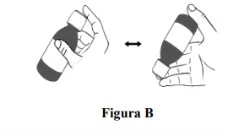
The oral suspension should be shaken by hand approximately 40 times for at least 30 seconds, continuously turning the bottle up and down until the oral suspension is well mixed and has a uniform appearance.
The suspension is dosed using the graduated oral syringe.
Important information on Duvyzat dosing:
Talk to your doctor or pharmacist to have them show you how to measure your prescribed dose.
- Take Duvyzat exactly as directed by your doctor (see Tables 1, 2, and 3).
- The recommended dose of Duvyzat is taken orally twice daily.
- Take Duvyzat as supplied (do not dilute with water or other liquids).
- Take Duvyzat with food to reduce the bitter taste of givinostat.
- Always take Duvyzat using the provided oral syringe (5 ml).
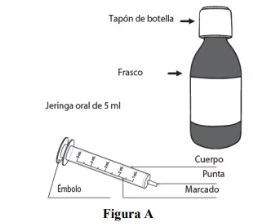
For first use of the bottle only: Remove the Duvyzat bottle and the 5 mL oral syringe from the box (see Figure A). |
|
Step 1. Check that the bottle is properly closed and shake it approximately 40 times for at least 30 seconds, continuously turning it upside down and right side up (see Figure B). Stop shaking once the Duvyzat oral suspension is well mixed and appears homogeneous. |
|
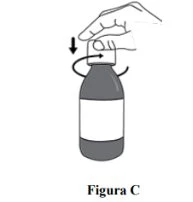
Step 2. Open the bottle by pressing down on the cap and turning it to the left (counterclockwise) (see Figure C). Do not discard the bottle cap. |
|
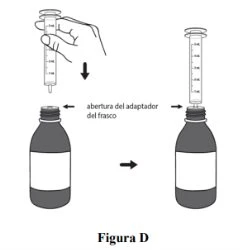
Step 3. For first use only: Take the provided oral syringe and insert the tip of the oral syringe into the adapter opening of the bottle (see Figure D). For subsequent uses: Take the provided oral syringe, press the plunger fully down (to expel air), and firmly insert the tip of the oral syringe into the adapter opening of the bottle (see Figure D). |
|
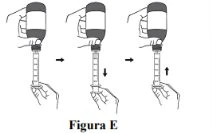
Step 4. While keeping the oral syringe in place, turn the bottle upside down. Slowly pull back the plunger to draw a small amount of the suspension. Then, push the plunger fully down to remove any air bubbles (see Figure E). |
|
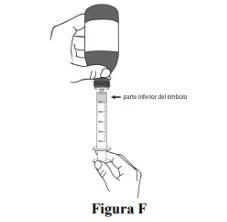
Step 5. Slowly push the plunger down until the edge of the plunger aligns with the marking on the oral syringe corresponding to the prescribed Duvyzat dose (see Figure F). If the prescribed dose is greater than 5 mL, you will need to repeat the process using the same oral syringe more than once. |
|
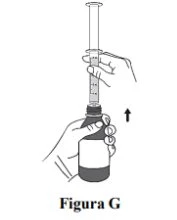
Step 6. With the plunger remaining in position, place the bottle upright and carefully set it on a flat surface. Remove the oral syringe by gently twisting or pulling it out of the adapter opening of the bottle. Do not hold the oral syringe by the plunger, as it may become dislodged (see Figure G). Take or administer Duvyzat immediately after drawing it into the oral syringe. Do not store the oral syringe filled with medication. |
|
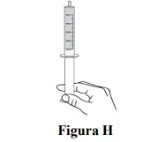
Step 7. Check that the prescribed volume (mL) of Duvyzat has been drawn into the oral syringe (see Figure H). Figure H shows an example of a 5 mL dose. Your dose may differ in volume. |
|
Step 8. To administer a dose of Duvyzat, the child or adult should be seated upright. Place the tip of the oral syringe against the inside of the cheek. Gently press the plunger fully down until no more medication remains in the oral syringe. If your prescribed dose is greater than 5 mL, repeat Steps 3 to 8 to administer the remaining dose volume. | |
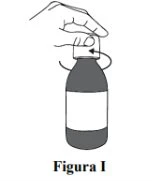
Step 9. After use, replace the bottle cap and turn it to the right (clockwise) to close the bottle securely (see Figure I). |
|
Step 10. Wash the oral syringe with water and allow it to air dry. Store the oral syringe in a clean and dry place. |
If you take more Duvyzat than you should
If you take more Duvyzat than prescribed, contact your doctor or hospital immediately.
Your doctor will decide what medical care you need, which may include monitoring of heart activity.
If you forget to take Duvyzat
It is important to take the correct dose.
If you miss a dose, take the next one at the scheduled time. Do not take a double dose to make up for a missed dose.
If you have any further questions about the use of this medicine, ask your doctor or pharmacist.
If you stop taking Duvyzat
Do not stop taking Duvyzat without first talking to your doctor.
If you have any further questions about the use of this medicine, ask your doctor or pharmacist.
4. Possible adverse effects
Like all medicines, this medicine can cause adverse effects, although not everyone will experience them.
After taking Duvyzat, you may experience one or more of the following adverse effects:
Very common adverse effects (may affect more than 1 in 10 people):
- stomach pain (abdominal pain)
- reduced platelet count (thrombocytopenia)
- diarrhea
- elevated levels of fats in the blood (hypertriglyceridemia)
- fever (pyrexia)
- vomiting
Common adverse effects (may affect up to 1 in 10 people):
- anxiety
- constipation
- decreased appetite
- dizziness
- skin redness (erythema)
- tiredness (fatigue)
- diarrhea and vomiting (gastroenteritis)
- blood accumulation under the skin (bruising)
- increased levels of thyroid-stimulating hormone or thyrotropin (TSH) in the blood
- joint pain (arthralgia)
- muscle pain (myalgia)
- muscle weakness
- rash
Reporting of adverse effects
If you experience any type of adverse effect, consult your doctor or pharmacist, even if it is a possible adverse effect not listed in this leaflet. You may also report them directly via the Spanish Pharmacovigilance System for Human Medicinal Products: www.notificaRAM.es. By reporting adverse effects, you can help provide more information on the safety of this medicine.
5. Conservation of Duvyzat
Keep this medicine out of the sight and reach of children.
Do not use this medicine after the expiry date stated on the carton and vial after "CAD". The expiry date refers to the last day of the month indicated.
Once opened, use within 60 days.
After 60 days from the first opening of the vial, discard any remaining unused Duvyzat.
Medicines must not be disposed of via wastewater or household waste. Ask your pharmacist how to properly dispose of unused medicines and their packaging. This will help protect the environment.
6. Contents of the pack and other information
Composition of Duvyzat
The active substance is givinostat.
Each millilitre of oral suspension contains 8.86 mg of givinostat (as monohydrochloride monohydrate).
The other components are polysorbate 20 (E-432), glycerol (E-422), tragacanth gum (E-413), sodium benzoate (E-211), peach flavour (natural flavourings, flavourings, propylene glycol [E-1520]), cream flavour (natural flavourings, flavourings, propylene glycol [E-1520]), sodium saccharin (E-954), liquid sorbitol (E-420), tartaric acid (E-334), sodium hydroxide (E-524), purified water.
Appearance of the product and contents of the pack
Duvyzat is an oral suspension that is white to off-white or pale pink in colour.
Pack containing a 140 ml bottle.
The bottle is packaged with a 5 ml graduated oral syringe. The oral syringe is graduated from 1 to 5 ml, in 0.5 ml increments.
Marketing Authorisation Holder
Italfarmaco S.p.A.
Viale F. Testi, 330
20126 Milan
Italy
Manufacturer
Italfarmaco S.A.
San Rafael, 3
28108 Alcobendas (Madrid)
Spain
or
Italfarmaco S.p.A.
Viale F. Testi, 330
20126 Milan
Italy
Scan the code with a mobile device to access the package leaflet in multiple languages.

Or visit the URL https://www.duvyzat.eu
Date of the most recent review of this leaflet: {MM/YYYY}.
This medicinal product has been authorised under a "conditional approval". This type of approval means that further information on this medicinal product is expected. The European Medicines Agency will review newly available information on this medicinal product at least once a year and this leaflet will be updated as necessary.
Detailed information on this medicinal product is available on the European Medicines Agency website: http://www.ema.europa.eu.