Duphalac 667 mg/ml oral solution
Spain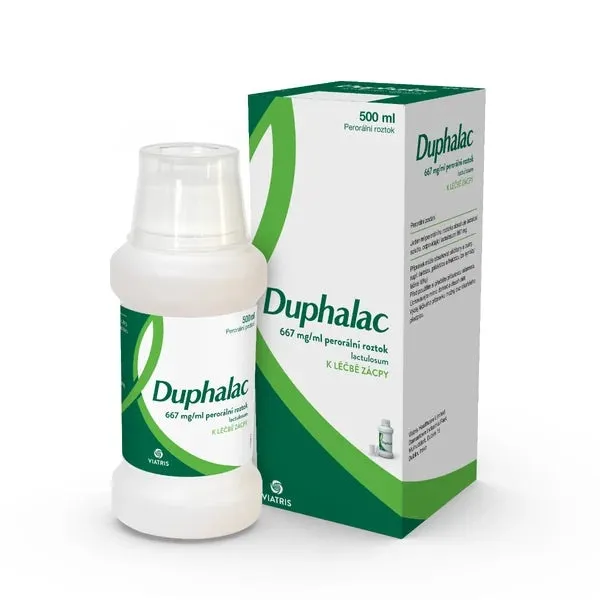
Table of Contents
- Package leaflet: Information for the user
- Introduction
- 1. What is Duphalac and what is it used for
- 2. What you need to know before starting duphalac
- **Children**
- **Pregnancy, breastfeeding and fertility**
- **Driving and using machines**
- 3. How to take Duphalac
- Dosage for constipation or when stool softening is necessary
- Dosage in portosystemic encephalopathy
- **Use in children and adolescents**
- **Special populations**
- Renal and hepatic impairment
- 4. Possible adverse effects
- 5. Storage of Duphalac
- 6. Contents of the pack and other information
Package leaflet: Information for the user
Introduction
Package leaflet: information for the patient
Duphalac 667 mg/ml oral solution
lactulose
Read the entire leaflet carefully before you start using this medicine, because it contains important information for you.
- Keep this leaflet, as you may need to read it again.
- If you have any questions, ask your doctor, pharmacist or nurse.
- This medicine has been prescribed for you only and must not be given to other people, even if they have the same symptoms as you, because it could harm them.
- If you experience any adverse effects, consult your doctor, pharmacist or nurse, even if they are adverse effects not listed in this leaflet. See section 4.
Leaflet contents
- What Duphalac is and what it is used for
- What you need to know before taking Duphalac
- How to take Duphalac
- Possible side effects
- How to store Duphalac
- Contents of the pack and other information
1. What is Duphalac and what is it used for
Duphalac contains a laxative called lactulose, which works by softening the stool to improve bowel transit and defecation, by drawing water into the intestine. It is not absorbed by the body.
Duphalac is used in the treatment of constipation (infrequent bowel movements, hard and dry stools) to produce semi-solid stools. It is used, for example, when haemorrhoids are present, or following anal surgery or surgery on the lower part of the intestine. In addition, it is used for the treatment and prevention of portosystemic hepatic encephalopathy (portosystemic encephalopathy), which is a liver disorder causing impaired thinking, tremor, reduced consciousness, and even coma.
You should consult a doctor if your condition worsens or does not improve after several days of treatment.
2. What you need to know before starting duphalac
Do not take duphalac:
- If you are allergic to lactulose or any of the other ingredients of this medicine (listed in section 6).
- If you have galactosemia (a serious genetic disorder that prevents digestion of galactose).
- If you have gastrointestinal obstruction, perforation, or risk of gastrointestinal perforation (other than habitual constipation).
If you have any doubts, consult your doctor or pharmacist.
Warnings and precautions
Consult your doctor, pharmacist, or nurse before starting to take duphalac.
This medicine contains lactose, galactose, and fructose from the manufacturing process. If your doctor has informed you that you have an intolerance to certain sugars, consult with him before taking this medicine.
This medicine may contain sulfites from the manufacturing process. These may rarely cause severe hypersensitivity reactions and bronchospasm.
You should consult your doctor if:
- You experience symptoms of abdominal pain of undetermined cause before starting treatment.
- The effect of the medicine is insufficient after several days of treatment.
- You are lactose intolerant.
- You are diabetic.
If you are diabetic and are being treated for hepatic encephalopathy, your dose of duphalac will be higher. This amount of duphalac contains a large quantity of sugar, so you will need to adjust the dose of your antidiabetic treatment.
- Chronic use of unadjusted doses of duphalac (exceeding 2–3 semi-solid bowel movements per day) or misuse may lead to diarrhea and disturbances in electrolyte balance.
Do not use duphalac without medical supervision for more than two weeks.
? You should be aware that the defecation reflex may deteriorate during treatment.
Children
Duphalac should not be administered frequently to infants and children, as it may cause disturbances in normal reflexes due to passive defecation.
Under special circumstances, your doctor may prescribe it for infants or children. In such cases, your doctor will closely monitor the treatment.
Use of Duphalac with other medicines
Inform your doctor or pharmacist if you are taking, have recently taken, or might need to take any other medicines.
The following medicines are not recommended to be used with Duphalac:
- Mesalazine (an intestinal anti-inflammatory): as it may reduce the effect of mesalazine.
- Antacids (reduce stomach pH): as they may alter the action of Duphalac.
- Diuretics (promote urine elimination): as they may increase potassium loss.
- Corticosteroids (used, for example, in inflammatory conditions, immune disorders, etc.): as they may increase potassium loss.
- Amphotericin B (an antibiotic): as it may increase potassium loss.
- Cardiac glycosides (medicines for heart disorders): Duphalac may enhance the effect of cardiac glycosides if a decrease in potassium levels occurs.
Use of Duphalac with food, drinks and alcohol
Duphalac can be taken with or without food. There are no restrictions on what you may eat or drink while taking Duphalac.
Pregnancy, breastfeeding and fertility
If you are pregnant or breastfeeding, think you may be pregnant or plan to become pregnant, consult your doctor or pharmacist before using this medicine.
Duphalac may be taken during pregnancy and during breastfeeding.
No effects of Duphalac on fertility are expected.
Driving and using machines
This medicine does not affect the ability to drive or operate machinery.
3. How to take Duphalac
Oral use.
Follow exactly the administration instructions for this medicine given by your doctor or pharmacist. If in doubt, consult your doctor or pharmacist again.
To facilitate dosing of this medicine, the following equivalences should be considered: one tablespoon contains 15 ml of oral solution. One dessert spoon contains 5 ml of oral solution.
The dose should be adjusted according to the clinical response. The duration of treatment should be adapted according to symptoms.
Lactulose may be administered as a single daily dose or divided into two doses. In the case of a single daily dose, it should always be taken at the same time each day, for example, during breakfast.
The appropriate dose of the oral solution may be taken either diluted with liquids or undiluted, swallowing it quickly without holding it in the mouth.
During treatment with laxatives such as Duphalac, you should drink an adequate amount of fluids (approximately 1.5–2 liters daily, equivalent to 6–8 glasses).
Adults
Dosage for constipation or when stool softening is necessary
The initial dose should be administered once daily, for example, during breakfast, or divided into two daily doses.
The maintenance dose should be adjusted after a few days, based on the response to treatment, which requires several days (2–3).
Daily initial dose | Daily maintenance dose | |
Adults | 10 – 30 g (equivalent to 15 - 45 ml/day of oral solution) | 10 – 20 g (equivalent to 15 - 30 ml/day of oral solution) |
Dosage in portosystemic encephalopathy
The recommended initial dose is 20 - 30 g, corresponding to 30 - 45 ml, equivalent to 2 - 3 tablespoonfuls, administered three to four times daily.
The maintenance dose should be adjusted to achieve two or three semi-solid bowel movements per day.
Use in children and adolescents
The use of laxatives in children and infants should be exceptional and under medical supervision, as it may alter the normal defecation reflexes.
Duphalac should not be used in children and adolescents under 14 years of age without first consulting a doctor and without medical supervision.
Dosage for constipation or when fecal softening is required
The initial dose should be taken once daily, for example with breakfast, or divided into two doses per day.
Initial daily dose | Recommended maintenance daily dose | |
Adolescents over 14 years | 10 – 30 g (equivalent to 15 - 45 ml/day of oral solution) | 10 – 20 g (equivalent to 15 - 30 ml/day of oral solution) |
Children (7-14 years) | 10 g (equivalent to 15 ml/day of oral solution) | 7 – 10 g (equivalent to 10 - 15 ml/day of oral solution) |
Children (1-6 years) | 3 - 7 g (equivalent to 5 - 10 ml/day of oral solution) | 3 - 7 g (equivalent to 5 - 10 ml/day of oral solution) |
Infants (<1 year) | up to 3 g (up to 5 ml/day of oral solution) | up to 3 g (up to 5 ml/day of oral solution) |
The maintenance dose should be adjusted after a few days, based on the response to treatment, which requires several days (2–3).
Dosage in portosystemic encephalopathy:
The safety and efficacy in the pediatric population (from newborns to 18 years of age) with portosystemic encephalopathy have not been established. No data are available.
Special populations
Renal and hepatic impairment
Dose adjustment is not required in this patient group.
Elderly patients
Dose adjustment is not required in this patient group, as systemic exposure to lactulose is negligible.
If you take more duphalac than you should
If you take more duphalac than you should, you may experience diarrhea, abdominal pain, and electrolyte loss. In such case, discontinue treatment with duphalac and consult your doctor for appropriate management of your symptoms.
In case of overdose or accidental ingestion, contact your doctor or pharmacist immediately, or call the Toxicology Information Service at telephone number 91.562.04.20, indicating the medication and the amount ingested.
If you have any further questions about the use of this product, ask your doctor or pharmacist.
If you forget to take duphalac
If you forget to take a dose, take it as soon as you remember, and then continue with your regular dosing schedule. Do not take a double dose to make up for a missed dose.
If you stop using duphalac
Do not stop treatment or discontinue use without consulting your doctor.
If you have any further questions about the use of this medicine, ask your doctor, pharmacist, or nurse.
4. Possible adverse effects
Like all medicines, this medicine may cause adverse effects, although not everyone will experience them.
The following adverse effects have been reported:
- Especially during the first days of treatment: flatulence (wind). These usually disappear after a few days.
- When a higher than recommended dose is taken: abdominal pain and diarrhoea. In these cases, the dose should be reduced.
If lactulose is administered at high doses (usually only in the treatment of hepatic encephalopathy) or for a prolonged period, the patient may experience an electrolyte imbalance (minerals present in the blood and other body fluids) due to diarrhoea.
In clinical trials of patients treated with lactulose, the following adverse effects have been observed:
Gastrointestinal disorders: very common (may affect more than 1 in 10 people): diarrhoea; common (may affect up to 1 in 10 people): flatulence, abdominal pain, nausea, and vomiting.
Investigations: uncommon (may affect up to 1 in 100 people): electrolyte imbalance due to diarrhoea.
-
Immune system disorders: frequency not known (frequency cannot be estimated from available data): allergic reactions.
-
Skin and subcutaneous tissue disorders: frequency not known (frequency cannot be estimated from available data): rash, pruritus, urticaria.
Reporting of adverse effects
If you experience any adverse effect, talk to your doctor, pharmacist, or nurse, even if it is a possible adverse effect not listed in this leaflet. You can also report them directly through the Spanish Pharmacovigilance System for Human Medicines: https://www.notificaram.es. By reporting adverse effects, you can help provide more information on the safety of this medicine.
5. Storage of Duphalac
Keep this medicine out of sight and reach of children.
Do not use this medicine after the expiry date stated on the packaging after CAD or EXP. The expiry date refers to the last day of the month indicated.
Do not store above 25°C. Even under the recommended storage conditions, darkening of the colour may occur, which is characteristic of sugar solutions and does not affect the therapeutic action.
Store in the original container, tightly closed.
Do not freeze. Freezing may alter the characteristics of the solution, causing it to become almost solid; however, it returns to its normal consistency when left at room temperature.
Medicines must not be disposed of via wastewater or household waste. Dispose of unused medicines and their containers at the SIGRE collection point at your pharmacy. Ask your pharmacist how to dispose of medicines and containers you no longer need. This will help protect the environment.
6. Contents of the pack and other information
Composition of Duphalac
- The active substance is lactulose. 1 ml of Duphalac oral solution contains 667 mg of lactulose.
What Duphalac looks like and contents of the pack
Duphalac oral solution is a clear, viscous, colourless or slightly yellowish-brown liquid.
It is available in plastic bottles with polypropylene screw cap and security seal, in sizes of 200 ml and 800 ml.
Only certain pack sizes may be marketed.
Marketing Authorisation Holder and Manufacturer
Marketing Authorisation Holder:
Cooper Consumer Health B.V.
Verrijn Stuartweg 60,
1112 AX Diemen,
The Netherlands
Manufacturer:
Abbott Biologicals B.V.
Veerweg 12, Olst, The Netherlands
For further information about this medicinal product, please contact the local representative of the Marketing Authorisation Holder:
Vemedia Pharma Hispania, S.A.
C/ Aragón, 182, 5th floor
08011 – Barcelona
Spain
Date of the most recent revision of this leaflet: April 2024
Detailed information on this medicinal product is available on the website of the Spanish Agency for Medicines and Health Products (AEMPS): https://www.aemps.es/