Dulcolax Picosulfate 7.5 mg/ml oral drops
Spain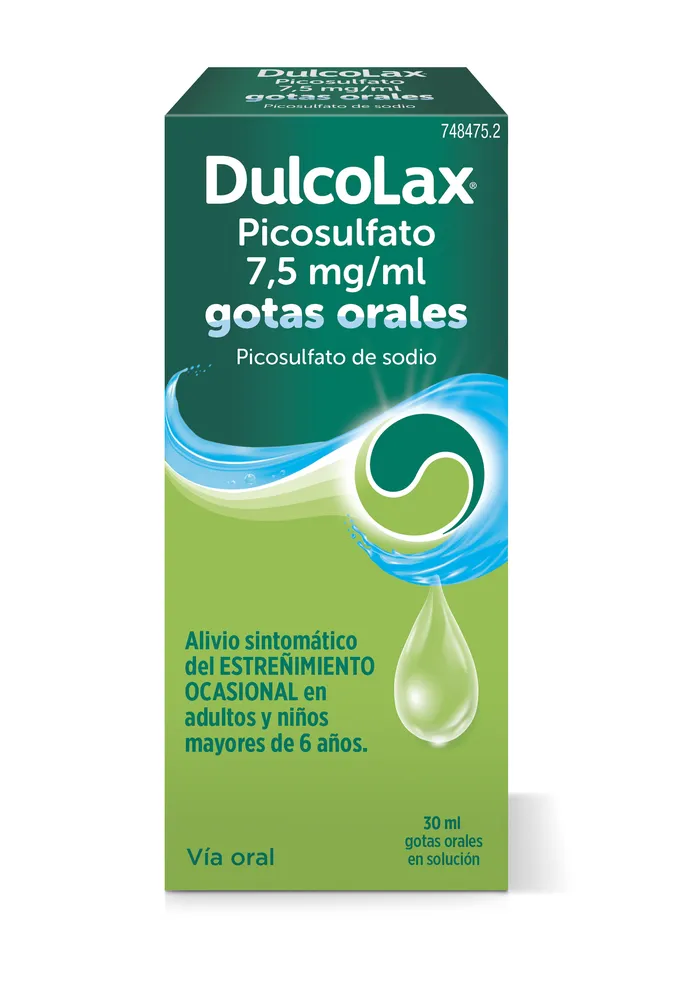
Table of Contents
- Package leaflet: Information for the user
- Introduction
- 1. What DulcoLax Sodium Picosulfate is and what it is used for
- 2. What you need to know before starting to take DulcoLax Sodium Picosulfate
- 3. How to take DulcoLax Picosulfate
- 4. Possible adverse effects
- 5. Storage of DulcoLax Picosulfate
- 6. Contents of the pack and other information
Package leaflet: Information for the user
Introduction
Package leaflet: information for the patient
DulcoLax Sodium Picosulfate 7.5 mg/ml oral drops
Sodium picosulfate
Read all of this leaflet carefully before you start taking this medicine, because it contains important information for you.
Follow exactly the instructions for use provided in this leaflet or those given by your doctor or pharmacist.
- Keep this leaflet, as you may need to read it again.
- If you need advice or more information, consult your pharmacist.
- If you experience any adverse effects, consult your doctor or pharmacist, even if they are adverse effects not listed in this leaflet. See section 4.
- You should consult a doctor if your condition worsens, if no bowel movement occurs within 12 hours after taking the maximum daily dose, or if you do not improve after 6 days of treatment.
Leaflet contents
- What DulcoLax Sodium Picosulfate is and what it is used for
- What you need to know before taking DulcoLax Sodium Picosulfate
- How to take DulcoLax Sodium Picosulfate
- Possible adverse effects
- How to store DulcoLax Sodium Picosulfate
- Contents of the pack and other information
1. What DulcoLax Sodium Picosulfate is and what it is used for
The active substance in this medicine, sodium picosulfate, belongs to a group of medicines called stimulant laxatives.
It is used for the symptomatic relief of occasional constipation in adults and children over 6 years of age.
If symptoms worsen, if no bowel movement occurs within 12 hours after the maximum daily dose, or if symptoms persist after 6 days of treatment, you should consult your doctor.
2. What you need to know before starting to take DulcoLax Sodium Picosulfate
It is recommended to drink 6 to 8 glasses of liquid daily when using any type of laxative, to help soften the stools.
Do not take DulcoLax Sodium Picosulfate
- If you are allergic to sodium picosulfate or to any of the other ingredients of this medicine (listed in section 6).
- If you have symptoms such as nausea, vomiting, severe abdominal pain and/or fever, which may indicate appendicitis or other abdominal disorders.
- If you suffer from acute inflammatory bowel disease, intestinal obstruction (ileus), gastrointestinal perforation, severe or undiagnosed abdominal pain, severe dehydration, or if you notice blood in your stools.
- If you experience sudden changes in bowel habits (frequency and consistency of stools) that persist for more than 2 weeks.
Warnings and precautions
Talk to your doctor or pharmacist before starting to take DulcoLax Sodium Picosulfate.
-
Like all laxatives, DulcoLax Sodium Picosulfate should not be taken continuously on a daily basis or for prolonged periods without investigating the cause of constipation. Prolonged excessive use may lead to loss of water and electrolytes (diarrhea).
-
Do not use this medicine to attempt weight loss. This product does not reduce caloric absorption from the intestine and may cause serious adverse effects. This product, like other stimulant laxatives, will not help you lose weight.
-
In elderly patients, prolonged use may worsen fatigue and/or weakness, or cause a decrease in blood pressure and lack of motor coordination.
-
Cases of dizziness and/or syncope have been reported in patients using sodium picosulfate. Based on available information, these may be due to vasovagal syncope caused by straining during defecation or a reflex response to abdominal pain related to constipation, and not necessarily to the use of sodium picosulfate.
Children
In children under 6 years of age, administer only under medical advice.
Other medicines and DulcoLax Sodium Picosulfate
Inform your doctor or pharmacist if you are taking, have recently taken, or might need to take any other medicines.
Concomitant use of diuretics (medicines used to increase urine elimination) or adrenocorticoids may increase the risk of electrolyte imbalance if excessive doses of DulcoLax Sodium Picosulfate are taken. Electrolyte imbalance may lead to increased sensitivity to cardiac glycosides (medicines used for heart conditions).
Concomitant administration of antibiotics may reduce the laxative effect of DulcoLax Sodium Picosulfate.
Pregnancy, breastfeeding and fertility
If you are pregnant, breastfeeding, think you might be pregnant, or are planning to become pregnant, consult your doctor or pharmacist before using this medicine.
No studies on the effect on fertility have been conducted in humans.
Driving and using machines
There are no specific studies on the ability to drive vehicles or operate machinery.
During treatment with this medicine, dizziness and/or syncope may occur due to a vasovagal response (e.g. to abdominal spasms). If you experience abdominal spasms, you should avoid potentially hazardous tasks such as driving or operating machinery.
DulcoLax Sodium Picosulfate contains sorbitol (E-420), sodium benzoate (E-211), and sodium
This medicine contains 450 mg of sorbitol in each ml.
Sorbitol is a source of fructose. If your doctor has told you (or your child) that you have an intolerance to certain sugars, or if you (or your child) have been diagnosed with hereditary fructose intolerance (HFI), a rare genetic disorder in which the body cannot break down fructose, consult your doctor before taking this medicine.
Sorbitol may cause gastrointestinal discomfort and a mild laxative effect.
This medicine contains 2 mg of sodium benzoate per ml. Sodium benzoate may cause jaundice (yellowing of the skin and eyes) in newborns (up to 4 weeks of age).
This medicine contains less than 1 mmol of sodium (23 mg) per ml; this is essentially "sodium-free".
3. How to take DulcoLax Picosulfate
Follow exactly the instructions for use provided in this leaflet or those given by your doctor or pharmacist. If in doubt, consult your doctor or pharmacist.
The recommended dose is:
Adults and adolescents over 12 years of age:
8 to 12 drops per day (4 to 6 mg of sodium picosulfate), taken as a single dose.
This corresponds to a maximum daily dose of 12 drops (6 mg of sodium picosulfate).
Use in children and adolescents
Children and adolescents aged 6 to 12 years:
2 to 8 drops per day (1 to 4 mg of sodium picosulfate), taken as a single dose.
This corresponds to a maximum daily dose of 8 drops (4 mg of sodium picosulfate).
It is recommended to start with the lowest dose. The dose may be adjusted up to the maximum recommended dose capable of producing regular bowel movements.
Do not exceed the recommended maximum daily dose.
Method of administration
Must be taken orally.
The drops can be taken alone or dissolved in any beverage (water, milk, fruit juice, etc.) or food (purees, porridge, etc.).
DulcoLax Picosulfate should be taken at night to produce a bowel movement the following morning. It must be administered as a single daily dose.
If symptoms worsen or if no bowel movement occurs within 12 hours after taking the maximum daily dose, consult your doctor.
Do not use for more than 6 consecutive days without consulting your doctor.
If you feel that the effect of DulcoLax Picosulfate is too strong or too weak, inform your doctor or pharmacist.
If you take more DulcoLax Picosulfate than you should
Gastrointestinal spasms, mucous and diarrheal stools, fluid loss, potassium loss, and other electrolyte imbalances may occur.
At doses much higher than recommended, cases of ischemia (reduced blood supply) in the colonic mucosa have been reported.
Like all laxatives, prolonged use of high doses may lead to chronic diarrhea, abdominal pain, low blood potassium levels, secondary hyperaldosteronism (excessive production of the hormone aldosterone by the adrenal gland), and kidney stones. Renal tubule injury, metabolic alkalosis (increased blood bicarbonate levels), and muscle weakness due to low blood potassium levels have also been reported.
If you have taken more DulcoLax Picosulfate than you should, go immediately to a medical center or call the Toxicology Information Service at 91 562 04 20, indicating the medication and the amount ingested.
If you forget to take DulcoLax Picosulfate
Do not take a double dose to make up for missed doses.
4. Possible adverse effects
Like all medicines, DulcoLax Picosulfate may cause adverse effects, although not everyone experiences them.
Very common adverse effects (may affect at least 1 in 10 patients):
- diarrhoea
Common adverse effects (may affect more than 1 in 10 people):
- colic
- abdominal pain
- abdominal discomfort
Uncommon adverse effects (may affect up to 1 in 100 people):
- vomiting
- nausea
- dizziness
Adverse effects with unknown frequency (cannot be estimated from available data):
- hypersensitivity (allergic reactions)
- angioedema (swelling beneath the skin surface)
- skin reactions
- syncope
- skin rashes
- swelling of the skin or mucous membranes (exanthema)
- itching
Dizziness and syncope occurring after administration of DulcoLax Picosulfate appear to be consistent with a vasovagal response (e.g. to abdominal spasm, defecation).
Reporting of adverse effects
If you experience any type of adverse effect, consult your doctor or pharmacist, even if it is a possible adverse effect not listed in this leaflet. You can also report them directly via the Spanish Pharmacovigilance System for Human Medicinal Products: https://www.notificaram.es. By reporting adverse effects, you can help provide more information on the safety of this medicine.
5. Storage of DulcoLax Picosulfate
Keep this medicine out of sight and reach of children.
Do not store above 30°C.
Do not use this medicine after the expiry date stated on the packaging after EXP. The expiry date refers to the last day of the month indicated.
Do not use more than 6 months after first opening the container.
Medicines must not be disposed of via wastewater or household waste. Dispose of unused medicines and their containers at the SIGRE collection point at your pharmacy. If you have any doubts, ask your pharmacist how to properly dispose of unused medicines and their packaging. This will help protect the environment.
6. Contents of the pack and other information
Composition of DulcoLax Picosulfate
- The active substance is sodium picosulfate. Each ml (15 drops) contains 7.5 mg of sodium picosulfate.
- The other components (excipients) are: sodium benzoate (E-211), liquid sorbitol (E-420), dihydrate sodium citrate, monohydrate citric acid, and water.
Appearance of the product and contents of the pack
DulcoLax Picosulfate is presented as an oral solution in drops, slightly viscous, clear, ranging from colourless to yellowish or slightly brownish-yellow.
It is supplied in a 30 ml plastic bottle with dropper and screw cap.
Marketing Authorization Holder and Manufacturer
Marketing Authorization Holder:
Opella Healthcare Spain, S.L.
C/ Rosselló i Porcel, 21
08016 Barcelona,
Spain
Manufacturer:
Istituto De Angeli, S.r.l.
Localita i Prulli - 50066 Reggello (Florence)
Italy
Date of the most recent review of this leaflet: November 2025
You can access detailed and up-to-date information about this medicine by scanning with your mobile phone (smartphone) the QR code included in the leaflet. You can also access this information at the following internet address: https://cima.aemps.es/cima/dochtml/p/49903/P_49903.html

Detailed information on this medicine is available on the website of the Spanish Agency for Medicines and Health Products (AEMPS) http://www.aemps.gob.es/.