Duavive 0.45 mg/20 mg modified-release tablets
Spain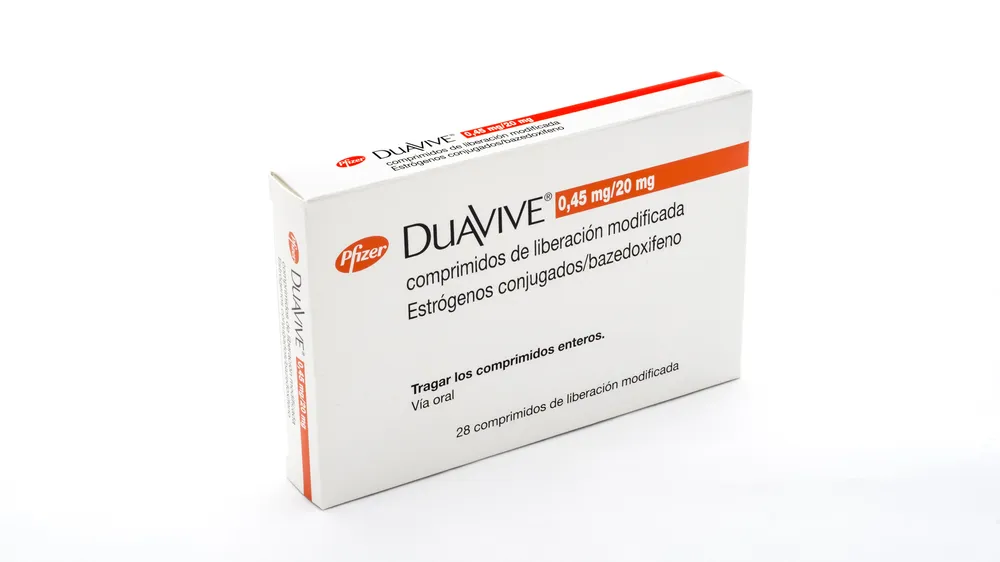
Table of Contents
Package leaflet: Information for the user
Introduction
Package leaflet: information for the patient
DUAVIVE 0.45mg/20mg modified-release tablets
conjugated estrogens/bazedoxifene
Read all of this leaflet carefully before you start taking this medicine because it contains important information for you.
- Keep this leaflet. You may need to read it again.
- If you have any questions, ask your doctor or pharmacist.
- This medicine has been prescribed for you only. Do not pass it on to others. It may harm them, even if their symptoms are the same as yours.
- If you experience any side effects, talk to your doctor or pharmacist, even if they are not listed in this leaflet. See section 4.
What this leaflet contains
- What DUAVIVE is and what it is used for
- What you need to know before you take DUAVIVE
- How to take DUAVIVE
- Possible side effects
- How to store DUAVIVE
- Contents of the pack and other information
1. What DUAVIVE is and what it is used for
DUAVIVE is a medicine that contains two active substances called conjugated estrogens and bazedoxifene. Conjugated estrogens are a medicine belonging to a group called hormone replacement therapy (HRT). Bazedoxifene belongs to a group of non-hormonal medicines called selective estrogen receptor modulators (SERMs).
DUAVIVE is used in postmenopausal women who still have their uterus (womb) and have not had a menstrual period in the last 12 months.
DUAVIVE is used for:
Relief of symptoms occurring after menopause
During menopause, there is a decrease in the amount of estrogen produced by a woman's body. This decrease can cause symptoms such as warmth in the face, neck, and chest (hot flushes). DUAVIVE relieves these postmenopausal symptoms. Your doctor will prescribe this medicine only if your symptoms significantly interfere with your daily life and if they determine that other types of HRT are not suitable for you.
2. What you need to know before starting DUAVIVE
Medical history and regular check-ups
The use of DUAVIVE involves risks that should be considered when deciding whether to start or continue treatment.
There is no experience with DUAVIVE treatment in women with premature menopause (caused by ovarian insufficiency or surgical intervention).
Before starting this medicine, your doctor will ask about your personal and family medical history. Your doctor may decide to perform a physical examination. If necessary or if you have specific concerns, this may include a breast examination and/or an internal examination. Inform your doctor if you have any medical condition or health problem.
Once you have started treatment with this medicine, you must visit your doctor for regular check-ups (at least once a year). During these visits, discuss with your doctor the benefits and risks of continuing DUAVIVE. It is advisable:
- to undergo regular diagnostic tests for breast disease and cervical smears as recommended by your doctor,
- to perform regular breast examinations to detect possible changes, such as skin dimpling, nipple changes, or visible or palpable lumps.
Do not take DUAVIVE
- If you are allergic to conjugated estrogens, bazedoxifene, or any of the other components of this medicine (listed in section 6).
- If you have or have had breast cancer, or if there is suspicion of breast cancer.
- If you have or have had estrogen-sensitive cancer, such as cancer of the uterine lining (endometrium), or if there is suspicion of such cancer.
- If you have recently experienced vaginal bleeding of unknown cause.
- If you have excessive thickening of the uterine lining (endometrial hyperplasia) that is not being treated.
- If you have or have had a blood clot in a vein (thrombosis), for example, in the legs (deep vein thrombosis), lungs (pulmonary embolism), or eyes (retinal vein thrombosis).
- If you have a blood clotting disorder (such as protein C, protein S, or antithrombin deficiency).
- If you have or have recently had an arterial disease caused by blood clots, such as heart attack, stroke, or angina.
- If you have or have had liver disease and your liver function tests have not returned to normal.
- If you are pregnant or could become pregnant, or if you are breastfeeding.
- If you have a rare blood disorder called porphyria, which is inherited (hereditary).
If you have any doubts about the above points, consult your doctor before taking this medicine.
If any of the above conditions develops for the first time while taking this medicine, stop taking it immediately and consult your doctor without delay.
Warnings and precautions
Consult your doctor before starting this medicine if you have ever had any of the following conditions, as they may reappear or worsen during treatment with DUAVIVE. If so, you should visit your doctor more frequently for check-ups:
- uterine fibroids
- growth of the uterine lining outside the uterus (endometriosis) or history of excessive growth of the uterine lining (endometrial hyperplasia)
- increased risk of blood clots (see "Blood clots in a vein [thrombosis]")
- increased risk of estrogen-sensitive cancer (such as having a mother, sister, or grandmother who had breast cancer)
- high blood pressure
- liver disorder, such as benign liver tumor
- diabetes
- gallstones
- migraine or severe headaches
- a rare immune system disease affecting multiple organs (systemic lupus erythematosus, SLE)
- seizures (epilepsy)
- asthma
- a disease affecting the eardrum membrane and hearing (otosclerosis)
- high fat levels in the blood (triglycerides)
- fluid retention due to heart or kidney problems
Stop taking DUAVIVE and consult a doctor immediately
If you experience any of the following conditions:
- any of the diseases listed in the section "Do not take DUAVIVE"
- yellowing of the skin or whites of the eyes (jaundice), as these may be signs of liver disease
- a significant increase in blood pressure (symptoms may include headache, fatigue, dizziness)
- new-onset pseudomigraine headaches
- if you become pregnant
- if you notice signs of a blood clot, such as painful swelling and redness in the legs, sudden chest pain, or difficulty breathing. For more information, see "Blood clots in a vein (thrombosis)"
DUAVIVE and cancer
Excessive thickening of the uterine lining (endometrial hyperplasia) and cancer of the uterine lining (endometrial cancer)
This medicine contains two active substances, conjugated estrogens and bazedoxifene, and is used to treat women who still have their uterus.
When taking DUAVIVE, do not take other estrogens, as this could increase the risk of endometrial hyperplasia.
If you experience unexpected vaginal bleeding, you should contact your doctor as soon as possible.
Breast cancer
Data show that the risk of breast cancer increases with estrogen-only hormone replacement therapy (HRT). The increase in risk depends on the duration of HRT and becomes evident after 3 years of use. After stopping HRT, the additional risk decreases over time, but the risk may persist for 10 years or more if HRT was used for more than 5 years.
The effect of DUAVIVE on the risk of breast cancer may be within the same range as with combined estrogen-progestogen HRT.
Perform regular breast examinations. Consult your doctor as soon as possible if you notice any changes, such as:
- skin dimpling
- nipple changes
- visible or palpable lumps
Ovarian cancer
Ovarian cancer is less common than breast cancer. The use of HRT with estrogen alone or combined estrogen-progestogen has been associated with a slightly increased risk of ovarian cancer.
The risk of ovarian cancer varies with age. For example, in women aged 50 to 54 who do not use HRT, about 2 cases of ovarian cancer are observed per 2000 women over a 5-year period. In women receiving HRT for 5 years, about 3 cases per 2000 women are observed (i.e., about 1 additional case). Consult your doctor if you have any questions.
The effect of DUAVIVE on the risk of ovarian cancer is unknown.
DUAVIVE and the heart or circulation
Blood clots in a vein (thrombosis)
DUAVIVE may increase the risk of blood clots.
Monotherapy (treatment with a single medicine) with estrogens or bazedoxifene increases the risk of blood clots in veins (also known as deep vein thrombosis or DVT), especially during the first year of treatment with these medicines.
Blood clots can be serious, and if one travels to the lungs, it can cause chest pain, difficulty breathing, collapse, or even death.
Since the likelihood of developing a blood clot in the veins increases with age and in the following cases, inform your doctor immediately:
- if you are unable to walk for long periods due to major surgery, injury, or illness (see also section 3 if you need to undergo surgery)
- if you are severely overweight (BMI >30 kg/m²)
- if you have a blood clotting disorder requiring long-term treatment with blood-thinning medicines
- if a close relative has or has had a blood clot in the leg, lung, or another organ
- if you have systemic lupus erythematosus (SLE)
- if you have cancer
If you are in any of the above situations, consult your doctor before starting this medicine.
Heart disease (heart attack)
There is no evidence that HRT prevents heart attacks. Data from randomized controlled trials showed no increased risk of coronary artery disease in women who had undergone hysterectomy (women whose uterus has been removed) and were taking estrogen monotherapy.
Stroke
The risk of stroke is about 1.5 times higher in women treated with HRT than in women not taking it. The number of additional stroke cases due to HRT use increases with age.
In women in their fifties who do not take HRT, an average of 8 out of 1000 will have a stroke over a 5-year period. In women in their fifties taking HRT, there will be 11 cases per 1000 women treated (i.e., 3 additional cases).
The effect of DUAVIVE on the risk of stroke may be within the same range as with combined estrogen-progestogen HRT.
Other factors that may increase the risk of stroke include:
- aging
- high blood pressure
- smoking
- excessive alcohol consumption
- irregular heartbeat
If you are scheduled for surgery
If you are scheduled for surgery, inform your doctor that you are taking DUAVIVE. You may need to stop taking DUAVIVE approximately 4 to 6 weeks before surgery to reduce the risk of blood clots (see "Blood clots in a vein"). Ask your doctor when you can resume taking this medicine.
If in doubt, consult your doctor before taking this medicine.
Other diseases
If you have any of the following conditions, your doctor should monitor you:
- kidney problems
- previous high levels of fat in the blood (triglycerides)
- liver problems
- asthma
- seizures (epilepsy)
- migraine
- systemic lupus erythematosus (SLE – a rare immune system disease that can affect multiple organs)
- fluid retention
Estrogen therapy does not prevent memory loss. Some data suggest an increased risk of memory loss in women who start estrogen therapy after age 65. Seek advice from your doctor.
Children and adolescents
This medicine must not be used in children and adolescents under 18 years of age.
Taking DUAVIVE with other medicines
Inform your doctor or pharmacist if you are taking, have recently taken, or might need to take any other medicines.
Some medicines may interfere with the effect of DUAVIVE. This may cause irregular bleeding. This applies to the following medicines:
- Medicines for the treatment of epilepsy (such as phenobarbital, phenytoin, and carbamazepine)
- Medicines for the treatment of tuberculosis (such as rifampicin and rifabutin)
- Medicines for the treatment of HIV infection (such as nevirapine, efavirenz, ritonavir, and nelfinavir)
- Herbal remedies containing St. John’s wort (Hypericum perforatum)
DUAVIVE may affect how other medicines work:
- A medicine used to treat epilepsy (lamotrigine), as it could increase the frequency of seizures
Pregnancy and breastfeeding
This medicine is intended only for postmenopausal women. Do not take this medicine if you are pregnant or think you may be pregnant. Do not take this medicine if you are breastfeeding.
Driving and using machines
DUAVIVE has a minor effect on the ability to drive or use machines.
If you experience drowsiness after taking this medicine, you should avoid driving and operating machinery.
Visual disturbances, such as blurred vision, have been reported with the use of bazedoxifeno, one of the components of this medicine. If this occurs, you should avoid driving and operating machinery until your doctor advises that it is safe to do so.
DUAVIVE contains lactose, sucrose, liquid maltitol, glucose, and sorbitol
If your doctor has informed you that you have an intolerance to certain sugars, consult with him before taking this medicine.
This medicine contains 0.0088 mg of sorbitol per tablet.
3. How to take DUAVIVE
Your doctor will aim to prescribe the lowest dose necessary to treat your symptoms, for the shortest possible duration. Please consult your doctor if you think the prescribed dose is too high or too low.
Follow exactly the instructions given by your doctor for taking this medicine. If in doubt, consult your doctor or pharmacist again.
The recommended dose is one tablet once daily.
The tablet should be swallowed whole with a glass of water.
You may take the tablet at any time of day, with or without food. However, it is advisable to take the tablet at the same time every day, as this will help you remember to take your medicine.
You should continue taking this medicine for as long as your doctor has instructed. To be effective, this medicine must be taken every day as prescribed.
If you take more DUAVIVE than you should
Contact your doctor or pharmacist immediately.
If you take too many tablets, you may experience nausea or vomiting. You may also have breast tenderness, dizziness, abdominal pain, numbness/fatigue, or short-term vaginal bleeding.
If you forget to take DUAVIVE
If you forget to take a tablet, take it as soon as you remember. However, if it is almost time for your next dose, skip the missed tablet and take only the next one as scheduled. Do not take a double dose to make up for forgotten doses.
If you stop taking DUAVIVE
If you decide to stop taking this medicine before completing the prescribed course of treatment, speak to your doctor first.
If you have any further questions about the use of this medicine, ask your doctor or pharmacist.
4. Possible adverse effects
Like all medicines, this medicine can cause adverse effects, although not everybody gets them.
Stop treatment with DUAVIVE and contact a doctor immediately if you experience any of the following serious adverse effects:
Uncommon: may affect up to 1 in 100 people
- If you start experiencing pseudomigrainous or severe headaches.
Rare: may affect up to 1 in 1,000 people
- Signs of blood clot, such as painful swelling and redness in the legs, sudden chest pain or difficulty breathing.
- Signs of blood clot in the eye (retinal vein), such as sudden visual deterioration in one eye, including vision loss, eye pain and swelling, especially if sudden.
- Severe allergic reaction – symptoms may include sudden wheezing (a whistling sound when breathing), pain or tightness in the chest, swelling of the eyelids, face, lips, mouth, tongue or throat, difficulty breathing, and collapse.
- Swelling of eyes, nose, lips, mouth, tongue or throat, difficulty breathing, severe dizziness or fainting, skin rash (symptoms of angioedema).
- Symptoms of pancreatitis, which may include severe upper abdominal pain that may radiate to the back, accompanied by abdominal swelling, fever, nausea and vomiting.
- Sudden onset of abdominal pain and passage of bright red blood in the stool, with or without diarrhoea, due to sudden blockage of an artery supplying the intestines (ischaemic colitis).
- Heart attack – symptoms usually include pain, including chest pain radiating to the jaw, neck and upper arm. In addition to pain, you may feel sweaty, fatigued, nauseous, have difficulty breathing and lose consciousness.
Very rare: may affect up to 1 in 10,000 people
- A large increase in blood pressure (symptoms may include headache, tiredness, dizziness).
- Erythema multiforme: symptoms may include a skin rash with red to pink spots, especially on the palms of the hands or soles of the feet, which may blister. You may also have mouth, eye or genital ulcers, and fever.
Frequency not known: frequency cannot be estimated from the available data
- Other eye reactions (seeing sparks or flashes of light, narrowing of the visual field, and swelling of the eye or eyelid)
Other adverse effects
Very common: may affect more than 1 in 10 people
- Abdominal pain (stomach ache).
Common: may affect up to 1 in 10 people
- Muscle spasms (including leg cramps).
- Constipation.
- Diarrhoea.
- Nausea.
- Candidiasis (fungal vaginal infection).
- Increase in triglyceride levels (fatty substances in the blood).
Uncommon: may affect up to 1 in 100 people
- Gallbladder disease (e.g. gallstones, inflammation of the gallbladder (cholecystitis)).
The following adverse effects have been observed with the use of conjugated estrogens and/or bazedoxifene (the active substances of this medicine) as monotherapy, and may also occur with this medicine.
Very common: may affect more than 1 in 10 people
- Hot flushes.
- Muscle cramps.
- Visible swelling of the face, hands, legs, feet or ankles (peripheral oedema).
Common: may affect up to 1 in 10 people
- Breast pain, breast tenderness, breast swelling.
- Nipple discharge.
- Joint pain.
- Alopecia (hair loss).
- Weight changes (increase or decrease).
- Increase in liver enzymes (detected in routine liver function tests).
- Dry mouth.
- Numbness.
- Hives (urticaria).
- Rash.
- Itching.
Uncommon: may affect up to 1 in 100 people
- Vaginal inflammation.
- Vaginal discharge.
- Cervical erosion detected during a medical examination.
- Blood clot in the leg veins.
- Blood clot in the lungs.
- Blood clot in a vein at the back of the eye (retinal vein) which may lead to vision loss.
- Nausea (feeling unwell).
- Headache.
- Migraine.
- Dizziness.
- Mood changes.
- Nervousness.
- Depression.
- Memory loss (dementia).
- Changes in sexual desire (increase or decrease in libido).
- Skin discolouration of the face or other body parts.
- Increased hair growth.
- Difficulty wearing contact lenses.
Rare: may affect up to 1 in 1,000 people
- Pelvic pain.
- Changes in breast tissue.
- Vomiting.
- Irritability.
- Effects on blood sugar (glucose) control, including increased blood glucose levels.
- Worsening of asthma.
- Worsening of epilepsy (seizures).
- Growth of benign meningioma, a non-cancerous tumour of the membranes surrounding the brain or spinal cord.
Very rare: may affect up to 1 in 10,000 people
- Painful red lumps on the skin.
- Worsening of chorea (a neurological disorder characterised by involuntary spasmodic body movements).
- Increase in size of hepatic haemangiomas, a benign (non-cancerous) liver tumour.
- Low calcium levels in the blood (hypocalcaemia); often there are no symptoms indicating low calcium levels, but in severe hypocalcaemia you may feel tired, generally unwell, depressed, and suffer dehydration. These symptoms may be accompanied by bone pain and abdominal pain. Kidney stones may form and cause severe pain in the mid-back area (renal colic).
- Worsening of porphyria, a rare inherited blood disorder.
Frequency not known: cannot be estimated from the available data
-
Palpitations (awareness of heart beat).
-
Dry eye, eye pain, decreased visual acuity, visual disturbance, blepharospasm (abnormal and involuntary blinking or spasm of the eyelids).
Reporting of adverse effects
If you experience any adverse effect, talk to your doctor or pharmacist, even if it is a possible adverse effect not listed in this leaflet. You can also report them directly through the national reporting system included in Appendix V. By reporting adverse effects, you can help provide more information on the safety of this medicine.
5. Storage of DUAVIVE
Keep this medicine out of the sight and reach of children.
Do not use this medicine after the expiry date stated on the packaging and on the blister after EXP. The expiry date refers to the last day of the month indicated.
Do not store above 25°C.
Keep in the original packaging to protect from moisture.
After opening the blister pack, use within 60 days.
Medicines must not be disposed of via wastewater or household waste. Ask your pharmacist how to properly dispose of unused medicines and their packaging. This helps protect the environment.
6. Contents of the pack and other information
Composition of DUAVIVE
The active substances are conjugated estrogens and bazedoxifene. Each tablet contains 0.45 mg of conjugated estrogens and bazedoxifene acetate equivalent to 20 mg of bazedoxifene.
The other components are: monohydrate lactose, sucrose, sucrose monopalmitate, polydextrose (E1200, containing glucose and sorbitol), liquid maltitol (see section 2), microcrystalline cellulose, powdered cellulose, hydroxypropylcellulose, hydroxyethylcellulose, magnesium stearate, ascorbic acid, hypromellose (E464), povidone (E1201), poloxamer 188, calcium phosphate, titanium dioxide (E171), macrogol (400), iron oxide red (E172), iron oxide black (E172), and propylene glycol (E1520).
Appearance of the product and contents of the pack
The modified-release tablet of DUAVIVE 0.45 mg/20 mg is a pink, oval tablet, printed with "0.45/20" on one side.
The modified-release tablets are supplied in PVC/Aclar/PVC blisters containing 28 tablets. Each blister is sealed in an aluminum pouch with an oxygen absorber.
Marketing Authorization Holder
Pfizer Europe MA EEIG, Boulevard de la Plaine 17, 1050 Bruxelles, Belgium.
Manufacturer
Pfizer Ireland Pharmaceuticals Unlimited Company, Little Connell, Newbridge, County Kildare, Ireland.
More information about this medicinal product can be requested by contacting the local representative of the Marketing Authorization Holder:
Belgium / Belgium / Belgium Luxembourg / Luxembourg Pfizer NV/SA Tel/Tel: +32 (0)2 554 62 11 | Latvia Pfizer Luxembourg SARL branch Latvia Tel.: + 371 670 35 775 |
| Lithuania Pfizer Luxembourg SARL branch in Lithuania Tel. + 370 52 51 4000 |
Czech Republic Pfizer, spol. s r.o. Tel: +420-283-004-111 | Hungary Pfizer Kft Tel: +36 1 488 3700 |
Denmark Pfizer ApS Tlf.: +45 44 201 100 | Malta Vivian Corporation Ltd. Tel: +35621 344610 |
Germany PFIZER PHARMA GmbH Tel: +49 (0) 30 550055-51000 | Netherlands Pfizer BV Tel: +31 (0)10 406 43 01 |
Estonia Pfizer Luxembourg SARL Estonia branch Tel.: +372 666 7500 | Norway Pfizer AS Tlf: +47 67 526 100 |
Greece Pfizer Hellas A.E. Tel.: +30 210 6785 800 | Austria Pfizer Corporation Austria Ges.m.b.H. Tel: +43 (0)1 521 15-0 |
Spain Pfizer, S.L. Tel.: +34 91 490 99 00 | Poland Pfizer Polska Sp. z o.o. Tel: +48 22 335 61 00 |
France Pfizer Tel +33 (0)1 58 07 34 40 | Portugal Laboratórios Pfizer, Lda. Tel: + 351 21 423 5500 |
Croatia Pfizer Croatia d.o.o. Tel: + 385 1 3908 777 | Romania Pfizer Romania S.R.L Tel: +40 (0) 21 207 28 00 |
Ireland Pfizer Healthcare Ireland Unlimited Company Tel: 1800 633 363 (toll free) +44 (0)1304 616161 | Slovenia Pfizer Luxembourg SARL Pfizer, advisory branch for pharmaceutical activities, Ljubljana Tel.: + 386 (0) 1 52 11 400 |
Iceland Icepharma hf Simi: +354 540 8000 | Slovak Republic Pfizer Luxembourg SARL, organizational unit Tel: + 421 2 3355 5500 |
Italy Organon Italia S.r.l. Tel: +39 06 90259059 | Finland Pfizer Oy Puh/Tel: +358 (0)9 430 040 |
Cyprus Pfizer Hellas (Cyprus Branch) A.E. Tel: +357 22 817690 | Sweden Pfizer AB Tel: +46 (0)8 550 520 00 |

Date of the most recent review of this leaflet:
Other sources of information
Detailed information on this medicinal product is available on the European Medicines Agency website: https://www.ema.europa.eu.