Doxycycline Normon 100 mg film-coated tablets
Spain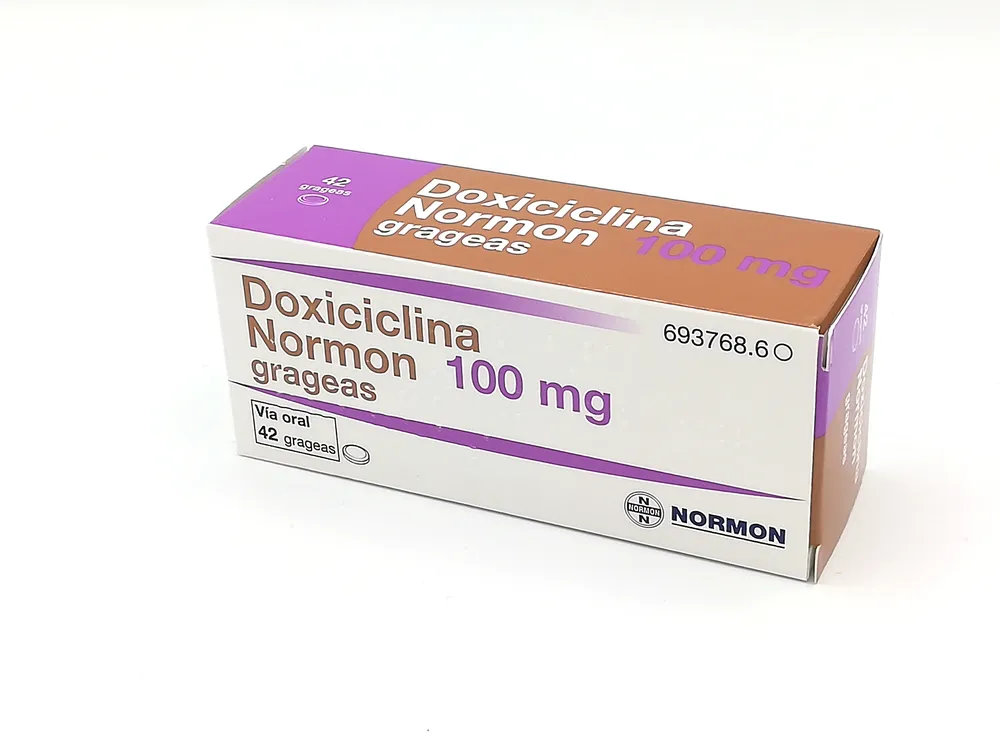
Table of Contents
- Package leaflet: Information for the user
- Introduction
- 1. What Doxiciclina Normon 100 mg film-coated tablets is and what it is used for
- 2. What you need to know before taking Doxiciclina Normon 100 mg coated tablets
- 3. How to take Doxicycline Normon 100 mg coated tablets
- 4. Possible adverse effects
- 5. Storage of Doxycycline Normon 100 mg Film-coated Tablets
- 6. Contents of the pack and other information
Package leaflet: Information for the user
Introduction
Package leaflet: information for the patient
Doxiciclina Normon 100 mg coated tablets
Doxycycline (Hyclate)
Read the entire leaflet carefully before you start taking this medicine, because it contains important information for you.
- Keep this leaflet, as you may need to read it again.
- If you have any questions, ask your doctor or pharmacist.
- This medicine has been prescribed for you only, and you should not give it to other people, even if they have the same symptoms as you, because it could harm them.
- If you experience any adverse effects, consult your doctor or pharmacist, even if they are effects not listed in this leaflet. See section 4.
Leaflet contents
- What Doxiciclina Normon 100 mg coated tablets are and what they are used for
- What you need to know before taking Doxiciclina Normon 100 mg coated tablets
- How to take Doxiciclina Normon 100 mg coated tablets
- Possible side effects
- How to store Doxiciclina Normon 100 mg coated tablets
- Contents of the pack and other information
1. What Doxiciclina Normon 100 mg film-coated tablets is and what it is used for
Doxiciclina Normon is an antibiotic belonging to the tetracycline group. It is a broad-spectrum antibiotic with bacteriostatic action.
Doxiciclina Normon is indicated, among other conditions, for skin and soft tissue infections (including acne vulgaris), otorhinolaryngological infections, and genitourinary infections.
2. What you need to know before taking Doxiciclina Normon 100 mg coated tablets
Do not take Doxiciclina Normon 100 mg coated tablets
If you are allergic to doxycycline, tetracyclines, or any of the other ingredients of this medicine (listed in section 6).
Warnings and precautions
Talk to your doctor or pharmacist before taking Doxiciclina Normon 100 mg coated tablets.
Children
Doxiciclina Normon 100 mg coated tablets must not be used during the period of tooth development (second half of pregnancy, breastfeeding, and in children under 8 years of age), as it may cause permanent discoloration of the teeth and delayed bone development.
General
- Bulging of the fontanelles (soft spots in the skull) in children and intracranial hypertension (increased pressure of the cerebrospinal fluid in the brain) in both children and adults have been reported. (See section 4. Possible side effects).
- If you develop diarrhea while being treated with doxycycline, consult your doctor.
- If this medicine is taken while lying down or without sufficient water, gastrointestinal ulcers may occur; therefore, it is important to follow the administration instructions. (See section 3. How to take Doxiciclina Normon 100 mg coated tablets and section 4. Possible side effects).
- If you have liver or kidney disease, consult your doctor.
- During prolonged treatment, your doctor will perform periodic monitoring of kidney and liver function.
- If you have systemic lupus erythematosus, avoid using this medicine.
- Skin redness may occur following direct exposure to sunlight; if this happens, stop treatment and consult your doctor.
- If you have myasthenia gravis (a form of muscle weakness), consult your doctor before taking this medicine.
- If you are due to have any urine tests, inform healthcare professionals that you are being treated with this medicine, as doxycycline may interfere with test results.
Other medicines and Doxiciclina Normon 100 mg coated tablets
Tell your doctor or pharmacist if you are taking, have recently taken, or might need to take any other medicines.
Some medicines may affect the action of Doxiciclina Normon 100 mg coated tablets when taken at the same time:
- Antacids containing aluminium, calcium, or magnesium reduce the absorption of doxycycline.
- Penicillin: should not be administered together with bactericidal antibiotics, as their effect may be reduced.
- Diuretics, methoxyflurane, and other nephrotoxic drugs may increase the nephrotoxic effect of tetracyclines.
- Retinoids used together with doxycycline may increase the risk of benign intracranial hypertension.
- Doxycycline may increase plasma levels of lithium, digoxin, and theophylline.
- Anticoagulants (such as warfarin): the dose of these should be reduced, as Doxiciclina Normon 100 mg coated tablets may influence the effect of these anticoagulants. Consult your doctor, who will advise you on the appropriate dose.
- Ergot alkaloids and methotrexate: their toxic effects may occasionally be increased by tetracyclines.
- Ophthalmic preparations containing thimerosal: ocular inflammation may occur.
- Oral contraceptives: tetracyclines may reduce their effectiveness.
- Chronic alcohol use, antiepileptic drugs, and rifampicin may increase the metabolism of doxycycline.
- If in doubt, consult your doctor or pharmacist.
Taking Doxiciclina Normon 100 mg coated tablets with food, drinks, and alcohol
Avoid combining doxycycline with alcohol.
It is advisable to take Doxiciclina Normon 100 mg coated tablets with food and a full glass of water to avoid irritation of the oesophagus. (See section 3. How to take Doxiciclina Normon 100 mg coated tablets).
Pregnancy and breastfeeding
If you are pregnant or breastfeeding, think you may be pregnant, or are planning to become pregnant, consult your doctor or pharmacist before using this medicine.
You should avoid taking Doxiciclina Normon 100 mg coated tablets during breastfeeding.
Driving and using machines
The effect of Doxiciclina Normon 100 mg coated tablets on the ability to drive and use machines is none or negligible.
Doxiciclina Normon 100 mg coated tablets contain lactose and sucrose. If your doctor has diagnosed you with an intolerance to certain sugars, consult with him before taking this medicine.
3. How to take Doxicycline Normon 100 mg coated tablets
Follow exactly the instructions for use of this medicine as given by your doctor or pharmacist. If in doubt, ask your doctor or pharmacist.
Remember to take your medicine. If you think the effect of doxycycline is too strong or too weak, tell your doctor or pharmacist.
IMPORTANT:
This medication should be taken during a meal, accompanied by a large glass of water. It is important to wait at least one hour after taking the medication before lying down or going to bed. The above recommendations aim to prevent the occurrence of gastrointestinal problems, especially esophageal ulcers. |
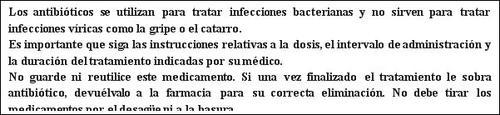
Your doctor will determine the duration of treatment with Doxiciclina Normon 100 mg coated tablets. Do not stop the treatment before completing the regimen prescribed by your doctor, as interrupting it prematurely may not only impair rapid recovery due to the risk of relapse, but may also lead to the development of microbial resistance to this antibiotic, potentially prolonging your illness.
Adults
The recommended dose is 2 coated tablets (200 mg) on the first day of treatment, given as a single dose or 1 coated tablet (100 mg) every 12 hours, followed by a maintenance dose of 1 coated tablet (100 mg) every 24 hours. For severe infections: 1 coated tablet (100 mg) every 12 hours, maintaining this dose throughout the treatment.
Children over 8 years of age
For children over 8 years of age weighing 45 kg or less, the recommended dose is 4 mg/kg of body weight on the first day of treatment (administered as a single dose or in two equal doses every 12 hours), followed by a maintenance dose of 2 mg/kg of body weight every 24 hours. For severe infections: 4 mg/kg of body weight every 24 hours, maintaining this dose throughout the treatment.
Treatment should continue for 24 to 48 hours after symptoms have disappeared.
Infections caused by group A beta-hemolytic streptococcus should be treated for at least 10 days.
If you take more Doxiciclina Normon 100 mg coated tablets than you should
If you take more Doxiciclina Normon 100 mg coated tablets than prescribed, contact your doctor or pharmacist immediately.
In case of overdose or accidental ingestion, contact the Toxicology Information Service (Tel. 91 562 04 20), indicating the product and the amount administered. Bring this leaflet with you.
Information for the physician: Dialysis does not alter the plasma half-life of doxycycline and would not be beneficial in the treatment of overdose.
If you forget to take Doxiciclina Normon 100 mg coated tablets
Do not take a double dose to make up for missed doses. It is important to take the medication regularly at the same time each day. If you miss a dose, take the next one at the scheduled time.
If you stop the treatment with Doxiciclina Normon 100 mg coated tablets
You should not interrupt the treatment and must follow the regimen prescribed by your doctor. Interrupting treatment prematurely may cause the infection to recur.
4. Possible adverse effects
Like all medicines, this medicine may cause adverse effects, although not everyone will experience them.
Blood disorders: Blood disorders following administration of tetracyclines are extremely rare. However, cases have been reported of: haemolytic anaemia (due to excessive destruction of red blood cells), thrombocytopenia (reduced number of platelets), neutropenia (reduced number of neutrophils), and eosinophilia (increased number of eosinophils).
Nervous system disorders: Intracranial hypertension, infrequently, may occur in children and adults, characterized by headache, nausea, vomiting, dizziness, tinnitus, and visual disturbances. These symptoms resolve after discontinuation of the drug. Bulging of fontanelles in children has also been reported.
Gastrointestinal disorders: Possible gastrointestinal disturbances: oesophageal ulcers (see section 3. How to take Doxycycline Normon 100 mg film-coated tablets), nausea, stomach pain, diarrhoea, loss of appetite, inflammation of the tongue, intestinal inflammation, anogenital candidiasis (fungal infection caused by a microscopic fungus). Permanent tooth discoloration may also occur if doxycycline is used during tooth development (second half of pregnancy, breastfeeding, and children under 8 years of age).
Liver disorders: Treatment with high doses may cause hepatitis and disturbances in liver function.
Skin disorders: Urticaria, maculopapular rash (skin spots and small elevations), exudative erythema (redness and skin lesions), multiform eruptions (redness and skin swellings), photosensitivity skin reactions, rarely exfoliative dermatitis (skin inflammation and peeling), very rarely Stevens-Johnson syndrome, and, with unknown frequency, photo-onycholysis (nail pigmentation).
Musculoskeletal disorders: Joint pain, muscle pain, and delayed growth in children, which ceases upon discontinuation of treatment, may occur.
Urinary disorders: Like all tetracyclines, doxycycline may cause increased blood urea nitrogen.
General disorders: Occasionally, allergic reactions may occur, exceptionally severe, including urticaria, angioedema (fluid retention in blood vessels), bronchial obstruction, pericarditis (inflammation of the tissue surrounding the heart), hypotension (low blood pressure), worsening of systemic lupus erythematosus, serum sickness (allergic reaction to serum), and, very rarely, anaphylactic shock (unusual or exaggerated allergic reaction).
Jarisch-Herxheimer reaction: Characterized by fever, chills, headache, muscle pain, and skin rash, which usually resolves spontaneously. This reaction occurs shortly after starting doxycycline treatment for spirochetal infections, such as Lyme disease.
Reporting of adverse effects
If you experience any type of adverse effect, consult your doctor or pharmacist, even if it is a possible adverse effect not listed in this leaflet. You may also report them directly through the Spanish Pharmacovigilance System for Human Medicines: https://wwwnotificaram.es. By reporting adverse effects, you can help provide more information on the safety of this medicine.
5. Storage of Doxycycline Normon 100 mg Film-coated Tablets
Store below 25°C. Keep in the original packaging to protect from moisture.
Keep this medicine out of the sight and reach of children.
Do not use this medicine after the expiry date stated on the packaging after EXP. The expiry date is the last day of the month indicated.
Medicines must not be disposed of via wastewater or household waste. Return unused medicines and their containers to the SIGRE Point at your pharmacy. Ask your pharmacist how to dispose of medicines and containers you no longer need. This helps protect the environment.
6. Contents of the pack and other information
Composition of Doxycycline Normon 100 mg coated tablets
- The active substance is doxycycline (hyclate). Each coated tablet contains 100 mg of doxycycline.
- The other components are povidone, corn starch, magnesium stearate, lactose monohydrate, sucrose, talc, arabic gum, ammonium methacrylate copolymer dispersion, titanium dioxide.
Appearance of the product and contents of the pack
Doxycycline Normon 100 mg coated tablets are presented in packs containing 14, 21 and 42 coated tablets.
Marketing Authorization Holder and Manufacturer
LABORATORIOS NORMON, S.A.
Ronda de Valdecarrizo, 6 - 28760 Tres Cantos – Madrid (SPAIN)
This leaflet was last reviewed in September 2020.
Detailed and up-to-date information on this medicinal product is available on the website of the Spanish Agency of Medicines and Health Products (AEMPS) http://www.aemps.gob.es/