Doxorubicin Accord 2 mg/ml concentrate for solution for infusion EFG
Spain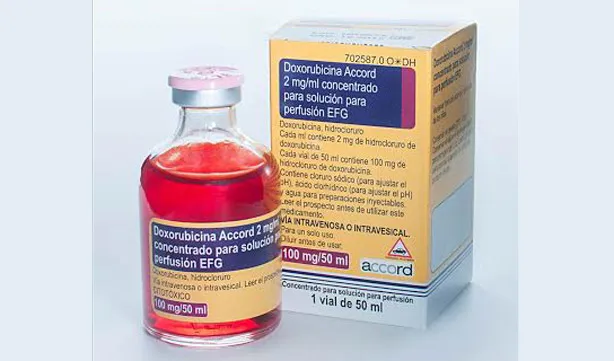
Table of Contents
- Package leaflet: Information for the user
- Introduction
- 1. What is Doxorubicin Accord and what is it used for
- 2. What you need to know before using Doxorubicin Accord
- 3. How to use Doxorubicin Accord
- 4. Possible adverse effects
- 5. Storage of Doxorubicin Accord
- 6. Contents of the container and other information
Package leaflet: Information for the user
Introduction
Package leaflet: information for the user
Doxorubicin Accord 2 mg/ml concentrate for solution for infusion EFG
Doxorubicin hydrochloride
Read the entire leaflet carefully before you start using this medicine, as it contains important information for you.
- • Keep this leaflet, as you may need to read it again.
- • If you have any questions, ask your doctor or pharmacist.
- • If you experience any side effects, talk to your doctor or pharmacist, even if they are side effects not listed in this leaflet. See section 4.
Contents of the leaflet:
|
1. What is Doxorubicin Accord and what is it used for
Doxorubicin Accord belongs to a group of medicines called anthracyclines. These medicines are also known as anticancer agents, chemotherapy, or "chemo". They are used in the treatment of various types of cancer to slow down or stop the growth of cancer cells. Often, a combination of different types of anticancer medicines is used to achieve better results and minimize side effects.
Doxorubicin Accord is used to treat the following types of cancer:
- breast cancer
- cancer of connective tissue, ligaments, bones, muscles (sarcoma)
- cancer developed in the stomach or intestine
- lung cancer
- lymphomas, a cancer affecting the immune system
- leukemia, a cancer causing abnormal production of blood cells
- thyroid cancer
- advanced ovarian and endometrial cancer (a cancer of the lining of the uterus or the uterus itself)
- bladder cancer
- advanced neuroblastoma (a cancer of nerve cells that commonly occurs in children)
- malignant kidney tumor in children (Wilms' tumor)
- myeloma (cancer of the bone marrow)
2. What you need to know before using Doxorubicin Accord
Do not use Doxorubicin Accord
- if you are allergic to doxorubicin hydrochloride or to any of the other ingredients of this medicine (listed in section 6), anthraquinones, or another anthracycline.
- if you have persistent suppression of your bone marrow’s ability to produce blood cells (myelosuppression).
- if you have previously received doxorubicin or other similar chemotherapy medicines such as idarubicin, epirubicin, or daunorubicin, as prior treatment with these similar medicines may increase the risk of side effects with Doxorubicin Accord.
- if you have any type of infection.
- if your liver is not functioning properly.
- if you have had a myocardial infarction (heart attack).
- if you have any cardiac function disorder.
- if you have a serious heart rhythm disorder (arrhythmia).
- if you are breastfeeding (see section “Pregnancy, breastfeeding and fertility”).
You must not receive the medicine via a catheter (a thin, flexible tube) into the bladder:
- if you are allergic to doxorubicin hydrochloride or to any of the other ingredients of this medicine (listed in section 6), anthraquinones, or another anthracycline.
- if you have a tumour that has grown into the bladder wall.
- if you have a urinary tract infection.
- if you have inflammation of the urinary bladder.
- if you have blood in your urine (haematuria).
- if you have problems with catheter insertion.
- if you are breastfeeding (see section “Pregnancy, breastfeeding and fertility”).
Warnings and precautions
Consult your doctor or pharmacist if you have or have previously had any of the following medical conditions or diseases:
- reduced production of blood cells in the bone marrow.
- heart problems.
- liver disorders.
- kidney disorders.
You should also inform your doctor:
- if you have ever received doxorubicin or any other similar anticancer medicine (anthracycline) for cancer treatment.
- if you have received radiotherapy to the upper part of your body.
- if you are currently using or have recently used trastuzumab (a medicine used in the treatment of certain types of cancer). Trastuzumab can remain in the body for up to 7 months. Since trastuzumab can affect the heart, doxorubicin must not be used until 7 months after stopping trastuzumab. If doxorubicin is used before this time, cardiac function must be carefully monitored.
Before starting treatment with Doxorubicin Accord and during treatment, your doctor will perform the following tests:
- blood tests.
- tests to assess heart, liver, and kidney function.
During treatment with doxorubicin, your bone marrow may no longer produce enough blood cells and platelets, and your blood count may change; therefore, blood tests must be performed before and during each treatment. The following symptoms may occur as a result of low blood cells and/or platelets: fever, infections, blood poisoning (septicaemia), bleeding, and tissue damage. If you develop a fever, contact your treating doctor immediately.
Skin rash along the vein where the medicine is administered is not uncommon and may be followed by inflammation of the vein (phlebitis). Hardening or thickening of the vein wall may occur, especially if the medicine is administered repeatedly into a small vein. If the medicine leaks from the blood vessel into the surrounding tissue (extravasation), local pain, severe inflammation of the subcutaneous tissue (cellulitis), and tissue damage may occur. Inform a nurse immediately if you feel a burning sensation during injection: the infusion must be stopped immediately and the needle reinserted into another vein.
Your doctor will carefully monitor your cardiac function during treatment because:
- doxorubicin can damage heart muscle.
- treatment with doxorubicin may lead to heart failure after a certain cumulative dose (sum of individual doses).
- the risk of heart muscle damage is higher if you have previously received medicines that may damage the heart or radiotherapy to the upper part of the body.
Generally, this medicine is not recommended in combination with live attenuated vaccines. Avoid contact with individuals recently vaccinated against polio.
During treatment with doxorubicin, inflammation of mucous membranes (mainly in the mouth, less frequently in the oesophagus) may occur. This may present as pain or burning sensation, skin rash, superficial mucosal ulceration (often along the side of the tongue or under the tongue), bleeding, and infections. Any mouth inflammation usually appears shortly after administration of the medicine and, in severe cases, may progress to mucosal ulcers within a few days; however, in most cases, patients recover from this side effect by the third week of treatment.
Nausea, vomiting, and occasionally diarrhoea may occur. These can be prevented or relieved with appropriate treatment prescribed by your doctor.
Reddish discoloration of the urine (which is normal and related to the colour of the medicine). Inform your doctor if this does not stop within a few days or if you suspect blood in the urine. Inform your doctor if you experience these symptoms.
Doxorubicin may cause infertility and damage reproductive cells. Both men and women must use effective contraception during treatment and for a period after treatment with doxorubicin has ended (see section “Pregnancy, breastfeeding and fertility”). If you wish to become pregnant after treatment with doxorubicin, you should discuss genetic counselling and fertility preservation options with your doctor before starting treatment.
Skin reactions and hypersensitivity reactions:
- Hair loss and interruption of beard growth may occur. This side effect is usually reversible, with complete hair regrowth occurring between two and three months after treatment ends.
- Skin and nail redness, discolouration, and increased sensitivity to sunlight may occur.
- Rarely, allergic (hypersensitivity) reactions may occur; signs or symptoms may range from skin rash and itching (pruritus, urticaria) to fever, chills, and anaphylactic shock.
Use of Doxorubicin Accord with other medicines
Inform your doctor or pharmacist if you are using, have recently used, or might need to use any other medicines.
The following medicines may interact with Doxorubicin Accord:
- other cytostatic agents (anticancer medicines), e.g., trastuzumab, anthracyclines (daunorubicin, epirubicin, idarubicin), cisplatin, cyclophosphamide, cyclosporine, cytarabine, dacarbazine, dactinomycin, fluorouracil, mitomycin C, taxanes (e.g., paclitaxel), mercaptopurine, methotrexate, streptozocin.
- cyclosporine: which may enhance the effects of doxorubicin and may cause prolonged bone marrow and blood cell suppression (coma and seizures have also been reported with concomitant administration of cyclosporine and doxorubicin).
- cardioactive medicines (medicines for treating heart diseases), e.g., calcium antagonists, verapamil, and digoxin.
- cytochrome P-450 inhibitors (medicines that inhibit cytochrome P-450, an enzyme important for the body's detoxification process), e.g., cimetidine; cytochrome P-450 inducers (e.g., rifampicin, barbiturates such as phenobarbital).
- antiepileptic medicines (e.g., carbamazepine, phenytoin, valproate).
- antipsychotics: clozapine (a medicine used for schizophrenia).
- warfarin (a medicine that prevents blood clotting).
- antiretroviral medicines (medicines against specific types of viruses).
- chloramphenicol and sulfonamides (antibacterial medicines).
- amphotericin B (medicines used against fungal diseases).
- live vaccines (e.g., polio, malaria).
- Some medicines affect the concentration and clinical effect of doxorubicin (e.g., St. John's wort).
- Paclitaxel: which may enhance the effects of doxorubicin.
Please note that this may also apply to medicines recently used.
Pregnancy, breastfeeding and fertility
Pregnancy
If you are pregnant or breastfeeding, think you may be pregnant, or plan to become pregnant, consult your doctor or pharmacist before using this medicine.
Animal studies have shown that doxorubicin crosses the placenta and causes fetal harm. Your doctor will administer doxorubicin only if the benefit of treatment outweighs the potential risks to the fetus. Inform your doctor immediately if you are pregnant or suspect you may be pregnant.
Women must not become pregnant during treatment with doxorubicin or for up to 7 months after treatment. Men must take appropriate precautions to ensure their partner does not become pregnant during treatment with doxorubicin or for up to 4 months after treatment.
Breastfeeding
Do not breastfeed while being treated with Doxorubicin Accord and for at least 14 days after the last dose. The medicine may pass into breast milk and possibly harm your baby.
Fertility
Men should seek advice about sperm cryopreservation (or cryopreservation) before treatment due to the possibility of irreversible infertility as a result of treatment with Doxorubicin Accord.
If you are considering becoming parents after treatment, consult your doctor.
Consult your doctor or pharmacist before using any medicine.
Driving and using machines
Due to the frequent occurrence of nausea and vomiting, do not drive or operate machinery.
Doxorubicin Accord contains sodium
Patients on low-sodium diets should be aware that this medicine contains 3.5 mg (0.15 mmol) of sodium per ml. The different container sizes of this medicine contain the following amounts of sodium:
This medicine contains less than 1 mmol of sodium (23 mg) in each 5 ml vial, i.e., essentially “sodium-free”.
This medicine contains 35.42 mg of sodium (main component of table salt) in each 10 ml vial. This is equivalent to 1.77% of the maximum daily recommended dietary intake of sodium for an adult.
This medicine contains 88.55 mg of sodium (main component of table salt) in each 25 ml vial. This is equivalent to 4.43% of the maximum daily recommended dietary intake of sodium for an adult.
This medicine contains 177.10 mg of sodium (main component of table salt) in each 50 ml vial. This is equivalent to 8.85% of the maximum daily recommended dietary intake of sodium for an adult.
This medicine contains 354.20 mg of sodium (main component of table salt) in each 100 ml vial. This is equivalent to 17.71% of the maximum daily recommended dietary intake of sodium for an adult.
3. How to use Doxorubicin Accord
Method and routes of administration
Doxorubicin Accord should only be administered under the supervision of a physician experienced in cancer treatment.
Your doctor will determine the dose you will receive.
Do not administer the medicine yourself. The medicine will be given to you as an intravenous infusion into a blood vessel, under the supervision of specialists. You will undergo periodic check-ups during and after treatment. If you have superficial bladder cancer, you may receive the medicine directly into the bladder (intravesical use).
Dosage
Your doctor will determine the dose you should receive.
The dose is usually calculated based on your body surface area. The usual dose is 60–75 mg per square meter of body surface area every 3 weeks when this medicine is used alone. The dose may need to be reduced to 30–60 mg per square meter of body surface area and the treatment interval prolonged when administered in combination with other antitumour medicines. Your doctor will inform you of the required amount. If administered weekly, the recommended dose is 15 to 20 mg per square meter of body surface area. Your doctor will inform you of the required amount.
Patients with impaired hepatic or renal function
In case of reduced liver or kidney function, the dose should be reduced. Your doctor will inform you of the required amount.
Children/elderly patients or patients previously treated with radiotherapy
Dose reduction may be necessary in children, elderly patients, or if you have previously received radiotherapy. Your doctor will inform you of the required amount.
Patients with bone marrow suppression
Dose reduction may be necessary in patients with bone marrow suppression. Your doctor will inform you of the required amount.
Obese patients
In obese patients, the initial dose may be reduced or the dosing interval prolonged. Your doctor will inform you of the necessary dose and frequency.
If you use more Doxorubicin Accord than you should
During and after treatment, your doctor or nurse will closely monitor your condition. Symptoms of overdose are an extension of the possible side effects of Doxorubicin Accord, particularly blood-related changes, gastrointestinal effects, and cardiac problems. Cardiac disorders may occur up to six months after the overdose.
In case of overdose, your doctor will take appropriate measures, such as blood transfusion and/or treatment with antibiotics.
Inform your doctor if you experience any of these symptoms.
If you forget to use a dose of Doxorubicin Accord
Your doctor will determine the duration of your treatment with Doxorubicin Accord. If treatment is interrupted before completing the recommended treatment cycles, the effectiveness of Doxorubicin Accord therapy may be reduced. Consult your doctor if you wish to discontinue treatment.
If you stop using Doxorubicin Accord
If you have any further questions about the use of this medicine, ask your doctor or pharmacist.
4. Possible adverse effects
Like all medicines, Doxorubicin Accord can cause adverse effects, although not everyone experiences them.
In some individuals, this medicine may cause a severe allergic reaction (anaphylaxis) that could be life-threatening. Contact a doctor immediately if you experience sudden onset of breathing difficulties, swelling of the face and throat, and general malaise (shock).
Doxorubicin severely reduces the immune system's ability to respond, thus posing a significant risk of infection or infestation that may lead to systemic infection due to microbes entering the bloodstream (blood poisoning). Contact a doctor immediately if you develop high fever, as blood poisoning can be fatal.
Other possible side effects include:
Very common: may affect more than 1 in 10 people
- Infection
- Loss of appetite (anorexia)
- Inflammation of the mouth (stomatitis)/inflammation of mucous membranes (mucositis)
- Diarrhea
- Nausea or vomiting
- Reduction in blood cell counts: red blood cells (anemia), all or some white blood cells (leukopenia, neutropenia), and platelets (thrombocytopenia)
- Redness, swelling, numbness, pain, and tingling in the palms of the hands and soles of the feet (palmar-plantar erythrodysesthesia or acral erythema)
- Hair loss from the head and body (alopecia and interruption of beard growth)
- Fever, feeling of weakness (asthenia), chills
- Abnormal ECG (this is an electrical tracing of your heart)
- Asymptomatic reductions in left ventricular ejection fraction
- Changes in liver enzyme levels (transaminases)
- Weight gain in patients with early breast cancer
- Damage to the heart muscle (cardiotoxicity)
Common: may affect up to 1 in 10 people
- Inflammation of the conjunctiva, the membrane covering the front of the eye and the inside of the eyelids (conjunctivitis)
- Changes in heart function, particularly in heart rhythm (sinus tachycardia), reduced amount of blood pumped by the heart throughout the body (congestive heart failure)
- Inflammation of the esophagus (esophagitis)
- Stomach pain
- Itchy rash, rash, skin and nail discoloration (hyperpigmentation)
- Blood poisoning
- Redness and swelling may appear at the injection site
- Local side effects when administered into the bladder, such as inflammation of the bladder (chemical cystitis)
Uncommon: may affect up to 1 in 100 people
- Embolism (blood clot in a blood vessel)
Rare: may affect up to 1 in 1,000 people
- Secondary leukemia (blood cancer developing after treatment for another cancer), when doxorubicin is used in combination with other anticancer medicines that damage DNA
- Tumor lysis syndrome (complications from chemotherapy due to breakdown products of dying cancer cells, which may, for example, affect the blood and kidneys)
Frequency not known: (frequency cannot be estimated from available data)
- Dehydration
- Increased urea in the blood (hyperuricemia)
- Blood cancer (acute lymphocytic leukemia, acute myeloid leukemia)
- Shock
- Inflammation of the corneal surface (keratitis), increased tear production
- Increased heart rate (tachyarrhythmias), loss of nerve impulses from the heart (atrioventricular block and bundle branch block)
- Inflammation of veins (phlebitis), complete blockage of a vein (thrombophlebitis), redness, bleeding problems (hemorrhage)
- Intestinal irritation or bleeding, mouth pain or ulcers, which may not appear until 3 to 10 days after treatment, discoloration inside the mouth
- Increased skin sensitivity to sunlight
- Inflammation of the large intestine (colitis) and inflammation of the stomach lining
- Itching of the skin and other skin disorders
- Hypersensitivity of irradiated skin (radiation recall reactions)
- Red discoloration of urine
- Women may also notice that their periods stop (amenorrhea), but periods should return to normal after stopping the medicine. In some cases, early menopause may occur
- In men, doxorubicin may cause absence or reduced sperm count (oligospermia, azoospermia), but this may return to normal after stopping the medicine
- Feeling of malaise
- Hepatotoxicity
- Temporary increase in liver enzymes
- Condition in which the kidney stops functioning (acute renal failure)
- Difficulty breathing due to spasm of muscles in the respiratory tract (bronchospasm)
Reporting of adverse effects:
If you experience any adverse effects, consult your doctor or pharmacist, even if they are possible adverse effects not listed in this leaflet. You can also report them directly via the Spanish Pharmacovigilance System for Human Medicines: https://www.notificaRAM.es. By reporting adverse effects, you can help provide more information on the safety of this medicine.
5. Storage of Doxorubicin Accord
-
Keep this medicine out of the sight and reach of children.
-
Do not use this medicine after the expiry date stated on the vial or outer packaging following EXP. The expiry date refers to the last day of the month indicated.
-
Store in a refrigerator (between 2°C and 8°C). Keep the vial in the outer packaging to protect it from light.
-
Do not use this medicine if the solution is not clear, red, and free of particles.
-
For single use only.
All materials used for preparation and administration, or that have come into contact with cisplatin in any way, must be disposed of in accordance with local cytotoxic requirements.
Unopened vials: 18 months
Opened vials: The product must be used immediately after opening the vial.
Physicochemical stability has been demonstrated in 0.9% sodium chloride injection and 5% dextrose injection for up to 28 days at 2–8°C and for up to 7 days at 25°C, when prepared in glass containers protected from light.
From a microbiological standpoint, the product should be used immediately. If not used immediately, the storage times and conditions prior to use are the responsibility of the user. Normally, storage should not exceed 24 hours, and the temperature should be between 2°C and 8°C, unless the dilution has been carried out under controlled and validated aseptic conditions.
6. Contents of the container and other information
Composition of Doxorubicin Accord
The active substance is doxorubicin hydrochloride.
Each ml contains 2 mg of doxorubicin hydrochloride.
Each 5 ml vial contains 10 mg of doxorubicin hydrochloride.
Each 10 ml vial contains 20 mg of doxorubicin hydrochloride.
Each 25 ml vial contains 50 mg of doxorubicin hydrochloride.
Each 50 ml vial contains 100 mg of doxorubicin hydrochloride.
Each 100 ml vial contains 200 mg of doxorubicin hydrochloride.
Appearance of the product and contents of the container
Doxorubicin Accord 2 mg/ml concentrate for solution for infusion EFG is a clear, red, almost particle-free solution.
Container sizes:
- 1 vial of 5 ml
- 1 vial of 10 ml
- 1 vial of 25 ml
- 1 vial of 50 ml
- 1 vial of 100 ml
Some container sizes may not be marketed.
Marketing Authorization Holder
Accord Healthcare S.L.U.
World Trade Center
Moll de Barcelona, s/n
Edifici Est, 6th floor
08039 Barcelona
Spain
Manufacturer
Accord Healthcare Polska Sp.z o.o.,
ul. Lutomierska 50,
95-200 Pabianice, Poland
or
Accord Healthcare single member S.A.
64th Km National Road Athens,
Lamia, Schimatari, 32009,
Greece
This medicinal product is authorized in the European Economic Area member states under the following names
Member State | Medicinal Product Name |
United Kingdom | Doxorubicin 2 mg/ml Concentrate for Solution for Infusion |
Austria | Doxorubicin Accord 2 mg/ml Konzentrat zur Herstellung einer Infusionslösung |
Belgium | Doxorubicin Accord Healthcare 2 mg/ml, solution à diluer pour perfusion / concentraat voor oplossing voor infusie / Konzentrat zur Herstellung einer Infusionslösung |
Bulgaria | Doxorubicin Accord 2 mg/ml Concentrate for Solution for Infusion |
Germany | Doxorubicin Accord 2 mg/ml Konzentrat zur Herstellung einer Infusionslösung |
Denmark | Doxorubicin Accord |
Estonia | Doxorubicin Accord 2 mg/ml |
Spain | Doxorubicin Accord 2 mg/ml concentrate for solution for infusion EFG |
Finland | Doxorubicin Accord 2 mg/ml Infuusiokonsentraatti, liuosta varten / koncentrat till infusionsvätska, lösning |
Hungary | Doxorubicin Accord 2 mg/ml koncentrátum oldatos infúzióhoz |
Ireland | Doxorubicin 2 mg/ml Concentrate for Solution for Infusion |
Italy | Doxorubicina AHCL |
Lithuania | Doxorubicin Accord 2 mg/ml koncentratas infuziniam tirpalui |
Latvia | Doxorubicin Accord 2 mg/ml koncentrats infuziju šķīduma pagatavošanai |
Netherlands | Doxorubicin Accord 2 mg/ml Concentraat voor oplossing voor infusie |
Norway | Doxorubicin Accord 2 mg/ml Konsentrat til infusjonsvæske |
Poland | Doxorubicinum Accord |
Portugal | Doxorubicin Accord |
Romania | Doxorubicină Accord 2 mg/ml concentrat pentru soluție perfuzabilă |
Sweden | Doxorubicin Accord 2 mg/ml Koncentrat till infusionsvätska, lösning |
Slovenia | Doxorubicin Accord 2 mg/ml koncentrat za raztopino za infundiranje |
Date of the most recent review of this summary: November 2023
Detailed and up-to-date information on this medicine is available on the website of the Spanish Agency of Medicines and Health Products (AEMPS) http://www.aemps.gob.es/
This information is intended for healthcare professionals only
Dosage and method of administration
Doxorubicin injection must be administered only under the supervision of a qualified physician with extensive experience in cytotoxic therapy. In addition, patients must be carefully and frequently monitored during treatment.
Due to the risk of cardiomyopathy, which is often fatal, the risks and benefits must be evaluated for each patient prior to every administration.
Doxorubicin is administered intravenously and intravesically and must not be administered orally, subcutaneously, intramuscularly, or intrathecally. Doxorubicin may be administered intravenously as an injection over several minutes, as a short infusion of up to one hour, or as a continuous infusion of up to 96 hours.
The solution is administered via a constant-flow intravenous infusion system with either a 9 mg/ml (0.9%) sodium chloride injection solution or a 50 mg/ml (5%) dextrose injection solution over 3–10 minutes. This technique minimizes the risk of thrombophlebitis or perivenous extravasation, which may lead to local cellulitis, blister formation, and severe tissue necrosis. Direct intravenous injection is not recommended due to the risk of extravasation, which may occur even when adequate blood return is observed upon needle aspiration.
Intravenous administration:
The dose of doxorubicin depends on the dosing schedule, the patient's general health, and prior treatment. The dosing regimen for doxorubicin hydrochloride may vary according to the indication (solid tumors or acute leukemia) and according to its use within a specific treatment regimen (as a single agent or in combination with other cytotoxic agents, or as part of multidisciplinary procedures including a combination of chemotherapy, surgery, radiotherapy, and hormonal therapy).
Monotherapy
The dose is usually calculated based on body surface area (mg/m²). Based on this, a recommended dose of 60–75 mg/m² of body surface area every three weeks is advised when doxorubicin is used as a single agent.
Combination regimen
When doxorubicin is administered in combination with other antitumor agents with overlapping toxicities, such as high-dose intravenous cyclophosphamide or related anthracycline compounds such as daunorubicin, idarubicin, and/or epirubicin, the dose of doxorubicin should be reduced to 30–60 mg/m² every 3–4 weeks.
In patients who cannot receive the full dose (e.g., due to immunosuppression or advanced age), an alternative dosing schedule is 15–20 mg/m² of body surface area per week.
Intravesical administration:
Doxorubicin may be administered via intravesical instillation for the treatment of superficial bladder carcinoma or for prophylaxis of tumor recurrence following transurethral resection (TUR) in patients at high risk of recurrence. The recommended dose of doxorubicin for local intravesical treatment of superficial tumors of the urinary bladder is instillation of 30–50 mg in 25–50 ml of 9 mg/ml (0.9%) sodium chloride injection solution. The optimal concentration is approximately 1 mg/ml. The solution should generally be retained intravesically for 1 to 2 hours. During this period, the patient should be rotated 90° every 15 minutes. Patients should not drink fluids for 12 hours before treatment to avoid undesirable dilution effects in urine (this should reduce urine production to about 50 ml/h). Instillations may be repeated at intervals ranging from 1 week to 1 month, depending on whether the treatment is therapeutic or prophylactic.
Patients with hepatic impairment
Since doxorubicin is primarily excreted via the hepatic route and in bile, drug elimination may be reduced in patients with hepatic impairment or biliary flow obstruction, which could lead to severe adverse effects.
General recommendations for dose adjustment in patients with hepatic impairment are based on serum bilirubin concentration:
Serum bilirubin | Recommended dose |
1.2 – 3.0 mg/100 ml | 50% |
3.1 – 5.0 mg/100 ml | 25% |
Doxorubicin is contraindicated in patients with severe hepatic impairment.
Patients with renal impairment
In patients with renal impairment (GFR < 10 ml/min), only 75% of the intended dose should be administered.
To avoid cardiomyopathy, it is recommended that the total cumulative dose of doxorubicin (including related drugs such as daunorubicin) should not exceed 450–550 mg/m² of body surface area. If a patient has concomitant heart disease and receives mediastinal and/or cardiac irradiation or prior treatment with alkylating agents, or if the patient is at high risk (hypertension for more than 5 years, previous coronary, valvular or myocardial lesions, or age over 70 years), the maximum total dose should not exceed 400 mg/m² of body surface area, and cardiac function should be monitored.
Dosage in children
Dosage in children may need to be reduced; refer to treatment protocols and specialized literature.
Obese patients and patients with neoplastic infiltration of bone marrow
In obese patients and patients with neoplastic infiltration of bone marrow, consideration should be given to administering a reduced initial dose or a prolonged dosing interval.
Incompatibilities
Doxorubicin must not be mixed with heparin, as a precipitate may form, and must not be mixed with 5-fluorouracil, as degradation may occur. Prolonged contact with any alkaline pH solution should be avoided, as it may lead to drug hydrolysis.
Until detailed compatibility data are available, doxorubicin must not be mixed with other medicinal products except with 0.9% sodium chloride injection or 5% dextrose injection.
Prepared infusion solutions
Physicochemical stability has been demonstrated in 0.9% sodium chloride injection and 5% dextrose injection for up to 28 days at 2–8°C and for up to 7 days at 25°C, when prepared in glass containers protected from light.
From a microbiological standpoint, the product should be used immediately. If not used immediately, the duration and conditions of storage prior to use are the responsibility of the user. Normally, storage should not exceed 24 hours and the temperature should be between 2°C and 8°C, unless dilution has been carried out under controlled and validated aseptic conditions.
Elimination
Any unused medicinal product and all materials used for dilution and administration must be destroyed in accordance with standard hospital procedures applicable to cytotoxic agents and in compliance with current legislation on hazardous waste disposal.
Any unused medicinal product or waste materials must be disposed of in accordance with local regulations for cytotoxic agents.
Shelf life and storage
Unopened vials: 18 months.
Opened vials: the product should be used immediately after opening the vial.
Store in a refrigerator (between 2°C and 8°C).
Keep the vial in the outer packaging to protect it from light.