Doxazosin Teva-Ratiopharm 2 mg tablets EFG
Spain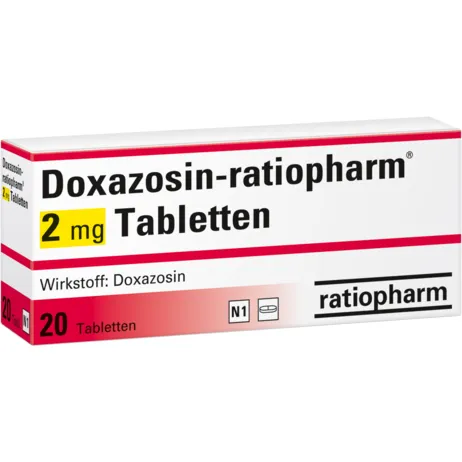
Table of Contents
- Package leaflet: Information for the user
- Introduction
- 1. What Doxazosina Teva-ratiopharm is and what it is used for
- 2. What you need to know before taking Doxazosina Teva-ratiopharm
- 3. How to take Doxazosina Teva-ratiopharm
- 4. Possible adverse effects
- 5. Storage of Doxazosin Teva-ratiopharm
- 6. Contents of the pack and other information
Package leaflet: Information for the user
Introduction
Package leaflet: Information for the user
Doxazosin Teva-ratiopharm 2 mg tablets EFG
Read all of this leaflet carefully before you start taking this medicine, because it contains important information for you.
- Keep this leaflet, as you may need to read it again.
- If you have any questions, ask your doctor or pharmacist.
- This medicine has been prescribed for you only, and you should not give it to other people, even if they have the same symptoms as you, because it may harm them.
- If you experience any adverse effects, consult your doctor or pharmacist, even if they are adverse effects not listed in this leaflet. See section 4.
Contents of the leaflet:
- What Doxazosin Teva-ratiopharm is and what it is used for.
- What you need to know before taking Doxazosin Teva-ratiopharm
- How to take Doxazosin Teva-ratiopharm
- Possible side effects
- How to store Doxazosin Teva-ratiopharm
- Contents of the pack and other information
1. What Doxazosina Teva-ratiopharm is and what it is used for
Doxazosin belongs to a group of medicines called alpha1-blocker antihypertensives.
Doxazosin is indicated for:
- Treatment of high blood pressure (hypertension).
- Treatment of urinary obstruction and symptoms associated with enlarged prostate (benign prostatic hyperplasia).
Doxazosina Teva-ratiopharm may be used in patients with benign prostatic hyperplasia, regardless of whether they have high or normal blood pressure.
Patients with both conditions may be treated with doxazosin as monotherapy.
2. What you need to know before taking Doxazosina Teva-ratiopharm
Do not take Doxazosina Teva-ratiopharm
- if you are allergic to doxazosin, to other quinazolines (e.g., prazosin or terazosin), or to any of the other ingredients of this medicine (listed in section 6),
- if you have experienced hypotension (low blood pressure) while taking other medicines for high blood pressure,
- if you have an enlarged prostate together with urinary tract obstruction, chronic urinary infection, or bladder stones,
- if you have low blood pressure.
Warnings and precautions
Talk to your doctor or pharmacist before taking Doxazosina Teva-ratiopharm
- if you have liver problems; doxazosin should be used with caution,
- if you have benign prostatic hyperplasia and are hypotensive,
- if you suffer from acute heart disease (heart condition), such as pulmonary edema or heart failure,
- if you are scheduled for cataract eye surgery, please inform your doctor if you are currently taking or have previously taken Doxazosina Teva-ratiopharm. This is because doxazosin may cause complications during surgery, which can be anticipated and managed by your ophthalmologist if they are informed in advance.
Prolonged and painful erections may occur very rarely. If this happens, consult a doctor urgently.
Before starting treatment with this medicine, your doctor may perform tests to rule out other conditions such as prostate cancer, which may cause symptoms similar to those of benign prostatic hyperplasia.
Children and adolescents
Doxazosin is not recommended for children or adolescents under 18 years of age, as safety and efficacy have not yet been established.
Taking Doxazosina Teva-ratiopharm with other medicines
Inform your doctor or pharmacist if you are taking, have recently taken, or might need to take any other medicines.
Doxazosin has been administered together with other antihypertensives and other medicines such as non-steroidal anti-inflammatory drugs, antibiotics, oral antidiabetics, gout medications, anticoagulants, digoxin, warfarin, phenytoin, and indomethacin without negative consequences. Doxazosin enhances the effect of other blood pressure-lowering medicines (thiazide diuretics, furosemide, beta-blockers).
Consult your doctor or pharmacist before using this medicine if you are taking any of the following medicines, as they may alter the effect of Doxazosina Teva-ratiopharm:
- Medicines for erectile dysfunction (impotence) (e.g., sildenafil, tadalafil, vardenafil) with alpha-blockers such as doxazosin.
- Medicines that reduce blood pressure.
- Medicines used to treat bacterial or fungal infections (e.g., clarithromycin, itraconazole, ketoconazole, telithromycin, voriconazole).
- Medicines used in the treatment of HIV (e.g., indinavir, nelfinavir, ritonavir, saquinavir).
- Nefazodone, a medicine used to treat depression.
Taking Doxazosina Teva-ratiopharm with food and drink
Doxazosin may be taken with or without food.
Pregnancy, breastfeeding, and fertility
If you are pregnant or breastfeeding, think you may be pregnant, or are planning to become pregnant, consult your doctor or pharmacist before using this medicine.
Doxazosin may pass into breast milk in small amounts. You should not take this medicine while breastfeeding unless your doctor advises you to do so.
Driving and using machines
Your ability to perform activities such as driving or operating machinery may be impaired, especially at the beginning of treatment with doxazosin.
Doxazosina Teva-ratiopharm contains Orange Yellow S (an azo dye), lactose, and sodium
This medicine may cause allergic-type reactions.
Contains lactose. If your doctor has diagnosed you with an intolerance to certain sugars, consult with them before taking this medicine.
This medicine contains less than 1 mmol of sodium (23 mg) per tablet; i.e., it is essentially "sodium-free".
3. How to take Doxazosina Teva-ratiopharm
Follow exactly the instructions for use of this medicine as given by your doctor. If you are unsure, consult your doctor or pharmacist again.
Do not take more tablets than prescribed by your doctor.
This medicine is administered orally.
The tablet may be divided into equal doses.
Hypertension
The usual dose is 2–4 mg once daily. Treatment should be initiated with 1 mg of doxazosin once daily for 1 or 2 weeks.
Depending on each patient's response, your doctor may gradually increase the dose to 2 mg, 4 mg, 8 mg, or up to a maximum of 16 mg daily, increasing at intervals of 1 or 2 weeks between each dose adjustment, until blood pressure is adequately reduced.
This medicine may be used in combination with other medicines prescribed by your doctor for the treatment of high blood pressure.
Benign prostatic hyperplasia (BPH)
The usual dose is 2–4 mg once daily. Treatment should be initiated with 1 mg once daily.
Depending on each patient's response, your doctor may gradually increase the dose to 2 mg, 4 mg, or up to a maximum of 8 mg daily, increasing at intervals of 1 or 2 weeks between each dose adjustment.
If you take more Doxazosina than you should
An overdose of this medicine may cause a drop in blood pressure. In this case, sit down with your head lowered.
In case of overdose or accidental ingestion, contact your doctor or pharmacist immediately or call the Toxicology Information Service at telephone number: 91 562 04 20, stating the name of the medicine and the amount ingested.
If you forget to take Doxazosina Teva-ratiopharm
Do not take a double dose to make up for missed doses.
If you have any further questions about the use of this medicine, ask your doctor or pharmacist.
4. Possible adverse effects
Like all medicines, this medicine can cause adverse effects, although not everyone experiences them.
Adverse effects vary in intensity from one individual to another and should be especially considered at the beginning of treatment or when changing medication, being generally mild.
Frequent (may affect up to 1 in 10 people):
- respiratory tract infection, urinary tract infection,
- dizziness, headache, tendency to sleepiness (somnolence),
- vertigo,
- sensation of strong or rapid heartbeat (palpitations), increased heart rate (tachycardia),
- hypotension and postural hypotension (low blood pressure caused by a sudden change in body position),
- bronchial inflammation (bronchitis), cough, difficulty breathing (dyspnea), nasal mucosa inflammation (rhinitis),
- abdominal pain, indigestion (dyspepsia), dry mouth, nausea,
- itching (pruritus),
- back pain, muscle pain (myalgia),
- bladder inflammation (cystitis), urinary incontinence,
- fatigue (asthenia), chest pain, flu-like illness, swelling of hands, feet or ankles (peripheral edema).
Uncommon (may affect up to 1 in 100 people):
- allergic reaction,
- abnormal loss of appetite (anorexia), gout, increased appetite,
- anxiety, depression, difficulty in falling or staying asleep (insomnia), agitation, nervousness,
- interruption of blood supply to the brain (stroke), decreased sensitivity (hypoesthesia), temporary loss of consciousness (syncope), tremor,
- ringing in the ears (tinnitus),
- chest pain or tightness (angina pectoris, myocardial infarction),
- nosebleed (epistaxis),
- constipation, diarrhea, flatulence, vomiting, gastroenteritis,
- abnormal liver function tests,
- skin rash,
- joint pain (arthralgia),
- discomfort when urinating (dysuria), blood in urine (hematuria), and frequent urination,
- impotence,
- pain, swelling of the face,
- weight gain.
Rare (may affect up to 1 in 1,000 people):
- increased frequency of urination (polyuria),
- gastrointestinal tract obstruction.
Very rare (may affect up to 1 in 10,000 people):
- decreased number of white blood cells (leucopenia), decreased number of platelets in blood (thrombocytopenia),
- postural dizziness, tingling (paresthesia),
- blurred vision,
- decreased heart rate (bradycardia), heart rhythm disorders (cardiac arrhythmias),
- hot flushes,
- difficulty breathing (bronchospasm),
- cessation or suppression of bile flow (cholestasis), liver inflammation (hepatitis), yellowing of the skin (jaundice),
- hair loss (alopecia), purplish skin spots of vascular origin (purpura), red itchy rashes (urticaria),
- muscle cramps, muscle weakness,
- urinary disorders, need to urinate at night (nocturia), or changes in urine volume (diuresis),
- enlargement of male breast glands (gynecomastia),
- persistent and painful penile erection (priapism). Consult a doctor urgently,
- fatigue, general malaise.
Frequency not known (cannot be estimated from available data):
- Intraoperative Floppy Iris Syndrome, an eye disorder that may occur during cataract surgery,
- entry of semen into the bladder during ejaculation (retrograde ejaculation).
No differences in adverse effects were observed between young and elderly patients.
Reporting of adverse effects:
If you experience any type of adverse effect, consult your doctor, pharmacist, or nurse, even if it is a possible adverse effect not listed in this leaflet. You may also report them directly via the Spanish Pharmacovigilance System for Human Medicinal Products: https://www.notificaram.es. By reporting adverse effects, you can help provide more information on the safety of this medicine.
5. Storage of Doxazosin Teva-ratiopharm
Keep this medicine out of the sight and reach of children.
Store in the original packaging.
Do not use this medicine after the expiry date stated on the packaging after the abbreviation CAD. The expiry date refers to the last day of the month indicated.
Medicines must not be disposed of via wastewater or household waste. Dispose of empty containers and unused medicines at the SIGRE Point located at your pharmacy. If you have any doubts, ask your pharmacist how to properly dispose of unused containers and medicines. This will help protect the environment.
6. Contents of the pack and other information
Composition of Doxazosin Teva-ratiopharm 2 mg tablets
The active substance is doxazosin. Each tablet contains 2.425 mg of doxazosin mesylate, equivalent to 2 mg of doxazosin.
The other components are: lactose monohydrate, sodium carboxymethyl starch (potato type IA), microcrystalline cellulose, magnesium stearate, sodium lauryl sulfate, colloidal silicon dioxide, and orange yellow S (E110) (see section 2 "Doxazosin Teva-ratiopharm contains orange yellow S (azo dye), lactose and sodium").
Appearance of the product and contents of the pack
Tablets
Orange-pink coloured, biconvex, scored on both sides, engraved with "DZS 2" on one side.
Each pack contains 28 tablets.
Marketing Authorisation Holder and Manufacturer
Marketing Authorisation Holder
Teva Pharma, S.L.U.
C/Anabel Segura 11, Edificio Albatros B, 1st floor,
Alcobendas, 28108 Madrid (Spain)
Manufacturer
SYNTHON HISPANIA, S.L.
Castelló, 1. Polígono Las Salinas.
08830 - Sant Boi de Llobregat (Spain)
or
Toll Manufacturing Services, S.L.
Aragoneses, 2.
28108 – Alcobendas (Spain)
Date of the most recent review of this leaflet: February 2024
"Updated and detailed information on this medicine is available on the website of the Spanish Agency of Medicines and Medical Devices (AEMPS) http://www.aemps.gob.es/"
You can access updated and detailed information about this medicine by scanning with your mobile phone (smartphone) the QR code included on the packaging. You may also access this information at the following web address: https://cima.aemps.es/cima/dochtml/p/65124/P_65124.html