Doxazosin Neo Stada 4 mg prolonged-release tablets EFG
Spain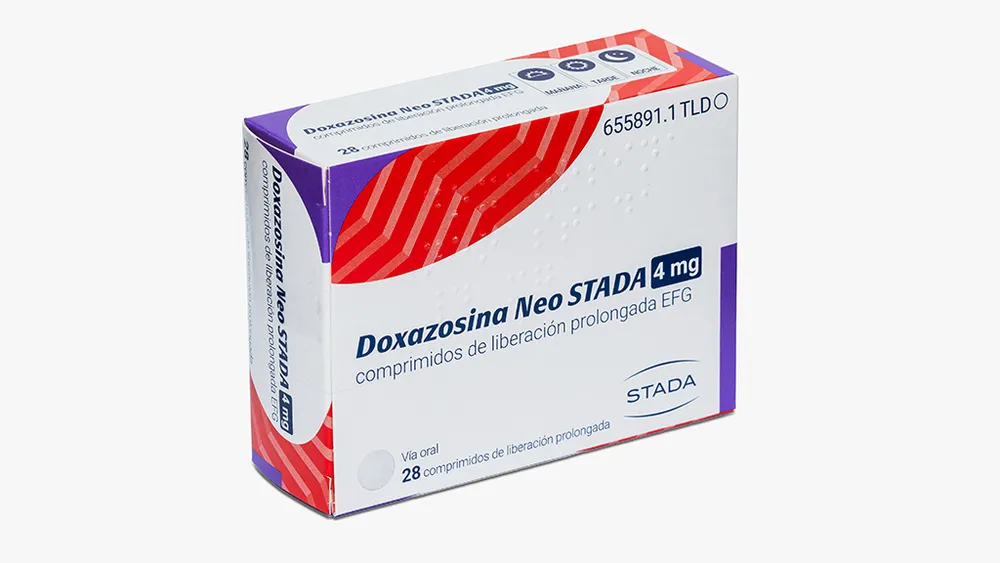
Table of Contents
- Package leaflet: Information for the user
- Introduction
- 1. What Doxazosina Neo Stada is and what it is used for
- 2. What you need to know before starting to take Doxazosin Neo Stada
- 3. How to take Doxazosina Neo Stada
- 4. Possible adverse effects
- 5. Storage of Doxazosina Neo Stada
- 6. Contents of the pack and other information
Package leaflet: Information for the user
Introduction
Package leaflet: information for the user
Doxazosina Neo STADA 4 mg prolonged-release tablets EFG
Read the entire leaflet carefully before you start taking this medicine, because it contains important information for you.
- Keep this leaflet, as you may need to read it again.
- If you have any questions, ask your doctor or pharmacist.
- This medicine has been prescribed for you only, and you should not give it to others, even if they have the same symptoms as you, because it may harm them.
- If you experience any adverse effects, consult your doctor or pharmacist, even if they are adverse effects not listed in this leaflet. See section 4.
Leaflet contents:
- What Doxazosina Neo Stada is and what it is used for
- What you need to know before taking Doxazosina Neo Stada
- How to take Doxazosina Neo Stada
- Possible adverse effects
- How to store Doxazosina Neo Stada
- Contents of the pack and other information
1. What Doxazosina Neo Stada is and what it is used for
The active substance in the tablets, doxazosin, belongs to a group of medicines known as alpha-1 blockers. Doxazosina Neo Stada is used to treat the following conditions:
- High blood pressure. If left untreated, high blood pressure can increase the risk of heart disease or stroke.
Doxazosin works by dilating your blood vessels, making it easier for the heart to pump blood through them. This helps lower blood pressure and reduce the risk of heart disease.
- Symptoms of benign prostatic hyperplasia (BPH). This condition causes an enlargement of the prostate gland, which lies below the bladder in men. This can make it difficult for urine to pass.
Doxazosin works by relaxing the muscle around the outlet of the bladder and the prostate gland, making it easier for urine to pass.
2. What you need to know before starting to take Doxazosin Neo Stada
Do not take Doxazosin:
- if you are allergic to doxazosin, to quinazolines (e.g. prazosin, terazosin), which are the chemical family to which doxazosin belongs, or to any of the other components of this medicine (listed in section 6). Allergic reactions may include, for example, itching, skin redness, or difficulty breathing.
- if you have low blood pressure (hypotension) or have previously experienced a drop in blood pressure upon standing that caused dizziness, lightheadedness, or fainting (orthostatic hypotension).
- if you have or have had any form of gastrointestinal obstruction.
- if you have benign prostatic hyperplasia (BPH) along with upper urinary tract congestion, chronic urinary infection, or bladder stones.
- if you have an overactive bladder, produce little or no urine (anuria), or have impaired kidney function (progressive renal failure).
- if you are breastfeeding.
Warnings and precautions
Consult your doctor or pharmacist before starting to take Doxazosin Neo Stada.
- if you have liver disease.
- if you have recently had an acute heart condition, such as heart failure.
- dizziness, weakness, and rarely fainting may occur, especially at the beginning of treatment with this medicine. Therefore, you should be cautious when starting treatment and avoid situations where such symptoms could cause harm.
Your doctor will advise you on what to do if you experience symptoms of postural hypotension (a drop in blood pressure with symptoms upon changing position, e.g. when standing up after lying or sitting down).
Do not be alarmed if you occasionally notice tablet-like residues in your stools. This is due to the non-absorbable coating of Doxazosin Neo Stada, which has been designed to control the release of the medicine over an extended period.
If you are scheduled for cataract surgery (clouding of the lens), inform your eye specialist before the procedure that you are currently taking or have previously taken Doxazosin Neo Stada. This is because Doxazosin Neo Stada may cause complications during surgery, which can be avoided if your specialist is adequately prepared.
Children and adolescents
The use of Doxazosin Neo Stada is not recommended in children and adolescents under 18 years of age, as its safety and efficacy have not been established.
Taking Doxazosin Neo Stada with other medicines
Inform your doctor or pharmacist if you are taking, have recently taken, or might need to take any other medicines.
Inform your doctor if you are taking any of the following medicines:
- non-steroidal anti-inflammatory drugs (NSAIDs), e.g. ibuprofen.
- other medicines used in the treatment of high blood pressure.
- estrogens (female hormone).
- dopamine, ephedrine, adrenaline, metaraminol, methoxamine, phenylephrine (medicines known as sympathomimetics, used, for example, to treat heart problems, low blood pressure, asthma, or nasal congestion).
- doxazosin and phosphodiesterase-5 inhibitors (e.g. sildenafil, tadalafil, or vardenafil). Some patients receiving alpha-blockers for high blood pressure or enlarged prostate may experience dizziness or lightheadedness, which may be caused by a drop in blood pressure upon sitting or standing quickly. Some patients have experienced these symptoms when taking erectile dysfunction medicines (impotence) together with alpha-blockers. To reduce the risk of such symptoms, you should be taking a regular daily dose of an alpha-blocker before starting erectile dysfunction medicines. In addition, it is recommended to maintain a 6-hour interval between taking doxazosin and a phosphodiesterase-5 inhibitor.
Taking Doxazosin Neo Stada with food and drinks
Doxazosin Neo Stada can be taken with or without food.
Pregnancy and breastfeeding
If you are pregnant or breastfeeding, think you may be pregnant, or are planning to become pregnant, consult your doctor or pharmacist before using this medicine.
Do not take Doxazosin Neo Stada if you are breastfeeding.
If you are pregnant, do not take this medicine without first consulting your doctor. The safety of this medicine during pregnancy has not been sufficiently established.
Driving and using machines
Doxazosin Neo Stada may cause tiredness or dizziness. If you experience tiredness, dizziness, or vertigo, do not drive or operate machinery. Exercise particular caution when taking the first dose or if your dose has been increased.
Doxazosin Neo Stada contains sodium
This medicine contains less than 23 mg of sodium (1 mmol) per tablet, which is considered essentially “sodium-free”.
3. How to take Doxazosina Neo Stada
Follow exactly the instructions for use of this medicine as given by your doctor. If in doubt, consult your doctor or pharmacist again.
Dosage
The dose of Doxazosina Neo Stada is the same whether you are taking it for hypertension or for treating the symptoms of benign prostatic hyperplasia. The usual dose is one tablet (4 mg) daily. Your doctor may increase your dose up to the maximum recommended dose of two tablets daily.
Choose any time of day that is convenient for you, and take your tablets at that time each day. The tablets must be swallowed whole, with a sufficient amount of water. Do not chew, split or crush the tablets. Doxazosina Neo Stada releases the active substance slowly throughout the day.
For the treatment of high blood pressure: Doxazosina Neo Stada may be used as monotherapy or in combination with other medications for lowering blood pressure (e.g. diuretics, fluid tablets).
It may take up to four weeks to achieve the optimal blood pressure-lowering effect with Doxazosina Neo Stada. Since treatment of high blood pressure aims to prevent future complications, you may not notice any symptoms while taking Doxazosina Neo Stada. Even if you feel well, do not stop taking your medicine unless your doctor tells you to. Do not change the dose or stop taking your medicine without first consulting your doctor.
If you take more Doxazosina Neo Stada than you should
If you take too many tablets, lie down on your back with your feet higher than your head. The most likely symptoms of overdose are dizziness or vertigo due to a drop in blood pressure. If you experience these symptoms, contact your doctor or pharmacist immediately or go to a hospital as soon as possible.
If you forget to take Doxazosina Neo Stada
If you forget to take a dose, do not worry. Simply take your tablet at the usual time the next day. Do not take a double dose to make up for missed doses.
If you have any further questions about the use of this medicine, ask your doctor or pharmacist.
4. Possible adverse effects
Like all medicines, this medicine can cause adverse effects, although not everyone will experience them.
STOP taking Doxazosina Neo Stada and call an ambulance immediately if you experience any of the following:
- Heart attack (uncommon)
- Weakness in arms, legs, or speech problems that may be symptoms of a stroke (uncommon)
- Swelling of the face, tongue, or throat which may be due to an allergic reaction to this medicine (uncommon)
Contact your doctor immediately if you experience any of the following symptoms after taking Doxazosina Neo Stada:
-
Chest pain (common), angina pectoris (uncommon)
-
Respiratory failure, difficulty breathing, wheezing (very rare)
-
Increased (common), decreased, or irregular heartbeat (very rare)
-
Awareness of heartbeat (palpitations) (common)
-
Skin rash or itching (especially whole body) (common)
-
Fainting (uncommon)
- Yellowing of the skin or eyes (jaundice) (very rare)
-
Decrease in white blood cells or blood platelets, which may lead to bruising or easy bleeding (very rare)
Other adverse effects
Common (may affect up to 1 in 10 people):
- Respiratory tract infections
- Dizziness, headache, drowsiness
- Loss of balance
- Low blood pressure and low blood pressure upon standing from a sitting or lying position (postural hypotension)
- Inflammation of the airways in the lungs, cough, respiratory failure, nasal congestion and/or runny nose
- Abdominal pain, indigestion, dry mouth, feeling unwell (nausea)
- Back pain, muscle pain
- Bladder inflammation (cystitis), urinary incontinence
- General malaise, flu-like symptoms
Uncommon (may affect up to 1 in 100 people):
- Loss of appetite, gout, increased appetite
- Anxiety, emotional instability (depression), lack of sleep (insomnia)
- Reduced sensation or sense of touch, tremors, ringing or noises in the ears (tinnitus)
- Nosebleeds
- Constipation, diarrhea, flatulence, feeling sick (vomiting), inflammation of the gastrointestinal tract
- Abnormal liver function tests
- Joint pain
- Pain or difficulty urinating, presence of red blood cells in urine (haematuria), frequent need to urinate
- Abnormal fluid accumulation under the skin causing facial swelling (facial oedema)
- Difficulty in achieving an erection (impotence)
- Pain
- Weight gain
Very rare (may affect up to 1 in 10,000 people):
-
Decrease in red blood cells
-
Postural dizziness
-
Restlessness, nervousness
-
Tingling
-
Blurred vision
-
Redness
-
Blockage of bile flow (cholestasis), inflammation of the liver (hepatitis)
-
Hair loss (alopecia), skin rash caused by bleeding under the skin (purpura), hives
-
Muscle cramps, muscle weakness
-
Urinary disorders, frequent urination at night, increased urine volume
-
Temporary breast enlargement (gynaecomastia)
- Persistent and painful erection of the penis. Contact a doctor urgently.
-
Feeling of tiredness (fatigue), malaise
Not known (frequency cannot be estimated from available data):
- Intraoperative floppy iris syndrome
- Taste disturbance
- Retrograde ejaculation
Reporting of adverse effects
If you experience any type of adverse effect, consult your doctor or pharmacist, even if it is a possible adverse effect not listed in this leaflet. You may also report them directly via the Spanish Pharmacovigilance System for Human Medicines: https://www.notificaram.es. By reporting adverse effects, you can help provide more information on the safety of this medicine.
5. Storage of Doxazosina Neo Stada
Keep this medicine out of the sight and reach of children.
Do not use this medicine after the expiry date stated on the carton, labelling, and blister pack, following EXP. The expiry date is the last day of the month indicated.
This medicine does not require any special storage conditions.
Medicines must not be disposed of via wastewater or household waste. Dispose of empty containers and unused medicines at the SIGRE collection point at your pharmacy. Ask your pharmacist how to dispose of containers and medicines you no longer need. This will help protect the environment.
6. Contents of the pack and other information
Composition of Doxazosina Neo Stada
-
The active substance is doxazosin. One prolonged-release tablet contains 4 mg of doxazosin (as mesilate).
-
The other components are: polyethylene oxide, microcrystalline cellulose, povidone, butylhydroxytoluene (E321), all-rac-α-tocopherol, anhydrous colloidal silica, sodium stearyl fumarate, methacrylic acid–ethyl acrylate copolymer (1:1) 30% dispersion, hydrated colloidal silica, macrogol and titanium dioxide (E171).
Appearance of the product and contents of the pack
The tablets are white, round, biconvex, with the letters “DL” engraved on one side.
Your medicine is available in:
PVC/PVDC/aluminum blister packs:
Packs containing 10, 20, 28, 30, 50, 56, 60, 90, 98, 100, 140 (10x14) prolonged-release tablets
Calendar packs containing 28 and 98 prolonged-release tablets
Unit-dose packs containing 50 x 1 prolonged-release tablets
or plastic bottles (PP container with LDPE screw cap and LDPE fill insert) containing 500 tablets
Only certain pack sizes may be commercially available.
Marketing Authorization Holder and Manufacturer
Marketing Authorization Holder:
Laboratorio STADA, S.L.
Frederic Mompou, 5
08960 Sant Just Desvern
(Barcelona) Spain
Manufacturer:
STADA Arzneimittel AG
Stadastrasse 2 – 18
61118 Bad Vilbel
Germany
or
Centrafarm Services B.V.
Van de Reijtstraat 31-E, 4814 NE Breda
The Netherlands
This medicinal product has been authorised in the EEA Member States under the following names:
Spain: Doxazosina Neo STADA 4 mg prolonged-release tablets EFG
Estonia: Doxalfa
The Netherlands: Doxazosine retard CF
Latvia: Doxalfa 4 mg ilgstošas darbibas tabletes
Lithuania: Doxalfa
United Kingdom: Doxadura XL
Sweden: Doxastad
Date of most recent review of this leaflet: December 2019
Detailed and up-to-date information on this medicinal product is available on the website of the Spanish Agency of Medicines and Health Products (AEMPS) http://www.aemps.gob.es/