Dorzolamide Aristo 20 mg/ml eye drops in solution
Spain
Table of Contents
- Package leaflet: Information for the user
- Introduction
- 1. What Dorzolamida Aristo is and what it is used for
- 2. What you need to know before using Dorzolamida Aristo
- 3. How to use Dorzolamida Aristo
- 4. Possible adverse effects
- 5. Storage of Dorzolamide Aristo
- 6. Contents of the pack and other information
Package leaflet: Information for the user
Introduction
Package leaflet: information for the user
Dorzolamida Aristo 20 mg/mL eye drops solution
Dorzolamide
Read the entire leaflet carefully before you start using this medicine, because it contains important information for you.
- Keep this leaflet, as you may need to read it again.
- If you have any questions, ask your doctor or pharmacist.
- This medicine has been prescribed for you only and must not be given to other people, even if they have the same symptoms as you, because it could harm them.
- If you experience any adverse reactions, consult your doctor or pharmacist, even if they are adverse reactions not listed in this leaflet. See section 4.
Leaflet contents
- What Dorzolamida Aristo is and what it is used for
- What you need to know before using Dorzolamida Aristo
- How to use Dorzolamida Aristo
- Possible side effects
- How to store Dorzolamida Aristo
- Contents of the pack and other information
1. What Dorzolamida Aristo is and what it is used for
Dorzolamida Aristo is a sterile ophthalmic solution. Dorzolamida Aristo contains dorzolamide as the active substance, which belongs to a group of medicines known as "carbonic anhydrase inhibitors".
This medicine is prescribed to reduce elevated pressure inside the eye and to treat glaucoma.
This medicine may be used alone or in combination with other medicines that lower intraocular pressure (called beta-blockers).
2. What you need to know before using Dorzolamida Aristo
Do not use Dorzolamida Aristo
- if you are allergic to dorzolamide or any of the other ingredients of this medicine (listed in section 6).
- if you have severe kidney problems or a history of kidney stones.
Warnings and precautions
Tell your doctor or pharmacist before starting Dorzolamida Aristo if you have or have had any medical conditions, including eye problems and eye surgeries, or if you are allergic to any medication.
If you experience any eye irritation or new eye disorders, such as eye redness or eyelid swelling, consult your doctor immediately.
If you suspect that this medicine is causing you an allergic reaction (for example, skin rash, severe skin reaction, or itching), stop using it and consult your doctor immediately.
Children
Dorzolamide has been studied in infants and children under 6 years of age who had elevated eye pressure or had been diagnosed with glaucoma. For further information, please consult your doctor.
Elderly patients
In studies with dorzolamide, the effects of this medicine were similar in elderly patients and younger patients.
Patients with hepatic impairment
Inform your doctor if you have or have had liver problems.
Other medicines and Dorzolamida Aristo
Tell your doctor or pharmacist if you are using, have recently used, or might need to use any other medicines (including eye drops).
This is particularly important if you are using another carbonic anhydrase inhibitor such as acetazolamide, or a sulfonamide.
Pregnancy and breastfeeding
Consult your doctor or pharmacist before using any medicine.
Pregnancy
You should not use this medicine during pregnancy. If you are pregnant, think you may be pregnant, or plan to become pregnant, consult your doctor or pharmacist before using this medicine.
Breastfeeding
If treatment with this medicine is required, breastfeeding is not recommended. Inform your doctor if you are breastfeeding or intend to breastfeed.
Driving and use of machines
No studies have been conducted on the effects on the ability to drive or operate machinery. Adverse effects associated with Dorzolamida Aristo, such as dizziness and blurred vision, may affect your ability to drive and/or operate machinery. Do not drive or operate machinery until you feel well or your vision is clear.
Dorzolamida Aristo contains the preservative benzalkonium chloride.
This medicine contains 0.075 mg of benzalkonium chloride in each mL of solution.
Benzalkonium chloride can be absorbed by soft contact lenses and may change the color of contact lenses. Remove contact lenses before using this medicine and wait 15 minutes before reinserting them.
Benzalkonium chloride may cause eye irritation, especially if you have dry eye or other corneal diseases (the transparent layer at the front of the eye). Consult your doctor if you experience a foreign body sensation, stinging, or eye pain after using this medicine.
3. How to use Dorzolamida Aristo
Follow exactly the instructions for administering this medicine as given by your doctor. If in doubt, consult your doctor or pharmacist again.
The appropriate dosage and duration of treatment will be determined by your doctor.
When Dorzolamida Aristo is used alone, the recommended dose is one drop into the affected eye(s) in the morning, afternoon, and evening.
If your doctor has recommended using Dorzolamida Aristo together with a beta-blocker eye drop to reduce intraocular pressure, the recommended dose is one drop into the affected eye(s) in the morning and evening.
If you are using this medicine with another eye drop, the drops should be administered at least 10 minutes apart.
Do not let the tip of the container touch the eyes or surrounding areas. It may become contaminated with bacteria that can cause eye infections leading to serious eye damage and even loss of vision. To avoid possible contamination of the container, avoid contact between the tip of the container and any surface. If you think your medicine may be contaminated, or if you develop an eye infection, consult your doctor immediately to determine whether you should continue using this bottle.
Instructions for use:
It is recommended to wash your hands before applying the eye drops.
Position yourself, if possible, in front of a mirror to facilitate administration.
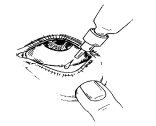
- Before using the medicine for the first time, ensure that the security strip on the neck of the bottle is intact. When the bottle has not yet been opened, it is normal for there to be a gap between the bottle and the cap.
- Remove the cap from the bottle.
- Tilt your head backward and gently pull down the lower eyelid to create a small pocket between the eyelid and the eye.
- Turn the bottle upside down and gently press to dispense a single drop into the eye as instructed by your doctor. DO NOT TOUCH THE EYE OR EYELID WITH THE TIP OF THE DROPPER. Close the eye and press gently with your finger on the inner corner of the eye for approximately two minutes. This helps prevent the drop from draining into the rest of the body.
- Repeat steps 3 and 4 in the other eye if instructed by your doctor.
- Replace the cap and close the bottle immediately after use.
If you use more Dorzolamida Aristo than you should
If too many drops are applied to the eye or if some of the contents are accidentally swallowed, consult your doctor immediately.
In case of overdose or accidental ingestion, contact your doctor or pharmacist immediately or call the Toxicology Information Service at: 91 562 04 20.
If you forget to use Dorzolamida Aristo
It is important to administer this medicine as directed by your doctor.
If you miss a dose, apply it as soon as possible. However, if it is almost time for your next dose, do not take the missed dose and continue with your regular dosing schedule.
Do not use a double dose to make up for a missed dose.
If you stop using Dorzolamida Aristo
If you wish to stop using this medicine, consult your doctor first.
If you have any further questions about the use of this medicine, ask your doctor or pharmacist.
4. Possible adverse effects
Like all medicines, this medicine may cause adverse effects, although not everyone will experience them.
Stop using this medicine and seek immediate medical advice if you develop allergic reactions such as hives, swelling of the face, lips, tongue and/or throat, which may cause difficulty breathing or swallowing.
The following adverse effects have been reported with dorzolamide during clinical trials or after marketing.
Very common adverse effects (affect more than 1 in 10 people):
- Burning and stinging of the eyes.
Common adverse effects (affect up to 1 in 10 people):
- Corneal disease with eye pain and blurred vision (superficial punctate keratitis), itchy eye discharge (conjunctivitis), eyelid irritation/inflammation, blurred vision
- nausea, bitter taste
- fatigue
- headache
Uncommon adverse effects (affect up to 1 in 100 people):
- Inflammation of the iris.
Rare adverse effects (affect up to 1 in 1,000 people):
- Tingling or numbness of the hands or feet
- Transient myopia that resolves upon discontinuation of therapy
- Development of fluid under the retina (choroidal detachment, after filtration surgery)
- Eye pain
- Crusting of the eyelid
- Low eye pressure
- Inflammation of the cornea (with symptoms of visual disturbances)
- Eye irritation including redness
- Kidney stones
- Dizziness
- Nosebleed
- Throat irritation
- Dry mouth
- Localized skin rash (contact dermatitis)
- Severe skin reactions
- Allergic-type reactions such as skin rash, urticaria, itching, in rare cases swelling of the lips, eyes and mouth, breathing difficulty, and even more rarely, difficulty breathing.
Frequency not known (cannot be estimated from available data):
- Difficulty breathing
- Foreign body sensation in the eye (feeling of having something in the eye)
- Strong heartbeats that may be fast or irregular (palpitations)
- Increased heart rate
- Increased blood pressure
Reporting of adverse effects
If you experience any adverse effect, consult your doctor or pharmacist, even if it is a possible adverse effect not listed in this leaflet. You may also report them directly through the Spanish Pharmacovigilance System for Human Medicines: https://www.notificaram.es. By reporting adverse effects, you can help provide more information on the safety of this medicine.
5. Storage of Dorzolamide Aristo
Keep this medicine out of the sight and reach of children.
Do not use this medicine after the expiry date stated on the container after EXP. The expiry date is the last day of the month indicated.
Store the bottle in the outer packaging to protect it from light. Store below 30°C.
Dorzolamide Aristo should be used within 28 days of first opening the bottle. Therefore, the bottle must be discarded 4 weeks after first opening, even if there is solution remaining. As a reminder, write the date of opening on the space provided on the box and on the bottle.
Medicines must not be disposed of via wastewater or household waste. Dispose of containers and unused medicines at the SIGRE Point at your pharmacy. Ask your pharmacist how to dispose of containers and medicines you no longer need. This will help protect the environment.
6. Contents of the pack and other information
Composition of Dorzolamida Aristo
- The active substance is dorzolamide. Each mL contains 20 mg of dorzolamide (equivalent to dorzolamide hydrochloride).
- The other components are mannitol (E421), hydroxyethyl cellulose, benzalkonium chloride solution 50% (as a preservative), sodium citrate, sodium hydroxide to adjust pH, and water for injections.
Appearance of Dorzolamida Aristo and contents of the container
Dorzolamida Aristo is a sterile, isotonic, buffered, clear, colourless, slightly viscous aqueous solution in an opaque white low-density polyethylene bottle with a sealed dropper and a two-piece cap. Each bottle contains 5 ml of ophthalmic solution.
Dorzolamida Aristo is available in packs containing 1, 3 or 6 bottles with 5 ml of ophthalmic solution.
Some pack sizes may not be marketed.
Marketing Authorization Holder and Manufacturer
Marketing Authorization Holder
Aristo Pharma Iberia, S.L.
C/Solana, 26
28850, Torrejón de Ardoz
Madrid, Spain
Manufacturer
Pharmathen S.A.
6, Dervenakion str.
153 51 Pallini Attiki,
Greece
This medicinal product is authorized in the European Economic Area member states under the following names:
Greece | Rezlod |
Italy | Dorzonorm |
Portugal | Dorzolamide Pharmathen |
Spain | Dorzolamide Aristo |
United Kingdom | Dorzolamide |
This patient information leaflet was last reviewed in January 2023
Detailed and up-to-date information on this medication is available on the website of the Spanish Agency for Medicines and Health Products (AEMPS): http://www.aemps.es/