Doptelet 20 mg film-coated tablets
Spain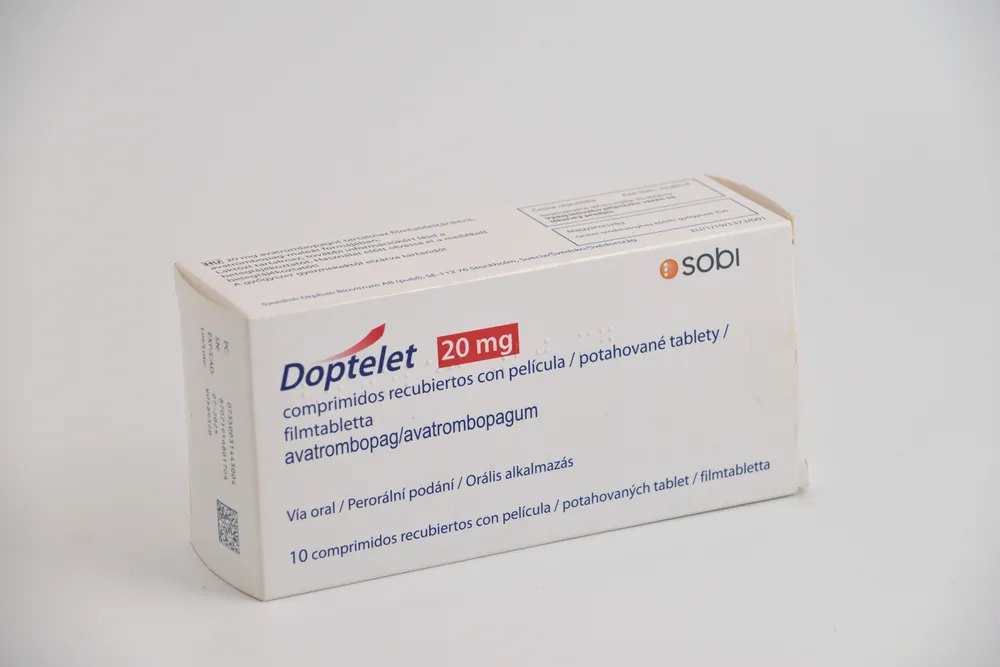
Table of Contents
Package leaflet: Information for the user
Introduction
Package leaflet: information for the patient
Doptelet 20 mg, film-coated tablets
avatrombopag
Read the entire leaflet carefully before you start taking this medicine, because it contains important information for you.
- Keep this leaflet, as you may need to read it again.
- If you have any questions, ask your doctor or pharmacist.
- This medicine has been prescribed for you only, and you should not give it to other people, even if they have the same symptoms as you, because it may harm them.
- If you experience any adverse reactions, consult your doctor or pharmacist, even if they are possible adverse reactions not listed in this leaflet. See section 4.
Contents of the leaflet
- What Doptelet is and what it is used for
- What you need to know before taking Doptelet
- How to take Doptelet
- Possible side effects
- How to store Doptelet
- Contents of the pack and other information
1. What Doptelet is and what it is used for
Doptelet contains an active substance called avatrombopag. It belongs to a group of medicines known as thrombopoietin receptor agonists.
Doptelet is used in adults with chronic liver disease to treat low platelet levels (thrombocytopenia) before undergoing a medical procedure that carries a risk of bleeding.
Doptelet is used to treat adults with low platelet levels due to chronic primary immune thrombocytopenia (ITP) when a previous treatment for ITP (such as, for example, corticosteroids or immunoglobulins) has not worked well enough.
Doptelet helps increase the platelet count in the blood. Platelets are blood cells that help blood to clot, reducing or preventing bleeding.
2. What you need to know before taking Doptelet
Do not take Doptelet
- if you are allergic to avatrombopag or any of the other ingredients of this medicine (listed in section 6). If you are unsure, consult your doctor or pharmacist before taking Doptelet.
Warnings and precautions
Talk to your doctor or pharmacist before taking Doptelet if:
- you are at risk of developing blood clots in the veins or arteries, or if your family members have had blood clots.
- you have another blood disorder known as myelodysplastic syndrome (MDS); taking Doptelet may worsen MDS.
You may have an increased risk of blood clots as you get older if:
- you have had to stay in bed for a prolonged period
- you have cancer
- you are taking contraceptive pills or hormone replacement therapy
- you have recently undergone surgery or suffered an injury
- you are overweight
- you smoke
- you have advanced chronic liver disease
If any of the above apply to you (or if you are unsure), consult your doctor or pharmacist before taking Doptelet.
Blood tests for platelet count
If you stop treatment with Doptelet, your platelet count is likely to fall back to the level it was at before treatment, or even lower, increasing the risk of bleeding. This may happen within days. Your platelet count will be monitored, and your doctor will discuss appropriate precautions with you.
Tests to check bone marrow
In people who have bone marrow problems, medicines like Doptelet could worsen these conditions. Signs of changes in the bone marrow may appear as abnormal results in blood tests. Your doctor may also perform tests to directly examine your bone marrow during treatment with Doptelet.
Children and adolescents
Do not give Doptelet to people under 18 years of age. The safety and efficacy of this medicine in this age group are unknown.
Other medicines and Doptelet
Tell your doctor or pharmacist if you are taking, have recently taken, or might need to take any other medicines.
If you are taking other medications for ITP, you may need to take them at lower doses or discontinue them during treatment with Doptelet.
Pregnancy and breastfeeding
If you are pregnant, think you might be pregnant, or plan to become pregnant, consult your doctor or pharmacist before using this medicine. The use of Doptelet is not recommended during pregnancy or in women of childbearing potential who are not using contraceptive methods.
If you are breastfeeding, consult your doctor or pharmacist before taking Doptelet. This medicine may pass into breast milk. Your doctor will decide whether the benefits of breastfeeding outweigh the potential risks to the baby during this time.
Driving and using machines
Doptelet is not expected to affect your ability to drive, ride a bicycle, or operate tools or machinery.
Doptelet contains lactose
Doptelet contains lactose (a type of sugar). If your doctor has informed you that you have an intolerance to certain sugars, consult with them before taking this medicine.
3. How to take Doptelet
Follow exactly the instructions given by your doctor or pharmacist for taking this medicine. If you are unsure, consult your doctor or pharmacist again.
If you have chronic liver disease and a low platelet count, your procedure should be scheduled 5 to 8 days after your last dose of Doptelet.
If you have chronic ITP, your doctor will tell you how much Doptelet to take and how often.
What dose to take
If you have chronic liver disease and are scheduled for an invasive procedure:
- Doptelet is available as 20 mg tablets. The usual recommended dose is 40 mg (2 tablets) or 60 mg (3 tablets) once daily for 5 consecutive days.
- The dose will depend on your platelet count.
- Your doctor or pharmacist will tell you how many tablets to take and when to take them.
If you have chronic ITP:
- The usual recommended starting dose is 20 mg (1 tablet) once daily. If you are taking certain other medications, you may require a different starting dose.
- Your doctor or pharmacist will tell you how many tablets to take and when to take them.
- Your doctor will monitor your platelet count periodically and adjust the dose as necessary.
How to take this medicine
- Swallow the tablets whole and take them with food at the same time each day that you take Doptelet.
If you have chronic liver disease and a low platelet count:
- Start taking Doptelet between 10 and 13 days before your scheduled medical procedure.
- Your doctor or pharmacist will tell you how many tablets to take and when to take them.
If you have chronic ITP:
- Your doctor or pharmacist will tell you how many tablets to take and when to take them.
If you take more Doptelet than you should
- Contact a doctor or pharmacist immediately.
If you forget to take Doptelet
- Take the missed dose as soon as possible, then take the next dose at your usual time.
- Do not take a double dose to make up for forgotten doses.
If you stop taking Doptelet
Take Doptelet for as long as your doctor has instructed. Do not stop treatment with Doptelet unless your doctor tells you to.
If you have any further questions about the use of this medicine, ask your doctor or pharmacist.
4. Possible adverse effects
Like all medicines, this medicine can cause adverse effects, although not everyone will experience them.
Contact your doctor or pharmacist if you notice any of the following adverse effects.
The following adverse effects have been reported with Doptelet treatment in adult patients with chronic liver disease:
Common (may affect up to 1 in 10 people)
- fatigue
Uncommon (may affect up to 1 in 100 people)
- decrease in red blood cell count (anaemia)
- blood clots in the portal vein (the blood vessel carrying blood to the liver from the intestine), which may result in pain or swelling in the upper abdomen
- bone pain
- muscle pain
- fever
Frequency not known (cannot be estimated from available data)
- allergic reactions including facial swelling, tongue swelling, and skin changes such as rash and itching
The following adverse effects have been reported with Doptelet treatment in adult patients with chronic primary immune thrombocytopenia (ITP):
Very common (may affect more than 1 in 10 people)
- fatigue
- headache
Common (may affect up to 1 in 10 people)
- back pain, muscle pain, joint pain, arm or leg pain
- discomfort or pain in bones, muscles, ligaments, tendons, and nerves
- nausea, diarrhoea, vomiting, abdominal pain, flatulence
- dizziness, head discomfort, migraine
- decreased appetite
- weakness
- nosebleeds
- skin rash, itching, acne, red spots on the skin
- sensation of tingling, pricking, or numbness
- enlargement of the spleen
- shortness of breath
- elevated blood pressure
- tendency to bruise or bleed (low platelet count)
Common adverse effects that may be detected in blood tests
- increased blood fats (cholesterol, triglycerides)
- increased or decreased blood sugar (glucose)
- increased liver enzyme (alanine aminotransferase)
- increased lactate dehydrogenase
- increased gastrin
- decreased number of red blood cells (anaemia)
- increased or decreased number of platelets
Uncommon (may affect up to 1 in 100 people)
- redness, swelling, and pain in a vein due to a blood clot
- pain, swelling, and tenderness on palpation in one leg (usually in the calf), with warm skin in the affected area (signs of a deep vein thrombosis)
- blood clots in the veins draining blood from the brain
- narrowing of blood vessels (vasoconstriction)
- sudden shortness of breath, especially when accompanied by sharp chest pain and/or rapid breathing, which could be signs of a blood clot in the lungs
- blockage or narrowing of the vein carrying blood to the liver
- stroke or transient ischaemic attack
- myocardial infarction
- irregular heartbeat
- haemorrhoids
- dilation of rectal veins
- inflammation (swelling) and infection of the nose, sinuses, throat, tonsils, or middle ear (upper respiratory tract infection)
- scarring tissue formation in the bone marrow
- loss of body water or fluids (dehydration)
- increased appetite, hunger
- emotional instability
- abnormal thinking
- disturbances in the senses of taste, smell, hearing, and vision
- eye problems such as irritation, discomfort, itching, swelling, tearing, light sensitivity, blurred vision, vision changes, vision loss
- ear pain
- increased sensitivity to everyday sounds
- coughing up blood
- nasal congestion
- pain, discomfort, or swelling in the abdomen
- constipation
- belching
- acid reflux
- burning or stinging sensation in the mouth
- numbness of the mouth, tongue swelling, tongue problems
- numbness
- hair loss
- boils
- dry skin
- dark purple spots on the skin (bleeding from blood vessels, bruising)
- excessive sweating
- changes in skin colour
- itchy rash
- skin irritation
- joint abnormality
- muscle cramps, muscle weakness
- blood in the urine
- heavy menstrual periods
- nipple pain
- chest pain
- pain
- swelling in the arms or legs
Uncommon adverse effects that may be detected in blood tests
- bacteria in the blood
- increased number of white blood cells
- decreased iron in the blood
- increased liver enzyme (aspartate aminotransferase), abnormal liver function tests
Frequency not known (cannot be estimated from available data)
- allergic reactions including facial swelling, tongue swelling, and skin changes such as rash and itching
Reporting of adverse effects
If you experience any adverse effect, talk to your doctor or pharmacist, even if it is a possible adverse effect not listed in this leaflet. You can also report them directly through the national reporting system included in Appendix V. By reporting adverse effects, you can help provide more information on the safety of this medicine.
5. Storage of Doptelet
Keep this medicine out of the sight and reach of children.
Do not use this medicine after the expiry date stated on the carton and on each blister after EXP. The expiry date is the last day of the month indicated.
This medicine does not require any special storage conditions.
Medicines should not be disposed of via wastewater or household waste. Ask your pharmacist how to dispose of medicines you no longer need. Doing so helps protect the environment.
6. Contents of the pack and other information
Composition of Doptelet
-
The active substance is avatrombopag. Each film-coated tablet contains an amount of avatrombopag maleate equivalent to 20 mg of avatrombopag.
-
The other components are:
Tablet core: lactose monohydrate (see section 2, "Doptelet contains lactose"); microcrystalline cellulose [E460(i)]; crospovidone type B [E1202]; colloidal anhydrous silica [E551]; magnesium stearate [E470b].
Tablet coating: polyvinyl alcohol [E1203]; talc [E553b]; macrogol 3350 [E1521]; titanium dioxide [E171]; yellow iron oxide [E172].
What Doptelet looks like and contents of the pack
The 20 mg film-coated tablets (tablets) of Doptelet are light yellow in colour, rounded at the top and bottom, and have the initials "AVA" in relief on one side of the tablet and the number "20" on the other.
The tablets are supplied in boxes containing one or two aluminium blisters. Each blister contains between 10 or 15 tablets.
Marketing Authorisation Holder
Swedish Orphan Biovitrum AB (publ)
SE-112 76 Stockholm
Sweden
Manufacturer:
Swedish Orphan Biovitrum AB (publ)
Norra Stationsgatan 93
113 64 Stockholm
Sweden
Date of the most recent revision of this leaflet:
Detailed information on this medicine is available on the European Medicines Agency website: http://www.ema.europa.eu.