Dopamine Grifols 200 mg solution for injection
Spain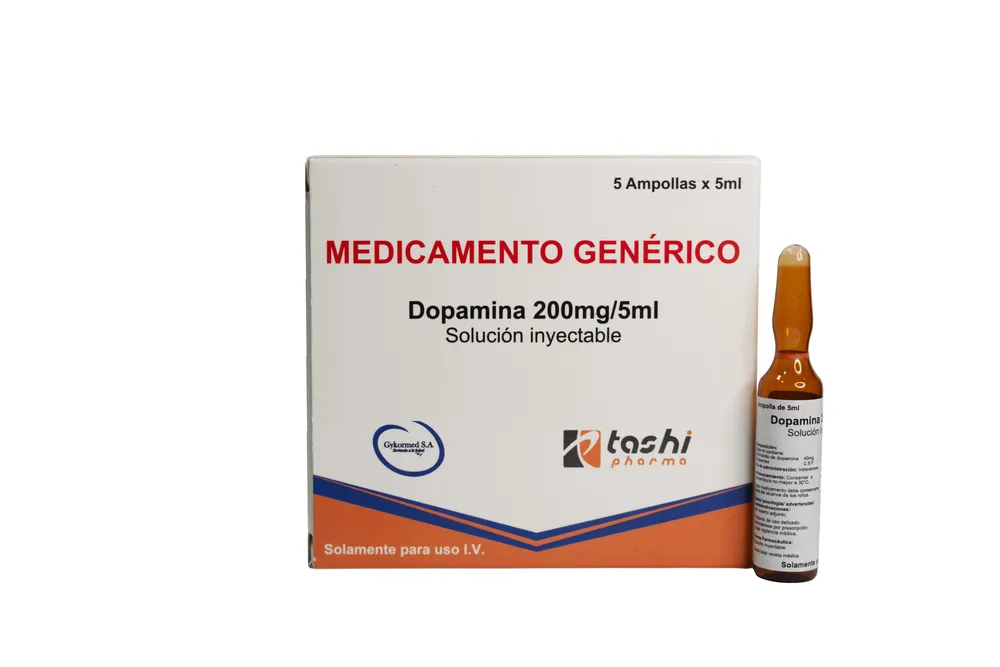
Table of Contents
- Package leaflet: Information for the user
- Introduction
- 1. What Dopamine Grifols 200 mg is and what it is used for
- 2. What you need to know before using Dopamina Grifols 200 mg
- 3. How to use Dopamina Grifols 200 mg
- 4. Possible adverse effects
- 5. Storage of Dopamina Grifols 200 mg
- 6. Contents of the pack and other information
- **Composition of Dopamine Grifols 200 mg**
Package leaflet: Information for the user
Introduction
Package leaflet: information for the user
Dopamina Grifols 200 mg injectable solution
Dopamine
Read all of this leaflet carefully before you start using this medicine, because it contains important information for you.
- Keep this leaflet; you may need to read it again.
- If you have any questions, ask your doctor or nurse.
- If you experience any side effects, talk to your doctor or nurse, even if they are side effects not listed in this leaflet.
Contents of the leaflet
-
What Dopamina Grifols 200 mg is and what it is used for
-
What you need to know before using Dopamina Grifols 200 mg
-
How to use Dopamina Grifols 200 mg
-
Possible side effects
-
Storage of Dopamina Grifols 200 mg
-
Contents of the pack and other information
1. What Dopamine Grifols 200 mg is and what it is used for
Dopamine Grifols 200 mg belongs to a group of medicines called adrenergic and dopaminergic agents. This medicine is a cardiac stimulant that acts by increasing the force of contraction of the heart muscle, resulting in an increase in cardiac output (volume of blood pumped by the heart per minute).
Dopamine is indicated for the correction of haemodynamic imbalances (blood flow disturbances) occurring in states of shock (acute reduction in blood flow) due to myocardial infarction, trauma, endotoxic septicaemia (severe blood infection), open-heart surgery, renal failure, and decompensated congestive heart failure.
2. What you need to know before using Dopamina Grifols 200 mg
Do not use Dopamina Grifols 200 mg:
-
if you are allergic to dopamine or any of the other ingredients of this medicine (listed in section 6)
-
if you have phaeochromocytoma (a tumour usually developing in the adrenal medulla)
- if you have tachyarrhythmias (fast or irregular heart rhythm), such as atrial fibrillation, ventricular tachycardia, or ventricular fibrillation.
Warnings and precautions
Talk to your doctor or nurse before starting to use Dopamina Grifols 200 mg.
-
Before starting treatment with this medicine, if appropriate, your blood volume should be restored with whole blood or a plasma expander.
-
Dopamine must always be diluted before administration.
-
The infusion rate must be carefully controlled to avoid accidental bolus administration.
-
Conditions such as hypoxia (reduced oxygen in the blood), hypercapnia (excessive increase in carbon dioxide in the blood), or acidosis (decrease in blood pH) should be corrected before or during administration of the medicine to prevent increased adverse effects or reduced efficacy.
-
The use of dopamine should be evaluated based on your clinical condition and should be administered with special caution if you have shock due to myocardial infarction, open-heart surgery, or acute heart failure, as well as if you have arrhythmias, ischaemic heart disease, or hypertension (high blood pressure).
-
If you have hyperthyroidism (increased activity of the thyroid gland), you may be at higher risk of cardiac effects or may be more sensitive to the medicine.
-
If you have or have had any disease causing arterial obstruction (occlusive vascular disease), such as atherosclerosis, arterial embolism, Raynaud's disease, frostbite, diabetic endarteritis, or Buerger's disease, you must inform your doctor of any changes in skin colour or temperature or if you experience pain in your limbs. Your doctor will need to assess the benefits of continuing treatment against the risk of possible necrosis. This condition may be reversed by reducing or stopping administration of the medicine.
-
Since this medicine must be diluted in an infusion solution before administration, fluid and/or dissolved substance overload may occur, leading to dilution of electrolyte concentrations in the blood, hyperhydration, congestion, or pulmonary oedema (fluid accumulation in the lungs). In addition, excessive administration of potassium-free intravenous solutions may cause hypokalaemia (low potassium levels in the blood). Clinical and laboratory tests should be performed to monitor fluid balance, electrolyte concentrations, and acid-base balance if intravenous treatment is prolonged or if your health condition requires it.
-
During administration of this medicine, certain physiological parameters such as heart rate, urine output, cardiac output, and blood pressure must be monitored.
If tachyarrhythmia or an increase in ectopic beats (a cardiac rhythm disorder) occurs, the dopamine dose should be reduced if possible.
If a drop in blood pressure is observed at low infusion rates, the infusion rate should be increased until adequate blood pressure is achieved. If your blood pressure does not rise, treatment should be discontinued and a more potent vasoconstrictor such as norepinephrine should be administered.
Discontinuation of administration should be performed by gradually reducing the dopamine dose while simultaneously increasing blood volume with intravenous fluids. Sudden interruption of treatment could cause a significant drop in blood pressure.
If a disproportionate increase in diastolic pressure (the lower value of blood pressure) is detected, the infusion rate should be reduced. Your doctor should monitor your condition and, in some cases, may need to administer a short-acting alpha-adrenergic blocking agent such as phentolamine.
-
Extravasation of the solution during administration may cause necrosis at the infusion site, so the site must be continuously monitored.
-
If you have received monoamine oxidase inhibitors (MAOIs) in the weeks prior to starting treatment with this medicine, reduced doses of dopamine should be administered.
Use of Dopamina Grifols 200 mg with other medicines
Inform your doctor if you are taking, have recently taken, or might need to take any other medicines.
It is important that you inform your doctor if you are taking any of the following medicines:
-
diuretics (such as furosemide): their concomitant use with a low dose of dopamine may increase diuretic effects.
-
tricyclic antidepressants: these may enhance the cardiovascular effects of dopamine.
-
vasoactive or vasoconstrictor medicines such as ergot alkaloids (e.g., ergometrine) or other oxytocic drugs (substances that cause uterine muscle contraction and help induce labour): their concomitant use with dopamine may cause a significant increase in blood pressure.
-
beta-adrenergic blockers (such as propranolol or metoprolol): these exert an opposite effect to dopamine at the cardiac level.
-
alpha-adrenergic blockers (such as tolazoline): concomitant administration of dopamine and tolazoline may lead to a severe drop in blood pressure, as they counteract the peripheral vasoconstriction caused by high doses of dopamine.
-
butyrophenones (such as haloperidol) and phenothiazines: these substances may suppress the mesenteric and renal vasodilation caused by low-dose dopamine administration.
-
phenytoin: concomitant use with dopamine may cause a decrease in blood pressure and heart rate (beats per minute).
-
monoamine oxidase inhibitors (MAOIs) (such as tranylcypromine and moclobemide): these medicines prolong and potentiate the action of dopamine; therefore, if you have taken them before dopamine administration, a substantially lower dose will be required. It is estimated that if you have taken these medicines within 2–3 weeks before dopamine administration, the initial dopamine dose should be no more than one-tenth of the normal dose.
-
guanethidine: dopamine reduces the effect of this medicine.
-
methyldopa and entacapone: these medicines increase the effect of dopamine.
Dopamine should be used with extreme caution in patients anaesthetized with cyclopropane or halogenated hydrocarbons, as their simultaneous administration may cause arrhythmias and increased blood pressure.
Concomitant administration of dopamine and the anaesthetic propofol has also been reported to reduce the concentration of the anaesthetic.
Pregnancy and breastfeeding
If you are pregnant or breastfeeding, think you may be pregnant, or plan to become pregnant, consult your doctor before using this medicine.
Adequate and well-controlled studies in pregnant women have not been conducted, and it is unknown whether dopamine crosses the placenta. Dopamina Grifols 200 mg should not be used during pregnancy except when clearly necessary, as determined by the physician.
If dopamine must be administered to a pregnant woman for advanced life support (ALS) during cardiopulmonary resuscitation, the physician should be aware that blood flow to the uterus may decrease. Additionally, if dopamine is used during labour together with oxytocic drugs, it should be noted that simultaneous use of both medicines may lead to a severe increase in blood pressure.
It is unknown whether dopamine is excreted in breast milk. The doctor will assess the potential risk to the infant and advise whether administration of dopamine during breastfeeding is appropriate.
Dopamina Grifols 200 mg contains sodium metabisulphite
This medicine may cause severe allergic reactions and bronchospasm (sudden sensation of breathlessness) because it contains sodium metabisulphite.
This medicine contains less than 23 mg (1 mmol) of sodium per 5 ml vial and is therefore considered essentially “sodium-free”.
3. How to use Dopamina Grifols 200 mg
Dopamina Grifols 200 mg must be diluted before administration.
Once diluted, dopamine is administered intravenously by infusion, preferably through a large-caliber vein, using an appropriate catheter or needle.
This medicine will be used in a hospital setting by the appropriate healthcare personnel.
Your doctor will determine the duration of your treatment.
Rate of administration:
Adults
Intravenous infusion of dopamine is usually initiated at a dose of 2 to 5 micrograms/kg/min, increasing by 1–4 micrograms/kg/min every 10–30 minutes until the desired therapeutic effects are achieved. Maintenance dosage ranges from 5 to 20 micrograms/kg/min, depending on the severity of the condition. When blood pressure, urine output, and overall circulatory status improve, continue the infusion at the dose that has proven effective.
The maximum recommended dose is 20 micrograms/kg/min. However, in severe situations, doses up to 50 micrograms/kg/min or even higher have been administered; in such cases, urinary excretion should be monitored frequently. The effects of dopamine depend on the dose administered.
Elderly
Dosage adjustment is not required in these patients. However, it is recommended to initiate treatment with low doses and closely monitor blood pressure, urinary flow, and peripheral perfusion.
Use in children
The safety and efficacy of this medicine have not been established; therefore, its use is not recommended in pediatric patients.
If you are given more Dopamina Grifols 200 mg than you should
Dopamine overdose causes excessive elevation of blood pressure and vasoconstriction (narrowing of a blood vessel) due to the alpha-adrenergic action of dopamine, especially in patients with a history of occlusive vascular disease. In such cases, reduce or temporarily discontinue the infusion rate until the patient's condition stabilizes.
If the patient's condition does not stabilize with these measures, the physician should consider administering a short-acting alpha-adrenergic blocking agent such as phentolamine.
In case of overdose or accidental ingestion, contact the Toxicology Information Service. Telephone: 915 620 420.
If you have any further questions about the use of this product, ask your doctor or nurse.
4. Possible adverse effects
Like all medicines, Dopamina Grifols 200 mg may cause adverse effects, although not everyone experiences them.
The most frequently observed adverse effects are: extrasystoles (cardiac rhythm disorder), nausea, vomiting, tachycardia, angina pectoris, palpitations, dyspnea (difficulty breathing), headache (intense headache), hypotension, and vasoconstriction.
At very high doses of dopamine, ventricular arrhythmias may also occur.
Administration of dopamine at high doses over prolonged periods or administration at low doses in patients with a history of occlusive vascular disease may lead to gangrene of the extremities.
If extravasation of the solution occurs at the injection site during administration, necrosis and eschar (scab) formation may develop in the surrounding tissue.
Other less frequent adverse effects include: cardiac conduction disorders, bradycardia (decreased heart rate), piloerection (erection of body hair), azotemia (presence of excessive nitrogenous compounds in the blood), hypertension, prolonged QRS complex on electrocardiogram, and anxiety. Dopamine has also caused some cases of peripheral cyanosis (bluish discoloration of the skin and mucous membranes of the extremities). It may also cause increased blood glucose levels, although these levels usually do not exceed normal values.
A case of choreoathetosis (involuntary, uncontrolled body movements) has been reported following dopamine administration.
Dopamine has been shown to inhibit the release of hormones such as prolactin, somatotropin, thyrotropin, and thyroid hormones. These changes may potentially affect immune function.
Due to the short duration of action of this medicine, most adverse effects resolve after discontinuation of treatment or reduction of the infusion rate.
Since this medicine contains sodium metabisulfite, severe allergic reactions and bronchospasm may occur.
If you experience any adverse effects, consult your doctor or nurse, even if they are adverse effects not listed in this leaflet.
5. Storage of Dopamina Grifols 200 mg
Keep in the original packaging to protect from light.
Keep this medicine out of the sight and reach of children.
Do not use this medicine after the expiry date stated on the container.
Do not use this medicine if the solution is not clear or contains precipitates.
Once the container is opened, the solution must be used immediately.
6. Contents of the pack and other information
Composition of Dopamine Grifols 200 mg
The active substance is dopamine hydrochloride. Each 5 ml vial of solution contains 200 mg of dopamine hydrochloride (40 mg/ml).
The other components (excipients) are: sodium metabisulfite (E-223) and water for injections.
Appearance of the medicinal product and contents of the container
Dopamine Grifols 200 mg is a clear, colourless or very pale yellow injectable solution supplied in 5 ml vials (pack of 6 vials).
Marketing Authorisation Holder and Manufacturer
LABORATORIOS GRIFOLS, S.A.
Can Guasch, 2
08150 Parets del Vallès, Barcelona (SPAIN)
Date of the most recent review of this summary: December 2012
Detailed and up-to-date information on this medicine is available on the website of the Spanish Agency of Medicines and Medical Devices (AEMPS) http://www.aemps.gob.es/
This information is intended for healthcare professionals only:
The effects of dopamine depend on the administered dose, although the actual patient response will largely depend on their clinical condition:
- At low doses (up to 2 micrograms/kg/min), it causes vasodilation at the renal, mesenteric, coronary, and intracerebral levels (probably due to a specific agonist action on dopaminergic receptors) and diuresis. Hypotension may sometimes occur.
- At moderate doses (2–10 micrograms/kg/min), it stimulates myocardial ß1-adrenergic receptors, increasing the force of cardiac muscle contraction and impulse conduction. Blood flow to peripheral vessels may decrease, while mesenteric flow increases due to increased cardiac output. Systolic pressure and pulse pressure usually rise.
- At higher doses (10–20 micrograms/kg/min), it produces α-adrenergic stimulation, increasing vasoconstrictive effects and blood pressure.
- At high doses (>20 micrograms/kg/min), α-adrenergic stimulation predominates, resulting in strong peripheral vasoconstriction, which may override the dopaminergic effects of the drug.
Dopamine Grifols 200 mg must be diluted before administration.
- Instructions for correct dilution of the medicinal product:
Use an aseptic technique.
Dilute the contents of one vial in 250 ml or 500 ml flasks of one of the following sterile intravenous solutions:
- 0.9% Sodium chloride solution (isotonic saline solution)
- 5% Glucose solution
- 5% Glucose and 0.9% Sodium chloride solution
- 5% Glucose and 0.45% Sodium chloride solution
- 5% Glucose and Ringer's lactate solution
- 1/6M Sodium lactate solution
- Ringer's lactate solution
These dilutions will yield the following final concentrations for administration:
- 250 ml dilution contains 800 micrograms/ml of dopamine.
- 500 ml dilution contains 400 micrograms/ml of dopamine.
If a higher concentration of dopamine is required, more than one vial may be diluted in the sterile intravenous solutions listed above.
Dopamine is stable at room temperature for at least 24 hours after dilution in any of the aforementioned sterile intravenous solutions. However, as with all intravenous mixtures, the solution should be prepared extemporaneously.
Do not dilute injectable dopamine with solutions containing sodium bicarbonate or any other alkaline solution, as dopamine is inactivated by alkalis.
Dopamine is degraded by oxygen; therefore, contact with oxidizing agents and iron salts should be avoided.
Solutions of dopamine that have developed a colour should not be administered, as discolouration indicates degradation of dopamine.
- Incompatibilities:
Dopamine is inactivated in alkaline solutions and is incompatible with alkaline substances such as sodium bicarbonate, furosemide, and sodium thiopental. It is also incompatible with oxidizing agents and iron salts.
In addition, incompatibility signs have been reported between dopamine and insulin, ampicillin, amphotericin B, gentamicin sulfate, sodium cefalotin, sodium oxacillin, sodium acyclovir, alteplase, potassium penicillin G, aldesleukin, cefepime hydrochloride, sodium indomethacin trihydrate, and certain parenteral nutrition mixtures.
In the absence of compatibility studies, this medicinal product must not be mixed with others.
Dopamine should be infused, whenever possible, into a large-calibre vein to minimize the risk of perivascular tissue infiltration adjacent to the infusion site, as extravasation may lead to necrosis and tissue eschar formation. Antecubital veins are preferable to the veins on the back of the hand or ankle. Less suitable infusion sites should only be used if the patient's condition requires immediate treatment or if large-calibre veins are unavailable, and infusion should be switched to a more appropriate site as soon as possible. Continuous monitoring of free circulation at the infusion site is essential.
In the event of extravasation, an α-adrenergic blocker such as phentolamine should be rapidly administered by infiltration into the affected area (e.g., 5–10 mg in 10–15 ml of saline solution).