Dolviran suppositories
Spain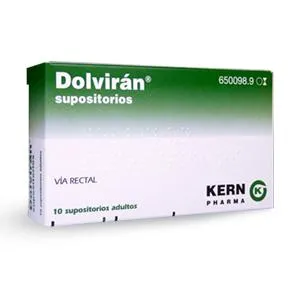
Table of Contents
Patient Information Leaflet
Introduction
Patient Information Leaflet
Dolvirán 400 mg/9.6 mg/50 mg suppositories
Acetylsalicylic acid / Codeine phosphate hemihydrate / Caffeine
Read the entire leaflet carefully before you start using the medicine, as it contains important information for you Follow exactly the instructions for taking the medicine provided in this leaflet or as advised by your doctor, pharmacist, or nurse.
|
Package leaflet contents:
- What Dolvirán is and what it is used for
- What you need to know before starting to use Dolvirán
- How to use Dolvirán
- Possible adverse effects
- Storage of Dolvirán
Pack contents and additional information
1. What Dolvirán is and what it is used for
Dolvirán is used in adults and adolescents over 16 years of age for the symptomatic relief of mild to moderate occasional pain, such as headaches, toothaches, menstrual pain, muscle pain (contractures), or back pain (lumbago).
This medicine contains codeine. Codeine belongs to a group of medicines called opioid analgesics, which work by relieving pain. It may be used alone or in combination with other analgesics such as paracetamol.
2. What you need to know before starting to take Dolvirán
Do not use Dolvirán
- If you are allergic to acetylsalicylic acid, codeine, or any of the other components of this medicine (listed in section 6).
- If you have active, chronic, or recurrent gastroduodenal ulcer.
- If you suffer from asthma.
- If you have or have had coagulation disorders, particularly hemophilia or hypoprothrombinemia.
- If you have severe renal or hepatic insufficiency.
- If you are being treated with oral anticoagulants.
- If you have nasal polyps associated with asthma that are induced or exacerbated by acetylsalicylic acid.
- Do not administer to children under 16 years of age with febrile conditions, influenza, or varicella, as the use of acetylsalicylic acid in these cases has been associated with the development of Reye's syndrome.
- For pain relief in children and adolescents (0–18 years of age) following tonsillectomy or adenoidectomy due to obstructive sleep apnea syndrome.
- If you have hypersensitivity to codeine or conditions in which respiratory center depression must be avoided.
- If you know you are an ultra-rapid metabolizer of codeine into morphine.
- Should not be taken over prolonged periods if you have chronic constipation.
- If you have chronic cardiorespiratory insufficiency or cardiac conditions.
- If you have biliary disorders, as codeine, like all morphine derivatives, may cause spasm of the sphincter of Oddi.
- If you are in the third trimester of pregnancy.
- If you are breastfeeding.
If you think you are affected by any of these conditions, consult your doctor before using this medicine.
Warnings and precautions
Consult your doctor if pain persists for more than 5 days, fever for more than 3 days, or if pain or fever worsen or new symptoms appear.
- Caution is recommended in debilitated or elderly patients, and in patients with intracranial lesions, hypothyroidism, adrenal insufficiency, or prostate hypertrophy.
- Administration of acetylsalicylic acid should be avoided in patients before or after dental extraction or surgical procedures. This medicine should be discontinued one week prior to surgical interventions.
- Do not administer systematically as a preventive measure for discomfort associated with vaccinations.
- Do not take sedatives during treatment with this medicine.
- As with all medicines containing codeine, dependence may develop after prolonged administration of high doses of Dolvirán, with withdrawal syndrome if treatment is stopped abruptly.
- Do not exceed the recommended dose (see section 3, “How to take Dolvirán”), as serious adverse effects may occur (see section 4, “Possible side effects”).
- If you have any heart condition, such as sinus tachycardia/extrasystoles, hepatic insufficiency, hyperthyroidism, or anxiety syndrome, you should take reduced doses of caffeine (no more than 100 mg, equivalent to two Dolvirán suppositories) or preferably under medical supervision.
Treatment with non-steroidal anti-inflammatory drugs (NSAIDs) is associated with gastrointestinal bleeding, ulceration, and perforation of the upper gastrointestinal tract. If melena, hematemesis, severe asthenia, or any other sign or symptom suggestive of gastrointestinal bleeding occurs, treatment must be discontinued immediately.
This medicine should be administered under close medical supervision in cases of hypersensitivity to other anti-inflammatory/antirheumatic drugs, glucose-6-phosphate dehydrogenase deficiency, urticaria, rhinitis, or arterial hypertension.
Codeine is metabolized into morphine in the liver by an enzyme. Morphine is the substance responsible for pain relief. Some individuals have a genetic variation in this enzyme, which may affect people differently. In some individuals, morphine is not produced or is produced in very low amounts, resulting in inadequate pain relief. In others, a high amount of morphine may be produced, increasing the risk of serious adverse reactions. If you experience any of the following adverse effects, stop using this medicine immediately and seek medical help: slow or shallow breathing, confusion, drowsiness, pinpoint pupils, nausea or vomiting, constipation, or loss of appetite.
Use in elderly patients/older individuals
Older individuals should not take this medicine without consulting their doctor, as they are more likely to experience adverse effects.
Other medicines and Dolvirán
Certain medicines may interact with Dolvirán. In such cases, it may be necessary to adjust the dose or discontinue treatment with one of the medicines. Therefore, they should not be used without consulting a doctor.
Concomitant use of this medicine with sedative medicines such as benzodiazepines or related drugs increases the risk of drowsiness, breathing difficulties (respiratory depression), coma, and may be fatal. Therefore, concomitant use should only be considered when no other treatment options are available.
However, if your doctor prescribes this medicine together with sedative medicines, the dose and duration of concomitant treatment must be limited by your doctor.
Inform your doctor about all sedative medicines you are taking and follow your doctor’s recommendations carefully regarding dosage. It may be helpful to inform friends or family members so they are aware of the aforementioned signs and symptoms. Contact your doctor if you experience such symptoms.
Acetylsalicylic acid interacts with ethanol, cimetidine, ranitidine, anticoagulants, non-steroidal anti-inflammatory drugs, corticosteroids, phenytoin, oral hypoglycemics or insulin, methotrexate, uricosuric agents, vancomycin, zidovudine, valproic acid, sulfonamides, digoxin, barbiturates, and lithium.
When administered concomitantly, metamizole (a substance used to reduce pain and fever) may reduce the effect of acetylsalicylic acid on platelet aggregation (blood cells clumping together to form a blood clot). Therefore, this combination should be used with caution in patients taking low-dose acetylsalicylic acid as a cardioprotective agent.
Caffeine may interfere with disulfiram, sedatives, antihistamines, sympathomimetics, adrenergic bronchodilators, mexiletine, benzodiazepines, oral contraceptives, cimetidine, theophylline, and gyrase inhibitors.
Codeine may interact with central nervous system depressants, alcohol, and morphine agonist-antagonists.
Inform your doctor or pharmacist if you are currently using, or have recently used, any other medicines, including those obtained without a prescription.
If you are undergoing any diagnostic tests (including blood or urine tests), inform your doctor that you are taking this medicine, as it may alter test results.
Use of Dolvirán with food, drinks, and alcohol
Do not consume alcoholic beverages during treatment.
Simultaneous use of this medicine with drinks containing caffeine may cause excessive stimulation of the nervous system, leading to nervousness, irritability, or insomnia.
Pregnancy, breastfeeding, and fertility
If you are pregnant or breastfeeding, think you may be pregnant, or plan to become pregnant, consult your doctor or pharmacist before using this medicine.
This medicine should not be used during the third trimester of pregnancy.
Additionally, it should not be taken during the rest of pregnancy unless your doctor considers it medically necessary.
Do not take this medicine while breastfeeding, as its components pass into breast milk and may affect the infant. Codeine and morphine are excreted in breast milk.
Use in children and adolescents
Do not administer to children under 16 years of age.
Use in children and adolescents after surgery
Codeine should not be used for pain relief in children and adolescents following tonsillectomy or adenoidectomy due to obstructive sleep apnea syndrome.
Use in children with respiratory problems
The use of codeine is not recommended in children with respiratory problems, as symptoms of morphine toxicity may be more severe in these children.
Driving and use of machines
Codeine may cause drowsiness, impairing the mental and/or physical abilities required to perform potentially dangerous activities such as driving or operating machinery. Avoid driving or operating machinery during treatment.
3. How to use Dolvirán
Follow exactly the administration instructions for this medicine given by your doctor or pharmacist. If in doubt, consult your doctor or pharmacist again.
After removing the suppository from its packaging, insert it deeply into the rectum. The entire suppository must be used. Do not divide the suppositories before administration.
Postpone bowel movement for as long as possible to allow the medicine to exert its effect.
Do not exceed the recommended dose. Always use the lowest effective dose.
This medicine should not be taken for more than 3 days. If pain does not improve after 3 days, consult your doctor again.
The recommended dose is:
Adults and adolescents over 16 years of age: 1 suppository 1 to 3 times daily. The maximum daily dose is 3 suppositories, with a minimum interval of 8 hours between each dose.
Patients with renal or hepatic impairment: your doctor will determine the appropriate dose.
Elderly patients: your doctor will determine the appropriate dose.
Use in children and adolescents under 16 years of age:
Do not administer to children and adolescents under 16 years of age:
- Do not administer to children under 16 years of age with fever-related conditions, influenza, or varicella (chickenpox), as the use of acetylsalicylic acid in these cases has been associated with the occurrence of Reye's syndrome.
- Children under 12 years of age should not take codeine due to the risk of serious respiratory problems.
If you use more Dolvirán than you should
This may lead to an overdose, and therefore the effects related to acetylsalicylic acid, codeine, and caffeine should be considered.
In case of overdose, symptoms characteristic of acetylsalicylic acid poisoning may occur, such as nausea, vomiting, tinnitus, hearing loss, sweating, vasodilation, hyperventilation, headache, blurred vision, and occasionally diarrhea as signs of overdose. Signs of acute intoxication include neurological disorders such as confusion, delirium, seizures, and coma.
Symptoms characteristic of codeine overdose may also occur (drowsiness, skin flushing, miosis, vomiting, pruritus, ataxia, headache, skin swelling, urinary and fecal retention, and respiratory depression that may lead to respiratory arrest), or symptoms due to caffeine overdose from excessive stimulation of the central nervous system (insomnia, restlessness, vomiting, seizures, and signs of excitation), and gastrointestinal irritation (nausea, vomiting, diarrhea, abdominal pain).
In case of overdose or accidental ingestion, contact your doctor or pharmacist immediately, go to a medical center immediately, or call the Toxicology Information Service at telephone: 91 562 04 20, indicating the medicine and the amount ingested.
If you forget to use Dolvirán
Do not use a double dose to make up for forgotten doses. If you have any further questions about the use of this product, ask your doctor or pharmacist.
4. Possible adverse effects
Like all medicines, this medicine can cause adverse effects, although not everyone experiences them.
Adverse reactions due to acetylsalicylic acid may include:
Common (may affect up to 1 in 10 people):
- Gastrointestinal disturbances such as heartburn, nausea, vomiting, abdominal pain, and diarrhoea.
- Increased tendency to bleed
- Minor blood loss from the gastrointestinal tract (micro-bleeding).
- Bleeding such as nosebleeds, bleeding gums, skin bleeding, or bleeding from the urinary tract and genital organs, possibly with prolonged bleeding time. This effect may last from 4 to 8 days after ingestion.
Uncommon (may affect up to 1 in 100 people):
- Bleeding from the stomach or intestines. After long-term use of acetylsalicylic acid, anaemia (iron-deficiency anaemia) may occur due to occult blood loss from the stomach or intestines.
- Intracranial bleeding, blood in the urine.
- Gastric or intestinal ulcers, which very rarely may lead to perforation.
- Gastrointestinal inflammation.
- Skin reactions such as urticaria.
- Runny nose.
Rare (may affect up to 1 in 1,000 people):
- Hypersensitivity reactions affecting the skin, respiratory tract, gastrointestinal system, and cardiovascular system, especially in asthmatics. The following disease characteristics may occur: drop in blood pressure, attacks of dyspnoea, inflammation of the nasal mucosa, nasal congestion, allergic shock, swelling of the face, tongue, and larynx (Quincke's oedema).
- Serious skin reactions such as rash known as erythema multiforme, and life-threatening forms including Stevens-Johnson syndrome and Lyell's syndrome.
- Severe bleeding, such as cerebral haemorrhage, especially in patients with uncontrolled high blood pressure and/or concomitant treatment with anticoagulants (blood-thinning medicines), which may endanger life in individual cases.
- Confusion
- Headache, dizziness
- Hearing impairment or ringing in the ears (tinnitus), especially in children and elderly people, which may be signs of overdose (see also “If you take more Dolvirán than you should”).
- Abnormally heavy or prolonged menstrual periods.
Very rare (may affect up to 1 in 10,000 people):
- Abnormal liver function tests.
- Renal dysfunction and acute renal failure.
- Decreased blood sugar (hypoglycaemia).
- Acetylsalicylic acid reduces the excretion of uric acid at low doses. This may trigger an attack of gout in at-risk patients.
- Febrile rashes with mucous membrane involvement (erythema multiforme).
Frequency not known (frequency cannot be estimated from available data):
- Accelerated breakdown or destruction of red blood cells and a certain form of anaemia in patients with severe glucose-6-phosphate dehydrogenase deficiency.
- Dizziness.
Treatment must be stopped immediately if the patient experiences any hearing loss, tinnitus, or dizziness. In patients with a history of hypersensitivity to acetylsalicylic acid and other non-steroidal anti-inflammatory drugs, anaphylactic or anaphylactoid reactions may occur. This may also happen in patients who have not previously shown hypersensitivity to these drugs.
Adverse effects due to codeine may include:
Rare (may affect up to 1 in 1,000 people):
- Gastrointestinal disorders (constipation, nausea)
- General disorders (malaise, somnolence)
Very rare (may affect up to 1 in 10,000 people):
- Blood and lymphatic system disorders (thrombocytopenia, agranulocytosis, leucopenia, neutropenia, haemolytic anaemia)
- Metabolic disorders (hypoglycaemia)
- Gastrointestinal disorders (jaundice)
- General disorders (hypersensitivity reactions ranging from simple skin rash or urticaria to anaphylactic shock, fever)
The following adverse effects have been observed with caffeine, although their frequency cannot be precisely determined:
- Nervousness
- Restlessness
- Stomach or intestinal irritation
- Tachycardia
Reporting of adverse effects
If you experience any adverse effect, talk to your doctor, pharmacist, or nurse, even if it is a possible adverse effect not listed in this leaflet. You can also report them directly via the Spanish Pharmacovigilance System for Human Medicines: https://www.notificaram.es By reporting adverse effects, you can help provide more information on the safety of this medicine.
5. Storage of Dolvirán
Keep this medicine out of sight and reach of children.
Do not store above 25°C. Store in the original packaging.
Do not use this medicine after the expiry date stated on the container and blister pack after EXP. The expiry date refers to the last day of the month indicated.
Keep in the original packaging, tightly closed.
Medicines must not be disposed of via wastewater or household waste. Dispose of unused medicines and their containers at the SIGRE collection point at your pharmacy. If you are in doubt, ask your pharmacist how to properly dispose of unused medicines and their packaging. This will help protect the environment.
6. Contents of the pack and other information
Composition of Dolvirán
The active substances are acetylsalicylic acid, codeine phosphate hemihydrate and caffeine.
Each suppository contains 400 mg of acetylsalicylic acid, codeine phosphate hemihydrate (equivalent to 7.34 mg of codeine) and 50 mg of caffeine.
The other components are: solid semisynthetic glycerides.
Appearance of Dolvirán and contents of the pack
Yellowish-white suppositories. Packaged in PVC/PE foil blisters containing 10 suppositories.
Marketing Authorization Holder and Manufacturer
Kern Pharma, S.L.
Venus, 72 - Pol. Ind. Colón II
08228 Terrassa - Barcelona
Spain
Date of the most recent revision of this leaflet: July 2021
Detailed and up-to-date information on this medicinal product is available on the website of the Spanish Agency for Medicines and Health Products (AEMPS) http://www.aemps.gob.es/