Dolquine 200 mg film-coated tablets
Spain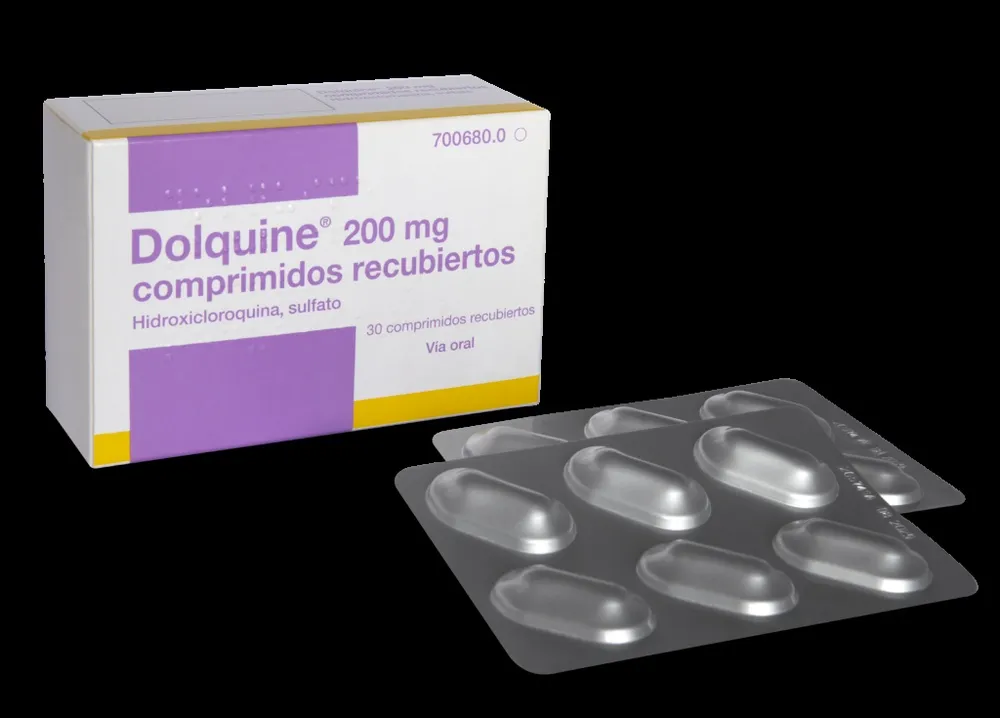
Table of Contents
Patient Information Leaflet
Introduction
Patient Information Leaflet
Dolquine 200 mg film-coated tablets
hydroxychloroquine sulfate
Read the entire leaflet carefully before you start taking this medicine, as it contains important information for you.
- Keep this leaflet, as you may need to read it again.
- If you have any questions, ask your doctor or pharmacist.
- This medicine has been prescribed for you only, and you should not give it to other people, even if they have the same symptoms as you, because it may harm them.
- If you experience any adverse effects, consult your doctor or pharmacist, even if they are adverse effects not listed in this leaflet. See section 4.
Leaflet contents:
- What Dolquine is and what it is used for
- What you need to know before taking Dolquine
- How to take Dolquine
- Possible side effects
- How to store Dolquine
- Contents of the pack and other information
1. What Dolquine is and what it is used for
Dolquine belongs to a group of medicines known as antimalarials.
Dolquine is indicated for:
Adults
- Treatment of acute or chronic rheumatoid arthritis.
- Treatment of systemic and chronic discoid lupus erythematosus.
- Prevention and treatment of uncomplicated malaria caused by susceptible Plasmodium species (the parasites that cause malaria), when first-line treatments are not suitable or not available.
Adolescents (aged 12 years and older) and children (aged 9 to 11 years weighing more than 31 kg)
- Prevention and treatment of uncomplicated malaria caused by susceptible Plasmodium species (the parasites that cause malaria), when first-line treatments are not suitable or not available.
2. What you need to know before taking Dolquine
Do not take Dolquine
-
if you are allergic to hydroxychloroquine or to any of the other ingredients of this medicine (listed in section 6).
-
if you have any retinal disorders.
-
for long-term treatment in children.
-
if malaria is caused by chloroquine-resistant parasites, Dolquine cannot be used for prevention or treatment.
-
if you are taking any of the following medicines:
-
Artemether/lumefantrine and mefloquine (used to treat malaria).
-
Natalizumab (used to treat multiple sclerosis).
-
Live attenuated viral vaccines.
-
Pimecrolimus and Tacrolimus (used to treat skin inflammation (eczema)).
-
Moxifloxacin (an antibiotic).
-
Agalsidase alfa and beta (used to treat a hereditary disorder called Fabry disease).
If you are unsure, talk to your doctor or pharmacist before taking this medicine.
Some people treated with Dolquine may experience mental health problems such as irrational thoughts, anxiety, hallucinations, confusion, or depression, including thoughts of self-harm or suicide, even if they have never had similar problems before. If you or people around you notice any of these adverse effects (see section 4), consult a doctor immediately.
Warnings and precautions
Talk to your doctor or pharmacist before starting to take Dolquine
-
if you have:
-
skin disorders such as psoriasis,
-
severe kidney disease,
-
deficiency of an enzyme called glucose-6-phosphate dehydrogenase (G6PD deficiency, leading to hemolytic anemia),
-
any liver disease,
-
myasthenia gravis (an autoimmune disease causing muscle weakness and fatigue),
-
alcoholism.
-
if the malaria is caused by Plasmodium vivax or Plasmodium ovale, primaquine must also be administered to prevent relapses,
-
if you are being treated with Dolquine and have porphyria (a hereditary metabolic disorder), your condition may worsen,
-
if you have neurological disorders (e.g. epilepsy),
-
if you are elderly, you should take special care to distinguish visual disturbances caused by the disease or aging from those caused by the medicine,
-
if you have visual disturbances. Before starting long-term treatment with Dolquine, your doctor will perform an eye examination and will then carry out periodic checks. Inform your doctor as soon as you notice any visual changes.
-
if you have an inactive chronic hepatitis B virus infection.
Avoid exposure to sunlight (even when cloudy) and ultraviolet (UVA) lamps while using this medicine.
If you take Dolquine for a long period, your doctor will likely perform regular check-ups. You must report any new or unusual symptoms or circumstances during each visit to your doctor.
Hydroxychloroquine may cause a decrease in blood glucose levels. Please consult your doctor about the signs and symptoms of low blood sugar. It may be necessary to monitor your blood glucose levels.
Severe skin rashes have been reported with the use of hydroxychloroquine (see section 4, possible adverse effects). These rashes often involve ulcers in the mouth, throat, nose, genitals, and conjunctivitis (red, inflamed eyes). These serious skin rashes are often preceded by flu-like symptoms such as fever, headache, and body aches. The rash may progress to widespread blisters and skin peeling. If you experience these skin symptoms, stop taking hydroxychloroquine and contact your doctor immediately.
Other medicines and Dolquine
Inform your doctor or pharmacist if you are currently using, have recently used, or might need to use any other medicines.
Please note that these instructions may also apply to medicines used previously or that may be used in the future.
Dolquine may affect how some medicines work, and some medicines may affect Dolquine.
Inform your doctor or pharmacist if you are taking any of the following medicines, as dose adjustments may be necessary:
- Kaolin and antacids.
- Medicines for diabetes such as insulin.
- Antihelminthics (used to eliminate intestinal worms).
- Antipsychotics: phenothiazines (used to treat mental disorders).
- Medicines used for heart conditions (digoxin and certain beta-blockers).
Some medicines may increase the number of side effects caused by Dolquine or reduce its effectiveness. These include:
- Dapsone (used to treat leprosy and certain skin diseases).
- Vaccines (inactivated).
- Echinacea (a traditional herbal remedy used as supportive treatment for the common cold).
- Trastuzumab (used to treat certain types of cancer).
Inform your doctor or pharmacist if you are taking any of the following medicines:
- Aminoglycoside antibiotics.
- Cimetidine (reduces stomach acid production).
- Neostigmine and pyridostigmine (for severe muscle weakness).
- Tacrolimus (in organ transplantation).
- Phenylbutazone (a non-steroidal anti-inflammatory drug).
- Hepatotoxic drugs.
- Medicines that may cause skin irritation, or that may damage the liver or eyes.
- Bupropion (used to treat depression).
- Leflunomide (a disease-modifying antirheumatic drug).
Taking Dolquine with food and drink
It is recommended to take Dolquine with food or milk.
Pregnancy and breastfeeding
If you are pregnant or breastfeeding, think you may be pregnant, or plan to become pregnant, consult your doctor or pharmacist before using this medicine.
Pregnancy
Dolquine may be associated with a small increased risk of major birth defects and should not be used during pregnancy unless your doctor considers that the benefits outweigh the risks.
Breastfeeding
Dolquine passes into breast milk. Dolquine should not be used during breastfeeding unless your doctor considers that the benefits outweigh the risks.
Consult your doctor or pharmacist before taking any medicine if you are pregnant or breastfeeding. Your doctor will advise you whether Dolquine is suitable for you.
Driving and using machines
Do not drive or operate tools or machinery until you know how this medicine affects you. Adverse effects such as dizziness and visual disturbances may occur.
3. How to take Dolquine
Follow exactly the instructions for using this medicine given by your doctor. If in doubt, consult your doctor or pharmacist again.
Dolquine is administered orally. Swallow the tablets whole during meals or with a glass of milk. The score line is intended solely for dividing the tablet if you find it difficult to swallow it whole.
The recommended doses are indicated below:
Adults
-
Treatment of rheumatoid arthritis
-
Initial dose: 2 to 3 tablets (400 to 600 mg) daily according to the patient's response to the medicine. If adverse effects occur, the initial dose should be reduced and then gradually increased after 5–10 days.
-
Maintenance dose: once an adequate response has been achieved (usually within 4–12 weeks), continue with a maintenance dose of 1 or 2 tablets (200–400 mg) daily.
The maximum daily dose for long-term treatment is 6.5 mg/kg of ideal body weight.
-
Treatment of lupus erythematosus
-
Initial dose: 2 tablets (400 mg) daily or 1 tablet (200 mg) every 12 hours, depending on the patient's response.
-
Maintenance dose: 1 or 2 tablets (200 to 400 mg) daily.
The maximum daily dose for long-term treatment is 6.5 mg/kg of ideal body weight.
- Prevention and treatment of uncomplicated malaria
Expert advice must be obtained. Before starting treatment, the Plasmodium species must be identified through reliable tests and its sensitivity known.
Prevention of uncomplicated malaria: 2 tablets (400 mg) once weekly, taken on exactly the same day each week.
Prevention should begin two weeks before exposure and continue for four weeks after leaving the endemic area. If prevention was not started before exposure, a double initial dose (4 tablets) may be administered in two doses separated by 6 hours, then continue as indicated above for up to 8 weeks after leaving the endemic area.
Treatment of acute uncomplicated malaria attack:
First dose: 4 tablets (800 mg).
Second dose: 2 tablets (400 mg), 6 hours after the first dose.
Third dose: 2 tablets (400 mg), 24 hours after the first dose.
Fourth dose: 2 tablets (400 mg), 48 hours after the first dose.
The maximum total dose is 10 tablets (2000 mg).
Adolescents (12 years of age and older) and children (9 to 11 years of age with body weight above 31 kg)
- Prevention and treatment of uncomplicated malaria
Prevention of uncomplicated malaria: 6.5 mg/kg of ideal body weight once weekly, without exceeding the recommended adult dose.
Prevention should begin two weeks before exposure and continue for four weeks after leaving the endemic area. If prevention was not started before exposure, a double initial dose may be administered in two doses separated by 6 hours, then continue as indicated above for up to 8 weeks after leaving the endemic area.
Treatment of acute uncomplicated malaria attack:
First dose: 13 mg/kg, not exceeding 4 tablets (800 mg).
Second dose: 6.5 mg/kg, not exceeding 2 tablets (400 mg), 6 hours after the first dose.
Third dose: 6.5 mg/kg, not exceeding 2 tablets (400 mg), 24 hours after the first dose.
Fourth dose: 6.5 mg/kg, not exceeding 2 tablets (400 mg), 48 hours after the first dose.
The maximum total dose for the complete treatment course must not exceed 30 mg/kg of ideal body weight, without exceeding the recommended adult dose.
Use in patients with liver or kidney problems:
Your doctor will decide whether a dose adjustment is necessary if you have liver or kidney problems.
If you take more Dolquine than you should
If you take more Dolquine than prescribed by your doctor, you may experience headache, drowsiness, visual disturbances, circulatory collapse, seizures, and cardiorespiratory arrest.
In case of overdose or accidental ingestion, contact your doctor or pharmacist immediately or call the Toxicology Information Service at telephone: 91 562 04 20, indicating the medicine and the amount ingested.
If you forget to take Dolquine
If you forget to take a dose, take it as soon as you remember. However, if it is almost time for your next dose, skip the missed dose.
Do not take a double dose to make up for missed doses.
If you stop taking Dolquine
Consult your doctor before stopping treatment.
If you have missed several doses, consult your doctor for advice on the dosing schedule to follow until your maintenance dose is reached.
If you have any further questions about the use of this medicine, ask your doctor or pharmacist.
4. Possible adverse effects
Like all medicines, this medicine can cause adverse effects, although not everyone will experience them.
Adverse effects may occur with certain frequencies, defined as follows:
Frequent (may affect between 1 and 10 out of every 100 patients)
- Headache.
- Problems in the cornea (a part of the eye) that may cause blurred vision, seeing halos, light sensitivity, and loss of visual acuity.
- Nausea, diarrhea, abdominal pain, loss of appetite, and vomiting.
- Weight loss.
Uncommon (may affect between 1 and 10 out of every 1,000 patients)
- Emotional changes, feeling nervous, seeing, feeling, or hearing things that are not real—symptoms of psychosis.
- Seizures, uncontrolled eye movements.
- Deafness, ringing in the ears (tinnitus), and sensation of spinning (vertigo).
- Skin rashes of various types.
- Changes in the color of the skin and mucous membranes.
- Itching.
- Changes in hair color (premature graying).
- Hair loss (alopecia).
- Skin rash upon exposure to sunlight.
- Muscle disease.
Rare (may affect between 1 and 10 out of every 10,000 patients)
- Bone marrow failure (tissue inside the bone that produces blood cells).
- Retinal diseases (a part of the eye) that may lead to vision loss.
- Heart muscle disease.
- Muscle weakness.
Very rare (may affect fewer than 1 out of every 10,000 patients)
- Abnormal liver function and liver failure.
- Psoriasis (a skin disease).
Frequency not known (cannot be estimated from available data)
- Decreased number of blood cells (anemia, leucopenia, thrombocytopenia), destruction of red blood cells (in individuals with Glucose-6-phosphate dehydrogenase deficiency), and agranulocytosis (lack of white blood cells).
- Nightmares.
- Inability to coordinate movements.
- Paralysis of the extraocular muscle.
- Sudden sensation of difficulty breathing (bronchospasm) and respiratory failure.
- Urticaria (hives).
- Worsening or precipitation of porphyria (an inherited metabolic disorder).
- Irritability and fatigue.
- Loss of foveal reflex (retinal impairment, a part of the eye).
- Decreased blood glucose levels.
- Depression or thoughts of self-harm or suicide.
- Hallucinations.
- Nervousness or anxiety.
- Confusion.
- Agitation.
- Difficulty sleeping.
- Euphoria or overexcitement.
Stop taking Dolquine and seek medical attention immediately if you experience any of the following serious adverse effects; you may require urgent medical treatment:
-
Liver problems. Symptoms may include general malaise, with or without jaundice (yellowing of the skin and eyes), dark urine, nausea, vomiting, and/or abdominal pain. Rare cases of liver failure (including fatal cases) have been observed.
-
Severe skin reactions (see section 2, Warnings and precautions), such as:
-
Rash with fever, flu-like symptoms, and swollen lymph nodes. This could be a condition called drug reaction with eosinophilia and systemic symptoms (DRESS).
-
Blisters, widespread scaly skin, pus-filled spots accompanied by fever. This could be a condition called acute generalized exanthematous pustulosis (AGEP).
-
Blisters or peeling of the skin around the lips, eyes, mouth, nose, and genitals, flu-like symptoms, and fever. This could be a condition called Stevens-Johnson syndrome (SJS).
-
Multiple skin lesions, itchy skin, joint pain, fever, and general malaise. This could be a condition called toxic epidermal necrolysis (TEN).
-
Skin reaction, including painful, raised, plum-colored ulcers, especially on the arms, hands, fingers, face, and neck, which may also be accompanied by fever. This could be a condition called Sweet's syndrome.
If you consider any of the adverse effects you experience to be severe, or if you notice any adverse effects not listed in this leaflet, inform your doctor or pharmacist.
Reporting of adverse effects
If you experience any type of adverse effect, consult your doctor, even if it is a possible adverse effect not listed in this leaflet. You may also report them directly via the Spanish Pharmacovigilance System for Human Medicines: www.notificaRAM.es. By reporting adverse effects, you can help provide more information on the safety of this medicine.
5. Storage of Dolquine
Keep this medicine out of sight and reach of children.
Do not use this medicine after the expiry date stated on the packaging, after EXP. The expiry date refers to the last day of the month indicated.
Do not store above 30 ºC.
Medicines must not be disposed of via wastewater or household waste. Return unused medicines and their packaging to the SIGRE collection point at your pharmacy. If you are in doubt, ask your pharmacist how to properly dispose of unused medicines and their packaging. This will help protect the environment.
6. Contents of the pack and other information
Composition of Dolquine
-
The active substance is hydroxychloroquine sulfate. Each coated tablet contains 200 mg of hydroxychloroquine sulfate (equivalent to 155 mg of hydroxychloroquine base).
-
The other components are:
- Core:
-
microcrystalline cellulose (E 460i),
-
calcium hydrogen phosphate dihydrate,
-
crospovidone,
-
magnesium stearate (E 470b).
- Coating: Opadry Y-1-7000 White, the components of which are: hypromellose (E 464), polyethylene glycol (macrogol), and titanium dioxide (E 171).
Appearance of the medicine and contents of the pack
White, oblong, film-coated tablets, scored.
Available in packs containing 30 and 60 tablets.
Some pack sizes may not be marketed.
Marketing Authorization Holder and Manufacturer
Marketing Authorization Holder
PRODUCTS AND TECHNOLOGY, S.L
C/ Industria, 29
Polígono Industrial Comte de Sert
08755 Castellbisbal
Barcelona, Spain
Local representative
LABORATORIOS RUBIÓ, S.A.
C/ Industria, 29
Polígono Industrial Comte de Sert
08755 Castellbisbal
Barcelona, Spain
Manufacturer
LABORATORIOS RUBIÓ, S.A.
C/ Industria, 29
Polígono Industrial Comte de Sert
08755 Castellbisbal
Barcelona, Spain
Date of the most recent revision of this Summary of Product Characteristics:
October 2023
Detailed and up-to-date information on this medicine is available on the website of the Spanish Agency of Medicines and Medical Devices (AEMPS) http://aemps.gob.es/