Dolalgial clonixin lysinate 125 mg film-coated tablets
Spain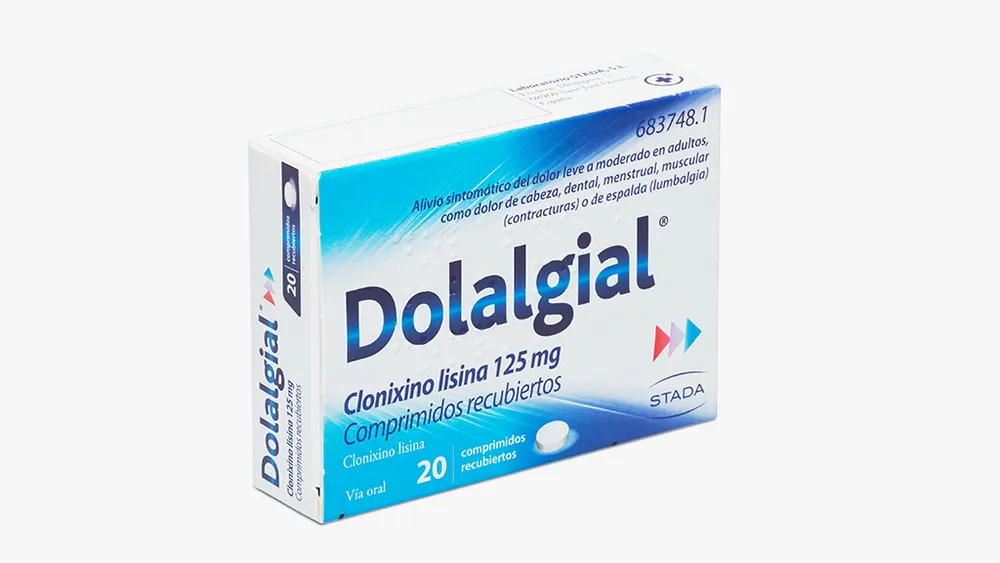
Table of Contents
Package leaflet: Information for the user
Introduction
PACKAGE LEAFLET: INFORMATION FOR THE USER
Dolalgial clonixinol lysine 125mg coated tablets
Clonixinol lysine
Read the entire leaflet carefully before you start taking this medicine, as it contains important information for you.
|
Package leaflet:
- What Dolalgial is and what it is used for
- What you need to know before taking Dolalgial
- How to take Dolalgial
- Possible side effects
- Storage of Dolalgial
- Contents of the pack and other information
1. What Dolalgial is and what it is used for
Dolalgial is an analgesic medicine that belongs to a group of medicines called non-steroidal anti-inflammatory drugs. It is an effective medicine for reducing pain.
Dolalgial is indicated for the symptomatic relief of mild to moderate pain in adults, such as headache, dental pain, menstrual pain, muscle pain (muscle spasms), or back pain (lumbago).
2. What you need to know before starting to take Dolalgial
Do not take Dolalgial
- if you are allergic (hypersensitive) to clonixinol lysine or to any of the other components of Dolalgial.
- if you have active stomach ulcer.
- if you have blood cell formation disorders.
- if you have severe renal insufficiency.
- if you are prone to gastrointestinal bleeding.
- if you are pregnant or breastfeeding (see the section on pregnancy and breastfeeding).
Warnings and precautions
Consult your doctor or pharmacist before taking Dolalgial if:
- you have a history of gastrointestinal disorders, stomach ulcers, or inflammatory bowel disease, especially if using clonixinol lysine at high doses (4 tablets daily).
- you have mild to moderate kidney function impairment.
- you have any heart disorder.
- you have a history of hypersensitivity (allergy) to anti-inflammatory drugs, asthma attacks, or acute skin rashes or rhinitis.
- you are taking non-steroidal anti-inflammatory drugs at very high doses.
- you have liver function impairment.
- clonixinol lysine may cause difficulty in becoming pregnant. Inform your doctor if you are planning pregnancy or have trouble conceiving.
Consult your doctor, even if any of the above conditions occurred in the past.
Children and adolescents
Do not use in individuals under 18 years of age without consulting a doctor.
Use of Dolalgial with other medicines
Inform your doctor or pharmacist if you are using or have recently used any other medicines, including those obtained without a prescription.
Certain medicines may interact with Dolalgial. In such cases, it may be necessary to adjust the dose or discontinue treatment with one of the medicines. Therefore, they should not be used without consulting a doctor.
This is especially important in the case of:
- Lithium salts (used in the treatment of depression).
- Antihypertensives (medicines used to treat high blood pressure).
- Diuretics (medicines that increase urine secretion).
- Non-steroidal anti-inflammatory drugs.
- Glucocorticoids (medicines used to treat inflammation).
- Ticlopidine, heparin, and thrombolytics (medicines that prevent blood clot formation).
- Methotrexate (used for the treatment of cancer and rheumatoid arthritis).
Use of Dolalgial with food, beverages, and alcohol
Do not take with alcohol, as it increases the risk of developing ulcers.
It is preferable to take it with food.
Pregnancy and breastfeeding
Consult your doctor or pharmacist before using any medicine.
Pregnancy:
Dolalgial should not be taken during the first and second trimesters of pregnancy.
This medicine is contraindicated during the third trimester.
IMPORTANT FOR WOMEN:
If you are pregnant or think you might be pregnant, consult your doctor before taking this medicine. Taking medicines during pregnancy may be dangerous for the embryo or fetus and must be monitored by your doctor.
Breastfeeding:
Administration of this medicine is not recommended for women who are breastfeeding, as clonixinol lysine passes into breast milk.
Driving and use of machines
During treatment, avoid situations requiring special alertness, such as driving vehicles or operating dangerous machinery, as clonixinol lysine may reduce reaction capacity. Therefore, avoid tasks requiring special attention until you know how you tolerate the medicine.
3. How to take Dolalgial
Follow exactly the administration instructions for Dolalgial provided by your doctor. Consult your doctor or pharmacist if you have any doubts.
Dolalgial is administered orally. The tablets must be swallowed whole, without splitting or chewing, with one glass of liquid, preferably water. Administration should be taken together with meals to reduce possible stomach discomfort.
Adults (over 18 years of age):
The usual dose is 1 or 2 tablets up to 3 times a day, depending on the intensity of pain, with a maximum of 6 tablets per day (750 mg of clonixin lysine per day).
Use in children and adolescents:
Do not use in individuals under 18 years of age without first consulting a doctor.
Patients over 65 years of age:
Treatment should be used with caution, following the doctor's instructions.
Patients with kidney disease:
Treatment should be used with caution, following the doctor's instructions.
Patients with liver disease:
Treatment should be used with caution, following the doctor's instructions.
This medicine should only be administered when painful symptoms occur. As symptoms subside, the medication should be discontinued.
The duration of treatment depends on the type and intensity of pain, and on the progression of the condition. If pain persists for more than 10 days or if new symptoms appear, treatment must be stopped and a doctor should be consulted.
If you take more Dolalgial than you should:
If the recommended doses are exceeded, side effects such as headache, dizziness, tremor, as well as abdominal pain, nausea, and vomiting may occur.
In case of overdose or accidental ingestion, contact your doctor or pharmacist immediately, or call the Toxicology Information Service at telephone number: 91 562 04 20, indicating the medication and the amount ingested.
In cases of massive ingestion, gastric lavage and symptomatic treatment will be required.
If you forget to take Dolalgial:
Do not take a double dose to make up for missed doses.
If you have any further questions about the use of this medicine, ask your doctor or pharmacist.
4. Possible adverse effects
Like all medicines, this medicine may cause adverse effects, although not everyone will experience them.
Common (may affect up to 1 in 10 people):
- malaise
- stomach pain
- nausea
- vomiting
- diarrhoea
- minor intestinal bleeding.
Rare (may affect up to 1 in 1,000 people):
- inflammation of the stomach
- vomiting blood.
Very rare (may affect up to 1 in 10,000 people):
- dizziness
- hypersensitivity reactions (allergy) with skin rash and itching sensation
- eczema with spots
- skin disorders
- blood disorders such as: agranulocytosis (reduction in white blood cells), anaemia or thrombocytopenia (reduction in platelet count)
- bronchospasm (sudden sensation of suffocation)
- breathing difficulties
- insomnia
- suffocation
- tremor
- pharyngitis
- fever
- fatigue
- loss of appetite
If you consider any of the adverse effects you experience to be severe, or if you notice any adverse effect not listed in this leaflet, inform your doctor or pharmacist.
Reporting of adverse effects:
If you experience any type of adverse effect, consult your doctor, pharmacist, or nurse, even if it is a possible adverse effect not listed in this leaflet. You may also report them directly via the Spanish System of Pharmacovigilance of Human Medicinal Products: www.notificaRAM.es
By reporting adverse effects, you can help provide more information on the safety of this medicine.
5. Storage of Dolalgial
Keep out of the sight and reach of children.
Store in the original container to protect from moisture and do not store at temperatures above 30°C.
Do not use Dolalgial after the expiry date stated on the packaging after EXP. The expiry date refers to the last day of the month indicated.
Medicines must not be disposed of via wastewater or household waste. Dispose of unused medicines and their containers at the SIGRE collection point at your pharmacy. If in doubt, ask your pharmacist how to properly dispose of unused medicines and their packaging. This way, you will help protect the environment.
6. Contents of the pack and other information
Composition of Dolalgial
The active substance is clonixin lysine. Each tablet contains 125 mg of clonixin lysine.
The other components are: pregelatinized corn starch, microcrystalline cellulose, magnesium stearate, colloidal silica, Sepifilm 820 white (hypromellose, glyceryl triacetate, titanium dioxide (E-171), and talc).
Appearance of the product and contents of the pack
Dolalgial are film-coated tablets, white in color, round-shaped, with the letter "D" engraved on one side.
They are supplied in packs of 20 film-coated tablets in blisters.
Marketing Authorization Holder and Manufacturer:
Marketing Authorization Holder:
Laboratorio STADA, S.L.
Frederic Mompou, 5
08960 Sant Just Desvern
Spain
Manufacturer:
sanofi-aventis, S.A.
Ctra. La Batlloria a Hostalrich, km. 63.09
17404 - Riells i Viabrea (Girona)
Spain
Date of the most recent revision of this leaflet: December 2021
Detailed and up-to-date information on this medicinal product is available on the website of the Spanish Agency of Medicines and Medical Devices (AEMPS) http://www.aemps.gob.es/