Dobutamine Hikma 12.5 mg/ml concentrate for solution for infusion EFG
Spain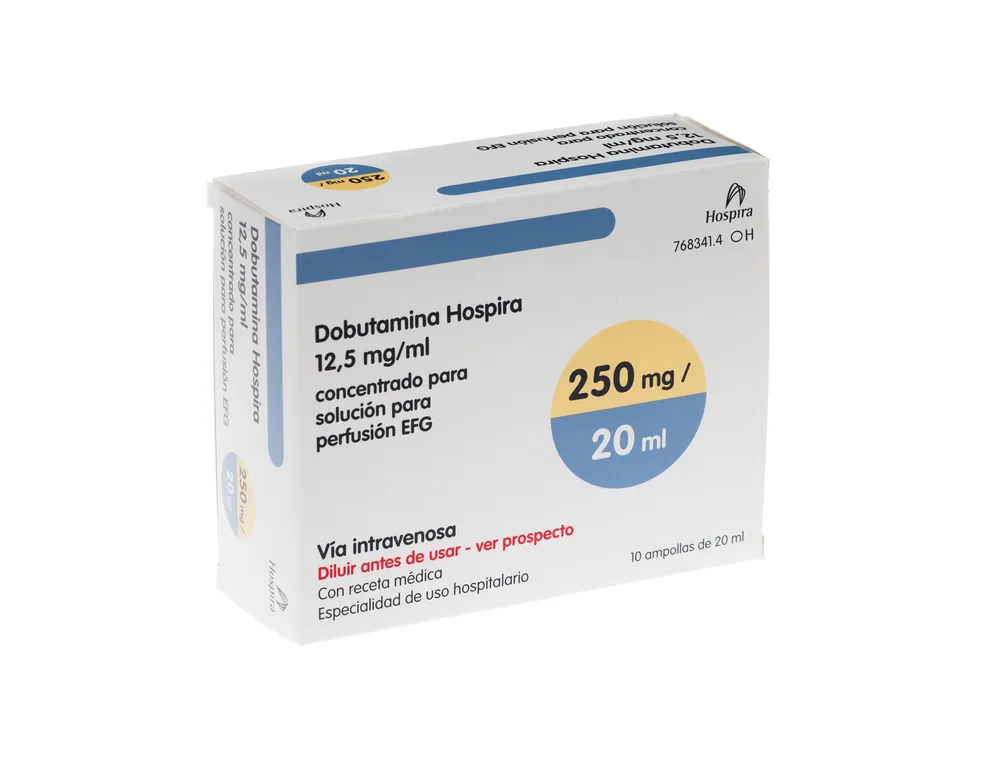
Table of Contents
- Patient Information Leaflet
- Introduction
- 1. What Dobutamine Hikma is and what it is used for
- 2. What you need to know before using Dobutamine Hikma
- **Do not use Dobutamina Hikma:**
- 3. How to use Dobutamine Hikma
- 4. Possible adverse effects
- 5. Storage of Dobutamine Hikma
- 6. Contents of the pack and other information
- **The following information is intended for healthcare professionals only:**
Patient Information Leaflet
Introduction
Package Leaflet: Information for the Patient
Dobutamine Hikma 12.5 mg/ml concentrate for solution for infusion EFG
Read all of this leaflet carefully before you start using this medicine, because it contains important information for you.
- Keep this leaflet, as you may need to read it again.
- If you have any questions, ask your doctor, pharmacist, or nurse.
- This medicine has been prescribed for you only and must not be given to other people, even if they have the same symptoms as you. It could harm them.
- If you experience any side effects, talk to your doctor, pharmacist, or nurse, even if they are side effects not listed in this leaflet. See section 4.
Contents of the leaflet
- What Dobutamine Hikma is and what it is used for
- What you need to know before using Dobutamine Hikma
- How to use Dobutamine Hikma
- Possible side effects
- How to store Dobutamine Hikma
- Contents of the pack and other information
1. What Dobutamine Hikma is and what it is used for
This medicine contains the active ingredient dobutamine, which belongs to a group of medicines called beta receptor agonists (heart stimulants).
In adults it is used:
- in open heart surgery,
- to treat heart diseases,
- to treat heart failure,
- as an alternative to exercise for cardiac stress testing.
Paediatric population
Dobutamine is indicated in all paediatric age groups (from newborns up to 18 years) as inotropic support in states of low cardiac output leading to hypoperfusion resulting from decompensated heart failure, following cardiac surgery, cardiomyopathies, and in cardiogenic or septic shock.
2. What you need to know before using Dobutamine Hikma
Do not use Dobutamina Hikma:
- If you are allergic to dobutamine or to any of the other components of this medicine (listed in section 6). An allergic reaction may include rash, itching, difficulty breathing, or swelling of the face, lips, throat, or tongue.
- If you have mechanical obstruction blocking the outflow and/or inflow of blood from the heart (your doctor will know this).
- If you have uncontrolled severe ventricular arrhythmia (abnormal heart rhythm).
- If you have high blood pressure due to a tumor near the kidney (pheochromocytoma).
Do not use Dobutamina Hikma during stress testing (dobutamine stress echocardiography) if:
- You have unstable angina (uncontrolled chest pain).
- You have uncontrolled high blood pressure.
- You have an electrolyte imbalance (salt imbalance).
- You have severe anemia (low red blood cell levels).
- You have recently had a myocardial infarction (heart attack) (within the last 30 days).
- You have recently experienced aortic dissection (bleeding caused by a tear in the wall of the aorta, the main blood vessel supplying blood to the body).
- You have an aortic aneurysm (a weakened and bulging area in the aorta, the main blood vessel supplying blood to the body).
- You have severe or uncontrolled ventricular arrhythmia.
Warnings and precautions
Talk to your doctor, pharmacist, or nurse before using this medicine:
- If you have any heart disorders.
- If you have liver or kidney abnormalities.
- If you have hyperthyroidism (overactive thyroid).
- If you have very low blood pressure (severe hypotension).
- If you have a tumor of the adrenal gland.
- If you have asthma.
- If you have a condition in which blood potassium levels are low (reduced serum potassium concentration and hypokalemia).
- If you have diabetes. Dobutamine may alter plasma insulin and glucose levels.
- If you have reduced fluid volume (dehydration).
Children and adolescents up to 18 years of age
Increases in heart rate and blood pressure appear to be more frequent and pronounced in children than in adults. The cardiovascular system of the newborn appears to be less sensitive to dobutamine, and the hypotensive effect (low blood pressure) seems to occur more frequently in adult patients than in young children. Therefore, the use of dobutamine in children should be closely monitored.
Other medicines and Dobutamina Hikma
Inform your doctor if you are taking, have recently taken, or might take any other medicines. This also applies to medicines without a prescription.
You must inform your doctor if you are taking any of the following medicines, as they may interact with Dobutamina Hikma:
- Monoamine oxidase inhibitors (MAOIs) (treatments for depression)
- Ergotamine or methysergide (treatments for migraine)
- Beta-adrenergic blockers such as propranolol or metoprolol
- Alpha-adrenergic blockers (for high blood pressure or enlarged prostate)
- Dipyridamole (an anticoagulant)
- General anesthetics
- Theophylline (a treatment for asthma)
- ACE inhibitors, e.g., captopril (for high blood pressure or heart failure)
- Entacapone (a medicine used to treat Parkinson’s disease)
- Antipsychotics (treatments for mental illnesses)
- Doxapram (for respiratory problems)
- Oxytocin (used during labor)
- Atropine sulfate (for inflammation of the iris or for eye examinations)
- Peripheral vasoconstrictors such as noradrenaline
- Peripheral vasodilators (e.g., nitrates, sodium nitroprusside)
- Dopamine
Talk to your doctor so that necessary measures can be taken if needed.
Pregnancy and breastfeeding
Do not use this medicine if you are pregnant or breastfeeding unless your doctor considers it necessary.
Driving and using machines
Dobutamina Hikma does not affect your ability to drive or use machines.
Dobutamina Hikma contains sodium
This medicine contains less than 1 mmol of sodium (23 mg) per milliliter; therefore, it is essentially “sodium-free.”
Dobutamina Hikma contains sodium metabisulfite (E223)
This medicine contains sodium metabisulfite. It may rarely cause severe hypersensitivity reactions and bronchospasm.
3. How to use Dobutamine Hikma
A doctor or nurse will administer this medicine to you in the hospital. This medicine is diluted and infused into a vein.
Your doctor will decide the correct dose for you and how and when the injection will be given.
Dose for heart stimulation
Adults and elderly patients:
The usual dose is 2.5 to 10 micrograms/kg (body weight)/min, adjusted according to heart rate, blood pressure, cardiac output, and urine output. Occasionally, doses up to 40 micrograms/kg/min may be required.
Dose for heart stress testing
Adults:
The recommended dose is an incremental increase from 5 to a maximum of 40 micrograms/kg/min.
Elderly:
The recommended dose is an incremental increase from 5 to a maximum of 20 micrograms/kg/min.
Use in children:
For all pediatric age groups (from newborns up to 18 years), an initial dose of 5 micrograms/kg/min is recommended, adjusted according to clinical response to 2–20 micrograms/kg/min. Occasionally, a dose as low as 0.5–1.0 micrograms/kg/min may produce a response. The dose required for children should be titrated carefully, taking into account the presumed narrower therapeutic window in children.
If you use more Dobutamine Hikma than you should
Since the injection will be administered by a doctor or nurse, it is unlikely that you will be given too much.
4. Possible adverse effects
Like all medicines, dobutamine may have adverse effects, although not everyone experiences them.
Very common (may affect more than 1 in 10 patients)
- increased heart rate
- palpitations
- severe chest pain
- irregular heartbeat
- arrhythmia (heartbeat that is too slow or too fast)
- ventricular tachycardia (fast heart rhythm originating in one of the heart's ventricles)
- coronary artery spasm (sudden, temporary contraction in a part of the heart muscle)
- elevation of the ST segment on electrocardiogram
Common (may affect up to 1 in 10 patients)
- hypersensitivity reactions including rash
- fever
- eosinophilia (high concentration of eosinophil granulocytes in blood)
- bronchospasm (sudden constriction of the muscles in the walls of the bronchioles)
- eosinophilic myocarditis (inflammation of the heart muscle)
- headache
- hypertension
- marked increase in systolic blood pressure indicating overdose
- non-specific chest pain
- difficulty breathing
- nausea
- asthma
Uncommon (may affect up to 1 in 100 patients)
- anaphylactic reactions (severe hypersensitivity, allergic reactions)
- severe asthma attacks which may be fatal, possibly induced by sulfite hypersensitivity
- atrial fibrillation (abnormal heart rhythm affecting the two upper chambers of the heart)
- ventricular fibrillation (uncontrolled contractions of the heart muscle in the ventricles)
- left ventricular outflow tract obstruction
- hypotension
- mild vasoconstriction (narrowing or constriction of blood vessels), especially in patients treated with beta-blockers
Rare (may affect up to 1 in 1,000 patients)
- phlebitis (formation of blood clots)
- local inflammatory changes
Very rare (may affect up to 1 in 10,000 patients)
- as with other catecholamines, decreases in serum potassium concentrations have been observed
- myoclonus (involuntary muscle contractions) has been reported in patients with severe renal impairment receiving dobutamine
- myocardial ischemia (reduced blood supply to the heart muscle)
- myocardial infarction (heart attack)
- eosinophilic myocarditis (inflammation of the heart muscle)
- fatal cardiac rupture during dobutamine stress test
- skin necrosis
Not known (frequency cannot be estimated from available data)
- urinary urgency
- low platelet count (thrombocytopenia)
- heart muscle problems (stress cardiomyopathy, also known as Takotsubo syndrome), causing chest pain, difficulty breathing, dizziness, fainting, and irregular heartbeats when dobutamine is used for a stress echocardiogram test
Reporting of adverse effects:
If you experience any type of adverse effect, consult your doctor, pharmacist, or nurse, even if it is a possible adverse effect not listed in this leaflet. You may also report them directly via the Spanish Pharmacovigilance System for Human Medicines: https://www.notificaram.es. By reporting adverse effects, you can help provide more information on the safety of this medicine.
5. Storage of Dobutamine Hikma
Your doctor and pharmacist are responsible for the proper storage, use, and disposal of this medicine.
Keep this medicine out of the sight and reach of children.
Store below 25 °C.
Do not use this medicine after the expiry date stated on the carton after EXP. The first two digits indicate the month and the last four digits the year. The expiry date refers to the last day of the stated month.
6. Contents of the pack and other information
Composition of Dobutamine Hikma
- The active substance is dobutamine hydrochloride.
- The other components are sodium metabisulfite (E223), sodium hydroxide, hydrochloric acid, and water for injections.
Each ml contains 12.5 mg of dobutamine (as 14.01 mg of dobutamine hydrochloride).
Each 20 ml vial contains 250 mg of dobutamine (as 280.2 mg of dobutamine hydrochloride).
Appearance of the product and contents of the container
Dobutamine Hikma is a clear, colourless to pale yellowish solution, supplied in clear glass vials packed in cardboard boxes containing 10 vials.
Marketing Authorisation Holder and Manufacturer
Hikma Farmacêutica (Portugal), S.A.
Estrada do Rio da Mó, nº8, 8A, 8B
Fervença
2705-906 Terrugem SNT
Portugal
For further information regarding this medicinal product, please contact the local representative of the Marketing Authorisation Holder:
Hikma España, S.L.U.
Calle Anabel Segura nº11, Edificio A, planta 1ª, oficina 2
28108 - Alcobendas, Madrid
Spain
This medicinal product is authorised in the Member States of the European Economic Area under the following names:
Italy: Dobutamina Hikma 12.5 mg/ml, Concentrato per soluzione per infusione
Portugal: Dobutamina Hikma
Date of the most recent review of this leaflet: 10/2025
Detailed and up-to-date information on this medicinal product is available on the website of the Spanish Agency of Medicines and Medical Devices (AEMPS) http://www.aemps.gob.es/
The following information is intended for healthcare professionals only:
- Dosage and method of administration
For intravenous use only.
Dosage
Adults
Myocardial inotropic support:
The usual dose is 2.5 to 10 micrograms/kg/min; this should be adjusted according to the patient's heart rate, blood pressure, cardiac output, and urinary output. Infusion should be initiated at a rate of 2.5 micrograms/kg/min, and the dose may be increased in increments at intervals of 10–30 minutes until the desired hemodynamic response is achieved or until side effects occur, such as excessive tachycardia, arrhythmia, headache, or tremor threshold. Further dose increases should be avoided if such effects occur. The dose must be individually adjusted based on heart rate and rhythm, blood pressure, and urine flow. Occasionally, a dose as low as 0.5 micrograms/kg/min may produce a response. Doses up to 40 micrograms/kg/min may be required.
During prolonged continuous infusion (48–72 hours), a reduction in hemodynamic response may occur, necessitating dose escalation.
Dose for cardiac stress testing:
The use of dobutamine in cardiac stress testing should only be performed in units already experienced in exercise stress testing. All standard precautions and monitoring required for such tests must be in place when dobutamine is used for this purpose, including availability of a defibrillator and personnel specifically trained in resuscitation.
The recommended dose is a stepwise increase in infusion rates from 5 micrograms/kg/min to 10, 20, 30, and a maximum of 40 micrograms/kg/min, with each dose infused for 3 minutes. Atropine may be added during repeat infusion at the maximum dose. Continuous electrocardiogram (ECG) monitoring is required, and infusion may be discontinued in case of ST-segment depression >0.2 mV (2 mm) measured 80 ms after the J point, ST-segment elevation >0.1 mV (1 mm) in patients without prior myocardial infarction, or significant cardiac arrhythmias.
Dobutamine infusion should be stopped if heart rate reaches 85% of the age-predicted maximum, systolic blood pressure rises above 220 mmHg, or there is a symptomatic decrease in systolic blood pressure >40 mmHg from baseline, new wall motion abnormalities, severe chest pain, or any intolerable adverse effect.
Elderly patients:
No dosage adjustment is recommended. Close monitoring of blood pressure, urine flow, and peripheral tissue perfusion is required.
Cardiac stress testing: When used as an alternative to exercise for cardiac stress testing, the recommended dose should start at 5 micrograms/kg/min, increasing gradually by 5 micrograms/kg/min every 8 minutes up to a maximum of 20 micrograms/kg/min. Continuous ECG monitoring is essential, and infusion should be stopped in case of ST-segment depression >3 mm or any ventricular arrhythmia. Infusion should also be discontinued if heart rate reaches the age/sex-predicted maximum, systolic blood pressure increases above 220 mmHg, or if adverse effects occur.
Paediatric population:
For all paediatric age groups (from newborns up to 18 years), an initial dose of 5 micrograms/kg/min is recommended, adjusted according to clinical response to 2–20 micrograms/kg/min. Occasionally, a dose as low as 0.5–1.0 micrograms/kg/min may elicit a response.
There is evidence to suggest that the minimum effective dose in children may be higher than in adults. Caution is advised when using high doses, as there is also evidence that the maximum tolerated dose in children may be lower than in adults. Most adverse reactions (particularly tachycardia) occur when the dose is ≥7.5 micrograms/kg/min, but rapid reversal of adverse reactions can be achieved simply by reducing or stopping the dobutamine infusion rate.
Marked inter-patient variability has been observed in paediatric patients regarding both the plasma concentration required to initiate a hemodynamic response (threshold) and the rate of hemodynamic response to increasing plasma concentrations. This indicates that the required dose in children cannot be predicted a priori and must be titrated carefully, reflecting the presumed narrower therapeutic window in children.
Method of administration
Dobutamine Hikma must be diluted before use and administered only by intravenous infusion.
The concentration of dobutamine administered depends on the required dose and the individual patient's fluid requirements. Final concentrations commonly used for infusion are 250 micrograms/ml, 500 micrograms/ml, or 1000 micrograms/ml. For special storage precautions of the prepared diluted infusion, see section 6.4. High concentrations of dobutamine should only be administered using an infusion pump or other suitable device to ensure accurate dosing. Due to its short half-life, dobutamine must be administered as a continuous intravenous infusion. Dobutamine should be given intravenously via an intravenous needle or catheter.
The following sterile intravenous infusion solutions may be used for dilution of dobutamine prior to use: 5% dextrose injection, 5% dextrose and 0.45% sodium chloride injection, 5% dextrose and 0.9% sodium chloride injection, 10% dextrose injection, electrolyte 5% dextrose injection, sodium lactate (Ringer's) injection, 5% dextrose in lactated Ringer's injection, 20% mannitol in water for injection, 0.9% sodium chloride injection, and sodium lactate injection.
Dosing for infusion administration systems:
A Dobutamine Hikma vial 12.5 mg/ml (250 mg/20 ml) diluted to a final solution volume of 500 ml (final concentration 0.5 mg/ml) with any of the approved diluents (see section 6.6).
Dose range | Specifications in ml/h* (drops/min) | |||
Patient weight | ||||
50 kg | 70 kg | 90 kg | ||
Low 2.5 micrograms/kg/min | ml/h (drops/min) | 15 (5) | 21 (7) | 27 (9) |
Medium 5 micrograms/kg/min | ml/h (drops/min) | 30 (10) | 42 (14) | 54 (18) |
High 10 micrograms/kg/min | ml/h (drops/min) | 60 (20) | 84 (28) | 108 (36) |
*For double concentration, e.g., 500 mg Dobutamine Hikma in 500 ml, or 250 mg in 250 ml of solution, the infusion rates must be halved.
The dose to be administered can be calculated using the following table.
The infusion rates in milliliters per minute can be obtained by multiplying the infusion rates for each concentration (ml/kg/min) by the patient's weight (kg).
One (1) vial 250 mg dobutamine in 1000 ml of infusion solution | Two (2) vials 500 mg dobutamine in 1000 ml of infusion solution | Four (4) vials 1000 mg dobutamine in 1000 ml of infusion solution | |
250 micrograms/ml | 500 micrograms/ml | 1000 micrograms/ml | |
Dose micrograms/kg/min | Infusion rate ml/kg/min | Infusion rate ml/kg/min | Infusion rate ml/kg/min |
2.5 | 0.01 | 0.005 | 0.0025 |
5 | 0.02 | 0.01 | 0.005 |
7.5 | 0.03 | 0.015 | 0.0075 |
10 | 0.04 | 0.02 | 0.01 |
12.5 | 0.05 | 0.025 | 0.0125 |
15 | 0.06 | 0.03 | 0.015 |
Dosing for syringe pumps:
One vial of Dobutamine Hikma 12.5 mg/ml (250 ml/20 ml) diluted to a final solution volume of 50 ml (final concentration 5 mg/ml) with any of the approved diluents (see section 6.6).
Dose range | Specifications in ml/h* (drops/min) | |||
Patient weight | ||||
50 kg | 70 kg | 90 kg | ||
Low 2.5 micrograms/kg/min | ml/h (drops/min) | 1.5 (0.025) | 2.1 (0.035) | 2.7 (0.045) |
Medium 5 micrograms/kg/min | ml/h (drops/min) | 3.0 (0.05) | 4.2 (0.07) | 5.4 (0.09) |
High 10 micrograms/kg/min | ml/h (drops/min) | 6.0 (0.10) | 8.4 (0.14) | 10.8 (0.18) |
Pediatric population
For continuous intravenous infusion using an infusion pump, dilute to a concentration of 0.5 to 1 mg/mL (up to 5 mg/mL if fluid restriction is required) with 5% glucose or 0.9% sodium chloride. Infuse higher concentration solutions through a central venous catheter only. Intravenous dobutamine infusion is incompatible with bicarbonate and other strongly alkaline solutions.
Neonatal intensive care
Dilute 30 mg/kg body weight to a final volume of 50 mL of infusion fluid. An intravenous infusion rate of 0.5 mL/hour delivers a dose of 5 micrograms/kg/minute.
- Incompatibilities
Do not add Dobutamine to an intravenous infusion of 5% sodium bicarbonate or other highly alkaline solutions. Due to possible physical incompatibilities, it is recommended that dobutamine hydrochloride not be mixed with other medicinal products in the same solution.
Dobutamine Hikma injections must not be used with other agents or diluents containing sodium metabisulfite and ethanol.
- Shelf life
2 years
Chemical and physical in-use stability has been demonstrated for 24 hours at 25°C (room temperature).
From a microbiological standpoint, the product should be used immediately. If not used immediately, storage times and conditions prior to use are the user's responsibility and normally should not exceed 24 hours between 2 and 8°C, unless dilution has been carried out under controlled and validated aseptic conditions.
- Special precautions for disposal and other handling
Dobutamine Hikma must be diluted to at least 50 mL prior to administration in an IV container with one of the following intravenous solutions listed below:
- 5% dextrose solution
- 5% dextrose and 0.45% sodium chloride solution
- 5% dextrose and 0.9% sodium chloride solution
- 10% dextrose solution
- Multi-electrolyte solution with 5% dextrose
- Ringer's lactate solution
- 5% dextrose in Ringer's lactate solution
- 20% mannitol in water for injections
- 0.9% sodium chloride solution
- Sodium lactate solution
For example, dilution to 250 mL or 500 mL will provide the following concentrations for administration:
250 mL contains 1,000 micrograms/mL of dobutamine
500 mL contains 500 micrograms/mL of dobutamine
The prepared solution must be used within 24 hours.
Any unused medicinal product or waste material should be disposed of in accordance with local requirements.