Dislaven Retard 75 mg prolonged-release capsules EFG
Spain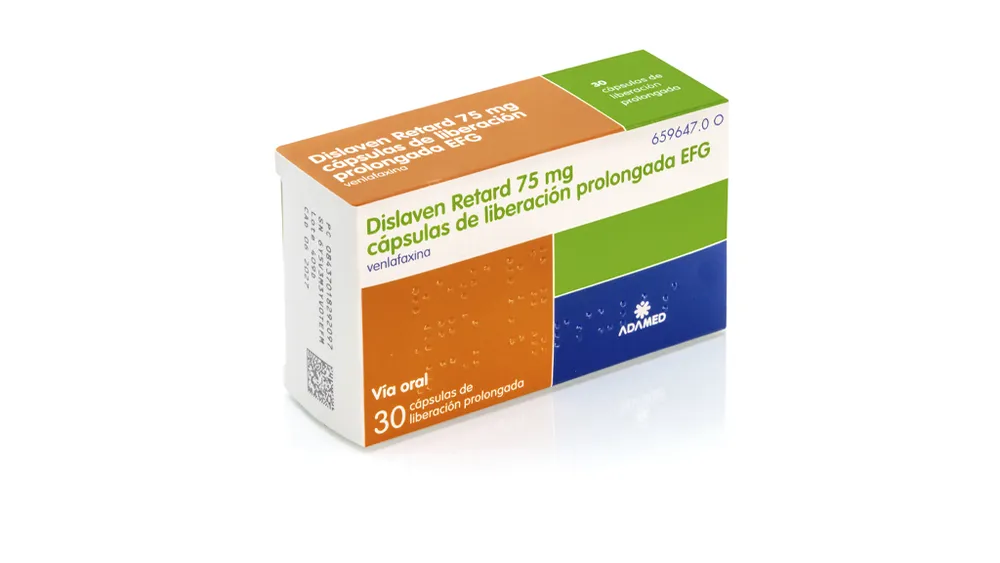
Table of Contents
Package leaflet: Information for the user
Introduction
Package leaflet: information for the user
Dislaven Retard 75 mg prolonged-release capsules EFG
venlafaxine
Read all of this leaflet carefully before you start taking this medicine, because it contains important information for you.
- Keep this leaflet, as you may need to read it again.
- If you have any questions, ask your doctor or pharmacist.
- This medicine has been prescribed for you only, and you should not give it to other people, even if they have the same symptoms as you, because it could harm them.
- If you experience any adverse effects, consult your doctor or pharmacist, even if they are adverse effects not listed in this leaflet. See section 4.
Leaflet contents:
- What Dislaven Retard is and what it is used for.
- What you need to know before taking Dislaven Retard.
- How to take Dislaven Retard.
- Possible side effects.
- Storage of Dislaven Retard.
- Contents of the pack and other information.
1. What Dislaven Retard is and what it is used for
Dislaven Retard contains the active substance venlafaxine.
Dislaven Retard is an antidepressant that belongs to a group of medicines called serotonin and norepinephrine reuptake inhibitors (SNRIs). This group of medicines is used to treat depression and other conditions such as anxiety disorders. It is believed that people who are depressed and/or suffer from anxiety have lower levels of serotonin and noradrenaline in the brain. How antidepressants work is not fully understood, but they may help increase the levels of serotonin and noradrenaline in the brain.
Dislaven Retard is a treatment for adults with depression. It is also a treatment for adults with the following anxiety disorders: generalized anxiety disorder, social anxiety disorder (fear or avoidance of social situations), panic disorder (panic attacks). Properly treating depressive and anxiety disorders is important to help you feel better. If left untreated, your condition may not go away or may worsen and become more difficult to treat.
2. What you need to know before taking Dislaven
Do not take Dislaven Retard:
- If you are allergic to venlafaxine or to any of the other components of this medicine (listed in section 6).
- If you are currently taking or have taken within the last 14 days an irreversible monoamine oxidase inhibitor (MAOI) used to treat depression or Parkinson’s disease. Taking an irreversible MAOI together with Dislaven Retard may cause serious or even potentially life-threatening adverse effects. Additionally, you must wait at least 7 days after stopping Dislaven Retard before taking any MAOI (see also the section “Use with other medicines” and the information in that section on “Serotonin Syndrome”).
Warnings and precautions
Talk to your doctor or pharmacist before starting Dislaven Retard:
- If you have a history of bleeding disorders or if you develop unusual bruising […], or if you are pregnant (see “Pregnancy and breastfeeding”).
- If you are taking other medicines that, when used together with Dislaven Retard, could increase the risk of developing serotonin syndrome (see section “Taking Dislaven Retard with other medicines”).
- If you have eye problems, such as certain types of glaucoma (increased pressure in the eye).
- If you have a history of high blood pressure.
- If you have a history of heart problems.
- If you have been told that your heart rhythm is abnormal.
- If you have a history of seizures (fits).
- If you have a history of low sodium levels in the blood (hyponatremia).
- If you are prone to bruising or have a tendency to bleed easily (history of bleeding disorders), or if you are taking other medicines that may increase the risk of bleeding, e.g., warfarin (used to prevent blood clots).
- If you have a history of, or if someone in your family has had, mania or bipolar disorder (feeling overly excited or euphoric).
- If you have a history of aggressive behavior.
Dislaven Retard may cause a feeling of restlessness or difficulty sitting or staying still during the first weeks of treatment. You should consult your doctor if this occurs.
Some medicines in the same class as Dislaven Retard (called SSRIs/SNRIs) can cause symptoms of sexual dysfunction (see section 4). In some cases, these symptoms persist after stopping treatment.
Do not drink alcohol during treatment with Dislaven Retard, as it may cause extreme tiredness and unconsciousness. Taking it together with certain medicines and/or alcohol may worsen symptoms of depression and other conditions, such as anxiety disorders.
Suicidal thoughts and worsening of your depression or anxiety disorder
If you are depressed and/or have anxiety disorders, you may sometimes have thoughts of harming yourself or committing suicide. This may increase when you first start taking antidepressants, because all these medicines take time to work, usually about two weeks, but sometimes longer.
This is more likely to happen:
- If you have previously had thoughts of suicide or of harming yourself.
- If you are a young adult. Clinical trial data have shown an increased risk of suicidal behavior in young adults (under 25 years of age) with psychiatric disorders who were treated with antidepressants.
If you have thoughts of harming yourself or committing suicide at any time, contact your doctor or go directly to a hospital.
You may find it helpful to tell a close family member or friend that you are depressed or have an anxiety disorder, and ask them to read this leaflet. You may also ask them to let you know if they think your depression or anxiety is getting worse, or if they are concerned about changes in your behavior.
Dry mouth
Dry mouth has been reported in 10% of patients treated with venlafaxine. This may increase the risk of tooth decay (cavities). Therefore, you should take care of your dental hygiene.
Diabetes
Your blood glucose levels may be altered by Dislaven Retard. Therefore, the doses of your diabetes medications may need to be adjusted.
Children and adolescents
Dislaven Retard should normally not be used in the treatment of children and adolescents under 18 years of age. In addition, you should know that in patients under 18 years of age, there is an increased risk of adverse effects such as suicide attempts, suicidal ideation, and hostility (predominantly aggression, confrontational behavior, and irritability) when taking this type of medicine. Despite this, your doctor may prescribe this medicine to patients under 18 years of age if they decide it is in the patient’s best interest. If your doctor has prescribed this medicine to a patient under 18 years of age and you wish to discuss this decision, please consult your doctor again. You must inform your doctor if any of the symptoms listed above develop or worsen while these patients under 18 years of age are taking Dislaven Retard. In addition, the long-term safety regarding growth, maturation, and cognitive and behavioral development has not been established.
Other medicines and Dislaven Retard
Inform your doctor or pharmacist if you are using, have recently used, or might need to use any other medicines.
Your doctor must decide whether you can take Dislaven Retard with other medicines.
Do not start or stop taking any medicine, including those sold without a prescription, natural remedies, or herbal products, without first checking with your doctor or pharmacist.
- Monoamine oxidase inhibitors used to treat depression or Parkinson’s disease must not be taken with Dislaven Retard. Tell your doctor if you have taken any of these medicines in the last 14 days. (MAOIs: see section “What you need to know before taking Dislaven Retard”).
Serotonin syndrome:
A potentially life-threatening condition, or reactions similar to Neuroleptic Malignant Syndrome (NMS) (see section “Possible side effects”), may occur with venlafaxine treatment, particularly when taken with other medicines.
Examples of these medicines include:
- Triptans (used for migraine)
- Other medicines to treat depression, for example, SNRIs, SSRIs, tricyclic antidepressants, or medicines containing lithium
- Medicines containing the antibiotic linezolid (used to treat infections)
- Medicines containing moclobemide, an MAOI (used to treat depression)
- Medicines containing sibutramine (used for weight loss)
- Medicines containing tramadol, fentanyl, tapentadol, meperidine, or pentazocine (used to treat severe pain)
- Medicines containing dextromethorphan (used to treat cough)
- Medicines containing methadone (used for opioid addiction treatment or for treating severe pain)
- Medicines containing methylene blue (used to treat elevated levels of methemoglobin in the blood)
- Products containing St. John’s wort (also known as “Hypericum perforatum”, a natural or herbal remedy used to treat mild depression)
- Products containing tryptophan (used for problems such as sleep and depression)
- Antipsychotics (used to treat a condition with symptoms such as hearing, seeing, or feeling things that are not there, false beliefs, unusual suspiciousness, unclear thinking, and tendency to withdraw)
Signs and symptoms of serotonin syndrome may include a combination of the following: restlessness, hallucinations, loss of coordination, rapid heartbeat, increased body temperature, rapid changes in blood pressure, overactive reflexes, diarrhea, coma, nausea, vomiting.
In its most severe form, serotonin syndrome may resemble Neuroleptic Malignant Syndrome (NMS). Signs and symptoms of NMS may include a combination of fever, rapid heartbeat, sweating, severe muscle stiffness, confusion, and increased muscle enzymes (determined by a blood test).
Contact your doctor immediately or go to the nearest hospital emergency department if you think you are experiencing serotonin syndrome.
Inform your doctor if you are taking medicines that may affect your heart rhythm.
Some examples of these medicines include:
- Antiarrhythmics such as quinidine, amiodarone, sotalol, or dofetilide (used to treat abnormal heart rhythm)
- Antipsychotics such as thioridazine (see also serotonin syndrome above)
- Antibiotics such as erythromycin or moxifloxacin (used to treat bacterial infections)
- Antihistamines (used to treat allergies)
The following medicines may also interact with Dislaven Retard and should be used with caution. It is especially important to inform your doctor or pharmacist if you are taking medicines containing:
- Ketoconazole (an antifungal medicine).
- Haloperidol or risperidone (for treating psychiatric conditions).
- Metoprolol (a beta-blocker used to treat high blood pressure and heart problems).
Taking Dislaven Retard with food, drinks, and alcohol
Dislaven Retard should be taken with food (see section 3 “How to take Dislaven Retard”).
Do not drink alcohol during treatment with Dislaven Retard. Taking it together with alcohol may cause extreme tiredness and unconsciousness, and may worsen symptoms of depression and other conditions, such as anxiety disorders.
Pregnancy and breastfeeding
If you are pregnant or breastfeeding, think you may be pregnant, or are planning to become pregnant, consult your doctor or pharmacist before using this medicine. You should only take Dislaven Retard after discussing with your doctor the potential benefits and potential risks to the unborn child.
If you take Dislaven Retard in the late stages of pregnancy, there may be an increased risk of heavy vaginal bleeding shortly after childbirth, especially if you have a history of bleeding disorders. Your doctor or midwife should be informed that you are taking Dislaven Retard so they can advise you.
Make sure your midwife and/or doctor knows that you are taking Dislaven Retard. Medicines similar to this one (SSRIs) taken during pregnancy may increase the risk of a serious condition in newborns called persistent pulmonary hypertension of the newborn (PPHN), causing the baby to breathe faster and turn blue. These symptoms usually begin within the first 24 hours after the baby’s birth. If this happens to your baby, contact your midwife and/or doctor immediately.
If you take this medicine during pregnancy, in addition to breathing problems, another symptom your baby may have at birth is feeding difficulties. If your baby has these symptoms at birth and you are concerned, contact your doctor and/or midwife, who can advise you.
Dislaven Retard passes into breast milk. There is a risk of effects on the baby. Therefore, you should discuss this with your doctor, who will decide whether you should stop breastfeeding or stop treatment with this medicine.
Driving and using machines
During treatment with Dislaven Retard, you may feel drowsy or dizzy. Do not drive or operate tools or machinery until you know how Dislaven Retard affects you.
Dislaven Retard contains sucrose
This medicine contains sucrose. If your doctor has told you that you have an intolerance to certain sugars, consult with him before taking this medicine.
3. How to take Dislaven Retard
Follow exactly the instructions for use of this medicine as given by your doctor. If you are in any doubt, consult your doctor or pharmacist again.
The usual recommended starting dose for the treatment of depression, generalized anxiety disorder, and social anxiety disorder is 75 mg per day. Your doctor may gradually increase the dose and, if necessary, further up to a maximum of 375 mg per day for depression. If you are being treated for panic disorder, your doctor will start with a lower dose (37.5 mg) and then gradually increase the dose. The maximum dose for generalized anxiety disorder, social anxiety disorder, and panic disorder is 225 mg/day.
Take Dislaven Retard at approximately the same time each day, either in the morning or in the evening. The capsules must be swallowed whole with liquid and must not be opened, crushed, chewed, or dissolved.
Dislaven Retard should be taken with food.
If you have liver or kidney problems, speak with your doctor, as your dose of this medicine may need to be adjusted.
Do not stop taking this medicine without consulting your doctor (see section “If you stop taking Dislaven Retard”).
If you take more Dislaven Retard than you should
In case of overdose or accidental ingestion, contact your doctor, pharmacist, or call the Toxicology Information Service at telephone number 91 562 04 20, indicating the medicine and the amount ingested.
Overdose can be life-threatening, especially when taken simultaneously with certain medicines and/or alcohol (see Taking Dislaven Retard with other medicines).
Symptoms of a possible overdose may include rapid heartbeat, changes in level of consciousness (ranging from drowsiness to coma), blurred vision, seizures or fits, and vomiting.
If you forget to take Dislaven Retard
If you have missed a dose, take it as soon as you remember. However, if it is already time for your next dose, skip the missed dose and take only your usual single dose. Do not take a double dose to make up for forgotten doses. Do not take more than the daily amount of Dislaven Retard prescribed for you in one day.
If you stop taking Dislaven Retard
Do not stop your treatment or reduce the dose without the advice of your doctor, even if you feel better. If your doctor considers that you no longer need Dislaven Retard, they may ask you to gradually reduce the dose before stopping treatment completely. Adverse effects are known to occur when people stop using this medicine, especially when it is stopped suddenly or when the dose is reduced too quickly. Some patients may experience symptoms such as fatigue, dizziness, lack of balance, headache, insomnia, nightmares, dry mouth, loss of appetite, nausea, diarrhea, nervousness, agitation, confusion, ringing in the ears, tingling sensations, or, rarely, electric shock-like sensations, weakness, sweating, seizures, or flu-like symptoms.
Your doctor will advise you on how to gradually stop treatment with Dislaven Retard. If you experience any of these or other bothersome symptoms, consult your doctor for advice.
If you have any further questions about the use of this medicine, ask your doctor or pharmacist.
4. Possible adverse effects
Like all medicines, this medicine can cause adverse effects, although not everyone gets them.
If any of the following effects occur, stop taking Dislaven Retard. Contact your doctor immediately or go to the nearest hospital emergency department:
Uncommon (may affect up to 1 in 100 people)
- Swelling of the face, mouth, tongue, throat, hands or feet and/or swollen, itchy rash, difficulty swallowing or breathing.
Rare (may affect up to 1 in 1,000 people)
- Chest tightness, noisy breathing, difficulty swallowing or breathing.
- Severe skin rash, itching or hives (raised areas of red or pale skin that often itch).
- Signs and symptoms of serotonin syndrome, which may include agitation, hallucinations, loss of coordination, rapid heartbeat, increased body temperature, rapid changes in blood pressure, overactive reflexes, diarrhea, coma, nausea, vomiting. In its most severe form, serotonin syndrome may resemble neuroleptic malignant syndrome (NMS). Signs and symptoms of NMS may include a combination of fever, rapid heartbeat, sweating, severe muscle rigidity, confusion, and increased muscle enzymes (determined by a blood test).
- Signs of infection, such as increased temperature, chills, shivering, headache, sweating, or flu-like symptoms. This may be due to a blood disorder that can lead to an increased risk of infection.
- Severe rash, which may progress to the formation of severe blisters and peeling of the skin.
- Unexplained muscle pain, discomfort, or weakness. This may be a sign of rhabdomyolysis.
Other adverse effects you should report to your doctor (the frequency of these adverse effects is included in the list below, “Other possible adverse effects”):
- Cough, noisy breathing, and difficulty breathing, which may be accompanied by increased temperature.
- Tar-colored stools or blood in the stool.
- Itching, yellowing of the eyes or skin, dark urine, which are symptoms of liver inflammation (hepatitis).
- Heart problems, such as rapid or irregular heartbeat, increased blood pressure.
- Eye problems, such as blurred vision, dilated pupils.
- Nerve problems, such as dizziness, tingling, movement disorders (muscle spasms and rigidity), seizures or fits.
- Psychiatric problems, such as hyperactivity (unusual feeling of over-excitement).
- Withdrawal effects (see section “How to take Dislaven Retard, if you stop taking Dislaven Retard”).
- Prolonged bleeding—if you cut yourself or sustain an injury, it may take slightly longer than normal for the bleeding to stop.
Do not be concerned if you notice white beads or small granules in your stools after taking this medicine. Inside Dislaven Retard capsules there are spheroids (small white beads) containing the active substance (venlafaxine). These spheroids are released from the capsule in the stomach. As they pass through the stomach and intestines, venlafaxine is slowly released. The “shell” of the spheroid does not dissolve and is eliminated in the stool. Therefore, even if you see spheroids in your stool, the dose of the medicine has been absorbed.
Other possible adverse effects
Very common (may affect more than 1 in 10 people)
- Dizziness, headache, drowsiness.
- Insomnia.
- Nausea, dry mouth, constipation.
- Excessive sweating (including night sweats).
Common (may affect up to 1 in 10 people)
- Decreased appetite.
- Confusion, feeling strange, absence of orgasm, decreased libido, nervousness, abnormal dreams.
- Tremor, a feeling of restlessness or inability to sit still or stay still, tingling, altered taste perception, increased muscle tone.
- Visual disturbances including blurred vision, dilated pupils, inability of the eye to automatically adjust focus from distant to near objects.
- Ringing in the ears (tinnitus).
- Rapid heartbeat, palpitations.
- Increased blood pressure, hot flushes.
- Difficulty breathing, yawning.
- Vomiting, diarrhea.
- Mild skin rash, itching.
- Increased frequency of urination, inability to urinate, difficulty urinating.
- Menstrual irregularities, such as increased bleeding or increased irregular bleeding, abnormal ejaculation/orgasm (in males), erectile dysfunction (impotence).
- Weakness (asthenia), fatigue, chills.
- Weight gain or weight loss.
- Increased cholesterol.
Uncommon (may affect up to 1 in 100 people)
- Hyperactivity, racing thoughts, and reduced need for sleep (mania).
- Hallucinations, feeling detached from reality, abnormal orgasm, lack of feelings or emotions, feeling overexcited, teeth grinding.
- Fainting, involuntary muscle movements, disturbance in coordination and balance.
- Dizziness (especially when standing up too quickly), decreased blood pressure.
- Vomiting blood, tar-colored stools (bowel movements), or blood in the stool, which may be a sign of internal bleeding.
- Sensitivity to sunlight, bruising, skin rash, abnormal hair loss.
- Inability to control urine. Muscle stiffness, spasms, and involuntary muscle movements.
- Slight changes in blood levels of liver enzymes.
Rare (may affect up to 1 in 1,000 people)
- Seizures or fits. Cough, noisy breathing, and shortness of breath, which may be accompanied by high temperature.
- Disorientation and confusion, often accompanied by hallucinations (delirium).
- Excessive water intake (known as SIADH).
- Decreased levels of sodium in the blood.
- Severe eye pain and reduced or blurred vision.
- Abnormal, rapid or irregular heartbeat, which may lead to fainting.
- Severe abdominal or back pain (which may indicate a serious problem in the intestine, liver, or pancreas).
- Itching, yellowing of the eyes or skin, dark urine, flu-like symptoms, which are signs of liver inflammation.
Very rare (may affect up to 1 in 10,000 people)
- Prolonged bleeding, which may be due to a reduced number of platelets in the blood, leading to increased bruising or bleeding.
- Abnormal production of breast milk.
- Unexpected bleeding, for example, bleeding from the gums, blood in the urine or vomit, or the appearance of bruises or broken blood vessels (ruptured veins).
Frequency not known (cannot be estimated from the available data)
- Suicidal thoughts and suicidal behaviour—cases of suicidal thoughts and behaviour have been reported during treatment with venlafaxine or shortly after stopping treatment (see section 2, “What you need to know before taking Dislaven Retard”).
- Aggression.
- Vertigo.
Heavy vaginal bleeding shortly after childbirth (postpartum haemorrhage)—see “Pregnancy and breastfeeding” in section 2 for more information.
Dislaven Retard sometimes causes unwanted effects that you may not be aware of, such as increased blood pressure or an abnormal heartbeat; slight changes in blood levels of liver enzymes, sodium, or cholesterol. Less frequently, Dislaven Retard may reduce the function of blood platelets, leading to an increased risk of bruising or bleeding. Therefore, your doctor may wish to carry out occasional blood tests, particularly if you have been taking Dislaven Retard for a long time.
Reporting of adverse effects
If you experience any adverse effect, talk to your doctor or pharmacist, even if it is a possible adverse effect not listed in this leaflet. You can also report them directly via the Spanish Pharmacovigilance System for Human Medicines: http://www.notificaram.es. By reporting adverse effects, you can help provide more information on the safety of this medicine.
5. Storage of Dislaven Retard
Keep this medicine out of the sight and reach of children.
Do not use this medicine after the expiry date stated on the container. The expiry date refers to the last day of the month indicated.
Do not store above 30 ºC.
Medicines must not be disposed of via wastewater or household waste. Return unused medicines and their containers to the SIGRE collection point at your pharmacy. Ask your pharmacist how to dispose of medicines and containers you no longer need. This will help protect the environment.
6. Contents of the pack and other information
Composition of Dislaven Retard
The active substance is venlafaxine.
Each prolonged-release capsule contains 84.86 mg of venlafaxine hydrochloride, equivalent to 75 mg of venlafaxine base.
The other components (excipients) are: sugar spheres 20 (sucrose and gluten-free corn starch), stearic acid, ethylcellulose and talc.
Capsule components: gelatin and titanium dioxide (E-171).
Appearance of the product and contents of the pack
Dislaven Retard 75 mg is presented as prolonged-release hard capsules. The capsules are hard gelatin capsules containing white or almost white spheroids of approximately 1 mm in diameter, with opaque white cap and body.
Dislaven Retard 75 mg is available in packs containing 30 prolonged-release hard capsules.
Other presentations
Dislaven Retard 150 mg prolonged-release capsules
Marketing Authorization Holder
Adamed Laboratorios, S.L.U.
Calle de las Rosas de Aravaca, 31 - 2nd floor
28023 Aravaca – Madrid
Spain
Manufacturer
Valpharma International, S.P.A.
Via G. Morgagni, 2
61016 Pesaro-Urbino - Italy
or
Natrix Sciences Ltd.
HF 79, A-B Hal Far Industrial Estate - Hal Far
BBG3000 - Malta
or
Farmalider, S.A.
Calle Aragoneses, 2
28108 Alcobendas (Madrid) - Spain
Date of the most recent revision of this leaflet: September 2023
Detailed and up-to-date information on this medicinal product is available on the website of the Spanish Agency for Medicines and Health Products (AEMPS) http://www.aemps.gob.es/