Dinisor Retard 120 mg modified-release tablets
Spain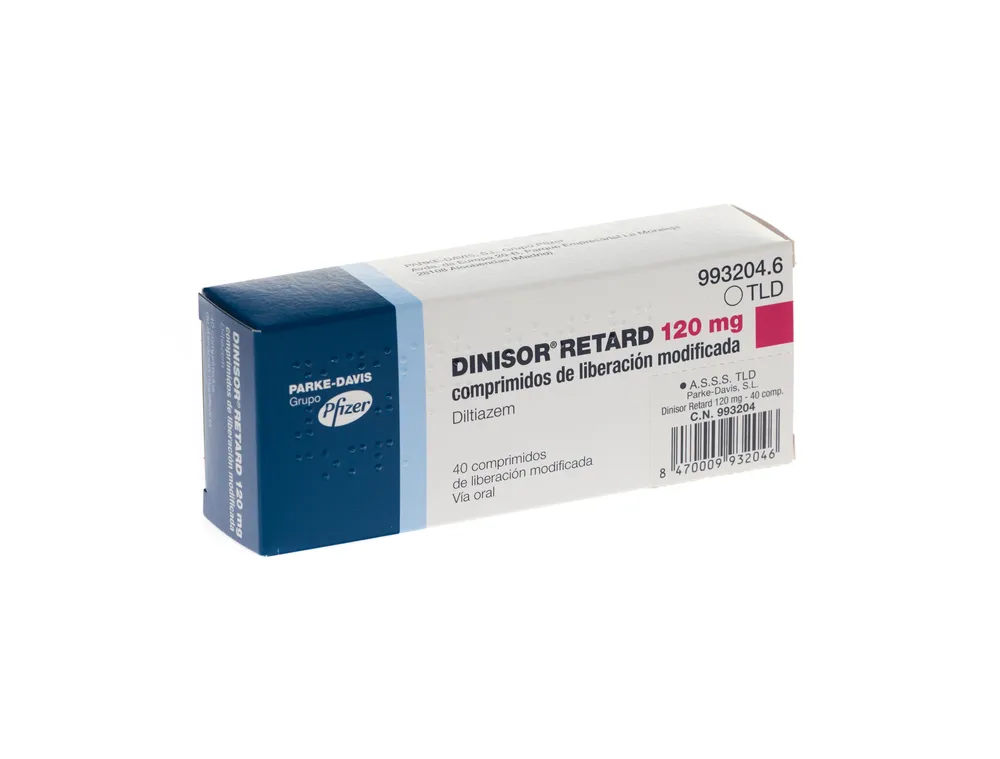
Table of Contents
Package leaflet: Information for the user
Introduction
Package leaflet: information for the user
DINISOR RETARD 120 mg modified release tablets
diltiazem hydrochloride
Read the entire leaflet carefully before you start taking this medicine, because it contains important information for you.
- Keep this leaflet. You may need to read it again.
- If you have any questions, ask your doctor or pharmacist.
- This medicine has been prescribed for you only and must not be given to other people, even if they have the same symptoms as you, because it could harm them.
- If you experience any side effects, talk to your doctor or pharmacist, even if they are side effects not listed in this leaflet. See section 4.
Leaflet contents:
- What DINISOR is and what it is used for
- What you need to know before taking DINISOR
- How to take DINISOR
- Possible side effects
- How to store DINISOR
- Contents of the pack and other information
1. What DINISOR is and what it is used for
DINISOR, whose active substance is diltiazem, belongs to a group of medicines called calcium antagonists. DINISOR is used for the treatment and prevention of angina pectoris, as it widens (dilates) the arteries of the heart, increasing blood flow. DINISOR also works by dilating other blood vessels in the body, so it is also used in the treatment of high blood pressure (hypertension).
2. What you need to know before taking DINISOR
Do not take DINISOR
- If you are allergic (hypersensitive) to the active substance or to any of the other components of DINISOR.
- If you have any heart rhythm or conduction disorders, such as sick sinus syndrome in patients without a pacemaker, second- or third-degree atrioventricular block in patients without a pacemaker, or severe bradycardia (heart rate below 40 beats per minute).
- If you have any heart disease such as left ventricular failure.
- If you are being treated with dantrolene.
- If you are taking medications containing ivabradine for the treatment of certain heart conditions.
- If you are already taking a medication containing lomitapide used to treat high cholesterol levels (see section: "Taking DINISOR with other medicines").
Warnings and precautions
-
If you have a cardiac arrhythmia (sick sinus syndrome, atrioventricular block) or if you are receiving treatment with other medications used to treat heart conditions (beta-blockers, digitalis), since using diltiazem in these situations may cause excessively slow pulse and heart rhythm (bradycardia).
-
If you are scheduled for surgery, since diltiazem may enhance the effects of anaesthetics.
-
If you have impaired ventricular function.
-
If you have hypotension: treatment with diltiazem may lead to an excessive drop in blood pressure. Your doctor will advise you on how to avoid symptoms resulting from hypotension and what measures to take if such symptoms occur.
-
If you have liver or kidney disease or are elderly: since there is limited data available in these patients, DINISOR should be used with caution.
-
Use of diltiazem has been associated with skin reactions and changes in mood (including depression). Your doctor will assess these symptoms and advise you on appropriate actions.
-
If you are at risk of developing intestinal obstruction, since, like other medicines in the same class, diltiazem reduces intestinal motility.
-
If you have a history of heart failure, new onset breathing difficulties, slow heartbeats, or low blood pressure. Cases of kidney injury have been reported in patients with these conditions; your doctor may need to monitor your kidney function.
Taking DINISOR with other medicines
Inform your doctor or pharmacist if you are taking, or have recently taken, any other medicines, including those obtained without a prescription.
Contraindicated use:
Diltiazem must not be used concomitantly with dantrolene (a muscle relaxant).
In particular, do not take this medicine and inform your doctor if you are taking:
Medications containing lomitapide used to treat high cholesterol levels. Diltiazem may increase lomitapide concentrations, which could increase the likelihood and severity of liver-related side effects.
Effects of other drugs on DINISOR
The following drugs may increase the effects of DINISOR by increasing its blood concentration:
- fluconazole (used to treat fungal infections)
- erythromycin and other macrolides (antibiotics)
- ritonavir (used to treat viral infections)
- amiodarone (used to reduce heart rate)
- cimetidine and ranitidine (used to reduce stomach acid production)
The following drugs may decrease the effects of DINISOR by reducing its blood concentration:
- phenytoin (used to treat epilepsy)
- St. John's wort (used for fatigue, tiredness, or sleep disturbances)
- rifampicin (antibiotic)
Effects of DINISOR on other drugs
DINISOR may increase the effects of the following drugs by increasing their blood concentrations or enhancing their effects:
-
phenytoin, carbamazepine (used to treat epilepsy)
-
triazolam, midazolam, buspirone (used to treat anxiety)
-
digoxin (used to treat heart conditions)
-
cyclosporine, sirolimus (used to suppress the immune system)
-
methylprednisolone (a corticosteroid used to treat inflammatory conditions)
-
simvastatin and lovastatin (medications to lower blood cholesterol levels)
-
theophylline (used to treat asthma)
-
medications that reduce blood clotting (oral anticoagulants such as acenocoumarol or warfarin)
-
rifampicin (antibiotic)
-
medications used to lower blood pressure (nitrates, alpha- and beta-blockers, diuretics, angiotensin-converting enzyme inhibitors) and to reduce heart rate (amiodarone)
-
anaesthetics
-
lithium salts (used to treat certain mental illnesses): may increase the risk of severe agitation (psychotic episodes)
-
sirolimus, temsirolimus, everolimus (medications that reduce immune system activity)
Concomitant use of DINISOR with other drugs should be under medical supervision, with gradual dose adjustments.
Use in children
There is no experience regarding the use of DINISOR in children.
Pregnancy and breastfeeding
If you are pregnant or breastfeeding, think you may be pregnant, or plan to become pregnant, consult your doctor or pharmacist before using this medicine.
Consult your doctor or pharmacist before using any medicine.
This medicine must not be administered to pregnant women or to women of childbearing potential who are not using an effective method of contraception.
This medicine must not be taken during breastfeeding, as it passes into breast milk. If your doctor considers it essential to take this medicine, the baby must be fed by alternative means.
Driving and using machines
Your ability to perform activities such as operating machinery or driving vehicles may be impaired, especially at the beginning of treatment with DINISOR.
DINISOR RETARD 120 mg contains lactose, hydrogenated castor oil (hydrogenated ricinoleic oil), and sodium
This medicine contains lactose. If your doctor has informed you of an intolerance to certain sugars, consult him before taking this medicine.
This medicine contains hydrogenated castor oil (hydrogenated ricinoleic oil). It may cause stomach discomfort and diarrhoea.
This medicine contains less than 1 mmol of sodium (23 mg) per tablet; essentially "sodium-free".
3. How to take DINISOR
Follow exactly the instructions for using this medicine as given by your doctor or pharmacist. If in doubt, consult your doctor or pharmacist.
DINISOR is administered orally. Your doctor will tell you how many tablets you should take each day.
Adults:
Angina pectoris: The initial dose is 1 tablet per day. Your doctor will gradually increase the dose until the optimal response is achieved. The maximum dose is 4 tablets per day (480 mg/day).
Hypertension: The initial dose is 1 tablet per day. Your doctor will gradually increase the dose until the optimal response is achieved. The maximum dose is 4 tablets per day (480 mg/day).
Elderly patients, renal or hepatic impairment:
Initial dose adjustment should be performed with caution.
All dose modifications and monitoring must be carried out under medical supervision.
Instructions for proper administration
Swallow the tablets whole, without chewing, with sufficient liquid (for example, a glass of water). The tablets must not be divided or crushed. DINISOR should preferably be taken before meals. If your doctor has instructed you to take 2–4 tablets per day, they should be taken at regular intervals (every 6–12 hours).
Take DINISOR every day and at approximately the same time each day. Taking the tablets at the same time daily will provide better control of your blood pressure and will help you remember when to take them.
Follow these instructions unless your doctor has given you different advice. Remember to take your medicine.
Your doctor will determine how long you should take DINISOR. Do not stop treatment prematurely, as this may be harmful to your health.
If you feel that the effect of DINISOR is too strong or too weak, consult your doctor or pharmacist.
If you take more DINISOR than you should:
An overdose of DINISOR may cause a drop in blood pressure, slowed heart rate, disturbances in cardiac conduction, and reduced kidney function. In case of low blood pressure, sit down with your head lowered.
In the event of a significant overdose, you should be transferred to a specialized center to receive appropriate treatment.
In case of overdose or accidental ingestion, contact your doctor or pharmacist immediately, go to the nearest hospital, or call the Toxicology Information Service at 91 562 04 20, stating the name of the medicine and the amount ingested.
If you forget to take DINISOR:
Do not take a double dose to make up for missed doses. It is important to take DINISOR regularly at the same time each day. If you forget to take a dose, take it as soon as possible. However, if it is almost time for your next dose, do not take the missed tablet.
If you stop taking DINISOR:
If you stop treatment with DINISOR, your condition may worsen, with symptoms such as chest pain or tightness, or a sudden rise in blood pressure. Do not stop treatment with DINISOR without first consulting your doctor. If you have any further questions about the use of this medicine, ask your doctor or pharmacist.
4. Possible adverse effects
Like all medicines, this medicine can cause adverse effects, although not everyone will experience them. Reactions to Diltiazem vary in intensity from patient to patient and should be taken into special consideration at the beginning of treatment or when changing medication.
Stop treatment with DINISOR and contact your doctor immediately if you experience any of the following symptoms:
-
swelling of the face, tongue or throat, difficulty swallowing, hives, and breathing difficulties (angioedema), frequency not known.
-
an extremely severe allergic reaction with skin rash, usually presenting as blisters or ulcers in the mouth and eyes, as well as other mucous membranes, for example the genitals (Stevens-Johnson syndrome), frequency not known.
-
severe and extensive skin damage (peeling of the epidermis and mucous membranes) (toxic epidermal necrolysis), frequency not known.
Other side effects:
Very common (may affect more than 1 in 10 patients)
- Edema in the lower limbs.
Common (may affect up to 1 in 10 patients)
- Headache, dizziness.
- Atrioventricular block (a type of arrhythmia), palpitations, slow heart rate (bradycardia).
- Flushing.
- Constipation, indigestion (dyspepsia), stomach pain, nausea.
- Skin rashes.
- Swelling of the joints.
- Tiredness (asthenia), fatigue, malaise.
Uncommon (may affect up to 1 in 100 patients)
- Nervousness, difficulty falling asleep (insomnia).
- Drop in blood pressure upon standing quickly, with or without dizziness (hypotension).
- Vomiting, diarrhea.
- Increased levels of liver enzymes in the blood.
Rare (may affect up to 1 in 1,000 patients)
- Dry mouth.
- Skin irritation and itching (urticaria).
Frequency not known (cannot be estimated from available data)
- Reduction in the number of platelets (thrombocytopenia).
- Decreased appetite, elevated blood sugar levels (hyperglycemia).
- Mood changes including depression, confusion, hallucinations, personality and sleep disturbances.
- Movement disorders (extrapyramidal syndrome), memory loss (amnesia), abnormal sensations of tingling, numbness, or burning (paresthesia), tendency to fall asleep (somnolence), temporary loss of consciousness (syncope), tremor, sudden involuntary jerking of a muscle or group of muscles.
- Lazy eye (partial loss of vision in one or both eyes), eye irritation.
- Ringing in the ears (tinnitus).
- Interruption or disturbance of the heart's electrical signal (sinoatrial block, sinus arrest), difficulty of the heart to pump blood (congestive heart failure), rapid heartbeat (tachycardia), abnormal heart contractions (ventricular extrasystoles), irregular heartbeat (arrhythmia), chest pain or tightness (angina pectoris).
- Inflammation of blood vessels (vasculitis).
- Difficulty breathing (dyspnea), nosebleeds (epistaxis), nasal congestion.
- Inflammation of the gums (gingival hyperplasia).
- Hepatitis (inflammatory disease affecting the liver), liver disorder (granulomatous liver disease).
- Sensitivity to light (photosensitivity), erythema multiforme (serious skin disease associated with red spots and blisters), sweating, exfoliative dermatitis (skin redness, itching, hair loss), and acute generalized exanthematous pustulosis (sudden rash accompanied by fever, with formation of pustules or lesions on the skin surface characterized as small, inflamed, pus-filled, and blister-like), small red spots on the skin (petechiae), itching (pruritus).
- Joint pain, muscle pain.
- Need to urinate at night (nocturia), increased frequency of urination (polyuria).
- Excessive breast enlargement in men (gynecomastia), sexual dysfunction.
- Difficulty walking.
- Elevated levels of the enzyme creatine phosphokinase (CPK) in blood tests, weight gain.
- Condition in which the body's immune system attacks normal tissue, causing symptoms such as inflamed joints, fatigue, and skin rashes (called "lupus-like syndrome").
Reporting of adverse effects
If you experience any type of adverse effect, consult your doctor or pharmacist, even if it is a possible adverse effect not listed in this leaflet. You may also report them directly via the Spanish Pharmacovigilance System for Human Medicines: https://www.notificaram.es. By reporting adverse effects, you can help provide more information on the safety of this medicine.
Like all medicines, this medicine can cause adverse effects, although not everyone will experience them. Reactions to Diltiazem vary in intensity from patient to patient and should be taken into special consideration at the beginning of treatment or when changing medication.
Stop treatment with DINISOR and contact your doctor immediately if you experience any of the following symptoms:
-
swelling of the face, tongue or throat, difficulty swallowing, hives, and breathing difficulties (angioedema), frequency not known.
-
an extremely severe allergic reaction with skin rash, usually presenting as blisters or ulcers in the mouth and eyes, as well as other mucous membranes, for example the genitals (Stevens-Johnson syndrome), frequency not known.
-
severe and extensive skin damage (peeling of the epidermis and mucous membranes) (toxic epidermal necrolysis), frequency not known.
Other side effects:
Very common (may affect more than 1 in 10 patients)
- Edema in the lower limbs.
Common (may affect up to 1 in 10 patients)
- Headache, dizziness.
- Atrioventricular block (a type of arrhythmia), palpitations, slow heart rate (bradycardia).
- Flushing.
- Constipation, indigestion (dyspepsia), stomach pain, nausea.
- Skin rashes.
- Swelling of the joints.
- Tiredness (asthenia), fatigue, malaise.
Uncommon (may affect up to 1 in 100 patients)
- Nervousness, difficulty falling asleep (insomnia).
- Drop in blood pressure upon standing quickly, with or without dizziness (hypotension).
- Vomiting, diarrhea.
- Increased levels of liver enzymes in the blood.
Rare (may affect up to 1 in 1,000 patients)
- Dry mouth.
- Skin irritation and itching (urticaria).
Frequency not known (cannot be estimated from available data)
- Reduction in the number of platelets (thrombocytopenia).
- Decreased appetite, elevated blood sugar levels (hyperglycemia).
- Mood changes including depression, confusion, hallucinations, personality and sleep disturbances.
- Movement disorders (extrapyramidal syndrome), memory loss (amnesia), abnormal sensations of tingling, numbness, or burning (paresthesia), tendency to fall asleep (somnolence), temporary loss of consciousness (syncope), tremor, sudden involuntary jerking of a muscle or group of muscles.
- Lazy eye (partial loss of vision in one or both eyes), eye irritation.
- Ringing in the ears (tinnitus).
- Interruption or disturbance of the heart's electrical signal (sinoatrial block, sinus arrest), difficulty of the heart to pump blood (congestive heart failure), rapid heartbeat (tachycardia), abnormal heart contractions (ventricular extrasystoles), irregular heartbeat (arrhythmia), chest pain or tightness (angina pectoris).
- Inflammation of blood vessels (vasculitis).
- Difficulty breathing (dyspnea), nosebleeds (epistaxis), nasal congestion.
- Inflammation of the gums (gingival hyperplasia).
- Hepatitis (inflammatory disease affecting the liver), liver disorder (granulomatous liver disease).
- Sensitivity to light (photosensitivity), erythema multiforme (serious skin disease associated with red spots and blisters), sweating, exfoliative dermatitis (skin redness, itching, hair loss), and acute generalized exanthematous pustulosis (sudden rash accompanied by fever, with formation of pustules or lesions on the skin surface characterized as small, inflamed, pus-filled, and blister-like), small red spots on the skin (petechiae), itching (pruritus).
- Joint pain, muscle pain.
- Need to urinate at night (nocturia), increased frequency of urination (polyuria).
- Excessive breast enlargement in men (gynecomastia), sexual dysfunction.
- Difficulty walking.
- Elevated levels of the enzyme creatine phosphokinase (CPK) in blood tests, weight gain.
- Condition in which the body's immune system attacks normal tissue, causing symptoms such as inflamed joints, fatigue, and skin rashes (called "lupus-like syndrome").
Reporting of adverse effects
If you experience any type of adverse effect, consult your doctor or pharmacist, even if it is a possible adverse effect not listed in this leaflet. You may also report them directly via the Spanish Pharmacovigilance System for Human Medicines: https://www.notificaram.es. By reporting adverse effects, you can help provide more information on the safety of this medicine.
5. Storage of DINISOR
Keep out of sight and reach of children.
Do not use DINISOR after the expiry date stated on the container after EXP. The expiry date refers to the last day of the month indicated. Store in the original packaging.
This medicine does not require any special storage conditions.
Medicines should not be disposed of via wastewater or household waste. Dispose of unused medicines and their containers at the SIGRE Point at your pharmacy. If in doubt, ask your pharmacist how to dispose of medicines and containers you no longer need. This will help protect the environment.
6. Contents of the pack and other information
Composition of DINISOR RETARD 120 mg
- The active substance is diltiazem hydrochloride. Each tablet contains 120 mg of diltiazem (as hydrochloride).
The other components are:
Core: monohydrate lactose, hydrogenated castor oil (castor oil), carboxymethylcellulose, stearic acid, magnesium stearate.
Coating: hypromellose, titanium dioxide (E-171), talc, macrogol 6000, anti-foaming agent silicone S184.
Appearance of DINISOR RETARD 120 mg and contents of the pack
DINISOR RETARD 120 mg tablets are white, round tablets marked "D120" on one side.
DINISOR RETARD 120 mg tablets are supplied in cartons with aluminum/PVC blisters containing 40 tablets.
Other presentations
DINISOR® RETARD 180 mg modified-release tablets
Marketing Authorization Holder
Pfizer, S.L.
Avda. de Europa, 20-B
Parque Empresarial La Moraleja
28108 Alcobendas (Madrid).
Manufacturer
Pfizer Manufacturing Deutschland GmbH
Mooswaldallee 1
79108 Freiburg Im Breisgau
Germany
Date of latest revision of this leaflet: November 2024
Detailed and up-to-date information on this medicine is available on the website of the Spanish Agency for Medicines and Health Products (AEMPS) http://www.aemps.gob.es/