Dimaz 20 mg/ml eye drops in solution
Spain
Table of Contents
Package leaflet: Information for the user
Introduction
Package leaflet: information for the patient
Dimaz 20 mg/ml eye drops, solution
Dorzolamide
Read the entire leaflet carefully before you start using this medicine, because it contains important information for you.
- Keep this leaflet as you may need to read it again.
- If you have any questions, ask your doctor, pharmacist or nurse.
- This medicine has been prescribed for you only, and you should not give it to other people even if they have the same symptoms as you, because it may harm them.
- If you experience any adverse effects, consult your doctor, pharmacist or nurse, even if they are adverse effects not listed in this leaflet. See section 4.
Contents of the leaflet
- What Dimaz is and what it is used for
- What you need to know before using Dimaz
- How to use Dimaz
- Possible side effects
- How to store Dimaz
- Contents of the pack and other information
1. What Dimaz is and what it is used for
Dimaz is a preservative-free ophthalmic medicine in the form of sterile drops containing dorzolamide as the active substance. Dorzolamide belongs to a group of medicines known as "carbonic anhydrase inhibitors".
This medicine is prescribed to reduce elevated pressure in the eye(s) and to treat glaucoma.
This medicine may be used alone or in combination with other medicines that reduce eye pressure (called beta-blockers).
2. What you need to know before using Dimaz
Do not use Dimaz
- If you are allergic to dorzolamide or to any of the other components of this medicine (listed in section 6);
- If you have been diagnosed with severe renal impairment or a blood pH disorder.
Warnings and precautions
Consult your doctor before starting to use Dimaz:
- if you have a history of kidney stones;
- if you have or have ever had liver function disorders;
- if you have been diagnosed with corneal defects;
- if you have previously had an allergic reaction to any medication;
- if you have undergone eye surgery or have such surgery scheduled;
- if you have an eye infection or have suffered an eye injury.
If during the use of this medicine you experience eye irritation or symptoms such as redness or itching in the eye and/or eyelids, consult your doctor immediately.
If you suspect that this medicine is causing you an allergic reaction (symptoms: skin rash, itching, swelling of the lips, eyes and mouth, difficulty breathing, wheezing), stop using this medicine and consult your doctor immediately.
If you wear contact lenses, you must consult your doctor before using Dimaz. Before instilling this medicine, remove your contact lenses and wait at least 15 minutes after instillation before reinserting them.
Children and adolescents
Studies with dorzolamide have been conducted in infants and children under 6 years of age diagnosed with glaucoma or elevated intraocular pressure (eyes). For detailed information, speak with your doctor, who will decide whether or not to use this medicine.
Elderly patients
In studies with dorzolamide, the effects of this medicine were similar in elderly patients and younger patients.
Other medicines and Dimaz
Inform your doctor or pharmacist if you are taking, have recently taken, or might need to take any other medicines (including eye drops). This is particularly important if you are taking another carbonic anhydrase inhibitor such as acetazolamide or a sulfonamide.
Pregnancy, breastfeeding, and fertility
If you are pregnant or breastfeeding, think you may be pregnant, or are planning to become pregnant, consult your doctor or pharmacist before using this medicine.
Pregnancy
You should not use this medicine during pregnancy. Inform your doctor if you are pregnant or intend to become pregnant.
Breastfeeding
You should not use this medicine while breastfeeding. Inform your doctor if you are breastfeeding or intend to breastfeed.
Fertility
Animal data do not suggest an effect of treatment with dorzolamide on male or female fertility. Human data are not available.
Driving and use of machines
During treatment with this medicine, dizziness and visual disturbances may occur that may interfere with driving and operating machinery. Do not drive or operate machinery until these symptoms have resolved.
3. How to use Dimaz
Follow exactly the administration instructions for this medicine given by your doctor. If in doubt, consult your doctor or pharmacist again.
The appropriate dosage and duration of treatment will be determined by your doctor.
If Dimaz is used as the sole medication, the usual dose is one drop in the affected eye(s) three times daily, e.g., in the morning, at midday, and in the evening.
If your doctor prescribes Dimaz together with another medication to reduce pressure in the eye(s), the usual dose is one drop in the affected eye(s) twice daily, e.g., in the morning and in the afternoon.
If you are using other eye medications simultaneously, maintain an interval of 10 minutes between the administration of these medications. Ophthalmic ointments should be administered last.
If it is necessary to replace a previous eye drop medication with Dimaz, discontinue treatment with the previous medication (after administering the recommended dose on that day) and begin using Dimaz the following day.
Do not modify the dosing regimen of Dimaz without consulting your doctor.
Dimaz is a sterile solution that contains no preservatives. See also Section 6 – Appearance of the product and contents of the pack.
Before instillation of the eye drops:
- When used for the first time, before administering a drop into the eye, you should first practice using the dropper bottle by slowly squeezing it to release one drop into the air, away from the eye.
- Once you are confident you can administer a drop, choose the position that is most comfortable for instilling the drops (you may sit, lie on your back, or stand in front of a mirror).
Instructions for use:
-
Wash your hands thoroughly before using this medicine.
-
Do not use the medicine if the box or bottle is damaged.
-
When using the medicine for the first time, unscrew the cap after ensuring that the tamper-evident seal on the cap has not been broken. You should feel slight resistance until this tamper-evident ring breaks (see Image 1).
-
If the tamper-evident ring is loose, it must be discarded because it could fall into the eye and cause injury.
-
Tilt your head backward and gently pull down the lower eyelid to form a pouch between the eye and the eyelid (see Image 2). Avoid contact between the tip of the bottle and the eyes, eyelids, or fingers to prevent contamination of the solution.
-
Apply one drop into the pouch by slowly pressing the bottle. Gently squeeze the middle of the bottle and let one drop fall into the eye. There may be a delay of a few seconds between pressing and the drop coming out (see Image 3). Do not squeeze too hard. If you are unsure how to administer this medicine, ask your doctor, pharmacist, or nurse.
-
Close the eye and press the inner corner of the eye with your finger for approximately two minutes. This helps prevent the drop from reaching the rest of the body.
-
Repeat steps 5, 6, and 7 in the other eye if instructed by your doctor.
-
After use and before recapping, shake the bottle once downward without touching the dropper tip, to remove any residual liquid from the tip. This is necessary to ensure proper delivery of subsequent drops. Screw the cap back onto the bottle after administration (see Image 4).
If a drop misses the eye, try again.
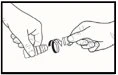

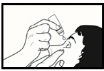
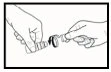
Image 1 Image 2 Image 3 Image 4
If you use more Dimaz than you should
If too many drops are applied into the eye or if part of the contents of the bottle is swallowed, contact your doctor immediately.
In case of overdose or accidental ingestion, contact your doctor or pharmacist immediately or call the Toxicology Information Service at telephone number: 91 562 04 20, indicating the medicine and the amount ingested.
If you forget to use Dimaz
It is important to use this medicine as prescribed by your doctor. If you forget to administer a dose, do so as soon as possible. However, if it is almost time for the next dose, do not administer the missed dose and continue with your regular dosing schedule.
Do not use a double dose to make up for a missed dose.
If you stop using Dimaz
If you wish to stop using this medicine, consult your doctor first.
If you have any further questions about the use of this medicine, ask your doctor or pharmacist.
4. Possible adverse effects
Like all medicines, this medicine may cause adverse effects, although not everybody gets them.
If you develop allergic reactions such as hives, swelling of the face, lips, tongue and (or) throat causing difficulty breathing or swallowing, or severe skin reactions with blistering or peeling, stop using this medicine and contact your doctor immediately.
The following adverse effects have been reported with dorzolamide during clinical trials or after marketing:
Very common adverse effects (may affect more than 1 in 10 people)
Burning and stinging of the eyes.
Common adverse effects (may affect up to 1 in 10 people)
Corneal disease with eye pain and blurred vision (superficial punctate keratitis), tearing, itchy eye with discharge (conjunctivitis), eyelid irritation/inflammation, blurred vision, headache, nausea, bitter taste, and fatigue.
Uncommon adverse effects (may affect up to 1 in 100 people)
Inflammation of the iris and ciliary body of the eye (iridocyclitis).
Rare adverse effects (may affect up to 1 in 1,000 people)
Tingling and numbness of hands and feet, transient myopia (which resolves upon discontinuation of the medicine), fluid accumulation under the retina (choroidal detachment, after filtration surgery), eye pain, eyelid crusting, low eye pressure, corneal edema (with symptoms of visual disturbances), ocular irritation including redness, kidney stones, dizziness, nasal bleeding, throat irritation, dry mouth, localized skin rash (contact dermatitis), severe skin reactions with blistering or peeling (Stevens-Johnson syndrome, toxic epidermal necrolysis), allergic-type reactions such as skin rash, urticaria, itching. In rare cases, swelling of the lips, eyes and mouth, difficulty breathing and wheezing.
Frequency not known (cannot be estimated from available data)
Breathing difficulty.
Foreign body sensation in the eye (feeling like something is in the eye).
Strong heartbeats that may be rapid or irregular (palpitations).
Increased heart rate.
Increased blood pressure.
Reporting of adverse effects
If you experience any type of adverse effect, talk to your doctor, pharmacist, or nurse, even if it is a possible adverse effect not listed in this leaflet. You may also report them directly via the Spanish Pharmacovigilance System for Human Medicines: www.notificaRAM.es. By reporting adverse effects, you can help provide more information on the safety of this medicine.
5. Storage of Dimaz
This medicine does not require special storage conditions.
After opening, do not store at temperatures above 25°C.
5 ml bottle:
Discard 60 days after first opening of the bottle.
10 ml bottle:
Discard 90 days after first opening of the bottle.
Keep this medicine out of the sight and reach of children.
Do not use this medicine after the expiry date which is stated on the carton and on the label of the bottle after EXP. The expiry date refers to the last day of the month indicated.
Medicines should not be disposed of via wastewater or household waste. Dispose of empty containers and unused medicines at the SIGRE collection point at your pharmacy. If you are unsure, ask your pharmacist how to dispose of containers and medicines you no longer need. This will help protect the environment.
6. Package contents and other information
Composition of Dimaz
- The active substance is dorzolamide. Each ml contains 20 mg of dorzolamide (as 22.26 mg of dorzolamide hydrochloride).
Each drop (approximately 35 microlitres (µl)) contains 0.70 mg of dorzolamide.
- The other components are hydroxyethylcellulose, mannitol, sodium citrate, sodium hydroxide (to adjust pH), water for injections.
Appearance of the medicinal product and contents of the container
Dimaz is a sterile, colourless, transparent, viscous liquid.
It is supplied in white LDPE bottles (5 ml, 11 ml) with a multidose HDPE dropper dispenser, which prevents contamination of the contents through a silicone valve system and filtered air return into the bottle, and a tamper-evident HDPE screw cap, packed in a cardboard box.
Pack sizes: 1 x 5 ml, 3 x 5 ml, 1 x 10 ml, 2 x 10 ml.
Only some pack sizes may be marketed.
Marketing Authorisation Holder and Manufacturer
Marketing Authorisation Holder
BRILL PHARMA, S.L.
C/ Munner, 8
08022 Barcelona
Spain
Manufacturer
Rafarm S.A.
Thesi Pousi Xatzi Agiou Louka
Paiania, 190 02
Greece
FRINO Pharm e.K.
Keplerweg 3
82538 Geretsried
Germany
This medicinal product is authorised in the European Economic Area member states under the following names:
Czech Republic - Dorzolamide Farmaprojects 20 mg/ml ocní kapky, roztok
Germany - Dimaz 20 mg/ml Augentropfen, Lösung
Spain - Dimaz 20 mg/ml colirio en solución
Date of latest revision of this leaflet: June 2024
Detailed information on this medicinal product is available on the website of the Spanish Agency of Medicines and Health Products (AEMPS) (http://www.aemps.es/)