Diltiazem Pensa 60 mg tablets EFG
Spain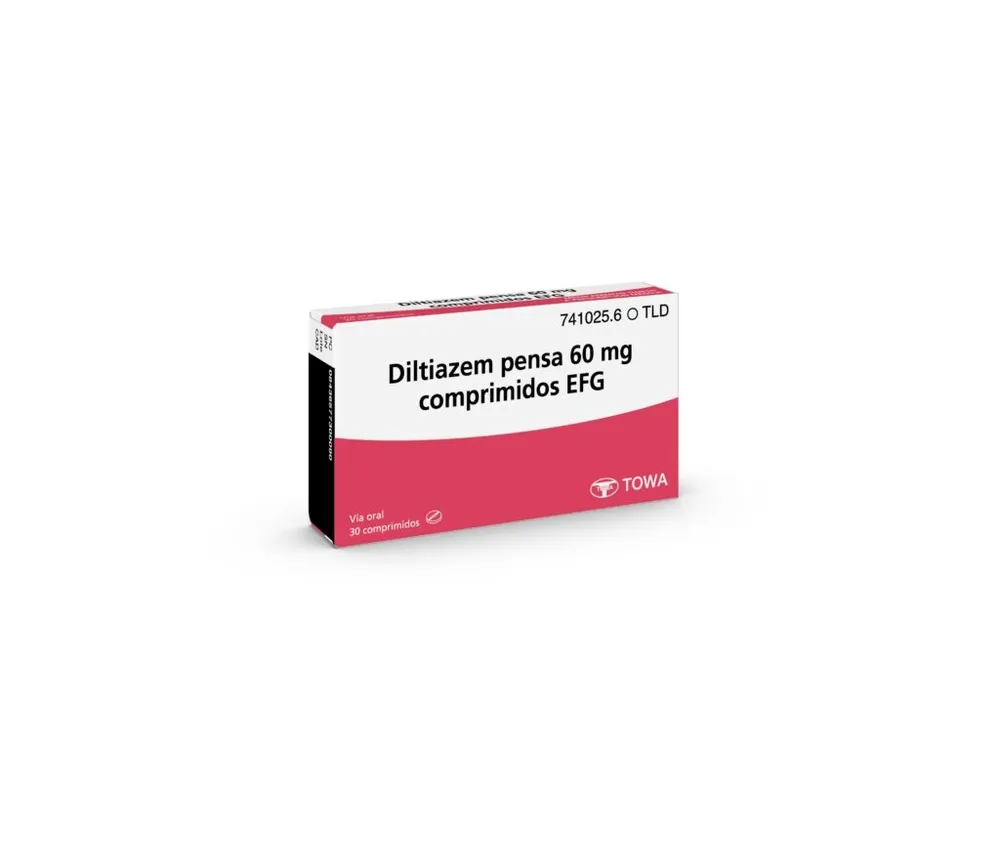
Table of Contents
Package leaflet: Information for the user
Introduction
Package leaflet: information for the user
Diltiazem pensa 60 mg tablets EFG
Read this entire leaflet carefully before you start taking this medicine because it contains important information for you.
- Keep this leaflet. You may need to read it again.
- If you have any questions, ask your doctor or pharmacist.
- This medicine has been prescribed for you only. Do not pass it on to others, even if they have the same symptoms as you, because it may harm them.
- If you experience any adverse reactions, talk to your doctor or pharmacist, even if they are not listed in this leaflet. See section 4.
Contents of the leaflet
- What Diltiazem Pensa is and what it is used for
- What you need to know before taking Diltiazem Pensa
- How to take Diltiazem Pensa
- Possible side effects
- How to store Diltiazem Pensa
- Contents of the pack and other information
1. What Diltiazem Pensa is and what it is used for
Diltiazem Pensa belongs to a group of medicines called selective calcium channel blockers, which cause dilation of blood vessels, resulting in a reduction in blood pressure, as well as an increase in blood flow and a decrease in the heart's oxygen requirements.
Diltiazem is indicated for:
- Treatment and prevention of angina pectoris, including Prinzmetal (vasospastic) angina.
- Treatment of high blood pressure.
2. What you need to know before taking Diltiazem Pensa
Do not take Diltiazem Pensa
- If you are allergic to the active substance or to any of the other ingredients of this medicine (listed in section 6).
- If you have a heart rhythm or conduction disorder, such as sick sinus syndrome in patients without a pacemaker, second- or third-degree atrioventricular block in patients without a pacemaker, or severe bradycardia (heart rate below 40 beats per minute).
- If you have a heart condition such as left ventricular failure with pulmonary congestion.
- If you are being treated with dantrolene (by infusion).
- If you are already taking a medicine containing ivabradine for the treatment of certain heart conditions.
- If you are already taking a medicine containing lomitapide used to treat high cholesterol levels (see section: “Other medicines and Diltiazem Pensa; combinations that are contraindicated”).
Warnings and precautions
Consult your doctor or pharmacist before starting to take Diltiazem Pensa
- If you have a history of heart failure, new onset breathing difficulty, slow heart rate, or low blood pressure. Cases of kidney injury have been reported in patients with these conditions; your doctor may need to monitor your kidney function.
- If you have heart conditions such as left ventricular dysfunction, bradycardia (slow heart rate), or first-degree atrioventricular block (a type of arrhythmia) detected on electrocardiogram, close monitoring by your doctor will be necessary.
- If you are undergoing general anesthesia, you must inform the anesthesiologist that you are being treated with this medicine.
- If you are elderly or have kidney or liver disease (renal or hepatic impairment), blood levels of diltiazem may be higher, so close monitoring of heart rate is required at the beginning of treatment.
- If you experience mood changes, including depression, inform your doctor.
- If you are at risk of intestinal obstruction, as diltiazem, like other medicines in the same class, reduces intestinal motility.
- If you have latent or overt diabetes mellitus. Strict monitoring is required in these patients due to the possible increase in blood glucose levels.
- The use of diltiazem may induce bronchospasm, including worsening of asthma, especially in patients with pre-existing bronchial hyperreactivity. Cases have also been reported after dose increases. Inform your doctor if you develop signs or symptoms of respiratory problems during treatment with this medicine.
- If you have a history of bradycardia (slow heart rate), low blood pressure, heart failure, or new onset breathing difficulty, as cases of kidney injury have been reported in patients with these conditions.
Sun exposure is not recommended during treatment, as photosensitivity reactions (skin rashes) may occur.
Other medicines and Diltiazem Pensa
Tell your doctor or pharmacist if you are taking, have recently taken, or might need to take any other medicines.
Certain medicines may interact with Diltiazem Pensa. In such cases, it may be necessary to adjust the dose or discontinue one of the medicines:
It is especially important that you inform your doctor if you are taking any of the following medicines:
Combinations that are contraindicated:
- Dantrolene: concomitant use of diltiazem with dantrolene (by infusion) is contraindicated.
- Ivabradine (see section “Do not take Diltiazem Pensa”).
- Medicines containing lomitapide used to treat high cholesterol levels. Diltiazem may increase lomitapide concentrations, which could increase the likelihood and severity of liver-related side effects.
Combinations that require caution:
Medicines used to treat cardiovascular conditions, such as:
- Alpha-blockers, as they may enhance the hypotensive effect (lowering of blood pressure).
- Beta-blockers, as cardiac disorders may occur. This combination should only be used under clinical and electrocardiographic monitoring, especially at the beginning of treatment.
- An increased risk of depression has been observed when diltiazem is administered together with beta-blockers (see section 4 Possible side effects).
- Amiodarone and digoxin, as they increase the risk of bradycardia. Caution is especially needed in elderly patients and when high doses are used.
- Other antiarrhythmic medicines, as diltiazem has antiarrhythmic properties, increasing the risk of cardiac adverse effects. This combination should only be used under clinical and electrocardiographic monitoring.
- Nitrate derivatives, as they may enhance the hypotensive effect and cause fainting.
The combination of diltiazem with the following medicines increases the blood levels of these medicines, so your doctor will need to adjust the dose during treatment with diltiazem:
- Cyclosporine (an immunosuppressant used in organ transplantation),
- Phenytoin (a medicine used to treat epilepsy). Monitoring of plasma phenytoin concentrations is recommended when administered together with diltiazem.
- Carbamazepine (a medicine used to treat epilepsy),
- Theophylline (a medicine used for asthma),
- H2 antagonists (cimetidine and ranitidine, medicines used to treat stomach ulcers), as they increase the blood levels of diltiazem; therefore, treatment with these medicines may need to be discontinued or the daily dose of diltiazem adjusted.
- Rifampicin (an antibiotic used to treat tuberculosis and certain infections), which may reduce blood levels of diltiazem; your doctor will need to monitor you closely.
- X-ray contrast media: patients treated with diltiazem may experience increased cardiovascular effects, such as hypotension, when given an intravenous bolus of ionic X-ray contrast media. Special caution is required in patients receiving diltiazem concomitantly with X-ray contrast media.
- Lithium (a medicine used to treat mental health conditions), as it may increase lithium toxicity. Your doctor will closely monitor your blood lithium levels.
General information to consider:
-
Due to possible additive effects, caution and careful evaluation are required when diltiazem is administered together with other agents known to affect cardiac conduction and/or contractility.
-
Antiplatelet agents (medicines that prevent blood cells called “platelets” from clumping and forming clots): the possibility of additive effects on platelet aggregation from diltiazem and antiplatelet agents (such as acetylsalicylic acid, ticagrelor, cilostazol) should be considered.
-
Medicines metabolized by the CYP3A4 enzyme, as this may result in decreased blood levels of diltiazem or increased levels of any co-administered medicine.
-
Patients who consume grapefruit juice should be monitored, as it may increase the adverse effects of diltiazem. Grapefruit juice should be avoided if an interaction is suspected.
-
Benzodiazepines (midazolam, triazolam), which are medicines with sedative, anxiolytic, anticonvulsant, amnestic, and muscle-relaxant effects, as diltiazem increases blood levels of these medicines, prolonging their duration of action. Your doctor will exercise special caution when prescribing benzodiazepines (especially short-acting ones) if you are taking diltiazem.
-
Corticosteroids (methylprednisolone), used as anti-inflammatory agents and for severe allergies due to their immunosuppressive properties, as diltiazem reduces the metabolism of methylprednisolone; your doctor will monitor you closely and may need to adjust your methylprednisolone dose.
-
Statins (medicines used to lower cholesterol), as diltiazem greatly increases blood levels of some statins, potentially causing statin-related toxicity.
-
Cilostazol: diltiazem inhibits the metabolism of cilostazol, increasing its pharmacological activity.
Children and adolescents
Diltiazem Pensa 60 mg is not suitable for children.
Taking Diltiazem Pensa with food, drinks, and alcohol
It is recommended to take this medicine preferably before meals.
Grapefruit juice should be avoided (see section “Other medicines and Diltiazem Pensa”).
Pregnancy, breastfeeding, and fertility
If you are pregnant or breastfeeding, think you may be pregnant, or plan to become pregnant, consult your doctor or pharmacist before using this medicine.
This medicine must not be administered to pregnant women or women of childbearing potential who are not using an effective method of contraception.
This medicine should not be taken during breastfeeding, as it passes into breast milk. If your doctor considers it essential to take this medicine, the baby should be fed by an alternative method.
Driving and using machines
Based on the adverse effects reported with the use of Diltiazem Pensa, such as dizziness (common) and malaise (common), the ability to drive and operate machinery may be impaired, although no specific studies have been conducted on this matter.
Diltiazem Pensa contains lactose and hydrogenated castor oil
This medicine contains lactose. If your doctor has informed you that you have an intolerance to certain sugars, consult with him before taking this medicine.
This medicine may cause stomach discomfort and diarrhea because it contains hydrogenated castor oil.
3. How to take Diltiazem Pensa
Follow exactly the instructions given by your doctor for taking this medicine. If in doubt, consult your doctor again.
Diltiazem is administered orally. Your doctor will indicate the duration of your treatment.
Prevention and treatment of angina pectoris:
The recommended dose is 1 tablet every 8 hours (three times a day), preferably taken before meals.
Hypertension:
Treatment of hypertension should be initiated with half (1/2) of a 60 mg tablet every 8 hours (three times a day), i.e., 90 mg of diltiazem per day. Your doctor may increase or decrease these doses if considered necessary.
Use in elderly patients and in patients with kidney or liver disease
In these cases, blood levels of diltiazem may increase; therefore, your doctor should consider the need to adjust your dose at the beginning of treatment.
Patients with renal or hepatic impairment: use with caution. See section “Warnings and precautions”.
Interchangeability between different diltiazem medicinal products is not recommended unless expressly advised by your doctor.
If you take more Diltiazem Pensa than you should
If you have taken more diltiazem than you should, contact your doctor or pharmacist immediately, or call the Toxicology Information Service at 91 562 04 20, indicating the medicine and the amount taken. It is recommended to bring the medicine’s packaging and leaflet to the healthcare professional.
An overdose of diltiazem may cause a significant drop in blood pressure (possibly leading to collapse), slowed heart rate, sinus arrest, disturbances in cardiac conduction, cardiac arrest, decreased renal function, and renal failure.
In case of significant overdose, you should be taken to a hospital, where gastric lavage and/or osmotic diuresis may be performed.
Atropine, epinephrine, glucagon, or calcium gluconate may be administered as antidotes.
If you forget to take Diltiazem Pensa
Do not take a double dose to make up for forgotten doses.
If you forget to take a dose, take it as soon as possible and then take the next dose at the usual time. However, if it is almost time for your next dose, skip the missed dose.
If you stop taking Diltiazem Pensa
Your doctor will indicate how long you should take diltiazem. Do not stop treatment prematurely.
If you discontinue treatment with diltiazem, your condition may worsen.
If you have any further questions about the use of this medicine, ask your doctor or pharmacist.
4. Possible adverse effects
Like all medicines, this medicine can cause adverse effects, although not everyone experiences them.
The following adverse effects have been reported according to the frequencies detailed below:
Very common: may affect more than 1 in 10 people
Common: may affect up to 1 in 10 people
Uncommon: may affect up to 1 in 100 people
Rare: may affect up to 1 in 1,000 people
Very rare: may affect up to 1 in 10,000 people
Frequency not known (cannot be estimated from available data)
Blood and lymphatic system disorders:
- Frequency not known: thrombocytopenia.
Metabolism and nutrition disorders:
- Frequency not known: hyperglycaemia.
Psychiatric disorders:
- Uncommon: nervousness, difficulty falling asleep (insomnia).
- Frequency not known: mood changes including depression.
Nervous system disorders:
- Common: headache, dizziness.
- Frequency not known: movement disorders (extrapyramidal syndrome).
Cardiac disorders:
- Common: atrioventricular block (a type of arrhythmia), palpitations.
- Uncommon: slow heart rate (bradycardia).
- Frequency not known: sinoatrial block, heart's difficulty in pumping blood (congestive heart failure), heart rhythm disorder (sinus arrest), cardiac arrest (asystole).
Vascular disorders:
- Common: hot flushes.
- Uncommon: drop in blood pressure upon standing up quickly, with or without dizziness (orthostatic hypotension).
- Frequency not known: vasculitis (diseases characterized by inflammation of blood vessels), including leukocytoclastic vasculitis.
Respiratory, thoracic and mediastinal disorders:
- Frequency not known: bronchospasm (including worsening of asthma).
Gastrointestinal disorders:
- Common: constipation, indigestion (dyspepsia), stomach pain, nausea.
- Uncommon: vomiting, diarrhoea.
- Rare: dry mouth.
- Frequency not known: inflammation of the hard palate (gingival hyperplasia).
Hepatobiliary disorders:
- Uncommon: increased liver enzyme levels in the blood during the initial treatment period. These increases are usually temporary.
- Frequency not known: hepatitis (inflammatory disease affecting the liver).
Skin and subcutaneous tissue disorders:
- Common: skin redness (erythema).
- Rare: skin irritation and itching (urticaria).
- Frequency not known: sensitivity to light (photosensitivity), swelling of the throat, lips and airways (angioneurotic oedema), rash, erythema multiforme (a serious skin disease associated with red spots, blisters), including cases of Stevens-Johnson syndrome (severe blistering reactions of the skin and mucous membranes), toxic epidermal necrolysis (a severe skin peeling disease), sweating, exfoliative dermatitis (skin redness, itching, hair loss), acute generalized exanthematous pustulosis (sudden rash accompanied by fever, with formation of pustules or skin lesions characterized as small, inflamed, pus-filled, and blister-like), occasionally erythematous desquamation with or without fever. A condition in which the body's immune system attacks normal tissue, causing symptoms such as swollen joints, fatigue, and skin rashes (called "lupus-like syndrome").
Reproductive system and breast disorders:
- Frequency not known: excessive breast development in men (gynaecomastia).
General disorders and administration site conditions:
- Very common: swelling in the lower limbs (peripheral oedema).
- Common: malaise.
Reporting of adverse effects
If you experience any type of adverse effect, consult your doctor or pharmacist, even if they are possible adverse effects not listed in this leaflet. You can also report them directly via the Spanish Pharmacovigilance System for Human Medicines: www.notificaRAM.es. By reporting adverse effects, you can help provide more information on the safety of this medicine.
5. Storage of Diltiazem Pensa
No special storage conditions are required.
Keep this medicine out of the sight and reach of children.
Do not use this medicine after the expiry date stated on the container (after Exp. The expiry date is the last day of the month indicated).
Medicines should not be disposed of via wastewater or household waste. Dispose of unused medicines and their containers at the SIGRE Point at your pharmacy. If you are in doubt, ask your pharmacist how to dispose of medicines and containers you no longer need. This will help protect the environment.
6. Contents of the pack and other information
Composition of Diltiazem Pensa
The active substance is diltiazem hydrochloride. Each tablet contains 60 mg of diltiazem hydrochloride.
The other components are: lactose, stearic acid, hydrogenated castor oil, carboxymethylcellulose, magnesium stearate, silicon dioxide.
Appearance of the product and contents of the container
Diltiazem Pensa tablets are white, circular, flat, bevelled, and scored on one side.
The tablets are presented in blisters containing 30 and 60 tablets.
Marketing Authorization Holder
Towa Pharmaceutical, S.A.
C/ de Sant Martí, 75-97
08107 Martorelles (Barcelona)
Spain
Manufacturer
Towa Pharmaceutical Europe, S.L.
C/ de Sant Martí 75-97
08107 Martorelles (Barcelona)
Spain
Date of the most recent review of this leaflet: March 2023
Detailed information on this medicine is available on the website of the Spanish Agency for Medicines and Health Products (AEMPS) http://www.aemps.gob.es/