Digoxin Teofarma 0.25 mg tablets
Spain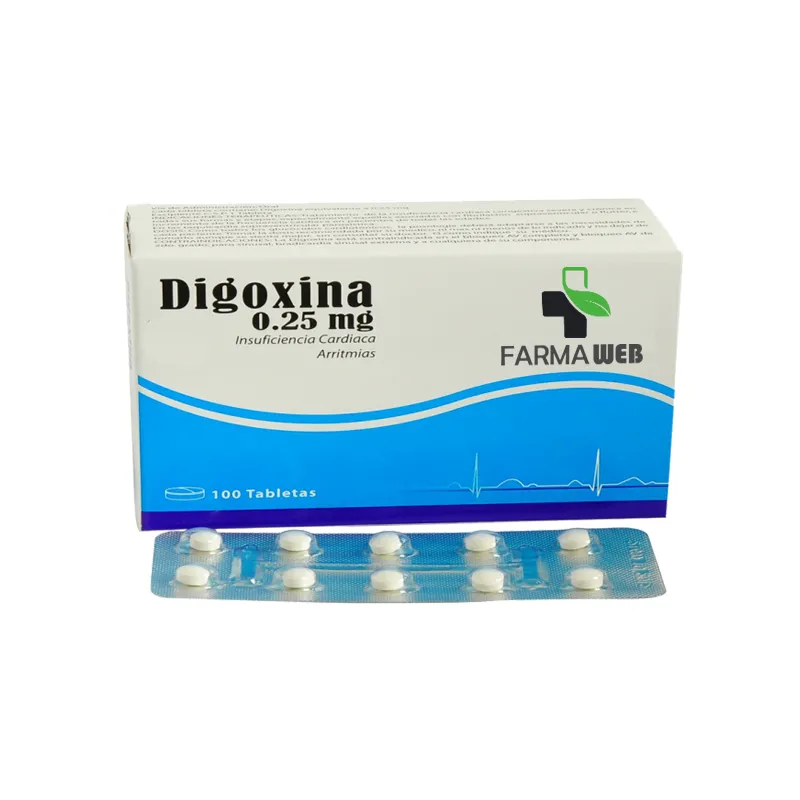
Table of Contents
- Package leaflet: Information for the user
- Introduction
- 1. What Digoxina Teofarma is and what it is used for
- 2. What you need to know before starting to take Digoxina Teofarma
- 3. How to take Digoxin Teofarma
- 4. Possible adverse effects
- 5. Storage of Digoxin Teofarma
- 6. Contents of the container and additional information
Package leaflet: Information for the user
Introduction
Package leaflet: information for the user
Digoxina Teofarma 0.25 mg tablets
Digoxin
Read all of this leaflet carefully before you start taking this medicine because it contains important information for you.
- Keep this leaflet. You may need to read it again.
- If you have any questions, ask your doctor or pharmacist.
- This medicine has been prescribed for you only and must not be given to other people, even if they have the same symptoms as you, because it could harm them.
- If you experience any adverse reactions, talk to your doctor or pharmacist, even if they are not listed in this leaflet. See section 4.
Contents of this leaflet:
- What Digoxina Teofarma is and what it is used for
- What you need to know before taking Digoxina Teofarma
- How to take Digoxina Teofarma
- Possible side effects
- How to store Digoxina Teofarma
- Contents of the pack and other information
1. What Digoxina Teofarma is and what it is used for
Digoxin belongs to a group of medicines called cardiac glycosides. These medicines are used to treat certain heart conditions, such as heart failure, and to treat certain irregularities of the heart rhythm.
2. What you need to know before starting to take Digoxina Teofarma
Do not take Digoxina Teofarma
- if you are allergic (hypersensitive) to digoxin, digitoxin, or any of the other ingredients of this medicine (listed in section 6).
- if you have heart rhythm disturbances caused by poisoning with other cardiac glycosides
- if you have serious heart problems such as inflammation of the heart, enlargement of the heart muscle, conduction disorders of electrical impulses in the heart, or irregular heart rhythm, including Wolff-Parkinson-White syndrome (a type of heart condition).
Warnings and precautions
This medicine must be used exclusively under the supervision and control of a doctor.
Consult your doctor before starting to take this medicine:
- If you have heart rhythm disturbances
- If you have recently suffered a heart attack (myocardial infarction)
- If you are currently taking or have taken any other cardiac glycoside within the last two weeks
- If you have any kidney disease
- If your doctor has told you that you have high levels of calcium in your blood, or low levels of magnesium or potassium in your blood
- If you have any thyroid disease
- If you have any lung or respiratory disease
- If you have any stomach or intestinal disease
Digoxin may cause changes in the electrocardiogram that do not reflect toxicity.
If you are scheduled for surgery or are to receive treatment with anesthetics, you must inform your doctor in advance that you are taking digoxin.
Use of Digoxina Teofarma with other medicines
Inform your doctor or pharmacist if you are using, have recently used, or might need to use any other medicine, especially if it is one of the following:
- Medicines used to treat stomach and intestinal problems (sucralfate, propanteline), including laxatives and those used for indigestion (antacids, kaolin, medicinal charcoal), diarrhea (sulfasalazine, diphenoxylate with atropine), and vomiting (metoclopramide).
- Phenytoin, used to treat epilepsy
- Itraconazole, amphotericin B, used to treat fungal infections
- Alprazolam, diazepam, used to treat anxiety
- Beta-blocking agents (propranolol or atenolol), used to treat high blood pressure (hypertension) or irregular heart rhythm (arrhythmias)
- Anti-inflammatory agents such as carbenoxolone, glucocorticoids, ACTH, indomethacin, phenylbutazone, and salicylates
- Cholestyramine, colestipol, used to lower cholesterol
- Cyclosporine, used after transplantation and also for the treatment of eczema, psoriasis, rheumatic diseases, and ulcerative colitis
- Salbutamol and theophylline, used to treat asthma
- Nefazodone, trazodone, tricyclic antidepressants, used to treat depression
- Quinine, used to treat malaria
- Penicillamine, used to treat rheumatoid arthritis
- Muscle relaxants (suxamethonium chloride, pancuronium)
- Calcium salts
- Medicines used to treat heart rhythm disturbances (amiodarone, flecainide, propafenone, quinidine)
- Medicines used to treat high blood pressure (hypertension) (prazosin, captopril, nisoldipine, lacidipine, nitrendipine, felodipine, tiapamil, verapamil, diltiazem, reserpine)
- Medicines that help eliminate fluid from the body (diuretics) (spironolactone, triamterene, amiloride)
- Medicines used to treat cancer
- Medicines used to treat bacterial infections (tetracyclines, erythromycin, clarithromycin, roxithromycin, trimethoprim, gentamicin, neomycin, rifampicin)
- Sympathomimetic medicines, such as adrenaline
Inform your doctor if you are taking a medicine containing enzalutamide (for the treatment of prostate cancer). It may interfere with your digoxin tests.
Pregnancy and breastfeeding
If you are pregnant or breastfeeding, think you may be pregnant, or plan to become pregnant, consult your doctor before using this medicine.
The dose required is less predictable in pregnant women, so a higher dose of digoxin may be needed during pregnancy. As with other medicines, digoxin should only be used during pregnancy if the expected clinical benefit to the mother outweighs any possible risk to the developing fetus.
Adverse fetal effects, such as miscarriage or fetal death in mothers with digitalis toxicity, have been reported when large amounts of digoxin were ingested.
Although digoxin is excreted in breast milk, the amounts are minimal, so it is not necessary to interrupt breastfeeding; however, the infant's heart rate should be monitored.
Driving and using machines
Digoxin may affect your vision. Therefore, caution is advised when driving or operating machinery until you know how this medicine affects you.
Digoxina Teofarma 0.25 mg tablets contain lactose
This medicine contains lactose. If your doctor has informed you of an intolerance to certain sugars, consult with him before taking this medicine.
3. How to take Digoxin Teofarma
Follow exactly the dosing instructions for this medicine as given by your doctor. If in doubt, consult your doctor again.
Your doctor will determine the amount of this medicine you should take based on your age, body weight, kidney function, presence of any illness, or whether you are taking other medications.
The groove on the tablet is intended solely to split the tablet if you find it difficult to swallow whole, but not for dividing it into equal doses.
Adults, adolescents, and children over 10 years of age:
- Initial dose
Rapid oral administration:
0.75 to 1.5 mg (3 to 6 tablets) as a single dose.
In less urgent cases or if there is a risk of toxicity (e.g., in elderly patients), the oral dose should be administered in divided doses every six hours, with approximately half of the total dose given as the first dose.
Slow oral administration:
0.25 to 0.75 mg (1 to 3 tablets) daily for 1 week, followed by a maintenance dose.
Your doctor will evaluate your response to treatment.
- Maintenance dose
Your doctor will determine the maintenance dose based on your response to treatment. The usual dose is 0.125 to 0.75 mg of digoxin per day. If you are more sensitive to the adverse effects of digoxin, a maintenance dose of 0.0625 mg per day or lower may be sufficient.
Newborns, infants, and children under 10 years of age
- Initial oral dose:
0.025 to 0.045 mg per kg of body weight over 24 hours.
This initial dose should be administered in divided doses, with approximately half of the total dose given as the first dose, and additional fractions of the total dose administered at intervals of 4 to 8 hours. The physician will assess the child's response to treatment before administering each additional dose.
- Maintenance dose:
Preterm newborns:
- daily dose = 20% of the initial dose administered over 24 hours (intravenous or oral).
Term newborns and children up to 10 years of age:
- daily dose = 25% of the initial dose administered over 24 hours (intravenous or oral).
These regimens are only guidelines. The physician must carefully monitor the child's response and serum digoxin levels to adjust the dose appropriately in this patient group.
If the child has received cardiac glycosides within the previous two weeks before starting digoxin treatment, the doctor will prescribe lower doses than those recommended above.
Dosages should also be reduced in premature and immature newborns due to their reduced renal function.
Use in children
Tablets are not an appropriate pharmaceutical form for children under 5 years of age or for those unable to swallow whole tablets.
Elderly patients
Your doctor may prescribe lower doses than those recommended for adults to avoid toxic effects due to increased serum digoxin levels resulting from impaired renal function or low lean body mass. Your doctor will regularly monitor your serum digoxin and potassium levels.
If you take more Digoxin Teofarma than you should:
If you take more digoxin than you should, or if you think your child has ingested any tablets, contact your doctor, pharmacist, or call the Toxicology Information Service immediately at telephone number: 91 562 04 20, stating the name of the medicine and the amount taken.
If you forget to take Digoxin Teofarma
Take the missed dose as soon as you remember, unless it is almost time for your next scheduled dose. Then continue taking your medicine as directed by your doctor.
Do not take a double dose to make up for a missed dose.
If you stop taking Digoxin Teofarma
Your doctor will determine the duration of treatment with this medicine. Do not stop treatment without consulting your doctor.
If you have any further questions about the use of this medicine, ask your doctor or pharmacist.
4. Possible adverse effects
Like all medicines, this medicine can cause adverse effects, although not everyone will experience them.
Common adverse effects (occur in between 1 and 10 out of 100 patients)
Disturbances in cardiac conduction and heart rhythm, loss of appetite, nausea, vomiting, anorexia, abdominal pain.
Uncommon adverse effects (occur in between 1 and 10 out of 1,000 patients)
Headache, fatigue, insomnia.
Rare adverse effects (occur in between 1 and 10 out of 10,000 patients)
Diarrhea, mood disturbances, depression, hallucinations, psychosis, visual disturbances, breast enlargement, allergic reactions such as erythema, erythematous lupus, skin rash, decreased number of platelets in the blood, fatigue.
Adverse effects with unknown frequency (cannot be estimated from the available data)
Mesenteric infarction.
Reporting of adverse effects
If you experience any type of adverse effect, consult your doctor or pharmacist, even if it is a possible adverse effect not listed in this leaflet. You may also report them directly through the Spanish Pharmacovigilance System for Human Medicines: https://www.notificaram.es. By reporting adverse effects, you can help provide more information on the safety of this medicine.
5. Storage of Digoxin Teofarma
Keep this medicine out of the sight and reach of children.
Do not use this medicine after the expiry date stated on the blister and carton after EXP. The expiry date refers to the last day of the month indicated.
Medicines should not be disposed of via wastewater or household waste. Dispose of unused containers and medicines at the SIGRE Point at your pharmacy. If in doubt, ask your pharmacist how to dispose of containers and medicines you no longer need. This will help protect the environment.
6. Contents of the container and additional information
Composition of Digoxina Teofarma 0.25 mg tablets
- The active substance is digoxin. Each tablet contains 0.25 mg of digoxin.
- The other components (excipients) are: monohydrate lactose, polyvinylpyrrolidone (E-1201), microcrystalline cellulose (E-460), sodium starch glycolate from potato, colloidal silicon dioxide (E551), magnesium stearate (E572).
Appearance of the medicinal product and contents of the container
This medicine is presented as small, round, white, scored tablets.
The score is intended solely for ease of breaking and swallowing, but not for dividing into equal doses.
Each pack contains 50 tablets in a blister.
Marketing Authorization Holder and Manufacturer
Teofarma S.r.l.
Via F.lli Cervi, 8
27010 Valle Salimbene
Pavia - Italy
Date of the most recent revision of this leaflet: August 2025
Detailed and up-to-date information on this medicinal product is available on the website of the Spanish Agency of Medicines and Health Products (AEMPS) http://www.aemps.gob.es/.
________________________________________________________________________
This information is intended for healthcare professionals only
Symptoms of intoxication
Digoxin overdose may enhance the occurrence of adverse effects.
Symptoms of intoxication include cardiac, gastrointestinal, and central nervous system manifestations. Cardiac symptoms are the most severe and life-threatening.
In children and infants, overdose is initially characterized by cardiac arrhythmias (alterations in heart rhythm). In adults, anorexia, nausea, vomiting, diarrhea, and central nervous system disturbances are more commonly observed.
The severity of intoxication depends on the amount of digoxin ingested and on extracellular and intracellular potassium concentrations.
Treatment of intoxication
If intoxication has occurred within the first 4 hours after ingestion, in patients with bradycardia, atropine injection (0.5–1.0 mg IV or SC) is recommended. In all other cases, patients should receive activated charcoal.
Antidote
A digoxin-specific antibody fragment (Fab) has been developed for severe cases of digitalis intoxication with cardiac arrhythmias and significant complications, following suicide attempts or accidental poisoning.
Forced diuresis, hemodialysis, and peritoneal dialysis should not be performed, as they are ineffective in eliminating digitalis glycosides.
Symptomatic treatment of intoxication
In case of tachycardias:
Potassium infusions. Close monitoring for the development of hyperkalemia is required. Potassium is contraindicated in advanced heart block.
For correction of arrhythmia:
Phenytoin 125–250 mg administered as slow IV injection, followed by oral therapy, or lidocaine 50–100 mg as slow IV injection followed by IV infusion (2–4 mg/min). If the above therapeutic measures are ineffective, cardioversion should be considered.
For correction of bradycardia (pulse <60/min):
Atropine 0.5 mg IV, repeated if necessary; if ineffective, temporary pacing may be indicated.
All therapeutic measures must be performed under ECG monitoring.