Dicloabak 1 mg/ml eye drops solution
Spain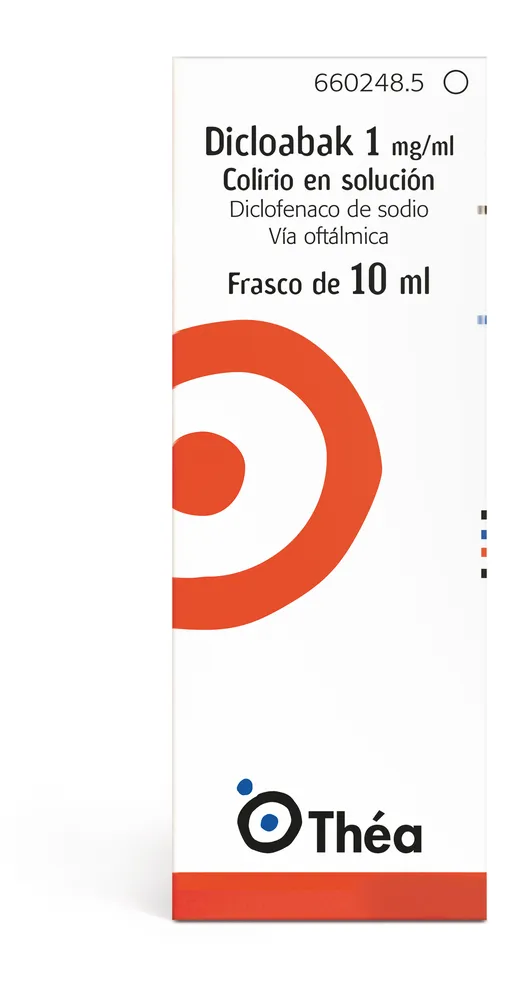
Table of Contents
- Package leaflet: Information for the user
- Introduction
- 1. What DICLOABAK is and what it is used for
- 2. What you need to know before starting to use DICLOABAK
- **Do not use Dicloabak:**
- - if you are allergic (hypersensitive) to sodium diclofenac or to any of the other components of this medicine (listed in section 6),
- **Warnings and precautions**
- **Use of Dicloabak with other medicines**
- 3. How to use DICLOABAK
- Do not use a double dose to make up for a missed dose.
- 4. Possible adverse effects
- 5. Storage of DICLOABAK
- 6. Contents of the pack and other information
Package leaflet: Information for the user
Introduction
Package leaflet: information for the user
DICLOABAK 1 mg/ml, eye drops, solution
sodium diclofenac
Read the entire leaflet carefully before you start using this medicine, because it contains important information for you.
- Keep this leaflet, as you may need to read it again. If you have any questions, ask your doctor, pharmacist or nurse.
- This medicine has been prescribed for you only, and you should not give it to other people, even if they have the same symptoms as you, because it may harm them.
- If you experience any adverse effects, consult your doctor, pharmacist or nurse, even if they are adverse effects not listed in this leaflet. See section 4.
Contents of the leaflet
- What DICLOABAK is and what it is used for
- What you need to know before using DICLOABAK
- How to use DICLOABAK
- Possible side effects
- How to store DICLOABAK
- Contents of the pack and other information
1. What DICLOABAK is and what it is used for
This medicine contains a non-steroidal anti-inflammatory drug (NSAID) for ophthalmic use.
It is used during certain eye surgeries and as postoperative treatment for:
- prevention of miosis (reduction in pupil size) during cataract surgery.
- prevention of inflammation in cataract surgery and anterior segment eye surgery.
- treatment of ocular pain in photorefractive keratectomy surgery (corrective surgery for myopia) during the first 24 hours after surgery.
2. What you need to know before starting to use DICLOABAK
Do not use Dicloabak:
- if you are allergic (hypersensitive) to sodium diclofenac or to any of the other components of this medicine (listed in section 6),
- if you have a history of allergy, hives (itchy rash), acute rhinitis (swelling and irritation inside the nose), or asthma after using this eye drop or a similar medicine, such as another NSAID or aspirin.
Warnings and precautions
Consult your doctor, pharmacist, or nurse before starting to use DICLOABAK.
-
You should use this medicine with caution:
-
Dicloabak, like other NSAIDs, may in rare cases induce allergic reactions including anaphylactic reactions (severe allergic reaction causing difficulty in breathing or dizziness), even without prior exposure to the drug.
-
In case of hypersensitivity reactions or signs of allergy to this medicine, especially asthma attack or sudden sweating of the face and neck, discontinue treatment and contact your doctor or emergency services immediately.
-
Before using this medicine, inform your doctor if you have asthma associated with chronic rhinitis, chronic sinusitis and/or nasal polyps.
-
An acute eye infection may be masked by the topical use of anti-inflammatory medicines. NSAIDs do not have antimicrobial properties. In case of eye infection, their use together with one or more anti-infective medicines must be carefully managed.
-
Simultaneous use of topical NSAIDs and topical steroids (e.g., dexamethasone) may increase the potential for healing problems.
-
NSAIDs may delay corneal healing.
-
If you have a tendency to bleed or are undergoing anticoagulant treatment (medicines that thin the blood).
-
With high doses and prolonged use, topical NSAIDs may cause keratitis.
-
Patients who have undergone repeated eye surgery within a short period of time, diabetes, ocular surface disease (e.g., dry eye syndrome), rheumatoid arthritis, may be at increased risk of adverse effects on the cornea.
-
Contact lens use after cataract surgery is not recommended. Your doctor will advise you when you can resume wearing contact lenses.
-
If your symptoms worsen or do not improve, you should see a doctor.
Use of Dicloabak with other medicines
If you are using other types of eye drops at the same time as Dicloabak, please wait 15 minutes between treatments.
Inform your doctor or pharmacist if you are taking, have recently taken, or might need to take any other medicines.
Pregnancy, breast-feeding and fertility
If you are pregnant or breast-feeding, think you may be pregnant or are planning to become pregnant, consult your doctor or pharmacist before using this medicine.
Pregnancy
Dicloabak must not be used from the beginning of the 6th month (24 weeks of amenorrhea) until the end of pregnancy. Dicloabak should not be used during the first 5 months of pregnancy (up to 24 weeks of amenorrhea) unless strictly necessary and recommended by your doctor. If treatment is required during this period, the lowest possible dose should be used for the shortest possible duration.
Oral formulations (e.g., tablets) of diclofenac may cause adverse reactions in the fetus. It is unknown whether this same risk applies to Dicloabak when used in the eyes.
Breast-feeding
DICLOABAK may be used during breast-feeding.
Fertility
Like all non-steroidal anti-inflammatory drugs (NSAIDs), this medicine may affect fertility in women and may make it difficult to conceive. This effect is reversible upon discontinuation of treatment. Consult your doctor if you are planning to become pregnant or have difficulty conceiving.
Driving and using machines
You may experience brief visual disturbances after administration of Dicloabak.
Wait until your vision has returned to normal before driving a vehicle or operating any potentially hazardous machinery.
DICLOABAK contains macrogolglycerol ricinoleate
Dicloabak contains macrogolglycerol ricinoleate, which may cause contact eczema (skin reactions).
3. How to use DICLOABAK
Follow exactly the administration instructions for this medicine as given by your doctor or pharmacist. If in doubt, consult your doctor or pharmacist again.
Dosage
The recommended dose in adults and elderly patients is as follows:
Inhibition of miosis during cataract surgery
- Preoperative: instill one drop up to five times within the three hours prior to surgery.
Cataract and anterior segment eye surgeries:
- Preoperative: administer 1 drop up to 5 times within the 3 hours before surgery;
- Postoperative: administer 1 drop 3 times immediately after surgery, followed by 1 drop 3 to 5 times a day for up to 4 weeks.
Treatment of ocular pain in photorefractive keratectomy surgery (corrective surgery for myopia)
- Preoperative: administer 2 drops within the hour prior to surgery;
- Postoperative: administer 2 drops within the hour after surgery, followed by 4 drops during the subsequent 24 postoperative hours.
Do not exceed the recommended dose.
Use in children:
Specific studies have not been conducted.
Method of administration
This medicine is intended for ocular use (ophthalmic use).
Do not inject, do not ingest.
Eye drops must not be administered by peri- or intraocular injection.
If you are using this and other ophthalmic medicines, wait at least 15 minutes between each instillation.
This medicine is a preservative-free ophthalmic solution. Avoid allowing the tip of the multidose container to come into contact with the eye or surrounding areas. The tip may become contaminated, leading to a risk of ocular infections. To avoid possible contamination of the multidose container, avoid contact of the tip with any surface.
Please follow the instructions below when using Dicloabak:
For the PE container (ABAK):
- Wash your hands thoroughly before using the product.
- Unscrew the cap to open the multidose container. Avoid touching the eye or eyelids with the dropper tip.
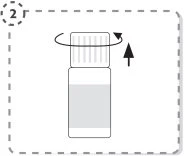
- Tilt your head slightly backward and hold the container vertically over the eye with one hand. With the index finger of the other hand, gently pull the lower eyelid downward. The space created is called the lower conjunctival sac. Squeeze the container firmly to instill one drop into the lower conjunctival sac of the affected eye(s).
If the drop does not enter the eye, try again.
Wipe away any excess liquid that runs onto the cheek.
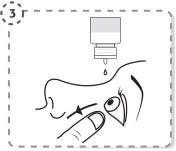
- After instillation, press with a finger at the point between the nose and the eye and close the eyelids for 2 minutes. This will help prevent Dicloabak from spreading to the rest of the body.
Repeat the procedure in the other eye if affected.
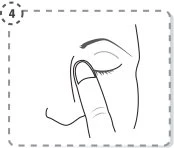
- Close the container after use.
For the LDPE bottle (Novelia)
- Wash your hands thoroughly before using the product.
- Unscrew the cap to open the multidose bottle. Avoid touching the eye or eyelids with the dropper tip.
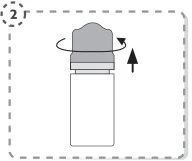
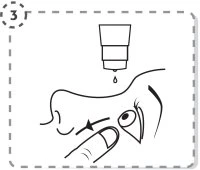
- Tilt the head slightly backward and hold the bottle vertically over the eye with one hand. With the index finger of the other hand, gently pull down the lower eyelid and look upward toward the blue dot. The space created is called the lower conjunctival sac. Gently squeeze the bottle so that one drop falls into the lower conjunctival sac of the affected eye.
If the drop does not enter the eye, try again.
Wipe away any excess liquid that runs onto the cheek.
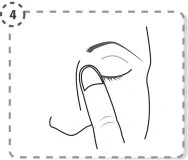
- After instillation, press with a finger at the tear duct next to the nose and gently close the eyelids for 2 minutes. This helps prevent Dicloabak from spreading to the rest of the body.
- Repeat the procedure in the other eye if affected.
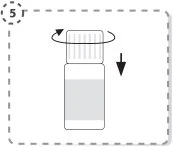
- After use and before recapping, shake the bottle once, without touching the dropper tip. This will remove any residual liquid from the tip. This step is necessary to ensure proper dispensing of subsequent drops.
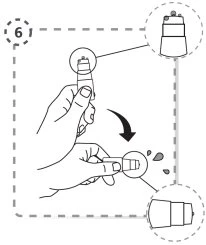
- After use, close the bottle.
If you forget to use DICLOABAK
Do not use a double dose to make up for a missed dose.
If you have any further questions about the use of this product, consult your doctor or pharmacist.
4. Possible adverse effects
Like all medicines, this medicine can have adverse effects, although not everyone will experience them.
The following adverse effects have been reported:
Uncommon (may affect up to 1 in 100 patients)
Sensation of burning in the eye after instillation,
Visual disturbances after instillation
Rare (may affect up to 1 in 1,000 patients)
Hypersensitivity reactions, itching and redness.
Photosensitivity reaction (allergic reaction after exposure to sunlight).
Punctate keratitis (lesions on the cornea), corneal ulceration, corneal thinning.
Dyspnea (difficulty breathing).
Worsening of asthma.
Frequency not known: (cannot be estimated from the available data)
Rhinitis (swelling and irritation inside the nose)
Conjunctival hyperemia (redness of the eyes), allergic conjunctivitis (inflammation of the surface of the eye), eyelid edema (swelling of the eyelids).
Cough
Urticaria (itching), erythema, contact eczema.
Due to the presence of macrogol glycerol ricinoleate, risk of contact eczema.
If you consider any of the adverse effects you experience to be severe, or if you notice any adverse effect not mentioned in this leaflet, inform your doctor or pharmacist.
Reporting of adverse effects
If you experience any type of adverse effect, consult your doctor or pharmacist, even if it is a possible adverse effect not listed in this leaflet. You may also report them directly via the Spanish System of Pharmacovigilance of Human Medicines: https://www.notificaram.es. By reporting adverse effects, you can help provide more information on the safety of this medicine.
5. Storage of DICLOABAK
Keep this medicine out of the sight and reach of children.
Do not use this medicine after the expiry date stated on the carton and container. The expiry date refers to the last day of the month indicated.
Do not store above 25°C.
The container must be discarded eight weeks after first opening.
Medicines should not be disposed of via wastewater or household waste. Return unused medicines and their containers to the SIGRE point at your pharmacy. If you are unsure, ask your pharmacist how to dispose of medicines and containers you no longer need. This helps protect the environment.
6. Contents of the pack and other information
Composition of DICLOABAK
- The active substance is sodium diclofenac at a concentration of 1 mg/ml.
- The other components are macrogol glycerol ricinoleate, trometamol, boric acid, water (water for injection purposes).
Appearance of the product and pack contents
Dicloabak is a slightly yellowish liquid, supplied in containers containing 10 ml of eye drops.
Marketing Authorization Holder
Laboratoires Théa
12, rue Louis Blériot
63017 Clermont-Ferrand Cedex 2
France
Manufacturer
ExCELVISION
27, Rue de la Lombardière
ZI la Lombardière
07100 Annonay
France
Local Representative
LABORATORIOS THEA S.A.
C/ Enric Granados, nº 86-88, 2nd floor
08008 Barcelona
Spain
This medicine is authorized in the Member States of the European Economic Area under the following names:
Austria, Norway: ……………………………………………….VOLTAREN OPHTHA ABAK
Belgium, Bulgaria, Finland, Spain, Greece, Netherlands, Luxembourg, Poland, Portugal, Czech Republic, Slovakia, Sweden: ………………………………DICLOABAK
Denmark: ……………………………………………………………………VOLTABAK
France:………………………………………………………… VOLTARENOPHTABAK
Italy: …………………………………………………………….VOLTAREN OFTABAK
Date of most recent review of this leaflet: December 2025
Detailed and up-to-date information on this medicine is available on the website of the Spanish Agency of Medicines and Health Products (AEMPS) http://www.aemps.es/.