Diazepam Pensa 5 mg tablets EFG
Spain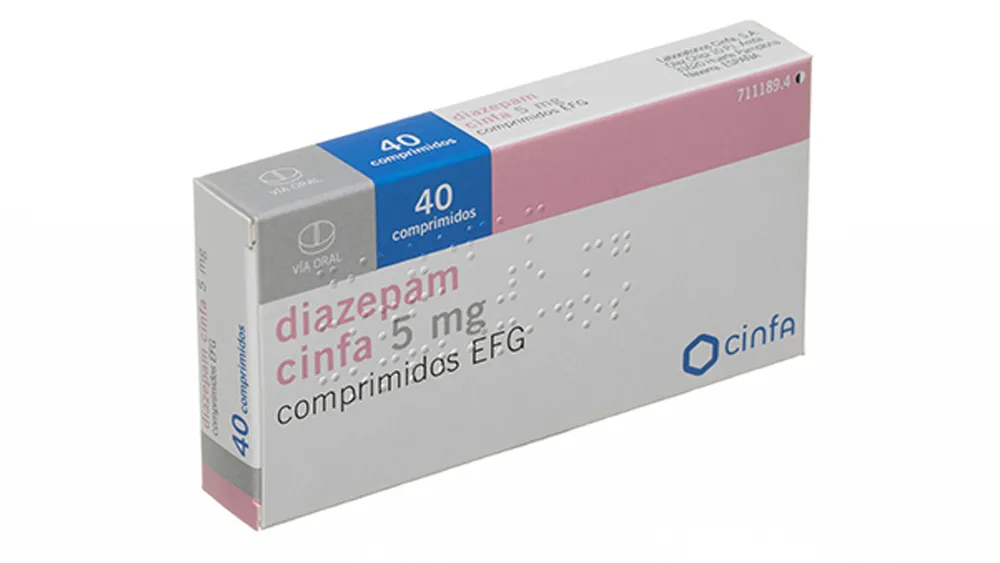
Table of Contents
- Patient Information Leaflet
- Introduction
- 1. What Diazepam pensa is and what it is used for
- 2. What you need to know before you start taking Diazepam pensa
- **Do not take Diazepam pensa**
- 3. How to take Diazepam pensa
- Follow exactly the administration instructions for this medication as indicated by your doctor. If in doubt, consult your doctor or pharmacist again.
- 4. Possible adverse effects
- 5. Storage of Diazepam pensa
- 6. Contents of the pack and other information
- **Composition of Diazepam pensa**
Patient Information Leaflet
Introduction
Patient Information Leaflet
Diazepam pensa 5 mg tablets EFG
Read the entire leaflet carefully before you start taking this medicine, as it contains important information for you.
- Keep this leaflet, as you may need to read it again.
If you have any questions, ask your doctor or pharmacist.
- This medicine has been prescribed for you only, and you should not give it to other people, even if they have the same symptoms as you, because it may harm them.
- If you experience any adverse effects, consult your doctor or pharmacist, even if such effects are not listed in this leaflet. See section 4.
Leaflet contents:
- What Diazepam pensa is and what it is used for
- What you need to know before taking Diazepam pensa
- How to take Diazepam pensa
- Possible side effects
- How to store Diazepam pensa
- Contents of the pack and other information
1. What Diazepam pensa is and what it is used for
Diazepam pensa contains the active substance diazepam, which belongs to a group of medicines called benzodiazepines.
Diazepam has tranquilizing, sedative, muscle-relaxant, and anticonvulsant effects.
Doctors prescribe diazepam to people experiencing symptoms of anxiety, agitation, and psychological tension caused by psychoneurotic conditions and transient situational disorders. Benzodiazepines are only indicated for the treatment of severe disorders that significantly impair a person's functioning or subject them to considerable stress.
It may also be useful in relieving symptoms of acute agitation, tremor, and hallucinations in patients experiencing alcohol withdrawal syndrome.
Diazepam helps relieve muscle pain caused by muscle or joint spasms, inflammation, trauma, etc. It may also be used to treat spasms resulting from conditions such as cerebral palsy (a group of disorders affecting a person's ability to move, maintain balance, and posture), paraplegia (paralysis of the lower half of the body affecting both legs), as well as in athetosis (continuous, involuntary, slow, and writhing movements of fingers and hands) and generalized stiffness syndrome.
Diazepam may be used as an adjunctive treatment (a treatment given following primary treatment to increase the likelihood of recovery) for seizure disorders (such as epilepsy, convulsions), although it has not been shown to be effective as monotherapy. In such cases, your doctor will periodically evaluate the continued usefulness of the medicine for your condition.
2. What you need to know before you start taking Diazepam pensa
Do not take Diazepam pensa
- If you are allergic to diazepam or to any of the other components of this medicine (listed in section 6).
- If you are allergic (hypersensitive) to other medicines in the benzodiazepine group.
- If you suffer from breathing difficulties, long-term or related to sleep.
- If you have a condition called "myasthenia gravis," which is characterized by muscle weakness and fatigue.
- If you have severe respiratory problems (severe respiratory insufficiency).
- If you have severe liver problems (severe hepatic insufficiency).
- If you suffer from drug or alcohol dependence, you should not take Diazepam pensa unless your doctor has specifically instructed you to do so.
This medicine is not recommended for the primary treatment of psychotic disorders (severe mental disorders causing abnormal thoughts and perceptions), and should not be used as the sole treatment in patients with depression, either alone or associated with anxiety. Your doctor will likely have prescribed another medicine for these conditions.
Warnings and precautions
Consult your doctor or pharmacist before starting to take Diazepam pensa
- If you have any heart, liver, or kidney disease
- If you have breathing difficulties
- If you suffer from severe muscle weakness
- If you have other illnesses
- If you have allergies
- If you have a history of, or problems with, drug dependence or central nervous system depressants, including alcohol
- If you are taking other medicines
Your doctor will decide whether you should take a lower dose of Diazepam pensa or whether you should not take it at all.
In patients with depression, diazepam acts only on the anxious component, so it does not constitute a treatment for depression itself and may eventually unmask certain signs of depression.
If you have epilepsy and are undergoing long-term treatment with diazepam, the use of the benzodiazepine antagonist Anexate (flumazenil) to reverse the effect of diazepam is not recommended, as seizures may occur.
Your doctor will pay special attention due to the increased risk if you are elderly or severely weakened.
Children
The duration of treatment should be as short as possible.
Do not use this medicine in children under 6 months of age.
Elderly patients
Elderly patients may require lower doses of diazepam than younger patients. The pharmacological effects of benzodiazepines in elderly patients appear to be greater than in younger populations.
If you are an elderly patient, your doctor may prescribe a lower dose and monitor your response to treatment. Please follow your doctor's instructions carefully.
Patients with hepatic impairment
The sedative effect of diazepam is increased in patients with alcoholic cirrhosis.
Other medicines and Diazepam pensa
Inform your doctor or pharmacist if you are taking, have recently taken, or might need to take any other medicine. This is extremely important because taking more than one medicine at the same time may increase or decrease their effects. For example, tranquilizers, sleep-inducing medicines, and similar drugs act on the brain and nerves and may enhance the effect of diazepam.
Cisapride, cimetidine, ketoconazole, fluconazole, voriconazole, fluvoxamine, fluoxetine, hormonal contraceptives, disulfiram, isoniazid, diltiazem, idelalisib, modafinil, armodafinil, esomeprazole, and omeprazole temporarily increase the sedative effect of diazepam, increasing the risk of drowsiness. The same applies to grapefruit juice.
Conversely, medicines such as rifampicin and carbamazepine reduce the effects of diazepam.
Also, the metabolism of phenytoin may be affected if you are taking diazepam; therefore, if you are taking this medicine, your doctor will adjust the doses accordingly.
The sedative effect and cardiorespiratory depression may increase when diazepam is combined with other central nervous system depressants, possibly leading to coma or death.
Xanthines such as theophylline and caffeine counteract the sedative effects of diazepam.
Therefore, you should not use diazepam with any other medicine unless authorized by your doctor.
If you need further information on this, consult your doctor or pharmacist.
Taking Diazepam pensa with food, drinks, and alcohol
Alcoholic beverages increase the sedative effects of Diazepam pensa; therefore, avoid consuming alcohol during treatment. If you need additional information, consult your doctor.
Diazepam should not be taken in combination with grapefruit juice, as it may increase diazepam levels in your body.
Food and antacids may slow down, but not reduce, the absorption of diazepam from the tablet; this may lead to milder effects after a single dose, but does not affect treatment with multiple doses.
Prokinetic medicines (medicines to improve intestinal transit) increase the absorption of diazepam.
Risk of dependence
The use of benzodiazepines and benzodiazepine-like drugs may lead to physical and psychological dependence. This mainly occurs after prolonged, uninterrupted use of the medicine. To minimize the risk of dependence, the following precautions should be observed:
- Benzodiazepines should only be taken under medical prescription (never because they worked for other patients), and you should never recommend them to others.
- Do not increase the doses prescribed by your doctor, or extend the treatment beyond the recommended duration.
- Consult your doctor regularly so they can decide whether treatment should continue.
Pregnancy and breastfeeding
Consult your doctor or pharmacist before using any medicine.
If you are pregnant or breastfeeding, think you may be pregnant, or plan to become pregnant, consult your doctor or pharmacist before using this medicine.
If diazepam is taken before or during childbirth due to strict medical necessity, newborns may experience hypothermia (abnormally low body temperature), weakness, hypotension, and breathing difficulties. Cases of withdrawal syndrome in newborns have also been reported.
Benzodiazepines pass into breast milk; therefore, you should consult your doctor about whether or not to take diazepam during breastfeeding.
Driving and using machines
Do not drive or operate tools or machinery, as this medicine may cause drowsiness, amnesia, difficulty concentrating, and muscle weakness, all of which may negatively affect your ability to drive vehicles or operate machinery. Your doctor must decide when you can resume these activities. This effect is increased if you have also consumed alcohol.
Diazepam pensa contains lactose
This medicine contains lactose. If your doctor has informed you that you have an intolerance to certain sugars, consult with them before taking this medicine.
3. How to take Diazepam pensa
Follow exactly the administration instructions for this medication as indicated by your doctor. If in doubt, consult your doctor or pharmacist again.
Depending on the nature of your condition, your age and weight, your doctor will prescribe the most appropriate dose and indicate the duration of your treatment with diazepam.
Remember to take your medication.
Follow these instructions unless your doctor has given you different directions:
Adults:
Anxiety symptoms: 2 to 10 mg, 2 to 4 times daily, depending on the severity of symptoms.
Symptomatic relief in acute alcohol withdrawal: 10 mg, 3 or 4 times during the first 24 hours, then reduced to 5 mg, 3 or 4 times daily, as needed.
Adjunctive treatment for relief of musculoskeletal spasm: 2 to 10 mg, 3 or 4 times daily.
Adjunctive treatment in anticonvulsant therapy: 2 to 10 mg, 2 or 4 times daily.
Dosing in special populations
Use in children: 2 to 2.5 mg, 1 or 2 times daily, gradually increased according to needs and tolerance; as a general rule, 0.1–0.3 mg/kg daily. Due to the variable response of children to drugs acting on the CNS, treatment should be initiated at the lowest dose and increased as required. Not to be used in children under 6 months of age.
In elderly patients or in the presence of debilitating diseases: 2 to 2.5 mg, 1 or 2 times daily, then gradually increased as needed and tolerated.
Treatment should be initiated with the lowest dose. The maximum dose must not be exceeded.
If you feel that the effect of diazepam is too strong or too weak, inform your doctor or pharmacist.
In elderly patients or those with liver or kidney disorders, muscle weakness, children, debilitated patients, or those with low serum albumin levels, the doctor will prescribe a lower dose.
Instructions for correct administration
Do not increase the doses prescribed by your doctor in any way.
Each individual dose must not exceed the limits indicated, nor must the total daily dose, unless your doctor prescribes a higher dose.
Diazepam pensa tablets should be taken without chewing, with a little water or a non-alcoholic drink. The tablet may be divided into equal doses.
The tablets should be taken at the times when they are most needed, usually in the afternoon or evening. Never change the prescribed dose on your own.
Duration of treatment
The duration of treatment should be as short as possible and never exceed 2–3 months. Consult your doctor regularly so they can decide whether treatment should continue.
Do not extend treatment beyond the recommended time.
To avoid withdrawal symptoms, diazepam should not be stopped abruptly, especially if it has been taken for a long time.
If you take more Diazepam pensa than you should
In case of overdose or accidental ingestion, contact your doctor or pharmacist immediately, or call the Toxicology Information Service at telephone 91.562.04.20, indicating the medication and the amount ingested.
If you forget to take Diazepam pensa
Do not take a double dose to make up for missed doses. Instead, continue with your normal dose.
If you stop taking Diazepam pensa
When administration is discontinued, symptoms such as restlessness, anxiety, insomnia, difficulty concentrating, headache, and hot flushes may occur. Abrupt discontinuation of the medication is generally not recommended; instead, the dose should be gradually reduced according to your doctor's instructions.
If you have any further questions about the use of this medicine, ask your doctor or pharmacist.
4. Possible adverse effects
Like all medicines, this medicine can cause adverse effects, although not everyone will experience them.
If you consider any of the adverse effects you experience to be severe, or if you notice any adverse effect not listed in this leaflet, inform your doctor or pharmacist.
Most patients tolerate this medicine well, but the most common adverse effects, which occur especially at the beginning of treatment, are fatigue, muscle weakness and drowsiness.
Occasionally, other adverse effects have been reported, such as confusion, reduced level of consciousness, loss of sensation, dizziness, affective disorders, emotional and mood disturbances, constipation, depression, diplopia (double vision), ataxia (inability to coordinate voluntary muscle movements), difficulty articulating speech, gastrointestinal disturbances, changes in heart rhythm, headache, hypotension, circulatory disturbances, changes in libido (sexual drive), nausea, dry mouth or hypersalivation (excessive salivary secretion), urinary incontinence or urinary retention, skin rashes, stammering, tremor, vertigo and blurred vision. The most frequent skin reactions are rash (skin inflammation), urticaria (red, itchy welts) and pruritus (tingling or uncomfortable skin irritation causing an urge to scratch the affected area).
Very rarely, elevated transaminase and alkaline phosphatase levels, jaundice (yellowing of the skin and eyes), and cardiac arrest have been reported.
An increased risk of falls and fractures has been observed in elderly patients and in patients taking other sedative medicines simultaneously (including alcoholic beverages).
Heart failure, respiratory depression, including respiratory failure, may occur.
It is known that when benzodiazepines are used, adverse behavioural effects may occur, such as restlessness, disorientation, agitation, irritability, delirium (incoherent thinking), rage attacks, aggressiveness, nervousness, hostility, anxiety, nightmares, abnormal dreams, hallucinations, psychosis (loss of contact with reality), hyperactivity or inappropriate behaviour. These reactions are more frequent in elderly patients and in children. If you experience any of these effects, you must stop treatment and contact your doctor immediately.
In addition, the use of benzodiazepines may lead to dependence, particularly when the medicine is taken continuously over a long period. Abrupt discontinuation of the medication is generally not recommended and should always be done in accordance with your doctor's instructions.
Anterograde amnesia (difficulty remembering recent events) may occur at normal doses; the risk increases with higher doses. Amnesic effects may be associated with behavioural disturbances.
If you notice any other reaction not described in this leaflet, consult your doctor or pharmacist.
Reporting of adverse effects
If you experience any adverse effect, consult your doctor or pharmacist, even if it is a possible adverse effect not listed in this leaflet. You may also report them directly via the Spanish Pharmacovigilance System for Human Medicinal Products: www.notificaRAM.es/. By reporting adverse effects, you can help provide more information on the safety of this medicine.
5. Storage of Diazepam pensa
Keep this medicine out of the sight and reach of children.
Do not use this medicine after the expiry date which is stated on the packaging after EXP. The expiry date refers to the last day of the month indicated.
This medicine does not require any special storage conditions.
Medicines must not be disposed of via wastewater or household waste. Dispose of containers and unused medicines at the SIGRE Point at your pharmacy. Ask your pharmacist how to dispose of containers and medicines you no longer need. This will help protect the environment.
6. Contents of the pack and other information
Composition of Diazepam pensa
- The active substance is diazepam. Each tablet contains 5 mg of diazepam.
- The other components are monohydrate lactose, corn starch, magnesium stearate, low-substituted hydroxypropylcellulose, and yellow iron oxide (E-172).
Appearance of the product and contents of the container
The tablets are pale yellow, round, biconvex, with a break line and printed with "D 5" on one side, the other side being smooth.
Diazepam pensa 5 mg tablets are available in blister packs (Aluminum/PVC) containing 30 and 40 tablets.
Marketing Authorization Holder and Manufacturer
Marketing Authorization Holder:
Towa Pharmaceutical, S.A.
C/ de Sant Martí, 75-97
08107 Martorelles (Barcelona)
Spain
Manufacturer:
LABORATORIOS NORMON, S.A.
Ronda de Valdecarrizo, 6 - 28760 Tres Cantos - Madrid (SPAIN)
Date of the most recent revision of this leaflet: September 2022
Detailed and up-to-date information on this medicine is available on the website of the Spanish Agency of Medicines and Health Products (AEMPS) http://www.aemps.gob.es/