Dexamethasone TAD 40 mg tablets
Spain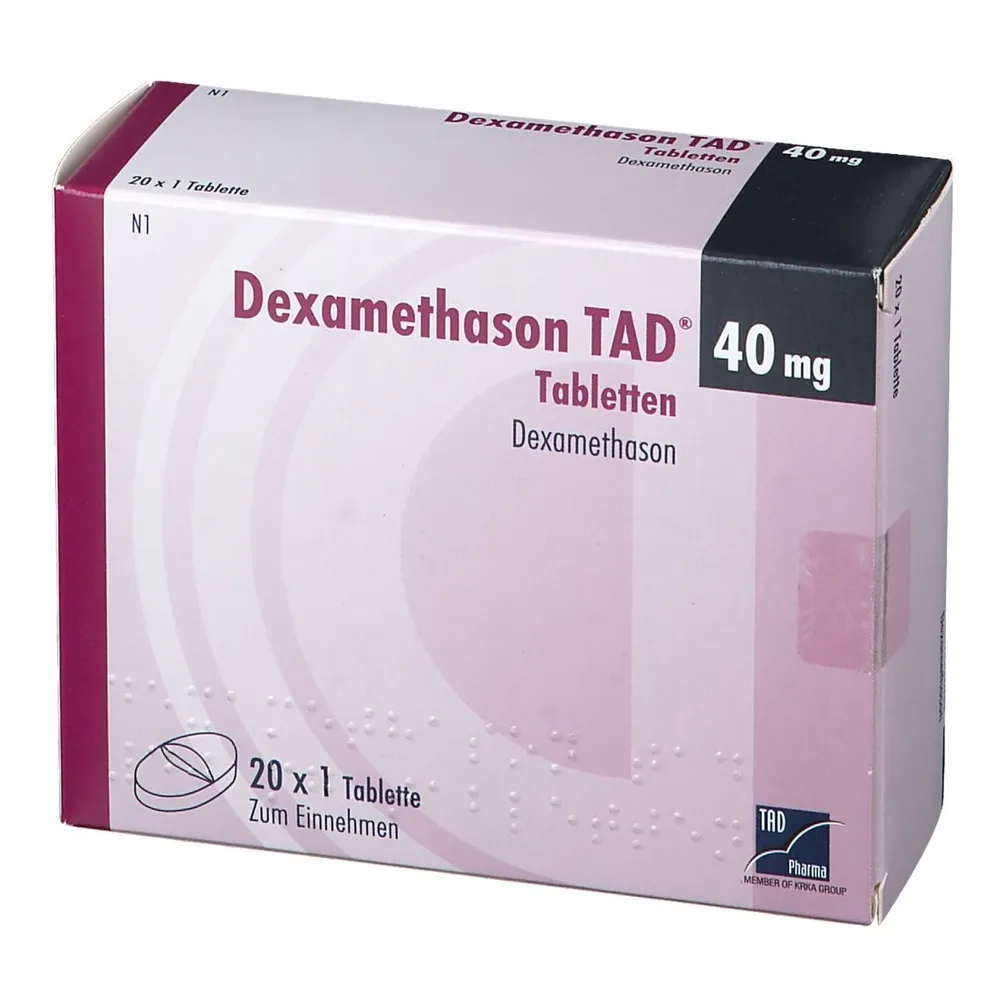
Table of Contents
- Package leaflet: Information for the user
- Introduction
- 1. What Dexamethasone TAD is and what it is used for
- 2. What you need to know before taking Dexamethasone TAD
- 3. How to take Dexametasona TAD
- 4. Possible adverse effects
- 5. Storage of Dexamethasone TAD
- 6. Contents of the pack and other information
Package leaflet: Information for the user
Introduction
Package leaflet: information for the user
Dexametasona TAD 20 mg tablets
Dexametasona TAD 40 mg tablets
Read the entire leaflet carefully before you start taking this medicine, because it contains important information for you.
- Keep this leaflet, as you may need to read it again.
- If you have any questions, consult your doctor or pharmacist.
- This medicine has been prescribed for you only, and you should not give it to other people, even if they have the same symptoms as you, because it may harm them.
- If you experience any adverse effects, consult your doctor or pharmacist, even if they are adverse effects not listed in this leaflet. See section 4.
Contents of the leaflet
- What Dexametasona TAD is and what it is used for
- What you need to know before taking Dexametasona TAD
- How to take Dexametasona TAD
- Possible adverse effects
- How to store Dexametasona TAD
- Contents of the pack and other information
1. What Dexamethasone TAD is and what it is used for
Dexamethasone TAD is a synthetic glucocorticoid. Glucocorticoids are hormones produced by the cortex of the adrenal glands. This medicine has anti-inflammatory, analgesic, and antiallergic effects, and suppresses the immune system.
Dexamethasone TAD is indicated for the treatment of rheumatic and autoimmune diseases (e.g., myositis), skin disorders (e.g., pemphigus vulgaris), blood disorders (e.g., idiopathic thrombocytopenic purpura in adults), treatment of symptomatic multiple myeloma, acute lymphoblastic leukemia, Hodgkin's disease and non-Hodgkin's lymphoma in combination with other medicines, metastatic spinal cord compression (pressure on the spinal cord nerves caused by a tumor), and for the prophylaxis and treatment of nausea and vomiting induced by chemotherapy, as part of antiemetic therapy.
2. What you need to know before taking Dexamethasone TAD
Do not take Dexamethasone TAD:
- if you are allergic to dexamethasone or to any of the other ingredients of this medicine (listed in section 6).
- if you have a systemic infection (unless you are receiving treatment).
- if you have a stomach or duodenal ulcer.
- if you are about to be vaccinated with live vaccines.
Warnings and precautions
Talk to your doctor or pharmacist before taking Dexamethasone TAD:
- if you have ever had severe depression or manic depression (bipolar disorder). This includes having had depression before or while taking steroid medicines such as dexamethasone.
- if a close family member has had this illness.
Mental health problems may occur while taking steroids such as Dexamethasone TAD:
- These problems can be serious.
- They usually begin within a few days or weeks of starting treatment.
- They are more likely to occur at high doses.
- Most of these problems go away if the dose is reduced or treatment is stopped. However, if problems occur, you may need treatment.
Consult your doctor if you (or someone taking this medicine) show any signs of mental health problems.
This is especially important if you are depressed or may be thinking about suicide. In rare cases, mental health problems have occurred when doses were reduced or stopped.
Talk to your doctor before starting this medicine:
- if you have kidney or liver problems (liver cirrhosis or severe renal failure),
- if you have or suspect you have a phaeochromocytoma (a tumour of the adrenal glands),
- if you have high blood pressure, heart problems, or have recently had a heart attack (myocardial rupture has been reported),
- if you have diabetes or a family history of diabetes,
- if you have osteoporosis (weakening of the bones), particularly if you are a postmenopausal woman,
- if you have previously experienced muscle weakness with this or other steroids,
- if you have glaucoma (increased eye pressure) or a family history of glaucoma, or cataracts (clouding of the eye's lens causing vision loss),
- if you have myasthenia gravis (a disease causing muscle weakness),
- if you have an intestinal disorder or a peptic (stomach) ulcer,
- if you have psychiatric problems or have had psychiatric disorders worsened by this type of medicine,
- if you have epilepsy (a condition causing repeated seizures or fits),
- if you suffer from migraines,
- if you have an underactive thyroid gland,
- if you have a parasitic infection,
- if you have tuberculosis, sepsis, or fungal eye infection,
- if you have cerebral malaria,
- if you have herpes (mouth ulcers, genital herpes, or ocular herpes, due to possible corneal perforation),
- if you have asthma,
- if you are being treated for blood vessel blockage due to blood clots (thromboembolism),
- if you have corneal ulcers or corneal damage.
Treatment with this medicine may trigger a phaeochromocytoma crisis, which can be fatal. Phaeochromocytoma is a rare tumour of the adrenal glands. Symptoms of a crisis include: headache, sweating, palpitations, and high blood pressure. Contact your doctor immediately if you experience any of these symptoms.
Treatment with corticosteroids may reduce your body's ability to fight infections. This may sometimes lead to infections caused by germs that rarely cause illness under normal circumstances (called opportunistic infections). If you develop any infection during treatment with this medicine, contact your doctor immediately. This is especially important if you notice signs of pneumonia: cough, fever, difficulty breathing, and chest pain. You may also feel confused, particularly if you are elderly. You should also inform your doctor if you have had tuberculosis or have been in regions where intestinal worm infections are common.
It is important that while taking this medicine you avoid contact with anyone who has had chickenpox, shingles, or measles. If you think you may have been exposed to any of these diseases, you must consult your doctor immediately. You should also inform your doctor if you have ever had infectious diseases such as measles or chickenpox, and if you have been vaccinated.
Contact your doctor if you experience symptoms of tumour lysis syndrome such as muscle cramps, muscle weakness, confusion, visual loss or changes, and difficulty breathing, in case you have a malignant haematological condition.
Contact your doctor if you experience blurred vision or other visual disturbances.
Treatment with this medicine may cause central serous chorioretinopathy, an eye disorder causing blurred or distorted vision. This usually occurs in one of the two eyes. Treatment with this medicine may also cause tendon inflammation. In extremely rare cases, tendons may rupture. This risk may be increased by certain antibiotics or kidney problems. Contact your doctor if you experience pain, or swelling or stiffness in joints or tendons.
Treatment with Dexamethasone TAD may cause a condition called adrenal insufficiency. This may affect how well the medicine works following stress or trauma, surgery, childbirth, or illness, and your body may not respond normally to severe stress such as accidents, surgery, childbirth, or illness.
If you have an accident, are ill, are under any other form of physical stress, or require surgery (even dental surgery), or are to be vaccinated (particularly with live viral vaccines) while taking or after stopping dexamethasone, you must inform the person treating you that you are taking or have taken steroids.
If you need suppression tests (tests measuring hormone levels in the body), skin allergy tests, or tests for bacterial infections, inform the person performing the test that you are taking dexamethasone, as it may interfere with test results.
Your doctor may reduce the amount of salt in your diet and may prescribe potassium supplements while you are taking this medicine.
If you are elderly, some of the adverse effects of this medicine may be more serious, particularly bone thinning (osteoporosis), high blood pressure, low potassium levels, diabetes, increased susceptibility to infections, and skin thinning. Your doctor will monitor you more closely.
Children
If a child is taking this medicine, it is important that their doctor regularly monitors their growth and development. Dexamethasone TAD should not be routinely used in premature infants with respiratory problems.
Other medicines and Dexamethasone TAD
Tell your doctor or pharmacist if you are taking, have recently taken, or might need to take any other medicines:
- Anticoagulant medicines that thin the blood (e.g., warfarin)
- Acetylsalicylic acid or similar (non-steroidal anti-inflammatory drugs), e.g., indomethacin
- Medicines used to treat diabetes
- Medicines used to treat high blood pressure
- Medicines used to treat heart problems
- Diuretics (tablets that increase water elimination)
- Intravenous amphotericin B
- Phenytoin, carbamazepine, primidone (medicines for epilepsy)
- Rifabutin, rifampicin, isoniazid (antibiotics used to treat tuberculosis)
- Antacids – particularly those containing magnesium trisilicate
- Barbiturates (medicines used to help sleep and relieve anxiety)
- Aminoglutethimide (anticancer treatment)
- Carbenoxolone (used in the treatment of stomach ulcers)
- Ephedrine (nasal decongestant)
- Acetazolamide (used for glaucoma and epilepsy)
- Hydrocortisone, cortisone, and other corticosteroids
- Ketoconazole, itraconazole (for fungal infections)
- Ritonavir (for HIV)
- Antibiotics including erythromycin, fluoroquinolones
- Medicines that help muscle movement in patients with myasthenia gravis (e.g., neostigmine)
- Cholestyramine (for high cholesterol)
- Oestrogen hormones including oral contraceptives
- Tetracosactide used in adrenal function tests
- Sultopride used to calm emotions
- Cyclosporine used to prevent transplant rejection
- Thalidomide used, for example, for multiple myeloma
- Praziquantel used for certain worm infections
- Vaccination with live vaccines
- Chloroquine, hydroxychloroquine, and mefloquine (for malaria)
- Somatropin
- Protirelin
Tell your doctor if you are taking or have recently taken other medicines, including those obtained without a prescription. You may have an increased risk of serious adverse effects if you take dexamethasone together with these medicines.
- Some medicines may increase the effects of Dexamethasone TAD, and your doctor may wish to monitor you closely if you are taking these medicines (including some HIV medicines: ritonavir, cobicistat).
- Acetylsalicylic acid or similar (non-steroidal anti-inflammatory drugs), e.g., indomethacin
- Medicines for the treatment of diabetes
- Medicines used to treat heart problems
- Diuretics (tablets that increase water elimination)
- Intravenous amphotericin B
- Acetazolamide (used for glaucoma and epilepsy)
- Tetracosactide used in adrenal function tests
- Carbenoxolone (used in the treatment of stomach ulcers)
- Chloroquine, hydroxychloroquine, and mefloquine (for malaria)
- Medicines used to treat high blood pressure
- Thalidomide used, for example, for multiple myeloma
- Vaccination with live vaccines
- Medicines that help muscle movement in myasthenia gravis (e.g., neostigmine)
- Antibiotics including fluoroquinolones.
You should read the package leaflet of all medicines you take together with Dexamethasone TAD regarding information about these medicines before starting treatment with Dexamethasone TAD. Special attention to pregnancy testing and prevention requirements is needed when thalidomide, lenalidomide, or pomalidomide are used.
Dexamethasone TAD with food, drinks, and alcohol
Dexamethasone should be taken with or after food to minimize gastrointestinal irritation. Drinks containing alcohol or caffeine should be avoided. It is recommended to eat small, frequent meals and, if advised by your doctor, to take antacids.
Pregnancy and breastfeeding
If you are pregnant or breastfeeding, think you may be pregnant, or plan to become pregnant, consult your doctor or pharmacist before using this medicine.
Dexamethasone TAD should only be prescribed during pregnancy, and particularly during the first trimester, if the benefits outweigh the risks for both mother and child. If you become pregnant while using this medicine, do not stop taking Dexamethasone TAD, but inform your doctor immediately. Corticosteroids may pass into breast milk. Risk to newborns/infants cannot be excluded. A decision on whether to continue or interrupt breastfeeding or continue or interrupt treatment with dexamethasone should be made, taking into account the benefit of breastfeeding for the child and the benefit of dexamethasone treatment for the woman.
Driving and using machines
Do not drive, operate tools or machinery, or perform any hazardous tasks if you experience adverse effects such as confusion, hallucinations, dizziness, tiredness, sleepiness, fainting, or blurred vision.
Dexamethasone TAD contains lactose
This medicine contains lactose. If your doctor has informed you that you have an intolerance to certain sugars, consult with them before taking this medicine.
3. How to take Dexametasona TAD
Follow exactly the instructions for use of this medicine given by your doctor. If you are in doubt, consult your doctor or pharmacist again.
Dexametasona TAD is available as 4 mg, 8 mg, 20 mg, and 40 mg tablets. The tablet may be divided into equal halves to allow for additional doses of 2 mg and 10 mg or to facilitate swallowing.

Dexamethasone is usually taken at doses of 0.5 to 10 mg daily, depending on the disease being treated.
In more severe diseases, doses above 10 mg daily may be required. The dose should be adjusted according to the individual patient's response and the severity of the disease. To minimize adverse effects, the lowest effective dose should be used.
Unless otherwise directed, the following dosage recommendations apply:
The dosage recommendations mentioned below are for guidance only.
The initial and daily doses must always be determined based on the individual patient's response and the severity of the disease.
- Pemphigus: initial dose of 300 mg for 3 consecutive days, followed by a dose reduction based on clinical need.
- Myositis: 40 mg for 4 days in cycles.
- Idiopathic thrombocytopenic purpura: 40 mg for 4 days in cycles.
- Metastatic spinal cord compression: the initial dose and duration of treatment depend on the cause and severity. Very high doses up to 96 mg may be used for palliative treatment. For optimal dosing and to reduce the number of tablets, combinations of lower doses (4 mg and 8 mg) and higher doses (20 mg or 40 mg) may be used.
- Prophylaxis and treatment of cytotoxic-induced emesis, emetogenic chemotherapy within antiemetic treatment: 8–20 mg (one 20 mg tablet or half of a 40 mg tablet) prior to chemotherapy, followed by 4–16 mg/day on days 2 and 3.
- Treatment of symptomatic multiple myeloma, acute lymphoblastic leukemia, Hodgkin’s disease, and non-Hodgkin’s lymphoma in combination with other medications: the usual dosage is 40 mg or 20 mg once daily.
The dose and frequency of administration vary according to the therapeutic protocol and associated treatments. Dexamethasone administration should follow the instructions for dexamethasone administration when specified in the summary of product characteristics of the associated treatments. If this is not the case, local or international treatment protocols and guidelines should be followed. Prescribing physicians must carefully evaluate the appropriate dexamethasone dose, taking into account the patient's condition and disease status.
Long-term treatment
For long-term treatment of various diseases, after initial therapy, glucocorticoid treatment with dexamethasone should be switched to prednisone/prednisolone to reduce suppression of adrenal cortex function.
Use in children
If a child is taking this medicine, it is important that the doctor regularly monitors their growth and development.
If you take more Dexametasona TAD than you should
If you take too much medicine, contact your doctor or hospital immediately.
In case of overdose or accidental ingestion, consult your doctor or pharmacist immediately or call the Toxicology Information Service at telephone number 91 562 04 20, stating the name of the medicine and the amount ingested. It is recommended to bring the packaging and the leaflet to the healthcare professional.
If you forget to take Dexametasona TAD
If you forget to take a dose, take it as soon as you remember, unless it is almost time for your next dose.
Do not take a double dose to make up for missed doses.
If you stop taking Dexametasona TAD
If your treatment is to be discontinued, you should follow your doctor's recommendations. Your doctor may advise you to gradually reduce the amount of medicine you are taking until you stop completely. Various symptoms have been reported when treatment is stopped too quickly, such as low blood pressure and, in some cases, relapse of the disease for which the treatment was prescribed.
A "withdrawal syndrome" may also occur, including fever, muscle and joint pain, inflammation of the nasal lining (rhinitis), weight loss, skin itching, and eye inflammation (conjunctivitis). If you stop treatment too early and experience any of the symptoms mentioned, you should speak to your doctor as soon as possible.
If you have any further questions about the use of this medicine, ask your doctor or pharmacist.
4. Possible adverse effects
Like all medicines, this medicine can cause adverse effects, although not everyone will experience them.
Consult your doctor immediately if you experience serious mental problems. These may affect 5 in every 100 people taking medicines like dexamethasone. These problems include:
- feeling depressed, including suicidal thoughts,
- feeling overly euphoric (mania) or having mood swings,
- feeling anxious, having sleep problems, difficulty thinking or confusion, and memory loss,
- feeling, seeing, or hearing things that are not real, having strange or frightening thoughts, changes in behavior, or feeling isolated.
Consult your doctor immediately if you experience:
- severe abdominal pain, nausea, vomiting, diarrhea, profound muscle weakness and fatigue, extremely low blood pressure, weight loss, and fever, as these may be signs of adrenal insufficiency,
- sudden abdominal pain, tenderness, nausea, vomiting, fever, and blood in the stool, which may be signs of intestinal perforation, particularly if you have or have had a bowel disease.
This medicine may worsen existing heart problems. If you experience shortness of breath or swelling of the ankles, consult your doctor immediately.
Other possible adverse effects (frequency not known) may include:
- Increased risk of infections, including viral and fungal infections, e.g., thrush; reactivation of tuberculosis or other infections, e.g., eye infections, if previously experienced
- Reduction in the number of white blood cells or increase in white blood cells, abnormal blood clotting
- Allergic reaction to the medicine, including potentially life-threatening allergic reactions (which may present as rash, swelling of the throat and tongue, and in severe cases, difficulty breathing or dizziness)
- Problems with the body's hormonal regulation, swelling and weight gain, moon face (Cushingoid state), altered endocrine system response following stress and trauma, surgery, childbirth, or illness; your body may be unable to respond normally to severe stress such as accidents, surgery, childbirth, or illness; growth retardation in children and adolescents; irregular or absent menstrual cycles (periods); excessive growth of body hair (particularly in women)
- Weight gain, loss of protein and calcium balance, increased appetite, electrolyte imbalance, fluid retention in the body, potassium loss which may lead to rhythm disorders, increased need for diabetes medication, previously undiagnosed diabetes becoming apparent, high levels of cholesterol and triglycerides in the blood (hypercholesterolemia and hypertriglyceridemia)
- Extreme mood changes, schizophrenia (mental disorder) which may worsen, depression, inability to sleep
- Unusually severe headache with visual disturbances due to withdrawal of treatment, seizures, and worsening of epilepsy, dizziness
- Increased intraocular pressure, papilledema, thinning of ocular membranes, increased risk of viral, bacterial, and fungal eye infections, worsening of symptoms associated with corneal ulcers, worsening of existing eye infections, protrusion of the eyeballs, cataracts, blurred vision, visual disturbances, vision loss
- Congestive heart failure in susceptible individuals, cardiac muscle rupture following a recent heart attack, cardiac decompensation
- High blood pressure, blood clots: formation of blood clots that may block blood vessels, for example in the legs or lungs (thromboembolic complications)
- Hiccups
- Nausea, vomiting, stomach discomfort and bloating, inflammation and ulcers in the esophagus, peptic ulcers which may perforate and bleed, inflamed pancreas (which may present as pain in the back and abdomen), flatulence, esophageal candidiasis
- Thinning of delicate skin, unusual skin markings, bruising, redness and inflammation of the skin, stretch marks, visible inflammation of capillaries, acne, increased sweating, skin rash, swelling, hair loss, unusual fat deposits, excessive hair growth, fluid retention in the body, weakened capillaries leading to easy rupture seen as bleeding under the skin (increased capillary fragility), skin irritation around the mouth (perioral dermatitis)
- Weakening of bones with increased risk of fractures (osteoporosis), bone necrosis, tendinitis, tendon rupture, muscle loss, myopathy, muscle weakness, premature interruption of bone growth (premature epiphyseal closure)
- Changes in sperm count and motility, impotence
- Reduced response to vaccines and skin tests, slow wound healing, malaise
- A "withdrawal syndrome" may also occur, including fever, muscle and joint pain, inflammation of the nasal lining (rhinitis), weight loss, painful itchy skin nodules, and eye inflammation (conjunctivitis)
Reporting of adverse effects:
If you experience any adverse effects, consult your doctor or pharmacist, even if they are possible adverse effects not listed in this leaflet. You may also report them directly via the Spanish Pharmacovigilance System for Human Medicines: https://www.notificaram.es. By reporting adverse effects, you can help provide more information on the safety of this medicine.
5. Storage of Dexamethasone TAD
Keep this medicine out of the sight and reach of children.
Do not use this medicine after the expiry date stated on the packaging after EXP. The expiry date refers to the last day of the month indicated.
This medicine does not require any special storage temperature.
Store in the original packaging to protect it from light and moisture.
Medicines must not be disposed of via wastewater or household waste. Dispose of unused medicines and their containers at the SIGRE point located at the pharmacy. If you are unsure, ask your pharmacist how to properly dispose of unused medicines and their packaging. This will help protect the environment.
6. Contents of the pack and other information
Composition of Dexamethasone TAD
- The active substance is dexamethasone.
Dexamethasone TAD 20 mg tablets
Each tablet contains 20 mg of dexamethasone.
Dexamethasone TAD 40 mg tablets
Each tablet contains 40 mg of dexamethasone.
- The other components (excipients) are monohydrate lactose, pregelatinized corn starch, anhydrous colloidal silica, and magnesium stearate (E470b). See section 2 “Dexamethasone TAD contains lactose”.
Appearance of the product and contents of the pack
20 mg tablets: white or almost white, round, bevelled-edge tablets, scored and marked with a "20" on one side (thickness: 4.0–6.0 mm; diameter: 10.7–11.3 mm). The tablet can be divided into equal doses.
40 mg tablets: white or almost white, oval-shaped tablets, scored on both sides (thickness: 6.0–8.0 mm; length: 18.7–19.3 mm). The tablet can be divided into equal doses.
Dexamethasone TAD is available in packs containing 10, 20, 30, 50, 60, 100, 10 x 1, 20 x 1, 30 x 1, 50 x 1, 60 x 1, and 100 x 1 tablets in blisters.
Only certain pack sizes may be marketed.
Marketing Authorization Holder
TAD Pharma GmbH, Heinz‑Lohmann‑Straße 5, 27472 Cuxhaven, Germany
Manufacturer
KRKA, d.d., Novo mesto, Šmarješka cesta 6, 8501 Novo mesto, Slovenia
Or
TAD Pharma GmbH, Heinz-Lohmann-Straße 5, 27472 Cuxhaven, Germany
For further information about this medicinal product, please contact the local representative of the Marketing Authorization Holder:
KRKA Farmacéutica, S.L., C/ Anabel Segura 10, Pta. Baja, Oficina 1, 28108 Alcobendas, Madrid, Spain
This medicinal product is authorized in the European Economic Area (EEA) Member States and in the United Kingdom (Northern Ireland) under the following names:
Hungary: Dexamethasone Krka 20 mg tabletta / Dexamethasone Krka 40 mg tabletta
Bulgaria: ?e?????????????? 20 mg ???????? / ?e?????????????? 40 mg ????????
Czech Republic: Dexamethasone Krka 20 mg / Dexamethasone Krka 40 mg
Estonia: Dexamethason Krka
Croatia: Dexamethason Krka 20 mg tablete / Dexamethason Krka 40 mg tablete
Latvia: Dexamethason Krka 20 mg tabletes / Dexamethason Krka 40 mg tabletes
Lithuania: Dexamethasone Krka 20 mg tabletes / Dexamethasone Krka 40 mg tabletes
Poland: Dexamethasone Krka
Romania: Dexametazona Krka 20 mg comprimate / Dexametazona Krka 40 mg comprimate
Slovenia: Dexamethason Krka 20 mg tablete / Dexamethason Krka 40 mg tablete
Slovakia: Dexametazon Krka 20 mg tablety / Dexametazon Krka 40 mg tablety
Germany: Dexamethason TAD 20 mg Tabletten / Dexamethason TAD 40 mg Tabletten
Spain: Dexametasona TAD 20 mg comprimidos / Dexametasona TAD 40 mg comprimidos
United Kingdom: Dexamethasone 20 mg tablets / Dexamethasone 40 mg tablets
Portugal: Dexametasona Krka 20 mg comprimidos / Dexametasona Krka 40 mg comprimidos
Date of the most recent review of this leaflet: July 2021
Detailed information on this medicinal product is available on the website of the Spanish Agency of Medicines and Health Products (AEMPS): http://www.aemps.es/