Dexamethasone Medochemie 4 mg/ml solution for injection and infusion EFG
Spain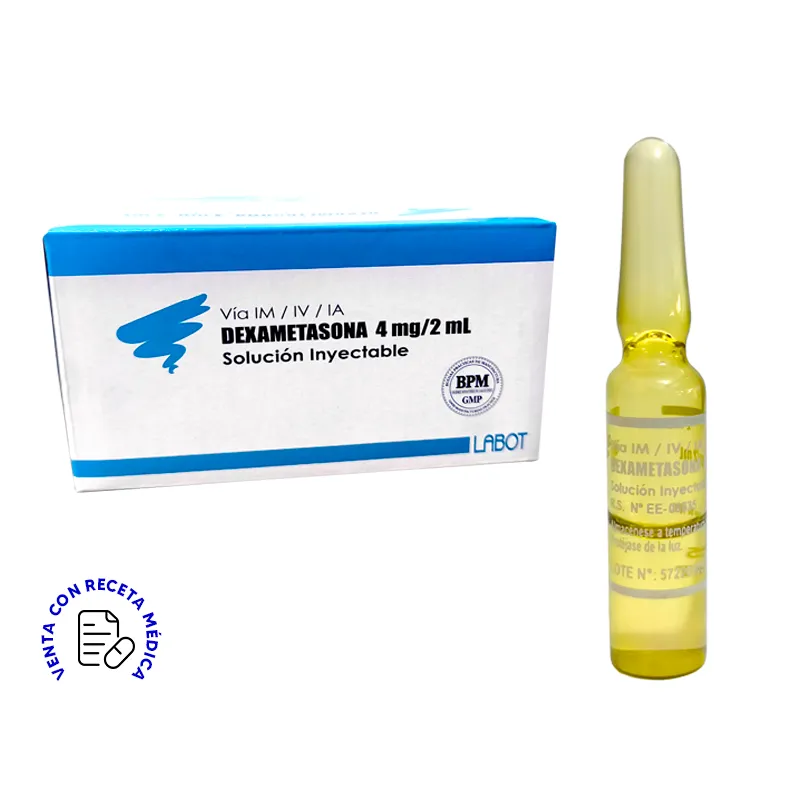
Table of Contents
- Patient Information Leaflet
- Introduction
- 1. What Dexamethasone Medochemie is and what it is used for
- 2. What you need to know before you are given Dexamethasone Medochemie
- 3. How Dexamethasone Medochemie will be administered to you
- 4. Possible adverse effects
- 5. Storage of Dexamethasone Medochemie
- 6. Contents of the pack and other information
Patient Information Leaflet
Introduction
Package Leaflet: Information for the patient
Dexamethasone Medochemie 4 mg/ml solution for injection and infusion EFG
dexamethasone phosphate
Read the entire leaflet carefully before you start using this medicine, as it contains important information for you.
- Keep this leaflet, as you may need to read it again.
- If you have any questions, consult your doctor, pharmacist, or nurse.
- If you experience any adverse effects, consult your doctor, pharmacist, or nurse, even if they are not listed in this leaflet. See section 4.
Leaflet Contents
- What Dexamethasone Medochemie is and what it is used for
- What you need to know before you are given Dexamethasone Medochemie
- How Dexamethasone Medochemie is administered
- Possible adverse effects
- How to store Dexamethasone Medochemie
- Contents of the pack and other information
1. What Dexamethasone Medochemie is and what it is used for
Dexamethasone is a synthetic glucocorticoid (adrenocortical hormone) that affects metabolism, electrolyte balance, and tissue functions.
Dexamethasone Medochemie is used for:
Conditions requiring treatment with glucocorticoids. Depending on the type and severity, these include:
Systemic use:
- Cerebral edema caused by brain tumors, brain surgery, brain abscess, bacterial inflammation of the brain lining.
- Shock states following severe injuries, for prophylactic treatment of pulmonary shock.
- Acute severe asthma attack.
- Initial treatment of certain extensive, acute, and severe skin disorders, such as erythroderma, pemphigus vulgaris, acute eczema.
- Treatment of systemic rheumatic diseases (rheumatic diseases that may affect internal organs), such as systemic lupus erythematosus.
- Active rheumatic inflammation of the joints (rheumatoid arthritis) with a severe progressive course, for example forms rapidly leading to joint destruction, and/or where tissue outside the joints is affected.
- Severe infectious diseases with poisoning-like conditions (e.g., in tuberculosis, typhoid fever, brucellosis); only in addition to appropriate anti-infective therapy.
- Supportive treatment in malignant tumors.
- Prevention and treatment of vomiting after surgery or during cytostatic therapy.
- Dexamethasone is used as a treatment for coronavirus disease 2019 (COVID-19) in adult and adolescent patients (from 12 years of age with a body weight of at least 40 kg) who have difficulty breathing and require oxygen therapy.
Local use:
- Intra-articular injection: persistent inflammation of one or several joints following general treatment of chronic inflammatory joint diseases, activated osteoarthritis, acute forms of painful shoulder syndrome.
- Infiltration therapy (only if strictly indicated): non-bacterial inflammation of tendons or bursa (a fluid-filled sac forming under the skin, usually over joints), inflammation around a joint, tendon disorders.
- Ocular therapy: injection under the conjunctival sac in non-infectious inflammation of various parts of the eye (cornea and conjunctiva, choroiditis, iridocyclitis), inflammation of the middle part of the eye (uveitis).
2. What you need to know before you are given Dexamethasone Medochemie
Do not administer Dexamethasone Medochemie
- If you are allergic to dexamethasone or to any of the other components of this medicine (listed in section 6).
Severe allergic reactions (anaphylactic reactions) with circulatory collapse, cardiac arrest (heart stops beating), arrhythmia (abnormal heart rhythm), breathing difficulty (bronchospasm) and/or drop or rise in blood pressure have occurred in isolated cases during the use of dexamethasone.
Intra-articular injection is contraindicated in:
- Infections of or immediately adjacent to the joint to be treated.
- Bacterial arthritis.
- Instability of the joint to be treated.
- Bleeding tendency (spontaneous or due to anticoagulants).
- Calcifications near the joints.
- Avascular osteonecrosis (a condition in which bone tissue dies due to lack of blood supply to the bone).
- Tendon rupture.
- Charcot joint (loss of sensation in the joint).
Infiltration should not be performed without additional causal therapy in cases of infection at the site of administration; the same applies to subconjunctival administration in ocular diseases caused by viruses, bacteria, and fungi, and in corneal lesions and ulcers.
Warnings and precautions
Talk to your doctor, pharmacist, or nurse before you start receiving this medicine.
Do not stop taking any other steroid medication unless your doctor has instructed you to do so.
General precautions regarding the use of steroids in specific diseases, masking of infection, concomitant medications, etc., in accordance with current recommendations.
If particular physical stress situations occur (accident, surgery, childbirth, etc.) during therapy with this medicine, a temporary increase in dose may be necessary.
This medicine may mask signs of infection and thus prevent the diagnosis of existing or developing infections. Latent infections may reactivate.
In the following diseases, treatment with this medicine should only be initiated if your doctor considers it essential. If necessary, medications acting against pathogens should also be administered:
- Acute viral infections (hepatitis B, chickenpox, shingles, herpes simplex infections, corneal inflammation caused by herpes viruses).
- Active chronic hepatitis positive for HBsAg (infectious liver inflammation).
- Approximately 8 weeks before to 2 weeks after vaccination with attenuated pathogens (live vaccines).
- Acute and chronic bacterial infections.
- Fungal infections involving internal organs.
- Certain diseases caused by parasites (amebic infections, worms). In patients with suspected or confirmed infection with threadworms (nematodes), this medicine may lead to activation and massive proliferation of these parasites.
- Poliomyelitis (virus-caused infection).
- Lymph node disease after tuberculosis vaccination.
- In case of history of tuberculosis, use only in combination with tuberculosis medications.
The following conditions should be specifically monitored during treatment with this medicine and treated as required:
- Gastrointestinal ulcers.
- Bone loss (osteoporosis).
- High blood pressure that is difficult to control.
- Diabetes that is difficult to control.
- Mental (psychological) disorders (also in the past), including suicidal tendencies. In such cases, neurological or psychiatric monitoring is recommended.
- Increased intraocular pressure (narrow-angle and wide-angle glaucoma); close follow-up and treatment by an ophthalmologist and complementary therapy are recommended.
- Eye corneal lesions and ulcers; close follow-up and treatment by an ophthalmologist and complementary therapy are recommended.
Contact your doctor if you experience blurred vision or other visual disturbances.
Due to the risk of intestinal perforation, dexamethasone may only be used if there are compelling medical reasons and with adequate monitoring:
- In severe inflammation of the colon (ulcerative colitis) with threatened perforation, with abscesses or purulent inflammation, possibly without peritoneal irritation.
- In inflamed pouches in the intestinal wall (diverticulitis).
- After certain intestinal surgeries (enteroanastomosis), immediately after surgery.
Signs of peritoneal irritation after gastrointestinal perforation may be absent in patients receiving high doses of glucocorticoids.
In patients with diabetes, metabolism should be checked regularly; the possibility of an increased need for diabetes treatment medications (insulin, oral antidiabetics) should be considered.
Patients with severe hypertension and/or severe heart failure should be carefully monitored due to the risk of deterioration. High doses may lead to slowing of the heartbeat.
Severe anaphylactic reactions (exaggerated immune system reaction) may occur.
The risk of tendon disorders, tendon inflammation, and tendon rupture increases when fluoroquinolones (certain antibiotics) and this medicine are administered together.
During treatment of a particular form of muscle paralysis (myasthenia gravis), symptoms may initially worsen.
Vaccinations with killed pathogen vaccines (inactivated vaccines) are generally possible. However, it should be noted that immune response and thus vaccine efficacy may be compromised at higher doses of corticosteroids.
Especially with prolonged treatment using high doses of this medicine, sufficient potassium intake (such as from vegetables, bananas) should be ensured and salt intake limited. Your doctor will monitor your blood potassium levels.
Viral diseases (such as measles, chickenpox) may be very severe in patients treated with this medicine. Patients with a compromised immune system who have not yet had measles or chickenpox are particularly at risk. If these patients come into contact with individuals infected with measles or chickenpox during treatment with this medicine, they should contact their doctor immediately, who will initiate preventive treatment if necessary.
Symptoms of tumor lysis syndrome, such as muscle cramps, muscle weakness, confusion, visual disturbances, or breathing difficulties, may occur if you suffer from hematological malignancy (blood cancers).
If you have or suspect you have pheochromocytoma (a tumor of the adrenal glands), talk to your doctor before taking this medicine.
Treatment with dexamethasone may cause a pheochromocytoma crisis, which can be fatal. Pheochromocytoma is a rare tumor of the adrenal glands. A crisis may occur with the following symptoms: headaches, sweating, palpitations, and high blood pressure. Contact your doctor immediately if you experience these signs.
Intravenous administration (into a vein) must be performed by slow injection (over 2–3 minutes), as side effects such as unpleasant itching or paresthesia may occur if injected too rapidly.
This medicine is intended for short-term use. If used incorrectly over a longer period, additional warnings and precautions should be considered, as described for long-term administration of glucocorticoid-containing medicines.
Possible systemic side effects and interactions should be considered after local administration.
Administration of this medicine into the joint increases the risk of joint infections. Long-term administration and repeated glucocorticoid injections into weight-bearing joints may worsen wear-related joint changes. This is likely due to overuse of the affected joints after pain or other symptoms have been relieved.
Local use in ocular diseases
Inform your doctor if you experience swelling and weight gain around the trunk and face, as these are usually the first signs of a condition called Cushing's syndrome. Suppression of adrenal gland function may develop after stopping intensive long-term treatment with this medicine. Consult your doctor before stopping treatment on your own. These risks are particularly important in children and patients treated with a medicine called ritonavir or cobicistat (medicines used to treat HIV).
Children and adolescents
Routine use of dexamethasone in premature infants with lung problems is not recommended.
This medicine should only be given to children when necessary, as it may slow children's growth. During long-term treatment with this medicine, height growth should be monitored regularly.
If dexamethasone is given to a premature newborn, heart function and structure need to be monitored.
Elderly patients
A special risk-benefit assessment should be carried out due to the increased risk of osteoporosis.
Use in athletes
Athletes should be aware that this medicine contains a component that may result in a positive finding in doping control tests.
Other medicines and Dexamethasone Medochemie
Inform your doctor or pharmacist if you are using, have recently used, or might use any other medicines.
Inform your doctor if you are taking any of the following medicines, as they may interact with the effect of this medicine:
- Medicines that accelerate breakdown in the liver, such as certain sleeping medications (barbiturates), medicines used to treat seizures (phenytoin, carbamazepine, primidone), and certain tuberculosis medicines (rifampicin), may reduce the effect of corticosteroids.
- Medicines that slow breakdown in the liver, such as certain antifungal medicines (ketoconazole, itraconazole), may increase the effect of corticosteroids.
- Certain female sex hormones, for example for pregnancy prevention (the pill): the effect of this medicine may be increased.
- Ephedrine (as found in medications for low blood pressure, chronic bronchitis, asthma attacks, medications used to reduce mucosal swelling in rhinitis, and appetite suppressants): through accelerated breakdown in the body, the effectiveness of this medicine may be reduced.
Inform your doctor if you are using ritonavir or cobicistat (medicines used to treat HIV), as this may increase the amount of dexamethasone in the blood.
Inform your doctor if you are taking any of the following medicines, as dexamethasone may influence the effect of these medicines:
- During concomitant use with certain blood pressure-lowering medicines (ACE inhibitors),
- Dexamethasone may increase the risk of changes in blood count.
- Dexamethasone may enhance the effect of heart-strengthening medicines (cardiac glycosides) due to potassium deficiency.
- This medicine may increase potassium excretion by diuretics (saluretics) or laxatives.
- Dexamethasone may reduce the blood glucose-lowering effect of oral antidiabetics and insulin.
- Dexamethasone may weaken or enhance the effects of blood-thinning medicines (oral anticoagulants, coumarins). Your doctor will decide whether an anticoagulant dose adjustment is necessary.
- During concomitant use with anti-inflammatory and anti-rheumatic medicines (salicylates, indomethacin, and other NSAIDs), dexamethasone may increase the risk of stomach ulcers and gastrointestinal bleeding.
- Dexamethasone may prolong the muscle-relaxing effect of certain medicines (non-depolarizing muscle relaxants).
- This medicine may enhance the intraocular (inside the eye) pressure-increasing effect of certain medicines (atropine and other anticholinergics).
- Dexamethasone may reduce the effect of medicines for worm infections (praziquantel).
- During concomitant use with medicines for malaria and rheumatic diseases (chloroquine, hydroxychloroquine, mefloquine), dexamethasone may increase the risk of muscle diseases or heart muscle diseases (myopathies, cardiomyopathies).
- Dexamethasone may reduce the increase in thyroid-stimulating hormone (TSH) after administration of protirelin (TRH, a hormone from the midbrain).
- If used together with medicines that suppress the body's immune system (immunosuppressants), dexamethasone may increase susceptibility to infections and worsen existing undiagnosed infections.
- Additionally, for cyclosporine (a medicine used to suppress the body's immune system): dexamethasone may increase cyclosporine blood concentration and thus the risk of seizures (fits).
- Fluoroquinolones, a certain group of antibiotics, may increase the risk of tendon ruptures.
Effect on diagnostic tests
Glucocorticoids may suppress skin reactions in allergy tests.
Pregnancy and breastfeeding
If you are pregnant or breastfeeding, think you may be pregnant, or plan to become pregnant, consult your doctor or pharmacist before using this medicine.
Pregnancy
Dexamethasone crosses the placental barrier. During pregnancy, especially in the first three months, the medicine should only be used after careful benefit-risk assessment. Therefore, women should inform their doctor if they are already pregnant or become pregnant.
During long-term treatment with glucocorticoids during pregnancy, fetal growth disorders cannot be excluded. If glucocorticoids are administered towards the end of pregnancy, there is a risk of subactive adrenal cortex in the newborn, which may require replacement therapy that should be tapered slowly.
Newborns of mothers who received dexamethasone near the end of pregnancy may have low blood sugar levels after birth.
Breastfeeding
Glucocorticoids, including dexamethasone, are excreted in breast milk. To date, no harm to infants has been reported. However, the need for treatment during breastfeeding must be closely evaluated. If the condition requires higher doses, breastfeeding should be interrupted. Contact your doctor immediately.
Consult your doctor or pharmacist before taking/using any medicine.
Driving and using machines
To date, there is no evidence that this medicine affects the ability to drive or use machines, or work without secure support.
Dexamethasone Medochemie contains sodium.
This medicine contains 3.12 mg of sodium (main component of table/cooking salt) in 1 ml vial. This is equivalent to 0.15% of the maximum daily recommended dietary sodium intake for an adult.
This medicine contains 6.24 mg of sodium (main component of table/cooking salt) in 2 ml vial. This is equivalent to 0.30% of the maximum daily recommended dietary sodium intake for an adult.
3. How Dexamethasone Medochemie will be administered to you
Your doctor will decide how long you should take dexamethasone. Your doctor will determine your individual dose. Follow the instructions carefully so that this medicine has the desired effect.
If in doubt, consult your doctor or pharmacist.
Method of administration
This medicine will be administered by a qualified healthcare professional. It will be given as an injection into a vein. It may also be administered into a muscle, directly into a joint, or into soft tissue.
This medicine must be administered by slow intravenous injection (over 2–3 minutes) (into the vein), but may also be given by intramuscular injection (into the muscle) if there are difficulties with venous access and blood circulation is adequate.
This medicine may also be used intra-articularly (into a joint), intralesionally (into a lesion or skin), or subconjunctivally (into the eyelid).
Direct intravenous administration or injection into an IV line should be given before starting an infusion, if possible.
The daily dose should be given as a single dose in the morning, if possible. However, in conditions requiring high-dose therapy, multiple doses throughout the day are often needed to achieve maximum effect.
The duration of treatment depends on the underlying disease and its course. Your doctor will specify a treatment regimen, which you must follow strictly. Once a satisfactory treatment response is achieved, the dose will be reduced to a maintenance dose or treatment will be discontinued.
Abrupt discontinuation of treatment after approximately 10 days may lead to acute adrenal insufficiency; therefore, the dose should be tapered gradually when stopping treatment.
In cases of hypothyroidism or hepatic cirrhosis, your doctor may prescribe lower doses of this medicine or your dose may be reduced.
When high doses are required in a single treatment, consideration should be given to using dexamethasone-containing medicines with increased resistance/capacity.
Unless your doctor prescribes otherwise, the recommended dose is:
Systemic use
- Cerebral edema: initially, in acute states, depending on the cause and severity, 8–10 mg (up to 80 mg) intravenously (i.v.), followed by 16–24 mg (up to 48 mg) daily, divided into 3–4 (up to 6) individual doses for 4–8 days.
- Cerebral edema due to bacterial meningitis:
- In adults: 0.15 mg/kg body weight every 6 hours for 4 days;
- In children: 0.4 mg/kg body weight every 12 hours for 2 days, starting before the first antibiotics.
- Shock following severe injury:
- In adults: initially 40–100 mg i.v., repeated dose after 12 hours, or 16–40 mg every 6 hours for 2–3 days.
- In children: initially 40 mg i.v., repeated dose after 12 hours, or 16–40 mg every 6 hours for 2–3 days.
- Severe exacerbations of asthma:
- In adults: 8–20 mg i.v. as soon as possible; if necessary, repeat another 8 mg dose every 4 hours.
- In children: 0.15–0.3 mg/kg body weight, or 1.2 mg/kg body weight i.v. as a bolus, then 0.3 mg/kg every 4–6 hours.
- Severe skin diseases: depending on the nature and extent of the disease, daily doses of 8–40 mg i.v., up to 100 mg in individual cases. Followed by tablet treatment with tapering doses.
- Systemic lupus erythematosus: 6–16 mg/day.
- Severely progressive forms of rheumatoid arthritis, for example, those leading rapidly to joint destruction: 12–16 mg/day; when extra-articular tissue is affected: 6–12 mg/day.
- Severe cases with intoxication-like conditions: 4–20 mg i.v. daily for several days, only in conjunction with appropriate anti-infective therapy; in individual cases (e.g., typhoid fever), initial doses up to 200 mg i.v., then gradually reduced.
- Supportive treatment in malignant tumors: initially 8–16 mg/day; during long-term treatment, 4–12 mg/day.
- Prevention and treatment of cytotoxic-induced vomiting in antiemetic regimens: 10–20 mg i.v. before starting chemotherapy, then 4–8 mg two to three times daily for 1–3 days as needed (moderately emetogenic chemotherapy) or up to 6 days (highly emetogenic chemotherapy).
- Prevention and treatment of postoperative nausea and vomiting:
- In adults: a single dose of 8–20 mg i.v. before the start of surgery;
- In children over 2 years: 0.15–0.5 mg/kg body weight (max. up to 16 mg).
- Treatment of Covid-19:
- It is recommended that adult patients receive 7.2 mg i.v. of dexamethasone phosphate (equivalent to 6 mg i.v. dexamethasone) once daily for up to 10 days.
- Adolescents aged 12 years or older: it is recommended to receive 7.2 mg of dexamethasone phosphate/dose i.v. (equivalent to 6 mg dexamethasone) once daily for up to 10 days.
Local use
Local infiltration and injection therapy are generally performed with 4–8 mg; 2 mg of sodium dexamethasone phosphate is sufficient when injected into small joints or administered by subconjunctival injection.
If you have been given more Dexamethasone Medochemie than you should have
In general, dexamethasone is well tolerated even with short-term use of large amounts. A doctor or nurse will administer this medicine. It is unlikely that you will be given too much or too little; however, inform your doctor or nurse if you have any doubts.
In case of overdose or accidental ingestion, contact your doctor or pharmacist immediately or call the Toxicology Information Service at 91 562 04 20, indicating the medicine and the amount used.
If a dose of Dexamethasone Medochemie was missed
The missed dose may be administered on the same day, and the next day the prescribed dose should be given as usual. If several doses are missed, this may lead to recurrence or worsening of the disease. In such cases, you should speak with your doctor, who will review and adjust the treatment if necessary.
Do not take a double dose to make up for a missed dose.
If you stop treatment with Dexamethasone Medochemie
Always follow the dosage prescribed by your doctor. Do not stop receiving this medicine suddenly, as this could be dangerous. Your doctor will advise you on how to gradually taper off the treatment. This medicine must not be discontinued without permission, particularly because long-term treatment may lead to a decrease in the body's production of glucocorticoids. A physically highly stressful situation without adequate glucocorticoid production can be life-threatening.
If you have any further questions about the use of this medicine, consult your doctor, pharmacist, or nurse.
4. Possible adverse effects
Like all medicines, this medicine can cause adverse effects, although not everyone will experience them.
Talk to your doctor or pharmacist if you notice any of the adverse effects listed below or any other adverse effects during treatment with dexamethasone. Never stop treatment on your own.
The risk of undesirable effects is low during short-term treatment with dexamethasone, except for high-dose parenteral therapy, where electrolyte imbalances, swelling, possible increase in blood pressure, cardiac arrest, cardiac rhythm disorders, or seizures may occur. Clinical manifestations of infections may also be observed during short-term treatment. Gastric and intestinal ulcerations (often stress-induced) should be monitored, as corticosteroid treatment may reduce their symptoms and decrease glucose tolerance.
If any of the following situations occur, inform your doctor immediately:
- Severe allergic reactions that may progress to anaphylactic shock (very rare cases). You may experience sudden rash with itching (urticaria), swelling of hands, feet, ankles, face, lips, mouth or throat (which may cause difficulty swallowing or breathing), and you may feel faint.
- Stomach or intestinal discomfort, back pain, shoulder or hip area pain, psychological problems, abnormal fluctuations in blood sugar levels (in diabetics).
During long-term treatment with this medicine, especially at high doses, side effects of varying severity may be expected regularly (frequency cannot be estimated from the available data).
Infections and infestations
Masking of infections, occurrence and worsening of viral, fungal, bacterial, and parasitic or opportunistic infections, activation of worm infections.
Blood and lymphatic system disorders
Changes in blood count (increased number of white blood cells or all blood cells, decreased number of certain white blood cells).
Immune system disorders
Hypersensitivity reactions (e.g., drug rash), severe anaphylactic reactions such as cardiac rhythm disturbances, bronchospasm (spasm of bronchial smooth muscle), high or low blood pressure, circulatory collapse, cardiac arrest, weakening of the immune system.
Endocrine disorders
Cushing's syndrome (typical signs include moon face, central obesity and flushing), reduced function or suppression of the adrenal gland.
Metabolism and nutrition disorders
Weight gain, elevated blood sugar levels, diabetes, increased blood lipids (cholesterol and triglycerides), increased sodium levels with swelling (edema), potassium deficiency due to increased potassium excretion (which may cause cardiac rhythm disturbances), increased appetite.
Psychiatric disorders
Depression, irritability, euphoria, increased drive, psychosis, mania, hallucinations, mood swings, anxiety, sleep disorders, suicidal tendencies.
Nervous system disorders
Increased intracranial pressure, emergence of previously unrecognized epilepsy, increased frequency of seizures in pre-existing epilepsy.
Eye disorders
Increased intraocular pressure (glaucoma), clouding of the lens (cataract), worsening of corneal ulcers, increased occurrence or worsening of ocular inflammation caused by viruses, bacteria or fungi; worsening of bacterial keratitis, drooping eyelid, pupil dilation, conjunctival swelling, perforation of the white of the eye, visual disturbances, vision loss. Rare cases of reversible exophthalmos (bulging eyes), and after subconjunctival administration, also herpetic keratitis, corneal perforation in cases of pre-existing keratitis, blurred vision.
Cardiac disorders
Thickening of the heart muscle (hypertrophic cardiomyopathy) in premature infants, which usually resolves after discontinuation of treatment.
Vascular disorders
Hypertension, increased risk of atherosclerosis and thrombosis (blood clot in a vein), inflammation of blood vessels (also as withdrawal syndrome after long-term treatment), increased fragility of blood vessels.
Gastrointestinal disorders (stomach and intestine)
Gastrointestinal ulcers, gastrointestinal bleeding, pancreatitis, stomach discomfort, hiccups.
Skin and subcutaneous tissue disorders
Skin striae, skin thinning ("tissue paper skin"), enlargement of skin blood vessels, tendency to bruising, skin bleeding in spots or patches, increased body hair, acne, inflammatory skin changes on the face, especially around the mouth, nose and eyes, changes in skin pigmentation.
Musculoskeletal, connective tissue and bone disorders
Muscle disorders, muscle weakness and wasting, bone loss (osteoporosis) – dose-related and possible even with short-term use, other forms of bone death (osteonecrosis), tendon disorders, tendinitis (tendon inflammation), tendon ruptures, fat deposits in the spine (epidural lipomatosis), growth suppression in children.
Note: Too rapid dose reduction after long-term treatment may cause a withdrawal syndrome with symptoms such as muscle and joint pain.
Reproductive system and breast disorders
Disorders of sex hormone secretion (resulting in: irregular or absent menstruation (amenorrhea), male-pattern body hair in women (hirsutism), impotence).
General disorders and administration site conditions
Delayed wound healing.
Local use
Local irritation and hypersensitivity reactions may occur (burning sensation, persistent pain), particularly when applied to the eye. Skin atrophy and subcutaneous tissue atrophy at the injection site cannot be excluded if corticosteroids are not carefully injected into the joint cavity.
Reporting of adverse effects
If you experience any adverse effect, consult your doctor or pharmacist, even if it is a possible adverse effect not listed in this leaflet. You may also report them directly via the Spanish Pharmacovigilance System for Human Medicines: www.notificaRAM.es. By reporting adverse effects, you can help provide more information on the safety of this medicine.
5. Storage of Dexamethasone Medochemie
Keep this medicine out of the sight and reach of children.
Do not use this medicine after the expiry date stated on the label and on the packaging after EXP. The expiry date refers to the last day of that month.
Store below 25°C. Keep the ampoules in the outer packaging to protect them from light.
Medicines should not be disposed of via wastewater or household waste. Dispose of unused containers and medicines at the SIGRE Point at your pharmacy. If in doubt, ask your pharmacist how to dispose of containers and medicines you no longer need. This will help protect the environment.
6. Contents of the pack and other information
Composition of Dexamethasone Medochemie
- The active substance is dexamethasone phosphate.
Each 1 ml ampoule contains 4 mg of dexamethasone phosphate (as dexamethasone sodium phosphate).
Each 2 ml ampoule contains 8 mg of dexamethasone phosphate (as dexamethasone sodium phosphate).
- The other components are: sodium citrate (E331), disodium edetate (E386), creatinine, water for injections, sodium hydroxide (E524), concentrated hydrochloric acid (E507).
Appearance of the product and contents of the pack
Clear, colourless to slightly yellowish solution. pH 7.0 to 8.5. Osmolality: 160 to 230 mOsm/kg.
Type I (Ph.Eur.), clear glass ampoule with a capacity of 2 ml.
Cartons containing 5, 10 or 100 ampoules are available.
Only some pack sizes may be marketed.
Marketing Authorization Holder
Medochemie Limited,
1-10 Constantinoupoleos,
3011 Limassol,
Cyprus
Manufacturer
Medochemie Ltd. Ampoule Injectable Facility
48 Iapetou, Agios Athanassios Industrial Area,
4101 Agios Athanassios,
Cyprus
Further information about this medicinal product is available upon request from the local representative of the Marketing Authorization Holder:
Local representative:
Medochemie Iberia S.A., Branch office in Spain
Avenida de las Águilas, nº 2 B; 5th floor, office 6,
28044 Madrid
SPAIN
This medicinal product is authorized in the Member States of the European Economic Area under the following names:
Estonia | Dexamethasone Medochemie |
Cyprus | dexamethasone Medochemie 4mg/ml solution for injection/infusion |
Slovenia | Dexamethasone Medochemie 4mg/ml solution for injection/infusion |
Netherlands | Dexamethasone Medochemie 4 mg/ml, solution for injection/infusion |
Croatia | Dexamethasone Medochemie 4 mg/ml solution for injection/infusion |
Lithuania | Dexamethasone phosphate Medochemie 4mg/ml injection or infusion solution |
Latvia | Dexamethasone Medochemie 4mg/ml solution for injection/infusion |
Malta | Dexamethasone Medochemie 4mg/ml solution for injection/infusion |
Romania | Dexamethasone phosphate Medochemie 4 mg/ml injectable/perfusable solution |
Spain | Dexamethasone Medochemie 4mg/ml injectable solution and for perfusion EFG |
Portugal | Dexamethasone Medochemie 4mg/ml |
Bulgaria | Дексаметазон Medochemie 4mg/ml разтвор за инжекции/инфузии |
Date of the last revision of this leaflet: February 2023.
Detailed information on this medicinal product is available on the website of the Spanish Agency of Medicines and Health Products (AEMPS) (http://www.aemps.gob.es/).
This information is intended for healthcare professionals only:
Dexamethasone Medochemie injectable and infusion solution is for intravenous, intramuscular, intra-articular, intralesional, or subconjunctival use.
Method of administration
Dexamethasone Medochemie should be administered by slow intravenous injection (over 2–3 minutes) or by infusion, but may also be given by intramuscular injection if venous access is problematic and blood circulation is adequate. This medicine may also be administered by infiltration and by intra-articular or subconjunctival injection. The duration of treatment depends on the indication.
In hypothyroidism or hepatic cirrhosis, low doses may be sufficient or dose reduction may be required.
Intra-articular injection must be considered an open joint procedure and must be performed under strict aseptic conditions. A single intra-articular injection is usually sufficient to achieve effective symptom relief. If repeat injection is necessary, it should not be administered earlier than 3–4 weeks after the previous injection. No more than 3–4 injections should be administered into a single joint. Medical monitoring of the joint is required, especially after repeated injections.
Infiltration: The area of greatest pain or tendon insertion site is infiltrated with this medicine. Caution: do not inject into the tendon! Frequent injections should be avoided, and strict aseptic precautions must be observed.
Suitability for use
Only clear solutions should be used. The contents of the ampoule are intended for single use only. Any unused portion of the injectable solution must be discarded.
Instructions for use and handling
Dexamethasone Medochemie 4 mg/ml injectable and infusion solution is preferably administered by direct intravenous injection or injected into the infusion line. The injection/infusion solution is compatible with the following infusion solutions and is intended for use within 24 hours:
- Isotonic saline solution
- Ringer's solution
- 5% glucose solution
- 10% glucose solution
- 5% dextrose solution
Incompatibilities
When used in combination with infusion solutions, the information provided by each manufacturer regarding their infusion solutions—including information on compatibility, contraindications, adverse effects, and interactions—must be taken into account.
Storage precautions during use
Chemical and physical in-use stability has been demonstrated for 24 hours at 25 °C and at 2–8 °C.
From a microbiological standpoint, the product should be used immediately. If not used immediately, the in-use storage times and conditions prior to use are the responsibility of the user and normally should not exceed 24 hours at 2–8 °C, unless reconstitution/dilution has been carried out under controlled and validated aseptic conditions.