Dexamethasone Kern Pharma 7.2 mg solution for injection
Spain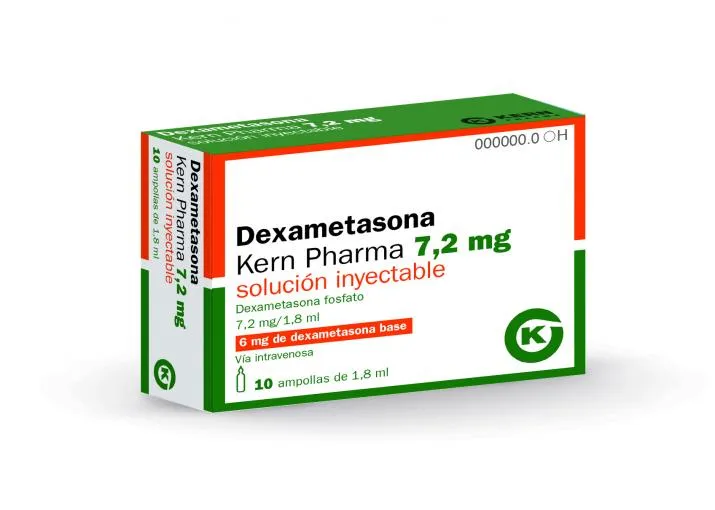
Table of Contents
- Package leaflet: Information for the user
- Introduction
- 1. What Dexamethasone Kern Pharma is and what it is used for
- 2. What you need to know before using Dexamethasone Kern Pharma
- 3. How to use Dexametasona Kern Pharma
- 4. Possible adverse effects
- 5. Storage of Dexamethasone Kern Pharma
- 6. Contents of the pack and other information
Package leaflet: Information for the user
Introduction
Package leaflet: Information for the user
Dexametasona Kern Pharma 7.2 mg solution for injection
Dexamethasone phosphate
Read the entire leaflet carefully before you start using this medicine, because it contains important information for you.
- Keep this leaflet as you may need to read it again.
- If you have any questions, ask your doctor or pharmacist.
- This medicine has been prescribed for you only, and you should not give it to other people, even if they have the same symptoms as you, because it could harm them.
- If you experience any adverse reactions, consult your doctor or pharmacist, even if they are adverse reactions not listed in this leaflet. See section 4.
Contents of the leaflet:
- What Dexametasona Kern Pharma is and what it is used for.
- What you need to know before using Dexametasona Kern Pharma.
- How to use Dexametasona Kern Pharma.
- Possible adverse effects.
- How to store Dexametasona Kern Pharma.
- Contents of the pack and other information.
1. What Dexamethasone Kern Pharma is and what it is used for
The dexamethasone phosphate contained in this medicine is a synthetic glucocorticoid (adrenocortical hormone) derived from cortisone. It plays a role in regulating many of the body's metabolic processes, with anti-inflammatory and immunosuppressive activity.
This medicine is used for the treatment of coronavirus disease 2019 (COVID-19) in adults and adolescents (at least 12 years of age with a body weight of at least 40 kg) who require supplemental oxygen therapy.
2. What you need to know before using Dexamethasone Kern Pharma
Do not use this medicine:
-
If you are allergic or have had an allergic reaction to dexamethasone or any of the other components of this medicine (listed in section 6). These reactions are more common in patients with a history of allergy to any medication.
-
For intravenous administration if you have a systemic infection, unless you are receiving specific anti-infective treatment.
Warnings and precautions
Administration of this medicine may cause adrenal insufficiency, especially if high doses are administered for prolonged periods.
Avoid abrupt discontinuation of treatment, particularly after long-term use, as this may lead to a corticosteroid withdrawal syndrome characterized by general malaise, weakness and muscle pain, difficulty breathing, loss of appetite, nausea, vomiting, fever, low blood pressure, and decreased blood glucose levels.
This medicine may increase the risk of infections and may also mask signs of infection and/or make diagnosis more difficult. Latent infections may reactivate during corticosteroid use.
Close medical monitoring is necessary in the following cases:
- In acute and chronic bacterial infections.
- If you have lymph node inflammation (lymph nodes that help the body's defense) after receiving the tuberculosis vaccine.
- If you have a history of tuberculosis.
- Patients with chronic hepatitis (liver inflammation).
- Acute viral infections (hepatitis B, herpes, chickenpox, poliomyelitis, measles).
- Infections caused by fungi or parasites.
- If you need to be vaccinated or have been vaccinated approximately 8 weeks before or 2 weeks after treatment.
- If you have diabetes, peptic ulcer, inflammatory gastrointestinal diseases, osteoporosis (loss of calcium from bones), heart failure, high blood pressure, or psychiatric disorders.
- If you have glaucoma (increased intraocular pressure), corneal ulcers or lesions, blurred vision, or other visual disturbances.
Administration of this medicine may alter the results of certain laboratory tests.
High doses of dexamethasone may cause a decrease in heart rate in some patients.
Severe anaphylactic reactions (hypersensitivity of the immune system) may occur.
If you have myasthenia gravis (severe muscle weakness), your condition may initially worsen during treatment with this medicine.
If intravenous administration of this medicine is too rapid, tingling or numbness may occur, lasting for a few minutes.
In postmenopausal women, this medicine may increase the risk of osteoporosis.
You should inform your doctor if you experience any symptoms of tumor lysis syndrome (TLS), such as muscle cramps, muscle weakness, confusion, visual loss or disturbances, or difficulty breathing, especially if you have a malignant hematological condition.
If dexamethasone is administered to a premature infant, cardiac function and structure must be closely monitored.
Children and adolescents
In children, the doctor should carefully evaluate the benefits of treatment, as glucocorticoid use may affect growth.
Elderly patients
In patients over 65 years of age, the doctor should assess the benefits and potential risks of treatment, as these patients may be more susceptible to adverse effects, such as osteoporosis.
Use of Dexamethasone Kern Pharma with other medicines
Inform your doctor or pharmacist if you are taking or have recently taken any other medicines, including those obtained without a prescription, homeopathic remedies, herbal medicines, and other health-related products, as it may be necessary to interrupt treatment or adjust the dose of some of them. Note that these instructions may also apply to medicines previously used or that may be used in the future.
This is especially important if you are taking the following medicines:
- Non-steroidal anti-inflammatory drugs (NSAIDs) such as indomethacin and salicylates, as they increase the risk of gastrointestinal ulceration and bleeding.
- Oral antidiabetic agents and insulin, as their effect may be reduced.
- Antiepileptics (carbamazepine), antiarrhythmics (phenytoin), antiasthmatics and bronchodilators (ephedrine), antituberculosis antibiotics (rifampicin), barbiturates, and primidone, as they may reduce the effects of dexamethasone.
- Medicines that delay liver metabolism, such as certain antifungal agents (ketoconazole, itraconazole) and certain antiretroviral drugs, as they may increase corticosteroid action. Your doctor will perform careful monitoring if you are taking these medicines (including some for HIV: ritonavir, cobicistat).
- Coumarin derivatives (oral anticoagulants), as their anticoagulant effect may be altered.
- Estrogens (e.g., for contraception), as they may increase the effect of dexamethasone.
- Atropine and other anticholinergic medicines, as they may increase intraocular pressure.
- Medicines used to treat heart conditions, such as cardiac glycosides, whose effects may be enhanced due to decreased potassium levels.
- Diuretics/laxatives, as they may increase potassium loss.
- Praziquantel, as glucocorticoids may reduce praziquantel blood levels.
- Antihypertensive medicines (ACE inhibitors), as they may increase the risk of blood component abnormalities.
- Antimalarial medicines (chloroquine, hydroxychloroquine, mefloquine), as they may increase the risk of muscle disorders or heart muscle diseases (myopathies, cardiomyopathies).
- Immunosuppressive agents, as they may increase the risk of infections. Additionally, in the case of cyclosporine, blood levels of cyclosporine may rise, increasing the risk of seizures.
- Non-depolarizing muscle relaxants, as muscle relaxation may be prolonged.
- Protirelin, as its effects on thyroid-stimulating hormone (TSH) may be affected.
- Fluoroquinolones, as they may increase the risk of tendon abnormalities.
- Amphotericin B, as it may increase the risk of low potassium levels (hypokalemia).
- Albendazole, as blood levels of its active metabolite may increase.
- Vaccines, as the immune response to vaccination may be inadequate.
Do not stop taking any other steroid medicine unless your doctor has instructed you to do so.
Talk to your doctor, pharmacist, or nurse before using Dexamethasone Kern Pharma.
Pregnancy, breastfeeding, and fertility
If you are pregnant or breastfeeding, think you may be pregnant, or plan to become pregnant, consult your doctor or pharmacist before using this medicine.
Pregnancy
Dexamethasone crosses the placenta. During pregnancy, especially in the first three months, treatment should only be administered after careful assessment of the risk-benefit ratio. Therefore, women should inform their doctor of any existing or suspected pregnancy. Long-term glucocorticoid treatment during pregnancy may not exclude fetal growth disturbances. If glucocorticoids are administered near the end of pregnancy, newborns may have impaired adrenal gland function, requiring replacement therapy with reduced doses.
Newborns of mothers who received Dexamethasone Kern Pharma near the end of pregnancy may have low blood sugar levels after birth.
Breastfeeding
Glucocorticoids, including dexamethasone, pass into breast milk. To date, no harm to the infant has been reported. However, the need for administration during breastfeeding should be carefully evaluated. If high doses are medically necessary, breastfeeding should be discontinued. Consult your doctor immediately.
Fertility
The effects of this medicine on fertility have not been studied.
Driving and use of machines
There are no data on how this medicine affects the ability to drive or operate machinery. Therefore, avoid tasks requiring special attention until you know how you tolerate the medicine.
Dexamethasone Kern Pharma contains sodium
This medicine contains less than 23 mg (1 mmol) of sodium per vial and is therefore considered essentially “sodium-free.”
Effect on laboratory test results
This medicine may alter the values of certain laboratory tests. In addition, skin reactions in allergy tests may be masked.
Use in athletes
This medicine contains a component that may result in a positive finding in doping control tests.
3. How to use Dexametasona Kern Pharma
Follow exactly the administration instructions given by your doctor. Your doctor will decide for how long you should use dexamethasone. Consult your doctor or pharmacist if you have any doubts.
This medicine is administered slowly (over 2–3 minutes) by intravenous route.
For the treatment of Covid-19
In adult patients, it is recommended to administer 7.2 mg of dexamethasone phosphate (1 vial, equivalent to 6 mg of dexamethasone base) by intravenous route once daily for up to a maximum of 10 days.
Renal and hepatic impairment
No specific dose adjustment is required.
Use in adolescents
It is recommended to administer 7.2 mg of dexamethasone phosphate (1 vial, equivalent to 6 mg of dexamethasone base) by intravenous route once daily for up to a maximum of 10 days to pediatric patients (adolescents at least 12 years of age).
If you use more Dexametasona Kern Pharma than you should
In case of overdose or accidental ingestion, consult your doctor or pharmacist immediately or call the Toxicology Information Service at telephone number: 91 562 04 20, indicating the medicine and the amount used.
Acute intoxications with dexamethasone are not known. In the event of overdose, the adverse reactions described in this leaflet are expected to occur to a greater extent.
If you stop treatment with Dexametasona Kern Pharma
Do not stop treatment earlier than indicated by your doctor or abruptly, as this could worsen your condition.
The dose should be reduced gradually. Likewise, discontinuation of treatment should always be done progressively.
Too rapid reduction of the dose after long-term treatment may cause symptoms such as muscle and joint pain. Your doctor will gradually reduce the dose you should take.
If you have any further questions about the use of this product, ask your doctor or pharmacist.
4. Possible adverse effects
Like all medicines, this medicine can cause adverse effects, although not everyone will experience them.
The following adverse effects have been reported with dexamethasone:
Frequent (may affect up to 1 in 10 patients):
- Immune system disorders: decreased resistance to infections, oropharyngeal candidiasis.
- Endocrine disorders: adrenocortical insufficiency.
- With high doses: signs of adrenal hyperactivity (Cushing's syndrome) with rashes, moon face, and trunk obesity.
- Metabolism and nutrition disorders: hyperglycemia (increased blood glucose).
- Eye disorders: cataracts.
- Vascular disorders: with high doses, hot flushes.
- Gastrointestinal disorders: with high doses: gastric ulcer.
- Skin and subcutaneous tissue disorders: delayed wound healing, skin allergic reaction.
- With high doses: hirsutism (excessive hair growth), cutaneous hyperpigmentation (darkening of the skin), scleroderma (disease of the subcutaneous tissue).
- Musculoskeletal and connective tissue disorders: osteoporosis, bone fragility.
- With prolonged treatment: muscle atrophy.
Uncommon (may affect up to 1 in 100 patients):
- Blood and lymphatic system disorders: decreased number of white blood cells called lymphocytes (lymphopenia), decreased number of white blood cells called eosinophils (eosinopenia).
- Immune system disorders: generalized allergic reaction.
- Metabolism and nutrition disorders: hypokalemia (decreased plasma potassium concentration).
- Psychiatric disorders: psychotic disorder.
- Nervous system disorders: increased intracranial pressure, neurological disturbances.
- Cardiac disorders: heart failure.
- Vascular disorders: thromboembolism, hypertension.
- With long-term administration, requiring medical attention: avascular necrosis, edema.
- Gastrointestinal disorders: inflammation of the pancreas (acute pancreatitis).
- With long-term administration, requiring medical attention: gastrointestinal irritation, peptic ulcer or intestinal perforation.
- Skin and subcutaneous tissue disorders: sweating.
- Musculoskeletal and connective tissue disorders: muscle weakness.
- With long-term administration, requiring medical attention: steroid myopathy (muscle weakness).
- Reproductive system and breast disorders: amenorrhea (absence of menstruation).
- General disorders and administration site conditions: fluid retention (edema).
- With rapid intravenous administration of high doses: allergic reactions and local injection site infection, generalized anaphylaxis, facial flushing, irregular heartbeat or palpitations, convulsive crisis. With local injection: unusual bruising, wounds that do not heal.
Frequency unknown (cannot be estimated from available data):
- Infections and infestations: masking of infections, existing infections may worsen or reactivate, and new infections may appear, activation of intestinal parasitic diseases (strongyloidiasis).
- Blood and lymphatic system disorders: alteration of blood cells (white blood cells and lymphocytes among others).
- Immune system disorders: severe allergic reactions such as: heart rhythm disturbances, bronchospasm, changes in blood pressure, circulatory failure, cardiac arrest.
- Metabolism and nutrition disorders: potassium loss (which may cause arrhythmias), diabetes mellitus, hypercholesterolemia, hypertriglyceridemia, increased appetite.
- Psychiatric disorders: mania, depression, hallucinations, emotional instability, irritability, increased activity, euphoria, anxiety, sleep disturbances, suicidal thoughts.
- Nervous system disorders: increased spasms in epileptic patients or onset of epilepsy (seizures), hyperactivity, epidural lipomatosis (growth of fatty tissue around the spine).
- Eye disorders: glaucoma (increased intraocular pressure), worsening of corneal ulcer symptoms; eye infections, ptosis, pupil dilation (mydriasis), burning sensation, scleral perforation, in rare cases reversible exophthalmos, visual disturbances, blurred vision, vision loss.
- Vascular disorders: increased risk of atherosclerosis, vasculitis (also as a symptom of withdrawal after long-term treatment), fragility of small blood vessels.
- Gastrointestinal disorders: hiccups, gastric discomfort, gastrointestinal hemorrhage (bleeding).
- Skin and subcutaneous tissue disorders: acne, perioral dermatitis, striae, skin atrophy, petechiae, telangiectasias, bruising, hypertrichosis.
- Musculoskeletal and connective tissue disorders: tendon abnormalities, tendon rupture, osteonecrosis, growth retardation in children.
- General disorders and administration site conditions: erectile dysfunction.
- Investigations: weight gain, decreased glucose tolerance.
- Thickening of the heart muscle (hypertrophic cardiomyopathy) in premature infants, which usually returns to normal after treatment is discontinued.
Reporting of adverse effects
If you experience any type of adverse effect, consult your doctor or pharmacist, even if it is a possible adverse effect not listed in this leaflet. You may also report them directly via the Spanish Pharmacovigilance System for Human Medicinal Products: www.notificaRAM.es. By reporting adverse effects, you can help provide more information on the safety of this medicine.
5. Storage of Dexamethasone Kern Pharma
Keep this medicine out of sight and reach of children.
Do not freeze. Do not store above 30°C. Keep in the original packaging to protect from light.
Do not use this medicine after the expiry date stated on the packaging after “EXP”. The expiry date refers to the last day of the month indicated.
This medicine is for single use only and must be administered immediately after opening. Any unused portion should be discarded.
Medicines should not be disposed of via wastewater or household waste. Ask your pharmacist how to dispose of medicines and packaging you no longer need. This will help protect the environment.
6. Contents of the pack and other information
Only clear solutions free from cloudiness and precipitates should be used.
Composition
- The active substance is dexamethasone. Each ampoule contains: 7.2 mg of dexamethasone phosphate (as dexamethasone sodium phosphate, 7.87 mg), equivalent to 6 mg of dexamethasone base.
- The other components (excipients) are: disodium edetate, sodium citrate, sodium hydroxide, and water for injections.
Appearance of the product and contents of the pack
Dexametasona Kern Pharma is a clear injectable solution supplied in packs containing 10 ampoules of 1.8 ml.
Marketing Authorisation Holder and Manufacturer
Kern Pharma, S.L.
Venus, 72 - Pol. Ind. Colón II
08228 Terrassa - Barcelona
Spain
Date of the most recent review of this leaflet: February 2022
Detailed and up-to-date information on this medicine is available on the website of the Spanish Agency of Medicines and Medical Devices (AEMPS) http://www.aemps.gob.es/
This information is intended for healthcare professionals only:
This medicine should preferably be administered directly by intravenous route or injected into an infusion line.
However, Dexametasona Kern Pharma 7.2 mg solution for injection is compatible with the following infusion solutions (250 ml each) and must be used within 24 hours: 0.9% sodium chloride, Ringer's solution, or 5% glucose solution.