Desvenlafaxine Cinfa 50 mg prolonged-release tablets EFG
Spain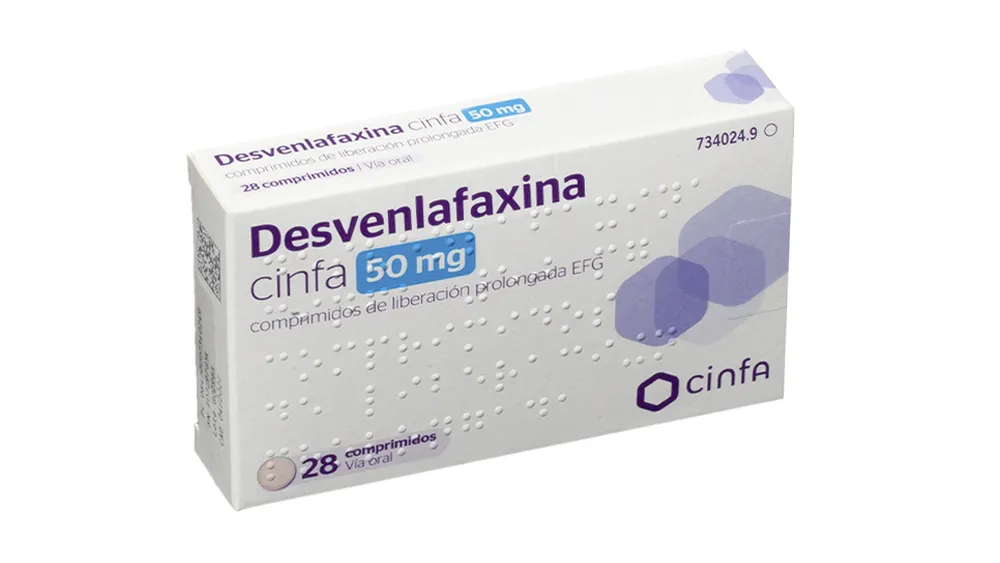
Table of Contents
- Package leaflet: Information for the patient
- Introduction
- 1. What desvenlafaxine cinfa is and what it is used for
- 2. What you need to know before taking desvenlafaxine cinfa
- 3. How to take desvenlafaxine cinfa
- 4. Possible adverse effects
- 5. Storage of desvenlafaxine cinfa
- 6. Contents of the pack and other information
Package leaflet: Information for the patient
Introduction
Package leaflet: information for the patient
desvenlafaxine cinfa 50 mg prolonged-release tablets EFG
Read the entire leaflet carefully before you start taking this medicine, because it contains important information for you.
- Keep this leaflet, as you may need to read it again.
- If you have any questions, ask your doctor or pharmacist.
- This medicine has been prescribed for you only, and you should not give it to others, even if they have the same symptoms as you, because it could harm them.
- If you experience any adverse effects, consult your doctor or pharmacist, even if they are adverse effects not listed in this leaflet. See section 4.
Leaflet contents
- What desvenlafaxine cinfa is and what it is used for
- What you need to know before taking desvenlafaxine cinfa
- How to take desvenlafaxine cinfa
- Possible adverse effects
- How to store desvenlafaxine cinfa
- Contents of the pack and other information
1. What desvenlafaxine cinfa is and what it is used for
Desvenlafaxine cinfa is an antidepressant that belongs to a group of medicines called serotonin and noradrenaline reuptake inhibitors (SNRIs). This group of medicines is used to treat depression. People with depression may have low levels of serotonin and noradrenaline (also known as norepinephrine) in the brain. The exact way antidepressants work is not fully understood, but they may help increase the levels of serotonin and noradrenaline in the brain.
This medicine is a treatment for adults.
2. What you need to know before taking desvenlafaxine cinfa
Do not take desvenlafaxine cinfa:
- if you are allergic to desvenlafaxine, venlafaxine, or any of the other ingredients of this medicine (listed in section 6).
- if you are currently taking or have taken within the last 14 days a medicine known as a monoamine oxidase inhibitor (MAOI) used to treat depression, infections, or Parkinson's disease. Taking an MAOI (e.g., linezolid or methylene blue) together with medicines such as desvenlafaxine may cause serious or even potentially life-threatening side effects. In addition, you must wait at least 7 days after stopping desvenlafaxine before starting any MAOI (see also sections “Serotonin syndrome” and “Other medicines and desvenlafaxine cinfa”).
Warnings and precautions
Talk to your doctor or pharmacist before starting desvenlafaxine.
Talk to your doctor if you have previously had any of the following conditions or if they occur during treatment with desvenlafaxine:
- if you or a family member has had or has a history of mania (a state of overexcitement, feelings of euphoria, or hyperirritability) or bipolar disorder (extreme mood swings, e.g., shifting from depression to euphoria).
- if you have a history of aggressive behavior.
- if you have eye problems, such as certain types of glaucoma (increased pressure in the eye).
- if you have a history of high blood pressure or hypertension.
- if you have a history of heart problems or heart attack.
- if you have a history of seizures (fits).
- if you have a history of bleeding disorders (tendency to bruise easily), or if you are pregnant (see section Pregnancy and breastfeeding), or if you are taking non-steroidal anti-inflammatory drugs (NSAIDs), aspirin, or other medicines that may increase the risk of bleeding when used together with desvenlafaxine.
- if you have a history of kidney problems.
- if you have a history of low sodium levels in the blood (hyponatremia).
- if you have a history of high cholesterol, or if your cholesterol levels increase.
- if you experience the following side effects: agitation (excitability and restlessness), altered consciousness, confusion, coma, rapid heartbeat, increased blood pressure, elevated body temperature, excessive sweating, lack of coordination, muscle spasms or stiffness, tremors, nausea, vomiting, and diarrhea. Contact your doctor immediately, as you may be experiencing serotonin syndrome (a condition that can be serious and, rarely, potentially fatal).
- if treatment is stopped abruptly, withdrawal symptoms may occur (e.g., mood changes, irritability, agitation, dizziness, anxiety, confusion, headache, sleep disturbances, tinnitus (ringing in the ears), and seizures (fits)). Therefore, it is important to gradually reduce the dose of desvenlafaxine under medical supervision whenever you and your doctor decide to discontinue treatment.
Some medicines in the same class as desvenlafaxine (called SSRIs/SNRIs) may cause sexual dysfunction symptoms (see section 4). In some cases, these symptoms may persist after stopping treatment.
Suicidal thoughts and worsening of depression or anxiety disorder
If you are depressed and/or have anxiety disorders, you may occasionally have thoughts about harming yourself or committing suicide. These thoughts may increase when you first start taking antidepressants, as these medicines take time to work—usually about two weeks, but sometimes longer.
You may be more likely to have such thoughts:
- if you have previously had thoughts of suicide or self-harm.
- if you are a young adult. Clinical trial data have shown an increased risk of suicidal behavior in young adults (under 25 years of age) with psychiatric disorders treated with antidepressants.
If you have thoughts of harming yourself or committing suicide at any time, contact your doctor or go directly to a hospital.
It may be helpful to tell a close friend or family member that you are depressed or have an anxiety disorder, and ask them to read this leaflet. You may also ask them to inform you if they think your depression or anxiety is worsening, or if they are concerned about changes in your behavior.
Dry mouth
Dry mouth has been reported in 18% of patients treated with desvenlafaxine. This may increase the risk of tooth decay. Therefore, you should take care with your oral hygiene.
Elderly patients
In some elderly patients, increased sensitivity to desvenlafaxine cannot be ruled out.
Children and adolescents
Desvenlafaxine should not normally be used in children and adolescents. In addition, you should know that in patients under 18 years of age, there is an increased risk of adverse effects such as suicide attempts and hostility (mainly aggression, confrontational behavior, and irritability) when taking this type of medicine. Nevertheless, your doctor may prescribe this medicine to patients under 18 years of age if they decide it is most appropriate for the patient. If your doctor has prescribed this medicine to a patient under 18 years of age and you wish to discuss this decision, please return to your doctor. You should inform your doctor if any of the symptoms listed above develop or worsen while these patients under 18 years of age are taking desvenlafaxine.
In addition, long-term effects on safety, as well as effects on growth, maturation, and cognitive and behavioral development, have not yet been established.
Other medicines and desvenlafaxine cinfa
Inform your doctor or pharmacist if you are taking, have recently taken, or might need to take any other medicines.
It is especially important that you inform your doctor if you are taking any of the following medicines:
- monoamine oxidase inhibitors (MAOIs), for example medicines containing linezolid (an antibiotic used to treat infections) and methylene blue (see section “Do not take desvenlafaxine cinfa”).
- other medicines containing venlafaxine or desvenlafaxine (also used in the treatment of depression).
- triptans (used for migraine).
- medicines for depression, for example tricyclic antidepressants, amphetamines, lithium, selective serotonin reuptake inhibitors (SSRIs), or serotonin-norepinephrine reuptake inhibitors (SNRIs).
- medicines containing sibutramine (used for weight loss).
- pain medicines, for example those containing tramadol, fentanyl and its analogs, tapentadol, meperidine, methadone (also used for treatment of narcotic withdrawal syndrome and opioid dependence), and pentazocine.
- medicines containing dextromethorphan (used for cough).
- products containing St. John’s wort (also known as Hypericum perforatum, a natural or herbal remedy used to treat mild depression).
- products containing tryptophan (used for problems such as sleep and depression).
- medicines containing ketoconazole (an antifungal).
- In addition, if you are being treated by other healthcare professionals, inform them that you are taking desvenlafaxine.
Serotonin syndrome or reactions similar to Neuroleptic Malignant Syndrome (NMS)
Rarely, a disorder called serotonin syndrome or reactions similar to NMS may occur, which can cause significant changes in brain, muscle, and digestive system function due to high levels of serotonin in the body. This potentially life-threatening condition may occur when taking medicines such as desvenlafaxine, particularly when taken together with other medicines mentioned above.
See section “Warnings and precautions” for possible adverse effects related to serotonin syndrome or reactions similar to NMS.
Switching from another antidepressant
When switching treatment from another antidepressant to desvenlafaxine, withdrawal symptoms from the initial antidepressant may occur. Your doctor may gradually reduce the dose of your initial antidepressant medication to help minimize these symptoms.
Interactions with laboratory tests
False positive results may occur for certain substances such as phencyclidine (PCP) and amphetamines in urine tests of patients taking or who have recently taken desvenlafaxine, even several days after stopping treatment.
Taking desvenlafaxine cinfa with food, drinks, and alcohol
Desvenlafaxine tablets can be taken with or without food. You should avoid alcohol while taking desvenlafaxine.
Pregnancy and breastfeeding
If you are pregnant or breastfeeding, think you may be pregnant, or are planning to become pregnant, consult your doctor or pharmacist before using this medicine.
If you take desvenlafaxine in the late stages of pregnancy, there may be an increased risk of heavy vaginal bleeding shortly after delivery, especially if you have a history of bleeding disorders. Your doctor or midwife should be aware that you are taking desvenlafaxine so they can advise you. When similar medicines (SSRIs) are taken during pregnancy, there may be an increased risk of a serious condition in the baby called persistent pulmonary hypertension of the newborn (PPHN), causing the baby to breathe faster and appear blue. These symptoms usually begin within the first 24 hours after birth. If your baby shows these symptoms, contact your doctor and/or midwife immediately.
If you take desvenlafaxine during pregnancy, inform your doctor and/or midwife, as your baby may experience withdrawal symptoms after birth. These symptoms may appear immediately after delivery and may require hospitalization. Symptoms include difficulty feeding or breathing problems. If your baby has these or other symptoms at birth and you are concerned, contact your doctor and/or midwife.
Desvenlafaxine passes into breast milk. There is a risk of effects on the baby. Therefore, do not use desvenlafaxine cinfa during breastfeeding unless specifically instructed by your doctor.
Driving and using machines
Desvenlafaxine may cause dizziness, drowsiness, and blurred vision. Do not drive or operate tools or machinery until you know how this medicine affects you.
3. How to take desvenlafaxine cinfa
Follow exactly the instructions for using this medicine given by your doctor or pharmacist. If in doubt, consult your doctor or pharmacist again.
The recommended dose is 50 mg once daily. Your doctor may increase your dose up to 100 mg once daily, or even up to a maximum of 200 mg once daily if necessary.
If you have kidney problems or a history of kidney problems, consult your doctor, as you may need to take a different dose of desvenlafaxine.
Desvenlafaxine should be taken orally, approximately at the same time each day. The tablets must be swallowed whole with liquid, without splitting, crushing, chewing, or dissolving them.
Do not be alarmed if you notice the tablet structure in your stools after taking desvenlafaxine. As the tablet travels through your gastrointestinal tract, the active ingredient desvenlafaxine is slowly released. The tablet structure does not dissolve and is eliminated in the stool. Therefore, even though the tablet structure may appear in your stool, you will have absorbed your dose of desvenlafaxine.
If you take more desvenlafaxine cinfa than you should
Contact your doctor or pharmacist immediately if you take more desvenlafaxine than prescribed by your doctor.
In case of overdose or accidental ingestion, consult your doctor or pharmacist immediately or call the Toxicology Information Service at telephone number 91 562 04 20, indicating the medication and the amount ingested.
If you forget to take desvenlafaxine cinfa
If you have missed a dose, take it as soon as you remember. However, if it is almost time for your next dose, skip the missed dose and take only your next dose at the usual time. Do not take a double dose to make up for a missed dose.
If you stop taking desvenlafaxine cinfa
Do not stop taking desvenlafaxine, or change the dose, unless instructed by your doctor, even if you feel better. Your doctor will usually prefer to gradually reduce the dose of desvenlafaxine to avoid adverse effects. It is known that patients may experience adverse effects when stopping desvenlafaxine, especially if they have taken a high dose for a prolonged period. Some of these adverse effects include: dizziness, nausea, headache, fatigue, irritability, diarrhea, anxiety, nightmares, and excessive sweating. Therefore, the dose should be gradually reduced whenever possible and under medical supervision, if you and your doctor decide to discontinue treatment with desvenlafaxine.
If you experience any of these or other bothersome symptoms, consult your doctor (see section "Warnings and precautions").
If you have any further questions about the use of this medicine, ask your doctor or pharmacist.
4. Possible adverse effects
Like all medicines, this medicine can cause adverse effects, although not everyone will experience them.
Serious adverse effects
If you notice any of the following signs, tell your doctor immediately or go to the nearest hospital:
- heart problems, such as rapid heartbeat, increased blood pressure, or chest pain.
- eye problems, such as blurred vision.
- nervous system problems, such as dizziness, numbness and tingling, movement disorders (e.g., involuntary muscle movements, restlessness), seizures or fits.
- psychiatric problems, such as hyperactivity and euphoria.
- drug allergy, such as rash, swelling of the throat, or breathing difficulties.
List of possible adverse effects
The adverse effects and frequencies (likelihood of occurrence) listed below have been observed in patients. In general, these adverse effects occurred more frequently during the first week of treatment.
Very common (may affect more than 1 in 10 people)
Common (may affect up to 1 in 10 people)
Uncommon (may affect up to 1 in 100 people)
Rare (may affect up to 1 in 1,000 people)
Frequency not known (cannot be estimated from available data)
Immune system disorders
Uncommon: allergic reaction
Metabolism and nutrition disorders
Common: loss of appetite
Rare: hyponatremia (reduced sodium concentration in blood)
Psychiatric disorders
Very common: insomnia
Common: withdrawal syndrome, anxiety, nervousness, unusual dreams, irritability, absence of orgasm, decreased libido
Uncommon: distortion of self-image and reality
Rare: hallucinations, hypomania (state of exaggerated excitement and activity), and mania (state of overexcitement, feeling of euphoria or hyperirritability)
Nervous system disorders
Very common: dizziness, headache, somnolence
Common: tremor, attention deficit, numbness and tingling, altered sense of taste
Uncommon: loss of consciousness, abnormal movements (dyskinesia)
Rare: serotonin syndrome (characterized by symptoms such as agitation (excitability and restlessness), altered consciousness, confusion, coma, palpitations, increased blood pressure, elevated body temperature, excessive sweating, lack of coordination, muscle spasms or rigidity, tremors, nausea, vomiting, and diarrhea), seizures (fits), movement disorders (e.g., involuntary muscle movements, restlessness)
Eye disorders
Common: pupil dilation, blurred vision
Ear disorders
Common: tinnitus, sensation of vertigo
Cardiac disorders
Common: rapid heartbeat, palpitations (sensation of rapid, irregular, or strong heartbeat)
Vascular disorders
Common: high blood pressure, hot flushes
Uncommon: peripheral coldness, low blood pressure upon changing position
Respiratory disorders
Common: yawning
Uncommon: nosebleeds
Gastrointestinal disorders
Very common: nausea, dry mouth, constipation
Common: vomiting, diarrhea
Rare: acute pancreatitis (inflammation of the pancreas)
Skin and subcutaneous tissue disorders
Very common: excessive sweating
Common: rash
Uncommon: partial or complete hair loss
Rare: Stevens-Johnson syndrome (multiform erythema, a hypersensitivity reaction affecting the skin and mucous membranes), swelling under the skin, photosensitivity
Musculoskeletal disorders
Common: muscle stiffness
Renal and urinary disorders
Uncommon: difficulty urinating, urinary retention, protein in urine
Reproductive system disorders
Common: erectile dysfunction, delayed ejaculation, ejaculatory failure
Uncommon: sexual dysfunction, ejaculation disorder
Frequency not known: heavy vaginal bleeding shortly after childbirth (postpartum hemorrhage); see “Pregnancy and breastfeeding” in section 2 for more information.
General disorders
Common: fatigue, weakness, chills, feeling of restlessness
Medical tests and evaluations
Common: abnormal liver function tests, high blood pressure, weight gain, weight loss
Uncommon: increased blood cholesterol levels, increased blood triglyceride values, increased blood prolactin levels
Reporting of adverse effects
If you experience any adverse effect, consult your doctor or pharmacist, even if it is a possible adverse effect not listed in this leaflet. You may also report them directly through the Spanish Pharmacovigilance System for Human Medicines: https://www.notificaram.es. By reporting adverse effects, you can help provide more information on the safety of this medicine.
5. Storage of desvenlafaxine cinfa
Keep this medicine out of the sight and reach of children.
Do not use this medicine after the expiry date stated on the packaging after EXP. The expiry date is the last day of the month indicated.
This medicine does not require any special storage conditions.
Medicines should not be disposed of via wastewater or household waste. Dispose of unused medicines and their containers at a SIGRE Point at your pharmacy. If in doubt, ask your pharmacist how to dispose of medicines and containers you no longer need. This will help protect the environment.
6. Contents of the pack and other information
Composition of desvenlafaxine cinfa
The active substance is desvenlafaxine. Each tablet contains 50 mg of desvenlafaxine (as benzoate).
The other components are:
Core: hypromellose, microcrystalline cellulose, talc, stearic acid, anhydrous colloidal silica, and magnesium stearate.
Coating: polyvinyl alcohol, titanium dioxide (E-171), macrogol, talc, yellow iron oxide (E-172), and red iron oxide (E-172).
Appearance of the product and contents of the pack
Light pink, round, biconvex tablets.
The tablets are packaged in OPA/AL/PVC//Aluminum and PVC/PE/PVDC//Aluminum blisters.
desvenlafaxine cinfa is available in packs of 28 prolonged-release tablets.
Marketing Authorization Holder and Manufacturer
Marketing Authorization Holder
Laboratorios Cinfa, S.A.
Carretera Olaz-Chipi, 10. Polígono Industrial Areta
31620 Huarte (Navarra) – Spain
Manufacturer
PharOs MT Ltd
HF62X, Hall Far Industrial Estate,
Birzebbugia BBG3000
Malta
Date of the most recent review of this leaflet: April 2022
Detailed information on this medicinal product is available on the website of the Spanish Agency of Medicines and Medical Devices (AEMPS) http://www.aemps.gob.es/
You can access detailed and up-to-date information about this medicine by scanning with your mobile phone (smartphone) the QR code included in the package leaflet and carton. You can also access this information at the following internet address: https://cima.aemps.es/cima/dochtml/p/86783/P_86783.html
QR code: https://cima.aemps.es/cima/dochtml/p/86783/P_86783.html