Depo-Progevera 150 mg/ml injection suspension
Spain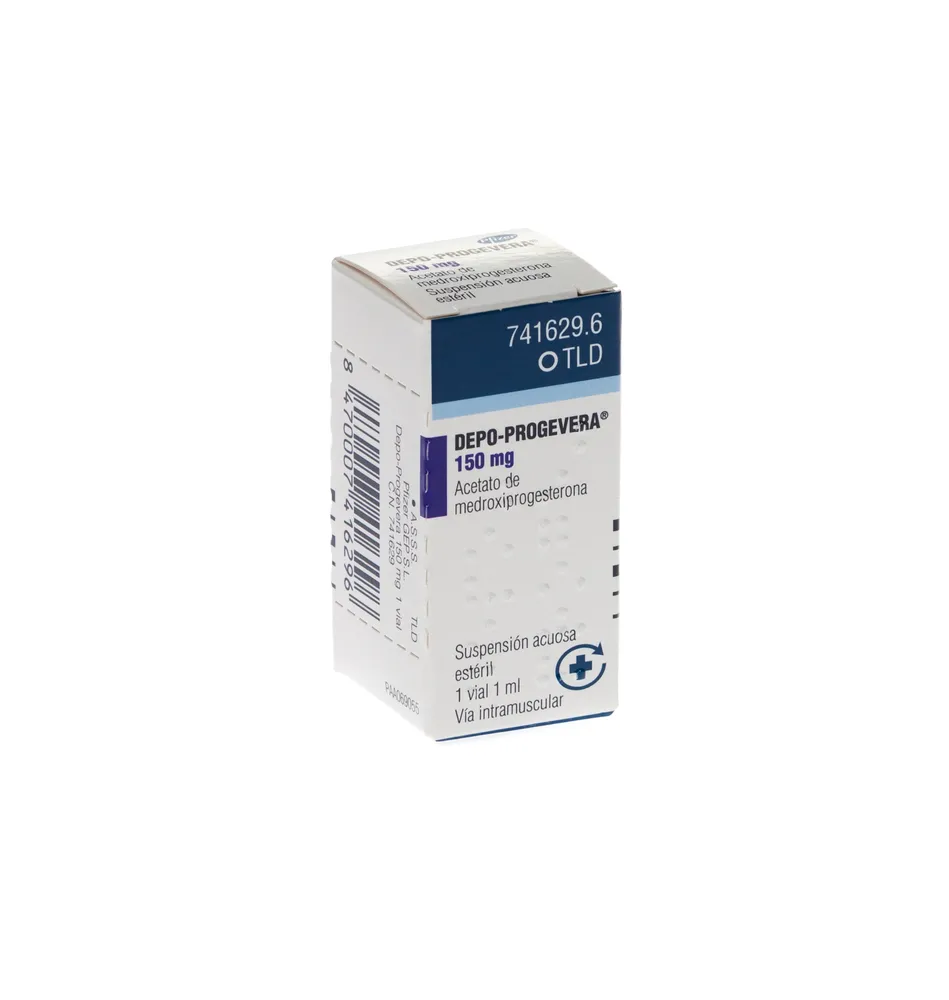
Table of Contents
Package leaflet: Information for the user
Introduction
PACKAGE LEAFLET: INFORMATION FOR THE USER
Depo-Progevera 150 mg/ml injectable suspension
Medroxyprogesterone
Read the entire leaflet carefully before starting to use Depo-Progevera 150 mg/ml injectable suspension
- Keep this leaflet, as you may need to read it again.
- If you have any questions, consult your doctor or pharmacist.
- This medicine has been prescribed for you and should not be given to other people, even if they have the same symptoms, as it may harm them.
- If you consider any of the side effects you experience to be severe, or if you notice any side effect not listed in this leaflet, inform your doctor or pharmacist.
Leaflet contents:
- What Depo-Progevera is and what it is used for
- Before using Depo-Progevera
- How to use Depo-Progevera
- Possible side effects
- Storage of Depo-Progevera
- Further information
1. What Depo-Provera is and what it is used for
Depo-Provera is indicated as a contraceptive treatment to prevent pregnancy.
Depo-Provera belongs to a class of hormonal contraceptives called progestogens (derivatives of progesterone), which work primarily by inhibiting the maturation of eggs during the menstrual cycle and preventing ovulation. By preventing eggs from maturing and being released from the ovaries, sperm are unable to fertilize them, thereby preventing pregnancy.
Depo-Provera is also indicated as an adjunctive treatment in the management of a certain type of endometrial cancer.
2. Before using Depo-Provera
Do not use Depo-Provera:
- If you are allergic (hypersensitive) to medroxyprogesterone acetate or to any of the other components of Depo-Provera.
- If you are pregnant or suspect you may be pregnant.
- If your doctor has told you that you have or suspect you may have a hormone-sensitive tumour of the breast or genital organs.
- If you have abnormal vaginal bleeding (either too little or too much) of unknown cause.
- If you have or have had blood vessel disorders such as thrombophlebitis (formation of blood clots in veins, with painful inflammation and cramps) or blood clots blocking blood vessels (thromboembolic events).
- If you have or have had severe liver disease.
- If you have had a missed abortion.
- If you have a meningioma or have ever been diagnosed with a meningioma (a usually benign tumour of the tissue surrounding the brain and spinal cord), unless you are using Depo-Provera to treat cancer.
Inform your doctor if any of the following apply to you.
Take special care with Depo-Provera
Before starting treatment with Depo-Provera, your doctor will perform general and gynaecological examinations to assess whether Depo-Provera is suitable for you. Inform your doctor if you have or have had any of the conditions described below. Similarly, if any of these conditions appear for the first time or worsen during treatment with Depo-Provera, inform your doctor immediately, as your doctor may decide to discontinue your treatment with Depo-Provera.
- If you have bone disorders. Administration of Depo-Provera reduces levels of oestrogen (a sex hormone naturally produced in the body) in the blood, which is associated with a significant loss of bone mineral density. Although partial recovery of bone mineral density occurs after stopping treatment, it is unknown whether the use of Depo-Provera could later increase the risk of fractures in older age. Your doctor will recommend taking calcium and vitamin D supplements while using Depo-Provera to reduce bone mineral density loss. Your doctor will also advise you to avoid alcohol and tobacco, as these habits contribute to bone demineralisation.
Long-term use of Depo-Provera (period longer than 2 years) should only be considered when your doctor has evaluated with you that other contraceptive methods are unsuitable or unacceptable for you. Before considering use of this contraceptive for more than 2 years, your doctor should perform a careful re-evaluation of your bone mineral density.
-
If you have very heavy or prolonged vaginal bleeding (periods). Depo-Provera usually causes changes in your menstrual cycle. After the first injection, you are very likely to experience irregular periods, possibly longer than usual or with intermittent spotting, and after some time on treatment, periods usually stop completely. These symptoms are normal and you should not be concerned. However, if you experience very heavy or prolonged bleeding during treatment with Depo-Provera, inform your doctor, as you may require treatment.
-
If you have sudden visual disturbances (such as partial or complete loss of vision, double vision, or other visual problems).
-
If you have migraines or severe headaches, especially if they occur for the first time while you are being treated with Depo-Provera.
-
If you have severe pain or swelling in your legs (indicative of a possible blood clot in the legs). Your doctor will monitor for symptoms of thromboembolic disease (formation of blood clots in your blood vessels).
-
If you have diabetes or a family history of diabetes.
-
If you have heart disease, cholesterol problems, or a family history of these conditions.
-
If you have a history of depression or feel very depressed during treatment with Depo-Provera.
During treatment with Depo-Provera, your doctor may periodically perform blood tests and/or medical examinations to assess whether Depo-Provera remains suitable for you.
Depo-Provera may cause fluid retention, so your doctor will pay special attention to conditions that may be influenced by fluid retention, such as epilepsy, asthma, hepatic and/or renal dysfunction, and other diseases. Inform your doctor if you have any of these conditions and if you notice a worsening during treatment with Depo-Provera.
You may experience weight gain during treatment with Depo-Provera. This should be taken into account if you have serious weight problems.
Psychiatric disorders
Some women using hormonal contraceptives such as Depo-Provera have reported depression or depressed mood. Depression can be severe and may sometimes lead to suicidal thoughts. If you experience mood changes or depressive symptoms, contact your doctor for additional medical advice as soon as possible.
Your doctor will advise you that Depo-Provera does not protect against transmission of HIV (AIDS) or any other sexually transmitted infection.
Your doctor will inform you that, like other hormonal contraceptives, the use of Depo-Provera may slightly increase the risk of developing breast cancer, although it has been shown that the additional risk due to Depo-Provera treatment gradually disappears within 10 years after stopping treatment.
Meningioma
The use of medroxyprogesterone acetate has been associated with the development of a usually benign tumour in the tissue surrounding the brain and spinal cord (meningioma). The risk increases especially when the medication is used for a longer time (several years). If you are diagnosed with a meningioma, your doctor will reconsider your treatment with Depo-Provera. Contact your doctor immediately if you notice symptoms such as changes in vision (e.g., double or blurred vision), hearing loss or ringing in the ears, loss of smell, headaches that worsen over time, memory loss, seizures, or weakness in the arms or legs.
Use in girls
Depo-Provera is not indicated before the first menstrual period.
Use of other medicines
Inform your doctor or pharmacist if you are taking, have recently taken, or might take any other medicines, including those obtained without a prescription.
Inform your doctor if you are being treated with aminoglutethimide (a medicine used to treat breast cancer), as it may reduce the concentration of Depo-Provera in your blood and could consequently reduce its effectiveness.
Use of Depo-Provera with food and drinks
Depo-Provera is administered by intramuscular injection and therefore does not interfere with food or drink intake.
Pregnancy and breastfeeding
Pregnancy
Consult your doctor or pharmacist before taking any medicine.
Inform your doctor if you are or think you may be pregnant, as Depo-Provera must not be used during pregnancy. Your doctor should confirm that you are not pregnant before starting treatment with Depo-Provera or before administering the next dose, if more than 89 days have passed since your previous injection.
If you have used Depo-Provera during pregnancy or become pregnant while using Depo-Provera, inform your doctor immediately. Your doctor will discuss with you the possibility of terminating the pregnancy.
If you wish to become pregnant after stopping treatment with Depo-Provera, consult your doctor about how long you should wait before trying. Although the use of Depo-Provera affects fertility, and you are usually not fertile until 5 or 6 months after the last injection, it is not impossible to become pregnant earlier, during which time there may still be a risk to the foetus.
Breastfeeding
If you are considering using Depo-Provera after childbirth, you should discuss this with your doctor so that they can assess whether Depo-Provera is suitable for you. If you are breastfeeding, treatment with Depo-Provera should not be started before six weeks after childbirth.
Driving and using machines
No effects on the ability to drive or use machines have been reported.
Important information about some of the components of Depo-Provera
As Depo-Provera contains methyl parahydroxybenzoate and propyl parahydroxybenzoate, it may cause allergic reactions (possibly delayed) and, exceptionally, bronchospasm (sudden sensation of suffocation). Seek immediate medical attention at a hospital or medical centre if you notice any sign or symptom of an allergic reaction.
3. How to use Depo-Provera
Follow exactly the administration instructions for Depo-Provera provided by your doctor. If you have any doubts, consult your doctor or pharmacist.
The usual dose of Depo-Provera, when used for contraceptive purposes, is 150 mg (1 vial) administered by deep intramuscular injection every 3 months (12 weeks). The first dose of Depo-Provera should be given within the first 5 days of the menstrual cycle. Depo-Provera may not be effective if the time interval between doses exceeds 89 days (12 weeks and 5 days). If more than 89 days have passed since the previous dose, your doctor must verify that you are not pregnant before administering the next dose (see section 2. Pregnancy and breastfeeding).
Your doctor may have prescribed Depo-Provera to treat a type of endometrial cancer. In this case, your doctor will decide the most appropriate dose for you based on the characteristics of your condition.
Your doctor will perform periodic check-ups to determine whether Depo-Provera remains an appropriate treatment for you and will advise you on how long you can continue using Depo-Provera.
If you use more Depo-Provera than you should
Contact your doctor or pharmacist immediately.
In case of overdose or accidental ingestion, contact the Toxicology Information Service. Telephone 91-562 04 20.
If you forget to use Depo-Provera
Do not administer a double dose to make up for missed doses. When using Depo-Provera for contraceptive effect, keep in mind that if more than 89 days (12 weeks and 5 days) have passed since your last injection, Depo-Provera may have lost its effectiveness and you may have become pregnant. In such cases, before administering the next dose, your doctor must confirm that you are not pregnant (see section 2. Pregnancy and breastfeeding).
If you stop using Depo-Provera
If you have any further questions about the use of this product, ask your doctor or pharmacist.
The use of Depo-Provera affects fertility, which returns to normal after stopping Depo-Provera, regardless of the duration of treatment. Typically, the contraceptive effect disappears between 5 and 6 months after the last injection. However, if you wish to become pregnant after using Depo-Provera, consult your doctor about how long you should wait after stopping treatment with Depo-Provera (see section 2. Pregnancy and breastfeeding).
4. Possible side effects
Like all medicines, Depo-Provera may cause side effects, although not everyone experiences them.
Very common side effects (may occur in at least 1 in 10 patients):
- menstrual irregularities
- headache
- dizziness, malaise, fatigue, abdominal pain
- weight changes
- nervousness
Common side effects (may occur in at least 1 in 100 patients):
- vaginal discomfort, white vaginal discharge, breast pain
- decreased sexual desire
- depression, insomnia
- hot flushes
- nausea
- skin rash, hair loss and failure of hair to grow, acne
- back pain, leg cramps, pelvic pain
- edema, swelling
Uncommon side effects (may occur in at least 1 in 1,000 patients) include:
- inflammation and pain at the injection site
- anemia, blood cell abnormalities
- allergic reactions
- excessive hair growth
- changes in appetite
- sensation of pregnancy
- seizures, drowsiness, tingling sensation, inability to move muscles, inability to move facial muscles
- difficulty breathing, hoarseness, pulmonary embolism (blood clot formation)
- stomach or intestinal discomfort, rectal bleeding (red blood)
- yellowing of the skin or eyes
- appearance of small dark spots on the skin of the face, skin hardening and shrinkage, itching
- joint pain, osteoporosis (thinning of bone tissue along with loss of bone density)
- milk secretion, nipple bleeding, change in breast size, breast lumps or swellings, swelling in the armpits, difficult or painful intercourse, vaginal cysts, uterine enlargement, painful menstruation, absence of return of fertility, suppression of lactation
- localized infection of the genital organs or urinary tract
- chest pain, fever
- thirst, reduced glucose tolerance
- transient loss of consciousness
- dilation and inflammation of veins, development of blood clots in deep veins
Side effects with unknown frequency (cannot be estimated from available data) include:
- Normally benign tumor of the tissue surrounding the brain and spinal cord (meningioma) (see section 2, "Special warnings and precautions for use").
If you consider any of the side effects you experience to be severe, or if you notice any side effects not listed in this leaflet, inform your doctor or pharmacist.
5. Storage of Depo-Provera
Keep out of the reach and sight of children.
Do not use Depo-Provera after the expiry date stated on the container. The expiry date is the last day of the month indicated.
Do not store above 25°C.
Do not refrigerate or freeze.
Keep the container in an upright (standing) position.
Store in the original packaging.
Medicines should not be disposed of via wastewater or household waste. Ask your pharmacist how to dispose of medicines and containers you no longer need. This will help protect the environment.
6. Additional Information
Composition of Depo-Provera
The active substance is medroxyprogesterone acetate. Each vial of Depo-Provera (1 ml) contains 150 mg of medroxyprogesterone acetate.
The other components are: polyethylene glycol, polysorbate 80, sodium chloride, methylparaben (E-218), propylparaben (E-216), and water for injections.
Appearance of the medicinal product and contents of the container
Depo-Provera is a sterile suspension for injectable use. It is supplied in containers containing one 1 ml vial, fitted with a stopper and an aluminum seal. Each vial contains 150 mg of medroxyprogesterone acetate.
Marketing Authorization Holder and Manufacturer
The Marketing Authorization Holder is:
Pfizer, S.L.
Avda. de Europa 20-B
Parque Empresarial La Moraleja
28108 Alcobendas (Madrid)
Tel: +34 91 490 99 00
The Manufacturer is:
Pfizer Manufacturing Belgium NV
Rijksweg 12,
2870 Puurs-Sint-Amands
Belgium
Date of the most recent revision of this leaflet: December 2024