Daraprim 25 mg tablets
Spain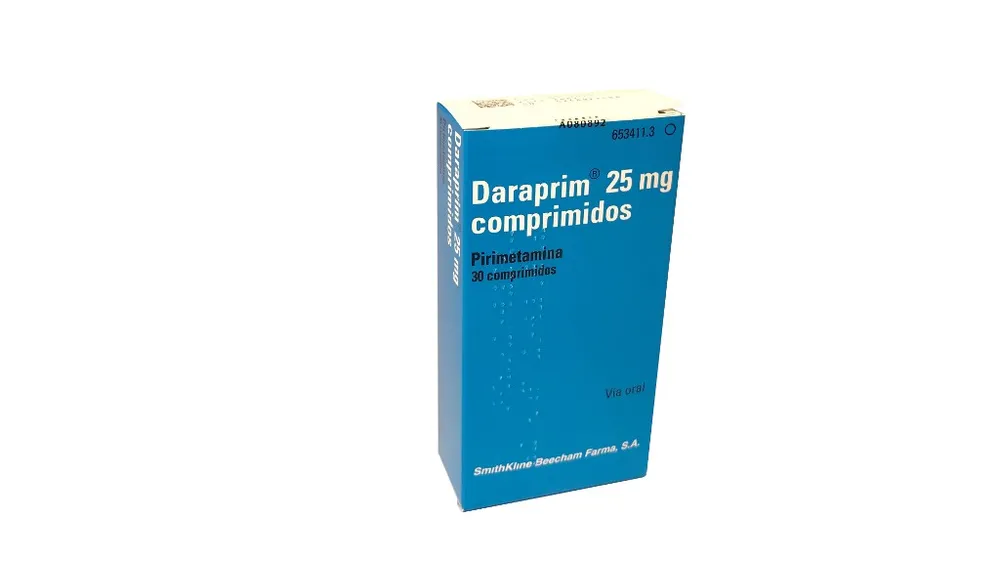
Table of Contents
- Package leaflet: Information for the user
- Introduction
- 1. What Daraprim is and what it is used for
- 2. What you need to know before starting to take Daraprim
- 3. How to take Daraprim
- 4. Possible adverse effects
- **Uncommon adverse effects**
- 5. Storage of Daraprim
- 6. Contents of the container and other information
Package leaflet: Information for the user
Introduction
Package leaflet: information for the user
Daraprim 25 mg tablets
Pyrimethamine
Read all of this leaflet carefully before you start taking this medicine because it contains important information for you.
- Keep this leaflet as you may need to read it again. If you have any questions, ask your doctor or pharmacist.
- This medicine has been prescribed for you only, and you should not give it to others, even if they have the same symptoms as you, because it could harm them.
- If you experience any adverse effects, consult your doctor or pharmacist, even if they are adverse effects not listed in this leaflet. See section 4.
Leaflet contents
- What Daraprim is and what it is used for
- What you need to know before taking Daraprim
- How to take Daraprim
- Possible side effects
- How to store Daraprim
- Contents of the pack and other information
1. What Daraprim is and what it is used for
Daraprim contains pyrimethamine, which belongs to a group of medicines called antimalarials. It is indicated in adults and children for the treatment of uncomplicated malaria caused by sensitive strains of Plasmodium falciparum.
Daraprim, in combination with a sulfonamide, is indicated for the treatment of congenital and acquired toxoplasmosis.
Pyrimethamine must not be used as monotherapy in the treatment of malaria and toxoplasmosis.
2. What you need to know before starting to take Daraprim
Do not take Daraprim
- if you are allergic to the active substance or to any of the other components of this medicine listed in section 6.
Warnings and precautions
- if you have a type of anaemia called megaloblastic anaemia or symptoms of malnutrition, since pyrimethamine may intensify the folate deficiency associated with this type of anaemia. Therefore, such individuals should receive a folinic acid supplement.
- if you have a history of seizures; in these patients, high initial doses of pyrimethamine should be avoided.
When pyrimethamine is administered together with a sulfonamide, general precautions applicable to sulfonamides should be considered. In any case, adequate fluid intake must be ensured to minimize the risk of crystalluria.
Use of Daraprim with other medicines
Inform your doctor or pharmacist if you are taking, have recently taken, or might need to take any other medicines.
In particular, pyrimethamine may alter the effect of the following medicines: antibiotics such as co-trimoxazole or trimethoprim, antimalarials such as proguanil, antivirals such as zidovudine, or cytostatic agents (e.g., methotrexate). Concomitant administration with a trimethoprim/sulfonamide combination may lead to megaloblastic anaemia.
Concomitant administration of lorazepam (a benzodiazepine) and pyrimethamine may induce mild liver damage.
Cases of complete or partial disappearance of cells normally present in the bone marrow (fatal bone marrow aplasia) have been associated with the administration of the antibiotic daunorubicin and pyrimethamine in individuals suffering from a type of white blood cell cancer known as acute myeloid leukaemia.
Antacid salts and the antidiarrhoeal agent kaolin reduce the absorption of pyrimethamine.
Pyrimethamine may affect the efficacy or toxicity of drugs such as the antimalarial quinine or anticoagulants such as warfarin when administered concomitantly.
Pregnancy, breast-feeding and fertility
If you are pregnant or breast-feeding, think you may be pregnant or are planning to become pregnant, consult your doctor or pharmacist before using this medicine.
Daraprim is only recommended in combination therapy with a sulfonamide during the second and third trimesters of pregnancy. In the first trimester, an alternative therapy is recommended.
Concomitant administration of calcium folinate is recommended if Daraprim is administered during pregnancy.
Pyrimethamine passes into breast milk; therefore, its use during breast-feeding is not recommended unless your doctor considers it appropriate.
Driving and using machines
Daraprim has not been shown to affect the ability to drive vehicles or operate machinery.
Daraprim 25 mg tablets contain lactose and sodium
This medicine contains lactose. If your doctor has informed you that you have an intolerance to certain sugars, consult with him before taking this medicine.
This medicine contains less than 23 mg of sodium (1 mmol) per tablet; hence, it is essentially "sodium-free".
3. How to take Daraprim
Follow exactly the instructions for administering this medicine as given by your doctor or pharmacist. If in doubt, consult your doctor or pharmacist again.
Remember to take your medicine.
Your doctor will determine whether the dose of the medicine should be increased or reduced during the treatment period, as well as the duration of treatment.
Daraprim are tablets for oral administration. They should be taken in the morning or evening, with or without food. The tablets must be swallowed whole with some liquid (a glass of water).
All patients receiving pyrimethamine must be given a folinic acid supplement to reduce the risk of bone marrow suppression.
Treatment of malaria:
Daraprim should be administered as a single dose concomitantly with sulfadiazine and another antimalarial agent.
Adults:
A single dose of two to three Daraprim tablets (50 to 75 mg of pyrimethamine), together with 1,000 mg – 1,500 mg of sulfadiazine.
In general, a higher dose should be administered to adults weighing more than 60 kg.
Use in children:
Pyrimethamine may be used orally with sulfadoxine/sulfadiazine in children from 2 months of age.
The following dosage regimen is recommended based on body weight:
- Children 5 to 10 kg: 12.5 mg pyrimethamine as a single dose.
- Children 11 to 20 kg: 25 mg pyrimethamine as a single dose.
- Children 21 to 30 kg: 37.5 mg pyrimethamine as a single dose.
- Children 31 to 45 kg: 50 mg pyrimethamine as a single dose.
- Children over 45 kg: use the same dose as for adults.
Use in elderly patients:
There is no information available on the effect of Daraprim in elderly patients. At the recommended doses for malaria, it is unlikely that pyrimethamine will have adverse effects in elderly individuals.
Treatment of toxoplasmosis
Daraprim must be administered concomitantly with sulfadiazine or clindamycin. The use of an alternative sulfonamide may require dose adjustment.
Immunocompetent adults:
Pyrimethamine: An initial dose of four tablets (100 mg pyrimethamine), followed by a daily dose of one to two tablets (25–50 mg pyrimethamine per day).
Immunocompromised adults:
Daraprim should be administered concomitantly with sulfadiazine or clindamycin.
- < 60 kg: oral pyrimethamine 200 mg as loading dose, followed by 50 mg daily.
- ≥ 60 kg: oral pyrimethamine 200 mg as loading dose, followed by 75 mg daily.
Subsequently, secondary prophylaxis regimen should be administered.
Use in children
For the treatment of toxoplasmosis, the following dosage regimens are recommended:
-
Children under 3 months (congenital toxoplasmosis): for the treatment of congenital toxoplasmosis, it is recommended that newborns receive pyrimethamine 2 mg/kg/day for 2 days; then 1 mg/kg/day for 2–6 months, followed by 1 mg/kg three times weekly until completing 12 months of treatment.
-
Children 3 to 9 months: 6.25 mg daily pyrimethamine together with sulfadiazine: 100 mg/kg body weight (maximum 1 g) per day in four divided doses.
-
Children 10 months to 2 years: 1 mg/kg body weight/day pyrimethamine together with 150 mg/kg body weight of sulfadiazine (maximum 1.5 g) per day in four divided doses.
-
Children 3 to 6 years: a loading dose of pyrimethamine 2 mg/kg body weight (up to a maximum of 50 mg), followed by a dose of 1 mg/kg/day (maximum dose 25 mg); together with 150 mg/kg body weight of sulfadiazine (maximum 2 g) per day in four divided doses.
-
Children over 6 years: same as for adults.
Dosage regimens in immunocompromised children have not been defined. As a general guide, refer to the regimens indicated for children with toxoplasmosis infection.
Use in elderly patients:
There is no information available on the effect of Daraprim in elderly patients. Theoretically, such patients undergoing treatment for toxoplasmosis may be more susceptible to bone marrow suppression due to folate deficiency associated with daily administration of Daraprim.
Use during pregnancy:
25 mg daily until delivery.
If you take more Daraprim than you should
If you have taken more Daraprim than you should, contact your doctor or pharmacist immediately. The most frequent symptoms in cases of acute overdose are vomiting and convulsions. Ataxia, tremor, and respiratory depression may also occur.
In case of overdose or accidental ingestion, contact your doctor or pharmacist immediately or call the Toxicology Information Service at telephone 91 562 04 20, indicating the medicine and the amount ingested.
If you forget to take Daraprim
Do not take a double dose to make up for missed doses. Take the next dose at the scheduled time.
If you have any further questions about the use of this medicine, ask your doctor or pharmacist.
4. Possible adverse effects
Like all medicines, this medicine can cause adverse effects, although not everyone experiences them.
Symptoms to watch for
Bone marrow damage (failure of the bone marrow to produce blood cells)
This increases the risk of bleeding and reduces your ability to fight infections. Symptoms include:
- unexplained bleeding or bruising
- fever
- sore throat
- mouth ulcers
- extreme paleness or weakness
Inform your doctor as soon as possible if you experience any of these symptoms—either for the first time, or if they worsen.
Observed adverse effects are classified according to their frequency of occurrence: very common (may affect more than 1 in 10 people), common (may affect up to 1 in 10 people), uncommon (may affect up to 1 in 100 people), rare (may affect up to 1 in 1,000 people), very rare (may affect up to 1 in 10,000 people):
Very common adverse effects
May affect more than 1 in 10 patients:
- headaches
- vomiting, nausea, diarrhea
- skin rash
Very common adverse effects that may appear in blood tests:
- anemia (reduction in the number of red blood cells)
Common adverse effects
May affect up to 1 in 10 patients:
- dizziness
Common adverse effects that may appear in blood tests:
- leucopenia (reduction in the number of white blood cells)
- thrombocytopenia (reduction in the number of platelets)
Daily therapeutic doses of pyrimethamine have been shown to suppress hematopoiesis (blood cell formation) in 25–50% of patients. The likelihood of inducing leucopenia, anemia, or thrombocytopenia is reduced by the concomitant administration of calcium folinate.
Uncommon adverse effects
May affect up to 1 in 100 patients:
- fever
- abnormal skin pigmentation
Very rare adverse effects
May affect up to 1 in 10,000 patients:
- cramps
- seizures
Seizures have been observed predominantly in patients treated for toxoplasmosis
- oral ulcers
- pneumonia with cellular and eosinophilic infiltration
Observed when pyrimethamine is administered once weekly in combination with sulfadoxine
- dermatitis
The very rare adverse effects that may appear in blood tests are:
- pancytopenia (reduction in the number of all types of blood cells)
Pancytopenia, responsive to folate treatment, has been observed in patients with probable pre-existing folate deficiency. Deaths have occurred in the absence of folate treatment.
If you consider any of the adverse effects you experience to be severe, or if you notice any adverse effect not mentioned in this leaflet, inform your doctor or pharmacist.
Reporting of adverse effects
If you experience any type of adverse effect, consult your doctor or pharmacist, even if it is a possible adverse effect not listed in this leaflet. You may also report them directly via the Spanish Pharmacovigilance System for Human Medicines: http://www.notificaRAM.es. By reporting adverse effects, you can help provide more information on the safety of this medicine.
5. Storage of Daraprim
Keep this medicine out of the sight and reach of children.
Do not store above 25°C. Store protected from light.
Do not use this medicine after the expiry date (EXP) stated on the packaging. The expiry date refers to the last day of the month indicated.
Medicines should not be disposed of via wastewater or household waste. Dispose of unused containers and medicines at the SIGRE collection point at your pharmacy. If you are unsure, ask your pharmacist how to properly dispose of unused containers and medicines. This will help protect the environment.
6. Contents of the container and other information
Composition of Daraprim
- The active substance is pyrimethamine. Each tablet contains 25 mg of pyrimethamine.
- The other components (excipients) are: monohydrate lactose, corn starch, hydrolyzed corn starch, sodium docusate, and magnesium stearate.
Appearance of the product and contents of the pack
Daraprim are white, biconvex, scored tablets with an identifying mark. They are supplied in packs containing 30 tablets.
Marketing Authorization Holder and Manufacturer
Marketing Authorization Holder
SmithKline Beecham Farma, S.A.
P.T.M. C/ Severo Ochoa, 2
28760 Tres Cantos (Madrid)
Tel: +34 900 202 700
Manufacturer
GlaxoSmithKline Trading Services Limited
12 Riverwalk
Citywest Business Campus
Dublin 24
Ireland
Date of the most recent revision of this leaflet: October 2020.
Detailed information on this medicinal product is available on the website of the Spanish Agency for Medicines and Health Products (AEMPS) http://www.aemps.gob.es/
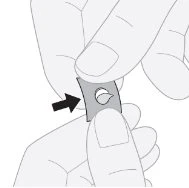
Daraprim is packaged in child-resistant blisters.
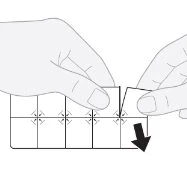
How to remove a tablet
- Separate one tablet: pull along the pre-cut line to separate one blister cavity from the strip.
- Remove the outer foil: starting at the corner, lift and remove the outer foil from the blister cavity.
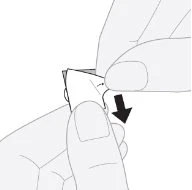
- Push to remove the tablet: press on one side of the tablet to push it through the aluminum foil.