Daptomycin Sala 350 mg powder for injection and for infusion EFG
Spain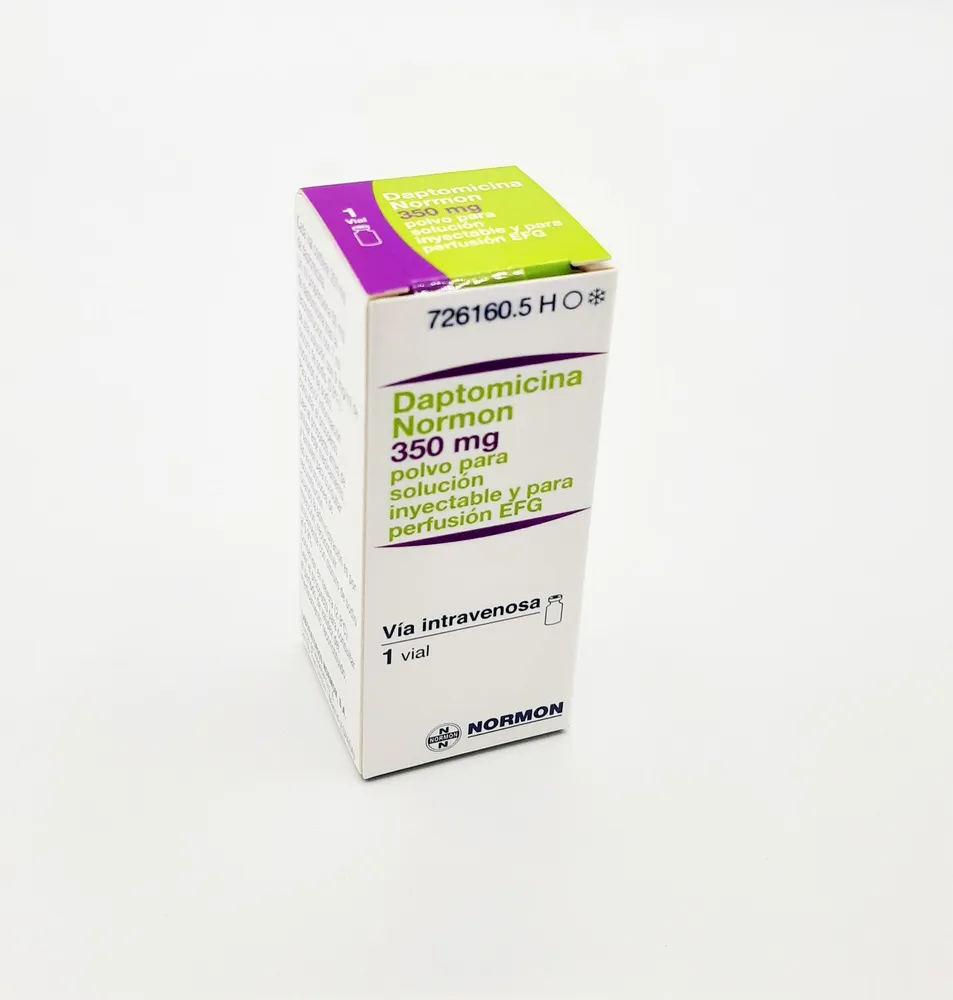
Table of Contents
Package leaflet: Information for the user
Introduction
Package leaflet: information for the patient
Daptomicina Sala 350 mg powder for solution for injection and infusion EFG
daptomicine
Read the entire leaflet carefully before you start using this medicine, because it contains important information for you.
- Keep this leaflet, as you may need to read it again. If you have any questions, consult your doctor or nurse.
- This medicine has been prescribed for you only, and you should not give it to other people, even if they have the same symptoms as you, because it may harm them.
- If you experience any adverse effects, consult your doctor or nurse, even if these are adverse effects not listed in this leaflet. See section 4.
Leaflet contents
- What daptomycin is and what it is used for
- What you need to know before receiving daptomycin
- How daptomycin is administered
- Possible side effects
- Storage of daptomycin
- Contents of the pack and other information
1. What daptomycin is and what it is used for
The active substance in Daptomicina Sala 350 mg powder for solution for injection and infusion is daptomycin.
Daptomycin is an antibacterial agent capable of stopping the growth of certain bacteria.
Antibiotics are used to treat bacterial infections and are not effective against viral infections such as influenza or the common cold.
It is important that you follow your doctor's instructions regarding dose, dosing interval, and duration of treatment.
Do not store or reuse this medicine. If you have any antibiotic left over after completing treatment, return it to the pharmacy for proper disposal. Medicines must not be disposed of via wastewater or household waste.
Daptomycin is used in adults and in children and adolescents (aged 1 to 17 years) to treat skin and soft tissue infections. It is also used to treat bloodstream infections when associated with a skin infection.
Daptomycin is also used in adults to treat infections of the tissues lining the inside of the heart (including heart valves), caused by a bacterium called Staphylococcus aureus. It is also used to treat bloodstream infections caused by the same type of bacteria when associated with a heart infection.
Depending on the type of infection(s) you have, your doctor may also prescribe other antibacterial agents while you are receiving treatment with daptomycin.
2. What you need to know before receiving daptomycin
Do not receive daptomycin
If you are allergic to daptomycin or to sodium hydroxide or to any of the other ingredients of this medicine (listed in section 6).
If this applies to you, inform your doctor or nurse. If you think you may be allergic, consult your doctor or nurse.
Warnings and precautions
Talk to your doctor or nurse before starting daptomycin.
- If you currently have or have previously had kidney problems. Your doctor may need to adjust your daptomycin dose (see section 3 of this leaflet).
- Occasionally, patients receiving daptomycin may develop increased muscle sensitivity, pain, or weakness (see section 4 of this leaflet for more information). Inform your doctor if this occurs. Your doctor will ensure that you have a blood test and will advise whether or not you should continue using daptomycin. Symptoms usually resolve within a few days after stopping treatment with daptomycin.
- If you have ever experienced, after taking daptomycin, a severe skin rash or skin peeling, blisters and/or mouth sores, or serious kidney problems.
- If you have significant overweight, there is a possibility that your blood levels of daptomycin may be higher than those found in individuals of average weight, and therefore you may require closer monitoring for adverse effects.
If any of the above situations apply to you, inform your doctor or nurse before receiving daptomycin.
Contact your doctor immediately if you develop any of the following symptoms:
- Severe and serious allergic reactions have been observed in patients treated with almost all antibacterial agents, including daptomycin. Symptoms may include wheezing, difficulty breathing, swelling of the face, neck, and throat, skin rash and hives, or fever.
- Serious skin disorders have been reported with the use of daptomycin. Symptoms associated with these skin disorders may include:
- onset or worsening of fever,
- raised or fluid-filled red spots on the skin, which may start in the armpits or areas of the chest or groin and may spread over a large area of the body.
- blisters or sores in the mouth or genital area.
- Serious kidney problems have been reported with the use of daptomycin. Symptoms may include fever and rash.
- Any tingling or numbness in the hands or feet, loss of sensation, or unusual movement difficulties. If this occurs, inform your doctor, who will decide whether treatment should continue.
- Diarrhea, especially if you notice blood or mucus in the stool or if the diarrhea becomes severe or prolonged.
- Onset or worsening of fever, cough, or difficulty breathing. These may be signs of a rare but serious lung function deterioration called eosinophilic pneumonia. Your doctor will check your lung condition and decide whether or not to continue treatment with daptomycin.
Daptomycin may interfere with laboratory tests measuring your blood's clotting ability. Results may falsely suggest impaired clotting, even though no actual problem exists. Therefore, it is important that your doctor is aware that you are receiving daptomycin. Inform your doctor that you are being treated with daptomycin.
Your doctor will perform blood tests to monitor your muscle health before starting treatment and regularly during treatment with daptomycin.
Children and adolescents
Daptomycin must not be given to children under one year of age, as animal studies have shown that this age group may experience severe adverse effects.
Use in elderly patients
Patients over 65 years of age may receive the same dose as other adults, provided their kidneys are functioning properly.
Use of daptomycin with other medicines
Inform your doctor or nurse if you are taking, have recently taken, or might need to take any other medicines.
It is particularly important that you mention the following:
- Medicines called statins or fibrates (used to lower cholesterol) or cyclosporine (a medicine used in transplant patients to prevent organ rejection or for other conditions, e.g. rheumatoid arthritis or atopic dermatitis). The risk of muscle-related adverse effects may increase if you take any of these medicines (and others that may affect muscles) during treatment with daptomycin. Your doctor may decide not to administer daptomycin or to temporarily discontinue treatment with the other medicine.
- Pain-relieving medicines called non-steroidal anti-inflammatory drugs (NSAIDs) or COX-2 inhibitors (e.g. celecoxib). These may interfere with the kidney elimination of daptomycin.
- Oral anticoagulants (e.g. warfarin), which are medicines that prevent blood clotting. Your doctor may need to monitor your blood clotting times.
Pregnancy and breastfeeding
Daptomycin is generally not given to pregnant women. If you are pregnant or breastfeeding, think you may be pregnant, or are planning to become pregnant, consult your doctor or pharmacist before receiving this medicine.
You must not breastfeed while receiving daptomycin, as it may pass into breast milk and affect the baby.
Driving and using machines
Daptomycin has no known effects on the ability to drive or use machines.
Daptomycin Sala contains sodium
This medicine contains less than 1 mmol of sodium (23 mg) per dose; that is, essentially "sodium-free".
3. How daptomycin is administered
Daptomycin will normally be administered to you by your doctor or nurse.
Adults (18 years of age and older)
The dose will depend on your body weight and the type of infection being treated. The usual dose for adults is 4 mg per kg of body weight once daily for skin infections, or 6 mg per kg of body weight once daily for heart infection or bloodstream infection associated with skin or heart infection. In adult patients, this dose is administered directly into the bloodstream (into a vein), either as an infusion lasting approximately 30 minutes or as an injection lasting approximately 2 minutes. The same dose is recommended for people over 65 years of age, provided their kidneys are functioning properly.
If your kidneys are not working properly, you may receive daptomycin less frequently, e.g., once every other day. If you are undergoing dialysis and your next dose of daptomycin is due on a dialysis day, you will usually receive daptomycin after the dialysis session.
Children and adolescents (1 to 17 years of age)
The recommended doses in children and adolescents (1 to 17 years of age) depend on the patient's age and the type of infection being treated. This dose is administered directly into the bloodstream (into a vein) as an infusion lasting approximately 30–60 minutes.
A full course of treatment for skin infections usually lasts between 1 and 2 weeks. Your doctor will decide the duration of your treatment for bloodstream or heart infections and for skin infections.
Detailed instructions for use and handling are provided at the end of the leaflet.
4. Possible adverse effects
Like all medicines, this medicine can cause adverse effects, although not everyone will experience them.
The most serious adverse effects are described below:
Serious adverse effects with unknown frequency (cannot be estimated from available data)
Cases of hypersensitivity reactions (severe allergic reactions including anaphylaxis and angioedema) have been reported during administration of daptomycin. These severe allergic reactions require immediate medical attention. Inform your doctor or nurse immediately if you experience any of the following symptoms:
- Chest pain or pressure,
- Rash or hives,
- Swelling around the throat,
- Rapid or weak pulse,
- Wheezing,
- Fever,
- Chills or shivering,
- Flushing,
- Dizziness,
- Fainting,
- Metallic taste.
Consult your doctor immediately if you experience muscle pain, tenderness, or weakness of unknown origin. Muscle problems can be serious, including muscle breakdown (rhabdomyolysis), which may lead to kidney damage.
Other adverse effects reported with the use of daptomycin include:
- A rare but potentially serious lung disorder called eosinophilic pneumonia, mostly occurring after more than 2 weeks of treatment. Symptoms may include difficulty breathing, new or worsening cough, or new or worsening fever.
Serious skin disorders. Symptoms may include:
- New or worsening fever,
- Raised red skin lesions or fluid-filled blisters, which may start in the armpits or on the chest or groin and may spread over a large area of the body,
- Blisters or sores in the mouth or genital area.
A serious kidney problem. Symptoms may include fever and rash.
If you experience these symptoms, inform your doctor or nurse immediately. Your doctor will perform additional tests to establish a diagnosis.
The following are the most commonly reported adverse effects:
Frequent adverse effects (may affect up to 1 in 10 patients)
- Fungal infections, such as oral thrush (mouth ulcers),
- Urinary tract infection,
- Decrease in red blood cells (anaemia),
- Dizziness, anxiety, difficulty sleeping,
- Headache,
- Fever, weakness (asthenia),
- High or low blood pressure,
- Constipation, abdominal pain,
- Diarrhoea, discomfort (nausea or vomiting),
- Flatulence,
- Abdominal swelling or distension,
- Skin rash or itching,
- Pain, itching or redness at the infusion site,
- Pain in arms or legs,
- Elevated levels of liver enzymes or creatine phosphokinase (CPK) in blood tests.
The following are other adverse effects that may occur after treatment with daptomycin:
Uncommon adverse effects (may affect up to 1 in 100 patients)
- Blood disorders (e.g. increased platelet count, which may increase the tendency to form blood clots, or increased number of certain types of white blood cells),
- Loss of appetite,
- Tingling or numbness in hands or feet, disturbances in taste sensation,
- Tremors,
- Changes in heart rhythm, flushing,
- Indigestion (dyspepsia), inflammation of the tongue,
- Itchy rash,
- Muscle pain, cramps or weakness, muscle inflammation (myositis), joint pain,
- Kidney problems,
- Inflammation and irritation of the vagina,
- Generalised pain or weakness, tiredness (fatigue),
- Elevated blood sugar levels, serum creatinine, myoglobin or lactate dehydrogenase (LDH), prolonged blood clotting time, or electrolyte imbalance in blood tests.
- Eye itching
Rare adverse effects (may affect up to 1 in 1,000 patients)
- Yellowing of the skin and eyes (jaundice),
- Prolonged prothrombin time.
Frequency not known (cannot be estimated from available data)
Antibiotic-associated colitis, including pseudomembranous colitis (severe or persistent diarrhoea containing blood and/or mucus, associated with abdominal pain or fever), increased tendency to bruise, bleeding gums, or nosebleeds.
Reporting of adverse effects
If you experience any adverse effect, talk to your doctor, pharmacist, or nurse, even if it is a possible adverse effect not listed in this leaflet. You can also report them directly through the Spanish Pharmacovigilance System for Human Medicines: https://www.notificaram.es. By reporting adverse effects, you can help provide more information on the safety of this medicine.
5. Storage of daptomycin
- Keep this medicine out of the sight and reach of children.
- Do not use this medicine after the expiry date stated on the carton after
EXP. The expiry date is the last day of the month indicated. - Store in a refrigerator (between 2°C and 8°C).
6. Package contents and additional information
Composition of Daptomicina Sala
- The active substance is daptomycin. One vial of powder contains 350 mg of daptomycin.
- The other component is sodium hydroxide.
Appearance of the product and package contents
Daptomicina Sala 350 mg powder for injectable and infusion solution is supplied in a glass vial as a pale yellow to light brown powder or cake. It is mixed with a solvent to form a solution prior to administration.
Daptomycin is available in packages containing 1 vial or 5 vials.
Marketing Authorization Holder and Manufacturer
Laboratorio Reig Jofré, S.A.
C/Gran Capitán, 10
08970 Sant Joan Despí (Barcelona)
Spain
This medicinal product is authorized in the European Economic Area member states under the following names:
Spain: Daptomicina Sala 350 mg powder for injection and infusion solution EFG
United Kingdom: Daptomycin 350 mg powder for solution for injection or infusion
Date of the most recent review of this leaflet: October 2021
Detailed information on this medicinal product is available on the website of the Spanish Agency of Medicines and Medical Devices (AEMPS): https://www.aemps.gob.es/
This information is intended for healthcare professionals only:
Important: Please consult the Technical Data Sheet or Summary of Product Characteristics before prescribing.
Instructions for use and handling
350 mg presentation:
In adults, daptomycin may be administered intravenously either as a 30-minute infusion or as a 2-minute injection. In contrast to adults, daptomycin must not be administered as a 2-minute injection in pediatric patients. Pediatric patients aged 7 to 17 years should receive daptomycin via 30-minute infusion. Pediatric patients under 7 years of age receiving doses of 9–12 mg/kg should receive daptomycin via 60-minute infusion. Preparation of the infusion solution requires an additional dilution step, as described below.
Daptomycin administered as 30- or 60-minute intravenous infusion
Reconstituting the lyophilized product with 7 mL of an injectable solution containing 9 mg/mL of sodium chloride (0.9%) yields a daptomycin concentration of 50 mg/mL for infusion.
The lyophilized product takes approximately 15 minutes to dissolve completely. The fully reconstituted product is transparent and may contain a few small bubbles or foam around the edge of the vial.
To prepare daptomycin for intravenous infusion, follow the instructions below:
An aseptic technique must be used throughout the reconstitution process.
For reconstitution:
-
Remove the polypropylene closure cap to expose the central portion of the rubber stopper. Clean the top of the rubber stopper with an alcohol swab or other antiseptic solution and allow it to dry. After cleaning, do not touch the rubber stopper or allow it to contact any other surface. Draw 7 mL of an injectable solution containing 9 mg/mL of sodium chloride (0.9%) into a syringe using a sterile transfer needle of 21 gauge or smaller, or a needle-free device, and slowly inject through the center of the rubber stopper into the vial, directing the needle toward the vial wall.
-
Gently rotate the vial to ensure complete wetting of the product, then allow it to stand for 10 minutes.
-
Finally, gently rotate or swirl the vial for several minutes until a clear reconstituted solution is obtained. Avoid vigorous shaking to prevent foaming.
-
Carefully inspect the reconstituted solution before use to ensure the substance is fully dissolved and to verify the absence of suspended particles. The color of the reconstituted daptomycin solution may range from pale yellow to light brown.
-
The reconstituted solution should then be diluted with 9 mg/mL of sodium chloride (0.9%) (typical volume: 50 mL).
For dilution:
-
Slowly withdraw the appropriate volume of reconstituted solution (50 mg daptomycin/mL) from the vial using a new sterile needle of 21 gauge or smaller, by inverting the vial so that the solution flows toward the stopper. Using a syringe, insert the needle into the inverted vial. While keeping the vial inverted, place the needle tip at the lowest point of the liquid and withdraw the solution into the syringe. Before removing the needle from the vial, pull the plunger back to the end of the syringe barrel to withdraw the required solution from the inverted vial.
-
Expel air, large bubbles, and any excess solution to obtain the required dose.
-
Transfer the required reconstituted dose to 50 mL of 9 mg/mL sodium chloride (0.9%).
-
The reconstituted and diluted solution should be administered intravenously over 30 or 60 minutes.
Daptomycin is neither physically nor chemically compatible with glucose-containing solutions. The following drugs have been shown to be compatible when added to infusion solutions containing daptomycin: aztreonam, ceftazidime, ceftriaxone, gentamicin, fluconazole, levofloxacin, dopamine, heparin, and lidocaine.
The total storage time (reconstituted solution in the vial and diluted solution in infusion bags) at 25°C must not exceed 12 hours (24 hours if refrigerated).
The stability of the diluted solution in infusion bags has been established as 12 hours at 25°C or 24 hours if refrigerated at 2°C–8°C.
Daptomycin administered as a 2-minute intravenous injection (for adult patients only)
Water must not be used for reconstitution of daptomycin for intravenous injection. Daptomycin must be reconstituted only with 9 mg/mL sodium chloride (0.9%).
Reconstituting the lyophilized product with 7 mL of an injectable solution containing 9 mg/mL of sodium chloride (0.9%) yields a concentration of 50 mg/mL of daptomycin for injection.
The lyophilized product takes approximately 15 minutes to dissolve completely. The fully reconstituted product is transparent and may contain a few small bubbles or foam around the edge of the vial.
To prepare daptomycin for intravenous injection, follow the instructions below:
An aseptic technique must be used throughout the reconstitution process.
-
Remove the polypropylene closure cap to expose the central portion of the rubber stopper. Clean the top of the rubber stopper with an alcohol swab or other antiseptic solution and allow it to dry. After cleaning, do not touch the rubber stopper or allow it to contact any other surface. Draw 7 mL of an injectable solution containing 9 mg/mL of sodium chloride (0.9%) into a syringe using a sterile transfer needle of 21 gauge or smaller, or a needle-free device, and slowly inject through the center of the rubber stopper into the vial, directing the needle toward the vial wall.
-
Gently rotate the vial to ensure complete wetting of the product, then allow it to stand for 10 minutes.
-
Finally, gently rotate or swirl the vial for several minutes until a clear reconstituted solution is obtained. Avoid vigorous shaking to prevent foaming.
-
Carefully inspect the reconstituted solution before use to ensure the substance is fully dissolved and to verify the absence of suspended particles. The color of the reconstituted daptomycin solution may range from pale yellow to light brown.
-
Slowly withdraw the reconstituted liquid (50 mg daptomycin/mL) from the vial using a sterile needle of 21 gauge or smaller.
-
Invert the vial so that the solution flows toward the stopper. Using a new syringe, insert the needle into the inverted vial. While keeping the vial inverted, place the needle tip at the lowest point of the liquid and withdraw the solution into the syringe.
Before removing the needle from the vial, pull the plunger back to the end of the syringe barrel to withdraw all the solution from the inverted vial.
-
Replace the needle with a new one for intravenous injection.
-
Expel air, large bubbles, and any excess solution to obtain the required dose.
-
The reconstituted solution should be injected slowly intravenously over 2 minutes.
Physical and chemical stability of the reconstituted solution in the vial has been demonstrated for 12 hours at 25°C and up to a maximum of 48 hours if refrigerated (2°C–8°C).
However, from a microbiological standpoint, the product should be used immediately. If not used immediately, the in-use storage time is the responsibility of the user and should normally not exceed 24 hours at 2°C–8°C, unless reconstitution/dissolution has taken place under controlled, validated aseptic conditions.
This medicinal product must not be mixed with other medicinal products except those mentioned above.
Daptomycin vials are for single use only. Any unused portion remaining in the vial must be discarded.