Danatrol 50 mg capsules
Spain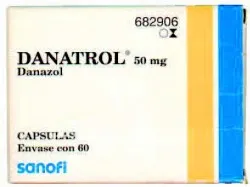
Table of Contents
Patient Information Leaflet
Introduction
Patient Information Leaflet
Danatrol 50 mg capsules
danazol
Read the entire leaflet carefully before you start taking this medicine, because it contains important information for you.
- Keep this leaflet, as you may need to read it again.
- If you have any questions, consult your doctor or pharmacist.
- This medicine has been prescribed for you and should not be given to other people, even if they have the same symptoms as you, because it may harm them.
- If you experience adverse effects, consult your doctor or pharmacist, even if they are adverse effects not listed in this leaflet. See section 4.
Leaflet contents:
- What Danatrol is and what it is used for
- What you need to know before taking Danatrol
- How to take Danatrol
- Possible adverse effects
- How to store Danatrol
- Contents of the pack and other information
1. What Danatrol is and what it is used for
Danatrol is a hormonal medicine effective in the treatment of endometriosis (growth of the mucosal tissue lining the inside of the uterus, occurring outside the uterus).
It is also effective in preventing attacks in patients with hereditary angioedema (accumulation of fluid under the skin).
2. What you need to know before taking Danatrol
Do not take Danatrol
- if you are allergic to danazol or to any of the other ingredients of this medicine (listed in section 6),
- if you are pregnant or breastfeeding,
- if you have porphyria (a disorder related to red blood cells),
- if you have severe disorders affecting the kidneys (renal), liver (hepatic), or heart (cardiac),
- if you have or have had thrombosis (formation of a blood clot within the circulatory system) or a thromboembolic disorder,
- if you have any type of tumour whose growth is influenced by hormonal agents,
- if you have abnormal vaginal bleeding that has not been diagnosed,
- do not take Danatrol at the same time as simvastatin.
Warnings and precautions
Talk to your doctor or pharmacist before starting to take Danatrol.
Warnings
Inform your doctor if you have or have had previous reactions to medicines, especially steroid medicines.
Your doctor may recommend periodic blood tests to monitor liver function and blood cell levels.
Treatment should be discontinued if clinically significant adverse effects occur, particularly if there is any evidence of:
- masculinization (virilization),
- optic nerve inflammation (papilledema), headache, visual disturbances, or other signs or symptoms of increased intracranial pressure,
- yellowing of the skin or any other indication of liver dysfunction,
- vascular problems such as thrombosis or thromboembolism.
It should be noted that:
- due to danazol's relationship with steroids, liver disorders may occur with prolonged or repeated treatment,
- the use of danazol increases the risk of ovarian cancer in patients treated for endometriosis,
- if a treatment cycle with Danatrol needs to be repeated, your doctor must carry out strict monitoring.
Precautions
Due to its adverse effects and interactions with other medicines, inform your doctor if you have any of the following conditions:
- liver or kidney disease,
- cardiovascular problems,
- high blood pressure,
- any condition that could be worsened by fluid retention,
- diabetes,
- lipoprotein disorders (abnormal levels of lipoproteins in the blood),
- epilepsy,
- a blood disorder known as polycythemia (increased proportion of red blood cells per blood volume),
- history of marked or persistent androgenic reaction to previous treatment with gonadal steroids,
- migraine.
Before starting treatment, the presence of hormone-dependent carcinoma should be ruled out, as well as the persistence or increase of breast nodules during treatment.
Treatment should be started during menstruation. Women of childbearing age must use an effective non-hormonal contraceptive method during treatment with Danatrol.
This medicine may increase skin sensitivity to sunlight. Avoid exposure to sunlight (even when cloudy) and to ultraviolet (UVA) lamps while using this medicine.
Use in athletes
This medicine contains danazol, which may cause a positive result in doping control tests.
Taking Danatrol with other medicines
Tell your doctor or pharmacist if you are taking, have recently taken, or might need to take any other medicines. Your doctor will decide which medication should be discontinued or whether the dose needs to be adjusted.
In particular, inform your doctor if you are currently taking:
- anticonvulsants (for treating seizures),
- antidiabetics (for treating diabetes),
- oral anticoagulants such as warfarin (medicines that help prevent blood clots),
- antihypertensives (medicines that lower blood pressure),
- cyclosporine or tacrolimus (used in transplant patients),
- steroids (medicines related to male sex hormone),
- alfacalcidol (a medicine used to treat hypocalcemia),
- statins (medicines to lower cholesterol). You must not take Danatrol at the same time as simvastatin (see section “Do not take Danatrol”).
Due to possible interference with laboratory tests for testosterone or plasma proteins, inform your doctor that you are taking Danatrol.
Pregnancy and breastfeeding
If you are pregnant or breastfeeding, think you might be pregnant, or plan to become pregnant, consult your doctor or pharmacist before taking this medicine.
Pregnancy:
Since the use of danazol is contraindicated during pregnancy due to the risk of fetal virilization (masculinization) in female fetuses, appropriate measures must be taken in women of childbearing age to exclude the possibility of pregnancy during treatment.
Danatrol must not be taken during pregnancy. Inform your doctor if you are pregnant or planning to become pregnant before starting treatment with this medicine.
If you suspect you have become pregnant while taking Danatrol, you must stop treatment and consult your doctor.
Because it is important to ensure you are not pregnant, treatment with Danatrol should be started during menstruation, and an effective non-hormonal contraceptive method must be used during treatment.
Breastfeeding:
Danazol may theoretically produce androgenic (masculinizing) effects in infants; therefore, treatment with danazol or breastfeeding should be discontinued.
If you are breastfeeding, you must not take this medicine.
Driving and using machines
Danatrol is unlikely to affect your ability to drive or operate machinery.
Danatrol contains lactose
This medicine contains lactose. If your doctor has informed you that you have an intolerance to certain sugars, consult with him before taking this medicine.
3. How to take Danatrol
Follow exactly the instructions for using this medicine as given by your doctor. If in doubt, consult your doctor or pharmacist again.
Danatrol must be administered orally.
If you are a woman of childbearing age, you should start treatment during menstruation to exclude the possibility of being pregnant when starting treatment. You must use a non-hormonal contraceptive method during treatment with Danatrol.
The usual dose is 200 to 800 mg of danazol per day (not exceeding 800 mg per day), divided into 2 to 4 doses taken orally.
The dose may be higher or lower than indicated, depending on the response obtained.
The lowest effective dose should always be administered.
This medicine must not be taken by children or elderly patients.
If you take more Danatrol than you should
As with other medicines, an overdose may be dangerous.
In case of overdose or accidental ingestion, contact your doctor or pharmacist immediately or call the Toxicology Information Service at telephone number 91 562 04 20, indicating the medicine and the amount ingested. It is recommended to bring the medicine's packaging and leaflet to the healthcare professional.
You should remain under observation in case of delayed reactions.
If you forget to take Danatrol
It is best to take the missed dose as soon as possible. Do not take the next dose until at least 4 hours have passed, then continue with the dosing schedule prescribed by your doctor.
Do not take a double dose to make up for missed doses.
4. Possible adverse effects
Like all medicines, Danatrol may cause adverse effects, although not everyone will experience them.
Adverse reactions are grouped according to organ system classification and frequency:
Very common: may affect more than 1 in 10 people
Common: may affect up to 1 in 10 people
Uncommon: may affect up to 1 in 100 people
Rare: may affect up to 1 in 1,000 people
Very rare: may affect up to 1 in 10,000 people
Frequency not known: cannot be estimated from available data.
Blood and lymphatic system disorders
- Rare: increased proportion of red blood cells per blood volume (polycythaemia), decreased number of white blood cells (leucopenia), and decreased number of platelets (thrombocytopenia).
- Very rare: increased number of eosinophils in blood (eosinophilia), spleen disease (splenic peliosis).
Metabolism and nutrition disorders
- Increased insulin resistance, abnormal glucose tolerance.
- Common: increased appetite.
- Rare: fluid retention.
Psychiatric disorders
- Common: altered emotional expression, anxiety, depressive state, nervousness, changes in sexual desire.
Nervous system disorders
- Common: headache, muscle tremors, muscle contractions.
- Rare: dizziness, benign intracranial hypertension.
- Very rare: worsening of epilepsy, onset of migraine, pain in wrists and fingers (carpal tunnel syndrome).
Eye disorders
- Rare: visual disturbances such as blurred vision, difficulty focusing, discomfort wearing contact lenses, and refractive changes requiring correction.
Ear and labyrinth disorders
- Rare: vertigo.
Cardiac disorders
- Rare: palpitations and tachycardia. Cases of myocardial infarction have also been reported.
Vascular disorders
- Common: hot flushes.
- Rare: hypertension. Effects due to presence of a blood clot in a blood vessel have also been observed (including sagittal sinus thrombosis, cerebrovascular thrombosis, and arterial thrombosis).
Respiratory, thoracic and mediastinal disorders
- Common: voice changes.
- Very rare: lung thickening and scarring (interstitial pneumonitis), chest pain.
Gastrointestinal disorders
- Common: nausea.
- Rare: inflammation of the pancreas (pancreatitis).
- Very rare: upper abdominal pain.
Hepatobiliary disorders
- Rare: yellowing of the skin (cholestatic jaundice), benign liver tumour (benign hepatic adenoma).
- Very rare: with prolonged use, liver disorders have been observed (malignant liver tumour and hepatic peliosis).
- Frequency not known: liver cell damage, deterioration of liver function, yellowing of the skin and/or mucous membranes due to liver cell injury (hepatocellular jaundice), benign liver tumour (focal nodular hyperplasia of the liver).
Skin and subcutaneous tissue disorders
- Common: skin rashes, which may be accompanied by fever. Facial swelling (facial oedema) and increased sensitivity of the skin to sunlight (photosensitivity) have also been reported. Acne, oily skin (seborrhoea), marked increase in facial or body hair (hirsutism), hair loss.
- Uncommon: red, raised wheals appearing on the skin surface (urticaria).
- Very rare: inflammatory skin disease (erythema nodosum), skin pigmentation disorders, exfoliative dermatitis, and skin allergic reaction (erythema multiforme).
Musculoskeletal and connective tissue disorders
- Common: back pain, muscle cramps, sometimes accompanied by increased levels of creatine phosphokinase, limb pain, joint pain and inflammation.
Renal and urinary disorders
- Very rare: presence of blood in urine with prolonged use in cases of hereditary angioedema.
Reproductive system and breast disorders
- Common: menstrual cycle disturbances, bleeding between periods, absence of menstruation, vaginal dryness, vaginal irritation.
- Uncommon: decreased breast size.
- Rare: enlargement of the clitoris.
- Very rare: decreased sperm production.
General disorders
- Rare: fatigue.
Investigations
- Increased plasma levels of glucagon, increased LDL cholesterol, decreased HDL cholesterol, and decreased levels of apolipoproteins AI and AII.
Other metabolic changes include induction of ALA synthetase (aminolevulinic acid synthetase), decreased thyroid-binding globulin and T4, with increased T3 uptake, but without alteration of thyroid-stimulating hormone or free thyroxine index.
- Common: weight gain.
- Uncommon: isolated increases in liver enzyme levels (transaminases) in blood.
- Rare: increased number of red blood cells and platelets.
Reporting of adverse effects
If you experience any type of adverse effect, consult your doctor or pharmacist, even if it is a possible adverse effect not listed in this leaflet. You may also report them directly via the Spanish Pharmacovigilance System for Human Medicines: https://www.notificaram.es. By reporting adverse effects, you can help provide more information on the safety of this medicine.
5. Storage of Danatrol
Keep out of sight and reach of children.
Store below 30°C.
Do not use this medicine after the expiry date stated on the packaging after EXP. The expiry date refers to the last day of the month indicated.
Medicines should not be disposed of via wastewater or household waste. Dispose of containers and unused medicines at the SIGRE collection point at your pharmacy. If in doubt, ask your pharmacist how to properly discard unused containers and medicines. This will help protect the environment.
6. Contents of the pack and other information
Composition of Danatrol
- The active substance is danazol. Each capsule contains 50 mg of danazol.
- The other components are lactose, corn starch, talc and magnesium stearate.
Appearance of the medicine and contents of the pack
Pink opaque capsules, marked with the inscription D50.
Each pack contains 60 capsules in PVC/aluminum blisters.
Marketing Authorization Holder and Manufacturer
Marketing Authorization Holder
Laboratorios Fidia Farmacéutica S.L.U.
Parque Empresarial de la Moraleja - Edificio Torona
Avenida de Europa, 24 - Edificio A - 1 B
28108 Alcobendas - Madrid - Spain
Manufacturer
Zentiva, k.s.
U Kabelovny 130
102 37 Prague 10
Czech Republic
Date of the most recent revision of this leaflet: June 2017
Detailed and up-to-date information on this medicine is available on the website of the Spanish Agency of Medicines and Medical Devices (AEMPS) http://www.aemps.gob.es/