Dalacin 20 mg/g vaginal cream
Spain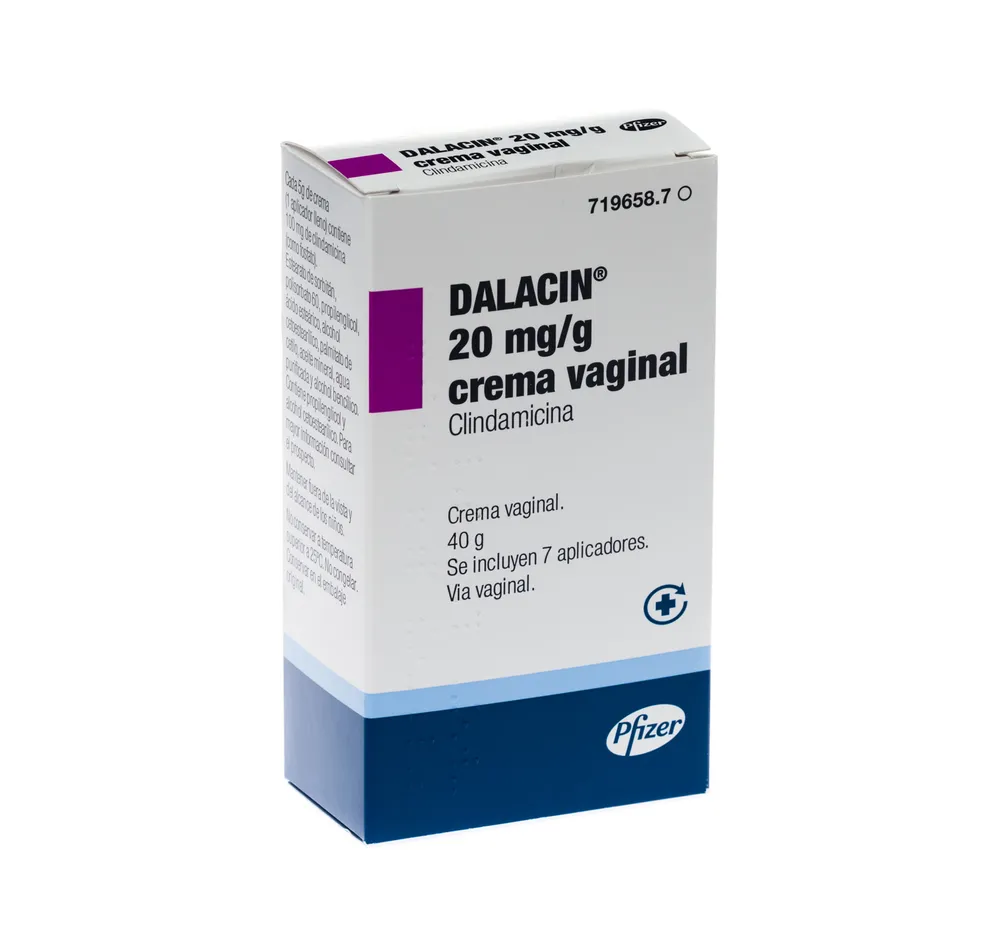
Table of Contents
- Package leaflet: Information for the user
- Introduction
- 1. What Dalacin Vaginal Cream Is and What It Is Used For
- 2. What you need to know before using Dalacin vaginal cream
- 3. How to use Dalacin vaginal cream
- 4. Possible adverse effects
- 5. Storage of Dalacin vaginal cream
- 6. Contents of the pack and other information
Package leaflet: Information for the user
Introduction
Package leaflet: information for the patient
Dalacin 20 mg/g vaginal cream
clindamycin
Read the entire leaflet carefully before you start using this medicine because it contains important information for you.
- Keep this leaflet as you may need to read it again.
- If you have any questions, ask your doctor or pharmacist.
- This medicine has been prescribed for you only and must not be given to other people, even if they have the same symptoms as you, since it could harm them.
- If you experience any adverse reactions, consult your doctor or pharmacist, even if they are adverse reactions not listed in this leaflet. See section 4.
Leaflet contents:
- What Dalacin vaginal cream is and what it is used for
- What you need to know before using Dalacin vaginal cream
- How to use Dalacin vaginal cream
- Possible side effects
- How to store Dalacin vaginal cream
- Contents of the pack and other information
1. What Dalacin Vaginal Cream Is and What It Is Used For
This medicine is an antibiotic belonging to a group called lincosamides.
Antibiotics are used to treat bacterial infections and are not effective against viral infections such as flu or colds.
It is important that you follow your doctor's instructions regarding dosage, administration, and duration of treatment.
Do not store or reuse this medicine. If you have any antibiotic left over after completing treatment, return it to the pharmacy for proper disposal. Do not dispose of medicines via wastewater or household waste.
This medicine is used for the treatment of bacterial vaginosis, or vaginal infection caused by bacteria, in women over 16 years of age and in pregnant women during the second and third trimesters of pregnancy.
2. What you need to know before using Dalacin vaginal cream
Do not use Dalacin cream:
- If you are allergic to clindamycin, lincomycin, or any of the other ingredients of this medicine (listed in section 6).
- If you have previously had antibiotic-associated colitis.
Warnings and precautions
- Your doctor will carry out laboratory tests to check for other infections (such as those caused by Trichomonas, Candida, Chlamydia, and gonococcal infections).
- Prolonged use of this medicine may lead to overgrowth of other microorganisms, particularly fungi.
- During or after treatment with Dalacin, symptoms suggesting antibiotic-associated colitis (such as diarrhea) may occur. If this happens, treatment must be stopped and your doctor will prescribe the most appropriate treatment.
- If you suffer from an inflammatory bowel disease, such as Crohn's disease or ulcerative colitis, inform your doctor so they can confirm whether you should use this medicine.
- As with all vaginal infections, you should avoid sexual intercourse while undergoing treatment with this medicine.
- Do not use latex condoms or diaphragms within 72 hours after treatment with this medicine, as their use may be associated with reduced contraceptive effectiveness and reduced protection against sexually transmitted infections.
- Do not use tampons or vaginal douches during treatment with this medicine.
- If you are being treated with neuromuscular blocking agents, inform your doctor, as clindamycin may enhance the effects of these medicines.
Your doctor will monitor your condition regularly to ensure this medicine is having the intended effect.
Children and adolescents
This medicine is indicated for use in individuals aged 16 years and older. Its safety and efficacy have not been established in patients under 16 years of age.
Use of Dalacin vaginal cream with other medicines
Inform your doctor or pharmacist if you are taking or have recently taken any other medicines, including those obtained without a prescription.
If you are receiving any neuromuscular blocking agent, inform your doctor, as the effect of these agents may be enhanced by this medicine.
Pregnancy and breastfeeding
Pregnancy
If you are pregnant or breastfeeding, think you may be pregnant, or are planning to become pregnant, consult your doctor or pharmacist before using this medicine.
In clinical trials, vaginal administration of clindamycin cream (as phosphate) in pregnant women during the second trimester was not associated with an increased frequency of congenital abnormalities.
This medicine may be used during the second and third trimesters of pregnancy if the woman's clinical condition clearly requires treatment.
Breastfeeding
It is unknown whether clindamycin is excreted in breast milk following vaginal administration. Therefore, your doctor must decide whether breastfeeding should be discontinued or treatment stopped, taking into account the benefits of breastfeeding for the child and the benefits of treatment for the mother.
Driving and use of machines
The influence of this medicine on the ability to drive or operate machinery is negligible or none.
Dalacin vaginal cream contains propylene glycol, cetostearyl alcohol, benzyl alcohol, and polysorbate 60
This medicine may cause local skin reactions (such as contact dermatitis) because it contains cetostearyl alcohol.
This medicine contains 250 mg of propylene glycol per applicator.
This medicine contains 50 mg of benzyl alcohol per applicator.
Benzyl alcohol may cause allergic reactions.
Benzyl alcohol may cause moderate local irritation.
This medicine contains 250 mg of polysorbate 60 per applicator. Polysorbates may cause allergic reactions. Inform your doctor if you have any known allergies.
3. How to use Dalacin vaginal cream
Follow exactly the instructions for use provided in this leaflet or those given by your doctor. If in doubt, consult your doctor or pharmacist.
Your doctor will determine the most appropriate dose and duration of treatment for you, based on your condition and your response to treatment.
Adults and patients over 16 years of age
The recommended dose is one full applicator of cream (approximately 5 grams) administered vaginally at bedtime for 3 to 7 consecutive days.
Instructions for handling the applicator can be found in section 6.
If you use more Dalacin than you should
Cases of overdose with this medicine have not been reported.
Accidental oral ingestion of the product may produce effects similar to those produced by oral administration of therapeutic concentrations of clindamycin.
In case of overdose or accidental ingestion, consult your doctor or pharmacist immediately or call the Toxicology Information Service at telephone number: 91 562 04 20, indicating the medicine and the amount ingested.
Information for healthcare professionals
In the event of overdose, appropriate symptomatic and supportive measures should be initiated.
If you forget to use Dalacin
Do not use a double dose to make up for the forgotten dose.
If you stop using Dalacin
If you discontinue treatment with Dalacin before the time recommended by your doctor, symptoms may worsen or reappear.
If you have any further questions about the use of this medicine, ask your doctor or pharmacist.
4. Possible adverse effects
Like all medicines, this medicine can cause adverse effects, although not everyone experiences them.
In clinical studies, the safety of clindamycin vaginal cream has been evaluated in both non-pregnant patients and patients in the second and third trimesters of pregnancy.
The following treatment-related adverse effects have been reported:
Very common adverse effects (may affect more than 1 in 10 people):
- Vulvovaginal infection caused by Candida (a type of fungus).
Common adverse effects (may affect up to 1 in 10 people):
- Fungal infection (including Candida, a type of fungus).
- Headache, dizziness, taste disturbance.
- Upper respiratory tract infection.
- Abdominal pain, constipation, diarrhea, nausea, vomiting.
- Itching (in a location different from the site of application), skin rash.
- Back pain.
- Urinary tract infection, presence of glucose and proteins in urine.
- Alteration in delivery.
- Vulvovaginal infection, vulvovaginal disorder, menstrual disorder, vulvar or vaginal pain, vaginal bleeding (from the uterus) not due to menstruation, vaginal discharge.
Uncommon adverse effects (may affect up to 1 in 1,000 people):
- Bacterial infection.
- Allergic reaction.
- Vertigo.
- Nosebleed.
- Abdominal distension, flatulence, bad breath.
- Skin redness, urticaria (skin rash with red spots and itching).
- Discomfort during urination.
- Vaginal infection by a microorganism known as Trichomonas, vaginal infection, pelvic pain.
- Altered results in microbiological tests (diagnostic tests to detect infections caused by microorganisms).
Adverse effects with unknown frequency (cannot be estimated from available data):
- Skin infection caused by a type of fungus (Candida).
- Increase in thyroid hormones.
- Pseudomembranous colitis, gastrointestinal disorders, stomach pain and discomfort during digestion (dyspepsia).
- Maculopapular rash (redness of the skin with spots and small bumps).
- Growth of endometrial tissue outside the uterus (endometriosis).
- Pain, inflammation.
Reporting of adverse effects
If you experience any type of adverse effect, consult your doctor or pharmacist, even if it is a possible adverse effect not listed in this leaflet. You may also report them directly via the Spanish Pharmacovigilance System for Human Medicines: www.notificaram.es.
By reporting adverse effects, you can help provide more information on the safety of this medicine.
5. Storage of Dalacin vaginal cream
Do not store above 25°C.
Do not freeze.
Keep in the original packaging.
Keep out of the sight and reach of children.
Do not use Dalacin after the expiry date stated on the tube and outer carton. The expiry date refers to the last day of the month indicated.
Do not use any container that is damaged or already opened.
Medicines must not be disposed of via wastewater drains or household waste. Dispose of unused containers and medicines at the SIGRE collection point at your pharmacy. If in doubt, ask your pharmacist how to dispose of containers and medicines you no longer need. This will help protect the environment.
6. Contents of the pack and other information
Composition of Dalacin
- The active substance is clindamycin (as phosphate). Each gram of cream contains 20 mg of clindamycin (as phosphate). Each 5 grams of cream (1 applicator) contains 100 mg of clindamycin (as phosphate).
- The other components are: sorbitan stearate, polysorbate 60, propylene glycol (E-1520), stearic acid, cetostearyl alcohol, cetyl palmitate, mineral oil, purified water, and benzyl alcohol.
Appearance of the medicine and contents of the pack
This medicine is a white, semi-solid cream supplied in a cardboard box containing a laminated tube composed of polyethylene and aluminum layers, fitted with a polypropylene cap, containing 40 grams of cream.
Seven disposable natural polyethylene applicators are included to measure the dose and facilitate application.
Instructions for using this medicine
-
Remove the cap from the cream tube and screw a plastic applicator onto the thread of the tube.
-
Squeeze the tube from the base until the applicator is filled and the plunger reaches its limit.
-
Unscrew the applicator and replace the cap on the tube.
-
Lie on your back, insert the applicator as far into the vagina as possible without causing discomfort. Slowly push the plunger fully down, then carefully remove the applicator from the vagina and dispose of it.
Marketing Authorization Holder and Manufacturer
Marketing Authorization Holder
Pfizer, S.L.
Avda. de Europa, 20 B. Parque Empresarial La Moraleja.
28108, Alcobendas (Madrid),
Spain.
Manufacturer
Pfizer Service Company BV
Hermeslaan 11
1932, Zaventem
Belgium
Date of the most recent revision of this leaflet: November 2025
Detailed and up-to-date information on this medicine is available on the website of the Spanish Agency of Medicines and Health Products (AEMPS) http://www.aemps.es/