Daktarin 20 mg/g cream
Spain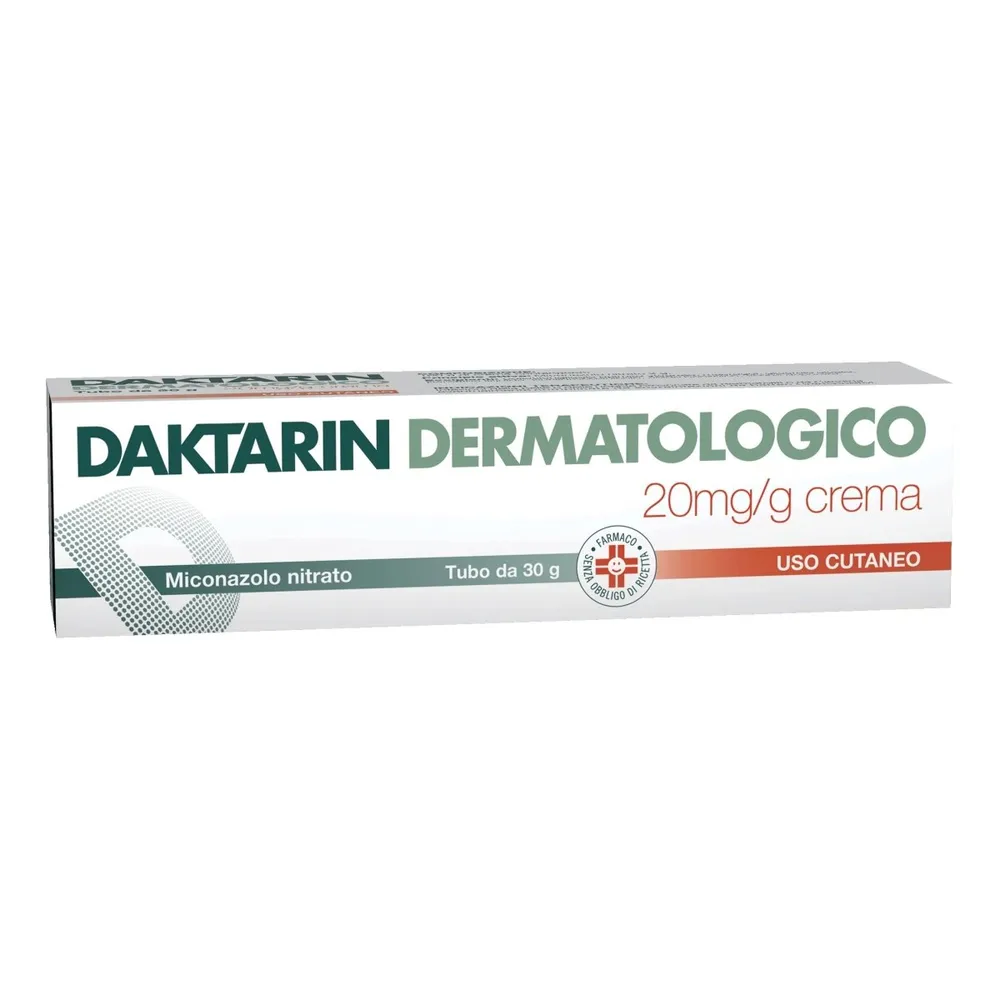
Table of Contents
Package leaflet: Information for the user
Introduction
Package leaflet: information for the patient
Daktarin 20 mg/g cream
miconazole nitrate
Read the entire leaflet carefully before you start using this medicine, because it contains important information for you.
- Keep this leaflet, as you may need to read it again.
- If you have any questions, ask your doctor or pharmacist.
- This medicine has been prescribed for you only, and you should not give it to other people, even if they have the same symptoms as you, because it may harm them.
- If you experience any adverse effects, talk to your doctor or pharmacist, even if the effects are not listed in this leaflet. See section 4.
Contents of the leaflet
- What Daktarin is and what it is used for
- What you need to know before using Daktarin
- How to use Daktarin
- Possible side effects
- How to store Daktarin
- Contents of the pack and other information
1. What Daktarin is and what it is used for
Daktarin contains the active substance miconazole, which belongs to a group of medicines called antifungal agents. Miconazole works by preventing the growth of fungi that cause infections of the skin.
This medicine is used to treat superficial infections of the:
- skin and nails,
- scalp, beard, trunk, feet, hands, groin.
2. What you need to know before using Daktarin
Do not use Daktarin:
If you are allergic to miconazole, to other similar antifungal agents, or to any of the other components of this medicine (listed in section 6).
Warnings and precautions
Consult your doctor or pharmacist before starting to use this medicine.
This is a topical medicine. Do not ingest.
Daktarin may cause severe allergic reactions. You should be aware of the signs of an allergic reaction when using this medicine (see section 4 “Possible side effects”).
Avoid contact with the eyes and mucous membranes. In case of accidental contact, rinse the eyes thoroughly with plenty of water.
Take the following precautions:
Wash your hands carefully after using this medicine, unless the treatment is for the hands.
Keep a separate towel and washcloth for your personal use to avoid infecting others.
Change clothing regularly that comes into contact with infected skin to prevent self-reinfection.
If you are taking oral anticoagulants such as warfarin, stop using Daktarin immediately and consult your doctor or pharmacist if you experience unexpected bleeding or bruising, nosebleeds, coughing up blood, blood in the urine, black tarry stools, or vomiting material resembling ground coffee during treatment with Daktarin. Close monitoring of International Normalized Ratio (INR) levels is required during treatment with Daktarin under the supervision of a healthcare professional.
Using Daktarin with other medicines
Consult your doctor, pharmacist, or dentist if you are taking, have recently taken, or might need to take any other medicines.
Oral anticoagulants (medicines used to thin the blood), such as warfarin, may be affected by Daktarin.
Some medicines may affect how Daktarin works or make it more likely that you will experience side effects. Daktarin may also affect how other medicines work.
If you are taking any of these medicines or others, consult your doctor or pharmacist before starting to use Daktarin:
- Oral anticoagulants such as warfarina;
- Oral hypoglycemic agents (medicines taken orally for the treatment of diabetes) and phenytoin (a medicine used to treat epilepsy), because the effects of these medicines and/or their side effects may be increased when taken with this medicine.
While using Daktarin, do not start taking any new medicine without first informing your doctor or pharmacist.
Pregnancy and breastfeeding
If you are pregnant or breastfeeding, think you may be pregnant, or are planning to become pregnant, consult your doctor or pharmacist before using this medicine.
This medicine should not be used during pregnancy unless considered necessary by your doctor.
Daktarin is minimally absorbed into the body when applied to the skin.
It is unknown whether miconazole or its components pass into breast milk. This medicine should not be used during breastfeeding unless considered necessary by your doctor.
Driving and using machines
Daktarin is not expected to affect your ability to drive or operate machinery.
Daktarin contains benzoic acid, benzyl alcohol, butylhydroxyanisole, and Gattefossé perfume
This medicine contains 2 mg of benzoic acid per gram of cream. Benzoic acid (E-210) may cause local irritation.
Benzoic acid may increase the risk of jaundice (yellowing of the skin and eyes) in newborns (up to 4 weeks of age).
Benzyl alcohol in the Gattefossé perfume may cause moderate local irritation.
This medicine may cause local skin reactions (such as contact dermatitis) or irritation of the eyes and mucous membranes because it contains butylhydroxyanisole (E-320).
This medicine contains Gattefossé perfume with the following allergens: 3-Methyl-4-(2,6,6-trimethyl-2-cyclohexen-1-yl)-3-buten-2-one, amyl cinnamaldehyde, amyl cinnamyl alcohol, anisyl alcohol, benzyl alcohol, benzyl benzoate, benzyl salicylate, benzyl cinnamate, cinnamaldehyde, cinnamyl alcohol, citral, citronellol, coumarin, d-Limonene, eugenol, farnesol, geraniol, hexyl cinnamaldehyde, hydroxycitronellal, isoeugenol, linalool, and methyl heptine carbonate. These allergens may cause allergic reactions. In addition to allergic reactions in sensitized patients, sensitization may occur in patients who are not previously sensitized.
3. How to use Daktarin
Follow exactly the instructions for use of this medicine as given by your doctor or pharmacist. If in doubt, consult your doctor or pharmacist again.
This medicine is for topical use. The amount to be used and the duration of treatment will depend on the type and location of the infection.
Skin infections:
Apply a small amount of cream to the affected area twice daily. The duration of treatment ranges from 2 to 6 weeks, depending on the extent and type of lesion.
Treatment should be continued for at least 1 week after all signs and symptoms have disappeared.
Nail infections:
Cut the affected nail as short as possible as it separates from the nail bed. Apply the cream once daily to the affected nail, covering it for 24 hours with a non-perforated occlusive dressing, or alternatively, apply the cream twice daily.
The duration of treatment is 2 to 6 months and should be continued for up to 10 days after all lesions have disappeared, to prevent relapse.
Unscrew the cap and pierce the seal on the tube opening by inserting the back of the cap into the tube opening.
Use in children and adolescents
Daktarin cream can be used in children, adolescents, and adults.
If you use more Daktarin than you should
If Daktarin is applied more frequently than prescribed, it may cause redness, swelling, or a burning sensation.
Accidental ingestion of a small amount of Daktarin is unlikely to cause poisoning. However, in case of overdose or accidental ingestion, consult your doctor or pharmacist immediately or call the Toxicology Information Service at telephone: 91 562 04 20, indicating the medicine and the amount ingested.
If you forget to use Daktarin
Do not apply a double dose to make up for missed doses.
If you stop using Daktarin
Do not stop treatment with Daktarin unless instructed by your doctor. If you stop treatment prematurely, it may be ineffective.
If you have any further questions about the use of this medicine, ask your doctor or pharmacist.
4. Possible adverse effects
Like all medicines, this medicine can cause adverse effects, although not everyone experiences them.
Inform your doctor or pharmacist if you experience any of the following adverse effects:
Uncommon adverse effects (may affect up to 1 in 100 patients) may include:
- Burning sensation on the skin, skin inflammation, pale spots on the skin
- Reactions at the application site, including irritation, burning, itching, warmth.
Very rare adverse effects (affect fewer than 1 in 10,000 patients) may include:
- Allergic itching of the skin due to contact, redness of the skin, rash, eruption, itching,
swelling of the face, lips, mouth, tongue or throat; difficulty swallowing or breathing.
If you experience any of the following adverse effects, stop using Daktarin and contact your doctor immediately:
An allergic reaction which may include:
- Swelling of the face, lips, mouth, tongue or throat,
- Difficulty swallowing or breathing,
- Itchy skin rash.
Reporting of adverse effects
If you experience any type of adverse effect, consult your doctor or pharmacist, even if it is a possible adverse effect not listed in this leaflet. You may also report them directly via the Spanish Pharmacovigilance System for Human Medicinal Products: http://www.notificaram.es. By reporting adverse effects, you can help provide more information on the safety of this medicine.
5. Storage of Daktarin
Keep this medicine out of sight and reach of children.
Do not use this medicine after the expiry date stated on the carton after EXP. The expiry date refers to the last day of the month indicated.
Do not store above 25°C.
Medicines must not be disposed of via wastewater drains or household waste. Dispose of unused medicines and their containers at the SIGRE Point at your pharmacy. If in doubt, ask your pharmacist how to properly dispose of unused medicines and their packaging. This will help protect the environment.
6. Contents of the package and other information
Composition of Daktarin
- The active substance is miconazole nitrate. Each gram of cream contains 20 mg of miconazole nitrate.
- The other components (excipients) are: benzoic acid (E-210), butylhydroxyanisole (E-320), polyoxyethylene glycerol monostearate, polyethylene glycol stearate and polyethylene glycol, Gattefossé perfume (contains 3-Methyl-4-(2,6,6-trimethyl-2-cyclohexen-1-yl)-3-buten-2-one, amyl cinnamaldehyde, amyl cinnamyl alcohol, anisyl alcohol, benzyl alcohol, benzyl benzoate, benzyl salicylate, benzyl cinnamate, cinnamaldehyde, cinnamyl alcohol, citral, citronellol, coumarin, d-Limonene, eugenol, farnesol, geraniol, hexyl cinnamaldehyde, hydroxycitronellal, isoeugenol, linalool and methyl heptine carbonate), liquid paraffin and purified water.
Appearance of the medicine and contents of the pack
Daktarin is a white, homogeneous cream supplied in a white opaque polyethylene tube with a screw cap containing 40 g of cream.
Marketing Authorization Holder and Manufacturer
Marketing Authorization Holder
Esteve Pharmaceuticals, S.A.
Passeig de la Zona Franca, 109
08038 Barcelona
Spain
Manufacturer
Esteve Pharmaceuticals, S.A.
C/ de Sant Martí, 75-97
08107 Martorelles, Barcelona
Spain
Date of the most recent review of this leaflet: August 2025
Detailed information about this medicine is available on the website of the Spanish Agency of Medicines and Medical Devices (AEMPS) (http://www.aemps.gob.es/)