Dagesil 75 mg/3 ml solution for injection and infusion EFG
SpainTable of Contents
Package leaflet: Information for the user
Introduction
Package leaflet: information for the user
Dagesil 75 mg/3 ml solution for injection and infusion EFG
sodium diclofenac
Read the entire leaflet carefully before you start using this medicine, because it contains important information for you.
-
Keep this leaflet, as you may need to read it again.
-
If you have any questions, consult your doctor or pharmacist.
-
This medicine has been prescribed for you only, and you must not give it to other people, even if they have the same symptoms as you, because it may harm them.
-
If you experience any adverse effects, consult your doctor or pharmacist, even if they are adverse effects not listed in this leaflet. See section 4.
Contents of the leaflet
- What Dagesil is and what it is used for
- What you need to know before using Dagesil
- How to use Dagesil
- Possible side effects
- How to store Dagesil
- Contents of the pack and other information
1. What Dagesil is and what it is used for
Dagesil belongs to a group of medicines called non-steroidal anti-inflammatory drugs (NSAIDs), which are used to treat pain and inflammation.
Dagesil relieves the symptoms of inflammation, including swelling and pain, by blocking the synthesis of molecules (prostaglandins) responsible for inflammation, pain, and fever. It has no effect on the underlying causes of inflammation or fever.
When administered by intramuscular injection, Dagesil can be used for the symptomatic treatment of the following conditions:
- Sudden worsening of rheumatic joint pain (arthritis), back pain, "frozen shoulder", "tennis elbow", and other types of rheumatism;
- Gout attack;
- Pain caused by gallstones or kidney stones;
- Postoperative and post-traumatic pain and swelling;
- Symptoms associated with severe migraine attacks.
When administered by intravenous infusion, Dagesil can be used in hospital settings to treat pain following surgery.
If you have any doubts about how Dagesil works or why it has been prescribed for you, please consult your doctor.
Monitoring during your treatment with Dagesil
If you have hepatic impairment, renal impairment, or blood disorders, you will need to have blood tests during treatment. These tests will monitor your liver function (transaminase levels), kidney function (creatinine levels), and blood cell counts (levels of white blood cells, red blood cells, and platelets). Your doctor will use the results of these blood tests to decide whether treatment with Dagesil should be stopped or whether the dose needs to be adjusted.
2. What you need to know before using Dagesil
Carefully follow all instructions from your doctor. They may differ from the general information included in this leaflet.
Inform your doctor if you have recently undergone or are scheduled to undergo stomach or intestinal surgery before using Dagesil, as Dagesil may sometimes impair wound healing in the intestine after surgery.
Do not use Dagesil
- if you are allergic to diclofenac, sodium metabisulfite (or other sulfites), or any of the other components of this medicine (listed in section 6);
- if you have a gastric or intestinal ulcer;
- if you have cerebrovascular bleeding or any other active bleeding, blood cell formation disorders, or coagulation problems, you should not take NSAIDs (e.g., acetylsalicylic acid, ibuprofen, and diclofenac);
- if you have previously experienced an allergic reaction after taking medications for inflammation or pain (e.g., diclofenac, acetylsalicylic acid, or ibuprofen). Reactions may include asthma, chest pain, nasal discharge, skin rash, or facial swelling. If you suspect you may be allergic, consult your doctor;
- if you have gastrointestinal bleeding or perforation, whose symptoms may include bloody or black stools;
- if you have severe kidney or liver disease;
- if you have established heart disease and/or cerebrovascular disease, for example, if you have had a heart attack, stroke, mini-stroke (TIA), blockages in blood vessels of the heart or brain, or undergone surgery to remove an obstruction or coronary bypass;
- if you have or have had circulatory problems (peripheral arterial disease);
- if you have severe heart failure;
- if you are in the third trimester of pregnancy.
If any of these conditions apply to you, consult your doctor and do not use Dagesil.
If you think you may be allergic, consult your doctor.
Warnings and precautions
Consult your doctor or pharmacist before starting to use Dagesil:
- If you are using Dagesil together with other anti-inflammatory medicines, including acetylsalicylic acid, corticosteroids, antithrombotics, or SSRIs (see “Other medicines and Dagesil”);
- If you have asthma or hay fever (seasonal allergic rhinitis);
- If you have ever had gastrointestinal problems, such as stomach ulcer, bleeding, or dark stools, or if you have experienced stomach discomfort or heartburn after taking anti-inflammatory medicines in the past;
- If you have inflammation of the colon (ulcerative colitis) or of the intestinal tract (Crohn’s disease);
- If you have or have had heart problems or high blood pressure;
- If you have liver or kidney problems;
- If you are dehydrated (e.g., due to illness, diarrhea, before or after major surgery);
- If you have swollen feet without associated traumatic cause;
- If you have blood clotting disorders or other blood disorders, including a rare liver condition called hepatic porphyria;
- If you have systemic lupus erythematosus or mixed connective tissue disorders;
- If you have ever experienced a severe skin rash, skin peeling, blisters, or mouth sores after taking Dagesil or other painkillers.
If any of these conditions apply to you, consult your doctor before starting to use Dagesil.
Dagesil may reduce the symptoms of an infection (e.g., headache, high temperature), which could make an infection harder to detect and treat appropriately. If you feel unwell and need to see a doctor, remember to mention that you are using Dagesil.
In very rare cases, Dagesil, like other anti-inflammatory medicines, may cause severe allergic skin reactions (e.g., rash). Therefore, inform your doctor immediately if you experience any of these reactions.
Injection site reactions have been reported after intramuscular administration of Dagesil, including pain at the injection site, redness, swelling, ulceration, sometimes with hematoma or pus, and destruction of the skin and underlying tissue, a phenomenon known as Nicolau syndrome.
Medicines such as Dagesil may be associated with a small increased risk of heart attacks (myocardial infarction) or stroke. Any risk is more likely with high doses and prolonged treatment. Do not exceed the recommended dose or duration of treatment.
If you have heart problems, have had a stroke, or believe you may be at risk of these conditions (e.g., if you have high blood pressure, diabetes, high cholesterol, or smoke), seek advice about treatment from your doctor or pharmacist.
- If at any time while taking Dagesil you experience signs or symptoms of heart or blood vessel problems, such as chest pain, difficulty breathing, weakness, or difficulty speaking, contact your doctor immediately.
Ensure that your doctor knows:
- If you smoke;
- If you have diabetes;
- If you have angina, blood clots, high blood pressure, high cholesterol, or high triglycerides.
Adverse effects may be reduced by using the lowest effective dose for the shortest possible time.
If you use Dagesil for more than a few weeks, ask your doctor to perform regular check-ups to ensure you are not experiencing unintended adverse effects.
Elderly patients
Elderly patients may be more sensitive to the effects of Dagesil. Therefore, they should follow their doctor’s instructions with particular care and be treated with the lowest effective dose for their condition. It is especially important that elderly patients report any adverse effects to their doctor immediately.
Renal and hepatic impairment
Caution should be exercised when administering an NSAID to patients with renal or hepatic impairment. In patients with mild to moderate renal or hepatic dysfunction, the initial dose should be reduced. Diclofenac should not be administered to patients with severe renal and/or hepatic impairment.
Children and adolescents
The use of Dagesil injectable and perfusion solution is not recommended in children and adolescents under 18 years of age.
Other medicines and Dagesil
Inform your doctor or pharmacist if you are taking, have recently taken, or might need to take any other medicine.
It is important that you inform your doctor if you are taking any of the following medicines:
- Lithium or serotonin reuptake inhibitors (SSRIs) (medicines used to treat certain types of depression);
- Digoxin (a medicine used to treat heart problems);
- Diuretics (medicines that increase urine production);
- ACE inhibitors or beta-blockers (classes of medicines used to treat high blood pressure);
- Other anti-inflammatory medicines such as acetylsalicylic acid or ibuprofen;
- Corticosteroids (medicines used to reduce inflammation in body tissues);
- Anticoagulants (medicines used to prevent blood clots);
- Medicines used to treat diabetes, except insulin;
- Methotrexate (a medicine used to treat certain types of cancer or arthritis);
- Cyclosporine and tacrolimus (medicines mainly used in patients who have received an organ transplant);
- Trimethoprim (a medicine used to prevent and treat urinary tract infections);
- Quinolone antibacterials (used to treat infections);
- Probenecid;
- Voriconazole (a medicine used to treat fungal infections);
- Phenytoin (a medicine used to treat seizures).
Pregnancy, breastfeeding, and fertility
If you are pregnant or breastfeeding, think you may be pregnant, or plan to become pregnant, consult your doctor or pharmacist before using this medicine.
- Do not take Dagesil during the last 3 months of pregnancy, as it may harm the fetus or cause problems during delivery. It may cause kidney and heart problems in your fetus. It may affect your tendency and your baby’s tendency to bleed and may delay or prolong labor more than expected. You should not take Dagesil during the first 6 months of pregnancy unless clearly necessary and as directed by your doctor. If treatment is needed during this period or while trying to conceive, you should take the lowest possible dose for the shortest possible time. From week 20 of pregnancy, Dagesil may cause kidney problems in your fetus if taken for more than a few days, which may lead to low levels of amniotic fluid surrounding the baby (oligohydramnios). If treatment for longer than a few days is needed, your doctor may recommend additional monitoring.
Inform your doctor if you are breastfeeding.
You should not breastfeed while using Dagesil, as it may harm your baby.
Consult your doctor or pharmacist before using any medicine. Your doctor will discuss with you the potential risks of using Dagesil during pregnancy or breastfeeding.
Driving and use of machines
It is unlikely that Dagesil will affect your ability to drive, operate machinery, or perform other activities requiring special attention.
Dagesil contains sodium
This medicine contains less than 1 mmol of sodium (23 mg) per ml of injectable and perfusion solution; thus, it is essentially “sodium-free”.
Dagesil contains sodium metabisulfite (E223)
Rarely, it may cause severe hypersensitivity reactions and bronchospasm.
Dagesil contains benzyl alcohol
This medicine contains 120 mg of benzyl alcohol in each ampoule (containing 3 ml of injectable and perfusion solution), equivalent to 40 mg/ml.
Benzyl alcohol may cause allergic reactions.
Consult your doctor or pharmacist if you are pregnant or breastfeeding. This is because large amounts of benzyl alcohol may accumulate in your body and cause adverse effects (metabolic acidosis).
Consult your doctor or pharmacist if you have liver or kidney disease. This is because large amounts of benzyl alcohol may accumulate in your body and cause adverse effects (metabolic acidosis).
Dagesil contains propylene glycol (E 1520)
This medicine contains 600 mg of propylene glycol in each ampoule (containing 3 ml of injectable and perfusion solution), equivalent to 200 mg/ml.
If you are pregnant or breastfeeding, do not take this medicine unless recommended by your doctor. Your doctor may perform additional monitoring while you are taking this medicine.
If you have hepatic or renal insufficiency, do not take this medicine unless recommended by your doctor. Your doctor may perform additional monitoring while you are taking this medicine.
Propylene glycol in this medicine may produce effects similar to those of alcohol consumption and may increase the likelihood of these adverse effects.
Use this medicine only if recommended by your doctor. Your doctor may perform additional monitoring while you are taking this medicine.
3. How to use Dagesil
Follow exactly the administration instructions for this medicine as indicated by your doctor. Do not exceed the recommended dose or duration of treatment. If in doubt, consult your doctor or pharmacist again.
Intramuscular injection: The solution should be drawn from the ampoule into a syringe and injected deeply into the gluteal muscle.
Intravenous infusion: The solution must be diluted with at least 100 ml of 0.9% sodium chloride solution or 5% glucose solution buffered with sodium bicarbonate and slowly infused into a vein. It must not be administered rapidly into a vein.
How much Dagesil should you use and when should you use it
Do not exceed the recommended dose. It is important that you use the lowest effective dose to control your pain and do not use Dagesil for longer than necessary. Adverse effects may be reduced if the lowest effective dose is used for the shortest possible time needed to control symptoms.
Your doctor will tell you exactly how many Dagesil ampoules you should use. Depending on your response to treatment, your doctor may suggest a higher or lower dose.
Adults
Generally, in adults, the contents of one ampoule are administered daily for up to two days; in some cases, the contents of two ampoules per day may be given. If further treatment with diclofenac is needed, it may be administered in the form of tablets or suppositories.
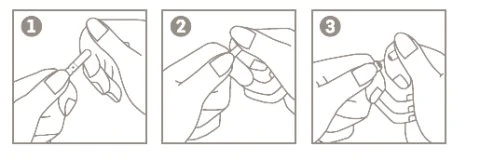
Instructions for opening OPC (One-Point-Cut) ampoules (Single Point Cut):
- Hold the body of the ampoule between your thumb and index finger, with the scored point facing upwards;
- Place the index finger of the other hand to hold the top of the ampoule. Place your thumb to cover the scored point;
- With the index fingers close together, press on the area of the scored point to open the ampoule.
Use in children and adolescents
Due to the dose of the injectable and infusion solution, Dagesil is not recommended for use in children and adolescents under 18 years of age.
How long should you use Dagesil
Follow exactly the administration instructions for this medicine as indicated by your doctor.
If you use more Dagesil than you should
If you have accidentally used more Dagesil than you should, consult your doctor immediately or go to a hospital emergency department. You may require medical attention.
In case of overdose or accidental ingestion, contact your doctor or pharmacist immediately or call the Toxicology Information Service at telephone number 91 562 04 20, stating the medicine and the amount ingested.
If you forget to use Dagesil
Do not use a double dose to make up for missed doses.
If you have any further questions about the use of this medicine, ask your doctor or pharmacist.
4. Possible adverse effects
Like all medicines, this medicine can cause adverse effects, although not everyone will experience them.
Medicines such as Dagesil may be associated with a small increased risk of heart attacks (myocardial infarction) or stroke.
Some adverse effects may be serious.
Inform your doctor immediately if you notice:
Reactions at the injection site, including pain at the injection site, redness, swelling, development of a hard nodule, ulcers, and bruising. These symptoms may progress to blackening and necrosis of the skin and underlying tissues surrounding the injection site, which may leave a scar upon healing; this is also known as Nicolau syndrome.
These uncommon effects may affect between 1 and 10 out of every 1,000 patients, especially if taking a high daily dose (150 mg) over a prolonged period:
- Sudden, crushing chest pain (signs of myocardial infarction or heart attack);
- Shortness of breath, difficulty breathing when lying down, swelling of feet and legs (signs of heart failure);
These rare or very rare effects may affect fewer than 1 to 10 out of every 10,000 patients:
- Spontaneous bleeding or bruising (signs of thrombocytopenia);
- High fever, frequent infections, persistent sore throat (signs of agranulocytosis);
- Difficulty breathing or swallowing, skin rash, itching, dizziness (signs of hypersensitivity, anaphylactic and anaphylactoid reactions);
- Swelling mainly of the face and throat (signs of angioedema);
- Mood disturbances (signs of psychotic disorders);
- Changes in memory (signs of memory impairment);
- Seizures;
- Anxiety;
- Neck stiffness, fever, nausea, vomiting, headache (signs of aseptic meningitis);
- Sudden, severe headache, nausea, dizziness, numbness, inability or difficulty speaking, weakness or paralysis of limbs or face (signs of stroke or cerebrovascular accident);
- Hearing difficulty (signs of hearing impairment);
- Headache, dizziness (signs of high blood pressure, hypertension);
- Skin rash, red-purple spots, fever, itching (signs of vasculitis);
- Sudden difficulty breathing and chest tightness with wheezing or cough (signs of asthma or pneumonia, especially if accompanied by fever);
- Vomiting blood (signs of haematemesis) and/or black or bloody stools (signs of gastrointestinal bleeding);
- Bloody diarrhoea (signs of haemorrhagic diarrhoea);
- Black stools (signs of melaena);
- Stomach pain, nausea (signs of gastrointestinal ulcer);
- Diarrhoea, abdominal pain, fever, nausea, vomiting (signs of colitis, including haemorrhagic colitis and exacerbation of ulcerative colitis or Crohn’s disease);
- Severe stomach pain (signs of pancreatitis);
- Yellowing of the skin or eyes (signs of jaundice), nausea, loss of appetite, dark urine (signs of hepatitis/liver failure);
- Flu-like symptoms, fatigue, muscle pain, increased liver enzymes in blood tests (signs of liver disease, including fulminant hepatitis, liver necrosis, liver failure);
- Blisters (signs of bullous dermatitis);
- Red-purple skin discoloration (possible signs of blood vessel inflammation), skin rash with blisters, blisters on lips, eyes and mouth, skin inflammation with peeling (signs of erythema multiforme, or with fever, Stevens-Johnson syndrome or toxic epidermal necrolysis);
- Skin irritation with peeling (signs of exfoliative dermatitis);
- Increased skin sensitivity when exposed to sunlight (signs of photosensitivity reaction);
- Purple spots on the skin (signs of purpura or Henoch-Schönlein purpura, if caused by allergy);
- Swelling, feeling of weakness, or abnormal urination (signs of acute renal failure);
- Excess protein in the urine (signs of proteinuria);
- Swelling of the face or abdomen, high blood pressure (signs of nephrotic syndrome);
- Increased or decreased urine production, drowsiness, confusion, nausea (signs of tubulointerstitial nephritis);
- Severe reduction in urine output (signs of renal papillary necrosis);
- Generalized swelling (signs of oedema).
If you experience any of these symptoms, inform your doctor immediately.
Some adverse effects are common:
These may affect 1 to 10 out of every 100 patients:
Headache, dizziness, vertigo, nausea, vomiting, diarrhoea, indigestion (signs of dyspepsia), abdominal pain, flatulence, loss of appetite, abnormal liver function tests (e.g., elevated transaminase levels), cutaneous erythema, reaction at injection site, pain at injection site, induration at injection site.
Some adverse effects are rare:
These may affect between 1 and 10 out of every 10,000 patients:
Somnolence, stomach pain (signs of gastritis), liver disease, itchy skin rash (signs of urticaria), necrosis at injection site.
Some adverse effects are very rare:
These may affect fewer than 1 out of every 10,000 patients:
Low red blood cell count (anaemia), low white blood cell count (leucopenia), disorientation, depression, difficulty sleeping (signs of insomnia), nightmares, irritability, psychotic disorders, tremor or swelling of hands and feet (signs of paraesthesia), tremors, taste disturbances (signs of dysgeusia), visual disturbances (signs of visual impairment, blurred vision, diplopia), ringing in the ears (tinnitus), constipation, mouth ulcers (signs of stomatitis), swelling of the tongue, redness and pain of the tongue (signs of glossitis), disorders of the passage carrying food from the throat to the stomach (signs of oesophageal dysfunction), cramps in the upper abdomen, especially after eating (signs of diaphragmatic intestinal disease), palpitations, chest pain, itchy skin rashes with burning and redness (signs of eczema), skin redness (signs of erythema), hair loss (signs of alopecia), itching (signs of pruritus), blood in the urine (signs of haematuria), abscess at injection site.
Some adverse effects have unknown frequency:
Tissue damage at the injection site. Nicolau syndrome – an intense, immediate pain sensation at the injection site, followed by redness, swelling, and nodule formation; this may occur with blockage of blood vessels, resulting in destruction of the skin and underlying tissues.
Allergic skin reaction, which may include round or oval patches of redness and swelling of the skin, blisters, and itching (fixed drug eruption). Skin darkening in affected areas may also occur, which could persist after healing. Fixed drug eruptions typically recur in the same or similar locations if the medicine is taken again.
Some adverse effects may be serious. Stop using Dagesil and inform your doctor immediately if you notice:
- Chest pain, which may indicate a potentially serious allergic reaction known as "Kounis syndrome".
- Mild cramps and abdominal tenderness beginning shortly after starting Dagesil treatment, followed by rectal bleeding or bloody diarrhoea usually within 24 hours of the onset of abdominal pain (frequency not known, cannot be estimated from available data).
- Severe allergic skin reaction, which may include widespread large red or dark patches, skin swelling, blisters, and itching (generalized bullous fixed drug eruption).
Inform your doctor if you experience any of these adverse effects.
Reporting of adverse effects
If you experience any adverse effects, talk to your doctor, pharmacist, or nurse, even if they are possible adverse effects not listed in this leaflet. You can also report them directly via the Spanish Pharmacovigilance System for Human Medicines: https://www.notificaram.es. By reporting adverse effects, you can help provide more information on the safety of this medicine.
5. Storage of Dagesil
Store below 30°C.
Keep in the original packaging to protect from light.
Keep this medicine out of the sight and reach of children.
Do not use this medicine after the expiry date stated on the packaging after EXP. The expiry date refers to the last day of the month indicated.
Medicines should not be disposed of via wastewater or household waste. Ask your pharmacist how to dispose of medicines and packaging that you no longer need. This will help protect the environment.
6. Package contents and additional information
Composition of Dagesil
- The active substance is sodium diclofenac. Each ml of injectable and infusion solution contains 25 mg of sodium diclofenac.
- The other components (excipients) are: mannitol, sodium metabisulfite, benzyl alcohol, propylene glycol, sodium hydroxide, and water for injections.
Appearance of the product and package contents
This medicine is a clear, sterile injectable and infusion solution presented in 5 ml glass ampoules (containing 3 ml of injectable and infusion solution).
Dagesil is available in packs of 2, 3, 6 or 50 ampoules.
Marketing Authorization Holder
Laboratórios Basi - Indústria Farmacêutica, S.A.
Parque Industrial Manuel Lourenço Ferreira, Lote 15
3450-232 Mortágua, Portugal
Tel.: +351 231 920 250
Fax: +351 231 921 055
E-mail: [email protected]
Manufacturer
Laboratórios Basi - Indústria Farmacêutica, S.A.
Parque Industrial Manuel Lourenço Ferreira, Lotes 8, 15 and 16
3450-232 Mortágua
Portugal
Local Representative
Laphysan, S.A.U.
Calle Anabel Segura 11,
Albatros Business Complex, Building A, 4th Floor, Door D,
28108 Alcobendas (Madrid), Spain
This medicinal product is authorized in the European Economic Area member states under the following names:
Portugal Dagesil
Spain Dagesil 75 mg/3 ml solution for injection EFG
Latvia Dagesil 75 mg/3 ml škidums injekcijam
Lithuania Dagesil 75 mg/3 ml injekcinis tirpalas
Estonia Dagesil 75 mg/3 ml süstelahus
Date of latest revision of this leaflet:
September
2025
Other sources of information
Detailed information on this medicinal product is available on the website of the Spanish Agency of Medicines and Health Products (AEMPS): http://www.aemps.gob.es/