Cytarabine Accord 100 mg/ml solution for injection and for infusion
Spain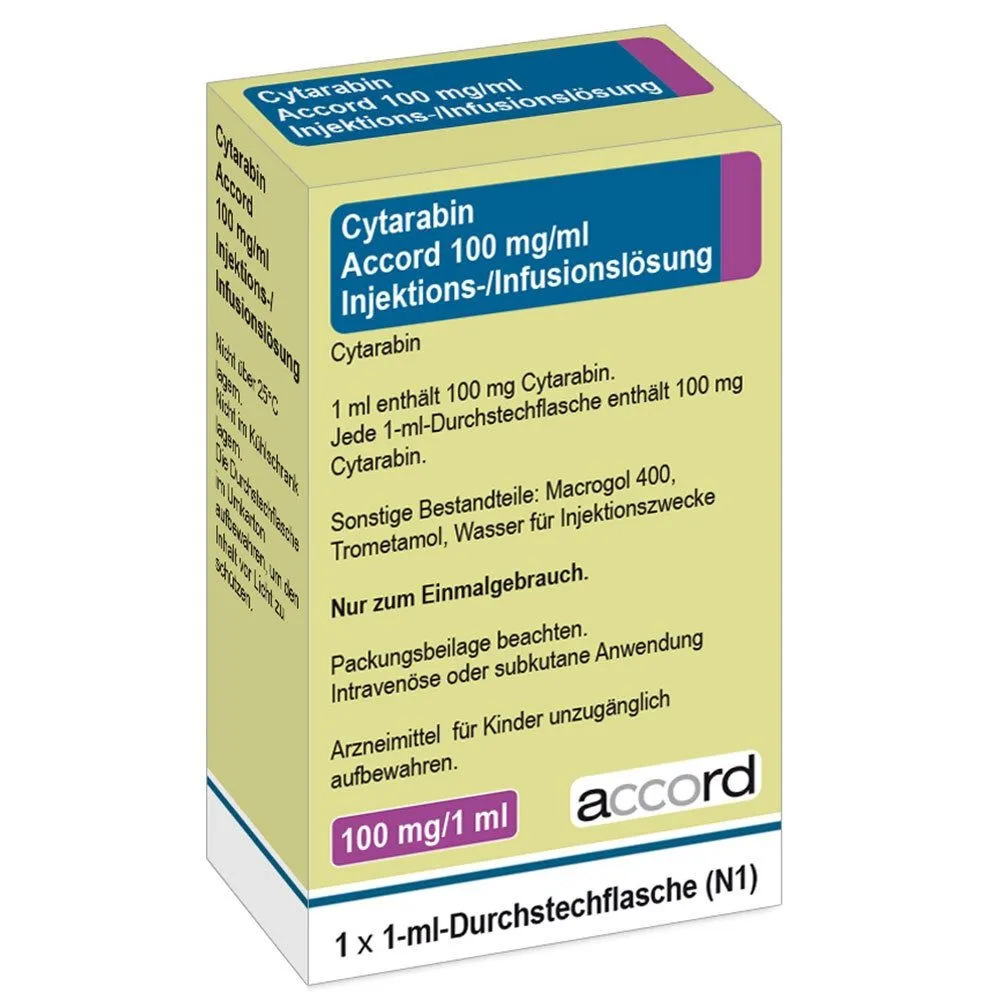
Table of Contents
Package leaflet: Information for the user
Introduction
Package leaflet: information for the user
Cytarabine Accord 100 mg/ml solution for injection and infusion
Read all of this leaflet carefully before you start using this medicine
- Keep this leaflet, as you may need to read it again.
- If you have any questions, ask your doctor or pharmacist.
- This medicine has been prescribed for you and should not be given to other people, even if they have the same symptoms as you, because it may harm them.
- If you think any of the side effects you experience is serious, or if you notice any side effects not listed in this leaflet, inform your doctor or pharmacist.
Contents of the leaflet:
- What Cytarabine Accord is and what it is used for
- What you need to know before using Cytarabine Accord
- How to use Cytarabine Accord
- Possible side effects
- How to store Cytarabine Accord
- Contents of the pack and other information
1. What Citarabina Accord is and what it is used for
Citarabina Accord is used in children and adults. The active substance is cytarabine.
Cytarabine belongs to a group of medicines called cytotoxic agents; these medicines are used in the treatment of acute leukemias (blood cancer characterized by an excess of white blood cells). Cytarabine interferes with the growth of neoplastic cells, which are eventually destroyed.
Cytarabine is also used to induce and maintain remission in acute leukemia.
Induction of remission is an intensive treatment aimed at forcing a reduction in leukemia. When successful, the balance of blood cells normalizes and your health improves. This period of relative health is called remission.
Maintenance treatment is a less intensive therapy intended to keep remission lasting as long as possible. Relatively low doses of cytarabine are used to keep the leukemia under control and prevent it from worsening.
2. What you need to know before using Cytarabine Accord
Do not use Cytarabine Accord
- If you are allergic to the active substance or to any of the other ingredients of this medicine.
- If you are already taking medicines that have caused a reduction in blood cell counts due to bone marrow suppression (the tissue capable of producing blood cells).
Warnings and precautions
Talk to your doctor or pharmacist before starting treatment with Cytarabine Accord.
- If your bone marrow is affected, treatment should be initiated under close medical supervision.
- If you have liver problems.
- Cytarabine markedly reduces the production of blood cells in the bone marrow. This may increase susceptibility to infections or bleeding. Blood cell counts may continue to decrease for up to one week after stopping treatment. Your doctor will perform periodic blood tests and, if necessary, examine your bone marrow.
- Severe and sometimes potentially fatal adverse effects may occur in the central nervous system, intestines, or lungs.
- Liver and kidney function should be monitored during treatment with cytarabine. If your liver and/or kidneys are not functioning properly before treatment, cytarabine should only be administered with extreme caution.
- Levels of uric acid (indicating that neoplastic cells have been destroyed) in your blood (hyperuricemia) may be elevated during treatment. Your doctor will advise you if you need to take any medication to control this.
Use of Cytarabine Accord with other medicines
Inform your doctor or pharmacist if you are taking, have recently taken, or might need to take any other medicines, especially in the following cases:
- If you are receiving medicines containing 5-fluorocytosine (a medicine used to treat fungal infections).
- If you are taking medicines containing digitoxin or beta-acetyldigoxin, used to treat certain heart conditions.
- If you are taking gentamicin (an antibiotic used to treat bacterial infections).
- If you are receiving medicines containing cyclophosphamide, vincristine, and prednisone, used in cancer treatment regimens.
- If you are administered cytarabine intravenously in combination with intrathecal methotrexate.
Pregnancy, breastfeeding, and fertility
If you are pregnant or breastfeeding, think you may be pregnant, or plan to become pregnant, consult your doctor or pharmacist before using this medicine.
Pregnancy
You must not become pregnant while you or your partner are being treated with cytarabine. If you are sexually active, you are advised to use effective contraception to prevent pregnancy during treatment, regardless of your sex. Cytarabine may cause congenital abnormalities; therefore, it is important to inform your doctor if you suspect you may be pregnant. Both men and women must use effective contraception during treatment and for 6 months after the last dose.
Contraception in women of childbearing potential
Women must always use effective contraceptive methods (contraception) to prevent pregnancy during treatment and for 6 months after the last dose. Consult your doctor about contraceptive methods appropriate for you and your partner.
Contraception in men
Male patients with female partners of childbearing potential must always use highly effective contraceptive methods to prevent pregnancy during treatment and for 3 months after the last dose.
Breastfeeding
Breastfeeding must be discontinued during treatment with cytarabine and for at least one week after the last dose, or treatment should be discontinued, as this medicine may be harmful to infants.
Fertility
Due to the potential risk of infertility following treatment, you should consider the possibility of sperm preservation before starting treatment with cytarabine.
Driving and use of machines
Cancer treatment in general may affect the ability of some patients to drive or operate machinery. If you are affected, you should not drive or operate machinery.
3. How to use Cytarabine Accord
Form and routes of administration
Cytarabine will be administered to you by intravenous infusion ("drip") or by injection in hospital, under the supervision of specialists. Your doctor will decide the dose to be given and the number of days of treatment you will receive, depending on your condition.
Dosage regimen
Your doctor will determine the dose of cytarabine based on your condition, your weight or body surface area, and whether you are undergoing induction or maintenance treatment. Your body surface area will be calculated based on your weight and height.
During treatment, you will require frequent examinations, including blood tests. Your doctor will inform you how often these are needed and will arrange for regular monitoring of:
- Blood, to check for low blood cell counts that may require treatment.
- Liver (also via blood tests) to ensure that cytarabine is not adversely affecting its function.
- Kidneys (also via blood tests) to ensure that cytarabine is not adversely affecting their function.
- Blood uric acid levels: cytarabine may increase blood uric acid levels. If your uric acid levels are too high, you may be given additional medication.
If you use more Cytarabine Accord than you should
High doses may worsen adverse effects, such as mouth ulcers, or may reduce white blood cell and platelet counts (which help with blood clotting) in the blood. In such cases, you may require antibiotics or blood transfusions. Mouth ulcers can be treated to reduce discomfort during healing.
If you have any questions about the use of this product, consult your doctor or pharmacist.
4. Possible adverse effects
Like all medicines, Cytarabine Accord can cause adverse effects, although not everyone will experience them.
The adverse effects of cytarabine depend on the dose. The gastrointestinal tract is usually the most affected organ, as well as the blood.
Very common adverse effects (may affect more than 1 in 10 patients) include:
- Infections, systemic infection, pneumonia.
- Reduction in the number of red blood cells, white blood cells, and/or platelets in the blood.
- Bone marrow suppression, i.e., impairment of the immune system with loss of the ability to fight infections or diseases.
- Disturbance in normal brain and cerebellar* function, drowsiness*.
- Eye corneal disorder*.
- Fluid accumulation in the lungs*, difficulty breathing*.
- Nausea, vomiting, diarrhea, inflammation or ulcers in the mouth or anus, abdominal pain.
- Liver function abnormalities.
- Rash, hair loss.
- Fever, cytarabine syndrome (characterized by muscle and bone pain, sometimes chest pain, fever, conjunctivitis, rash, and malaise, usually appearing 6–12 hours after administration and treated with corticosteroids).
- Changes in the appearance of bone marrow and blood cells.
Common adverse effects (may affect up to 1 in 10 patients) include:
- Inflammation of a portion of the intestine with death of intestinal cells (necrotizing colitis)*.
- Skin ulcers, skin peeling*.
Adverse effects with unknown frequency (cannot be estimated from available data) include:
-
Severe allergic reaction.
-
Inflammation at the injection site.
-
Localized pus formation in the liver*.
-
Allergic fluid retention.
-
Loss of appetite.
-
Personality change*.
-
Neurotoxicity, nerve inflammation, headache, dizziness, coma*, motor and sensory disturbances of the peripheral nervous system* (when administered intrathecally); in children, a rare inflammatory disorder may occur causing damage to the tissue covering the nerves (necrotizing leukoencephalopathy), leg and lower body paralysis (paraplegia), progressive ascending paralysis, progressive toxicity, seizures.
-
Conjunctivitis (eye infection that may be associated with rash), hemorrhagic conjunctivitis*, blindness (when administered intrathecally).
-
Inflammation of the tissue covering the heart (pericarditis), slower than normal heart rate or rhythm (sinus bradycardia).
-
Heart disease (cardiomyopathy)*, enlargement of the heart (cardiomegaly)*.
-
Blockage and inflammation of the blood vessel at the injection site (thrombophlebitis).
-
Sore throat, shortness of breath, inflammation of part of the lung tissue*.
-
Esophageal ulcer, esophagitis, gastrointestinal ulcer*, presence of cysts in the intestinal wall*, peritonitis*, death of intestinal cells*, pancreas inflammation (pancreatitis).
-
Yellowing of the skin, liver damage*, increased bilirubin levels*.
-
Urticaria, skin spots, itching.
-
Urinary retention, kidney impairment.
-
Chest pain.
-
Reaction at the injection site.
-
Skin rash on the palms of the hands and soles of the feet.
-
Redness, pain, or inflammation of the ears that may occur during or shortly after treatment with cytarabine (known as "cytarabine ears" or auricular erythema).
-
Inflammation of the sweat glands, which may sometimes cause painful red skin plaques (known as eccrine neutrophilic hidradenitis).
-
Due to high-dose cytarabine only
Reporting of adverse effects:
If you experience any adverse effects, consult your doctor or pharmacist, even if they are possible adverse effects not listed in this leaflet. You may also report them directly via the Spanish Pharmacovigilance System for Human Medicines: https://www.notificaram.es. By reporting adverse effects, you can help provide more information on the safety of this medicine.
5. Storage of Cytarabine Accord
Keep out of the reach and sight of children.
Do not store above 25°C.
Store the vial in the outer packaging to protect it from light.
Do not refrigerate.
Do not use this medicine after the expiry date stated on the packaging after EXP. The expiry date refers to the last day of the month indicated.
The medicine should be used immediately after opening the vial.
Do not use the solution if it is not clear, colourless, and free from particles.
Any unused medicine and materials that have come into contact with it should be disposed of in accordance with local regulations.
6. Additional Information
Composition of Citarabina Accord
The active substance is cytarabine. Each ml of solution contains 100 mg of cytarabine.
Each 1 ml vial contains 100 mg of cytarabine.
Each 5 ml vial contains 500 mg of cytarabine.
Each 10 ml vial contains 1 g of cytarabine.
Each 20 ml vial contains 2 g of cytarabine.
Each 40 ml vial contains 4 g of cytarabine.
Each 50 ml vial contains 5 g of cytarabine.
The other components are macrogol 400, tromethamine, and water for injections.
Appearance of the product and contents of the pack
Clear, colorless solution, free from visible particles.
Pack sizes:
1 vial of 1 ml, 5 vials of 1 ml
1 vial of 5 ml, 5 vials of 5 ml
1 vial of 10 ml
1 vial of 20 ml
1 vial of 40 ml
1 vial of 50 ml
Only some pack sizes may be commercially available.
Marketing Authorization Holder
Accord Healthcare, S.L.U.
World Trade Center, Moll de Barcelona, s/n
Edifici Est. 6ª planta
08039 Barcelona
Spain
Manufacturer
Accord Healthcare Polska Sp.z o.o.,
ul. Lutomierska 50, 95-200 Pabianice,
Poland
Date of latest review of this leaflet: March 2026
Detailed and up-to-date information on this medicinal product is available on the website of the Spanish Agency of Medicines and Medical Devices (AEMPS) http://www.aemps.es/.
Information intended exclusively for physicians or healthcare professionals
Dosage and method of administration
By intravenous injection or infusion, or subcutaneous injection.
Cytarabine must not be administered intrathecally.
When cytarabine is administered intravenously at high doses, solvents containing benzyl alcohol must not be used.
In dosage recommendations, values based on body weight may be converted to values based on body surface area using nomograms.
- Remission induction:
-
Continuous treatment:
- Rapid injection: 2 mg/kg/day is a prudent initial dose. Administer for 10 days. Obtain daily blood counts. If no anti-leukemic effect is observed and no apparent toxicity is present, increase the dose up to 4 mg/kg/day and maintain until a therapeutic response or toxicity occurs. Almost all patients experience toxicity at these doses.
- 0.5–1.0 mg/kg/day may be administered as an infusion lasting up to 24 hours. One-hour infusions have yielded satisfactory results in most patients. After 10 days, this initial daily dose may be increased to 2 mg/kg/day, depending on toxicity. Continue until toxicity occurs or remission is achieved.
-
Intermittent treatment:
Administer 3–5 mg/kg/day intravenously for five consecutive days. After a rest period of two to nine days, administer an additional course. Continue until response occurs or toxicity is observed.
Initial signs of bone marrow improvement have been observed between 7 and 64 days (mean 28 days) after starting treatment.
In general, if a patient shows neither toxicity nor remission after adequate attempts, cautious administration of higher doses may be justified. As a general rule, patients tolerate higher doses better when receiving rapid intravenous injection than with slow infusion. This difference is due to the rapid metabolism of cytarabine and the resulting short duration of action of high-dose administration.
- Maintenance treatment:
Remissions induced by cytarabine or other drugs may be maintained by intravenous or subcutaneous injection of 1 mg/kg once or twice weekly.
Secondary or refractory acute myeloid leukemia: Cytarabine doses of 2–3 g/m², alone or in combination with other chemotherapeutic agents, administered as a 1–3 hour infusion every 12 hours for 6 days, have been used.
Acute lymphoblastic leukemia: Cytarabine is administered in combination with other antineoplastic agents as part of complex treatment regimens for induction and consolidation of remission in acute lymphoblastic leukemia. Refer to existing treatment protocols for dosage and route of administration of cytarabine as monotherapy or in combination with other antineoplastic agents.
High doses:
Cytarabine is administered as monotherapy or in combination with other cytostatic agents at 2–3 g/m² as an intravenous infusion over 1–3 hours every 12 hours for 2–6 days. The total treatment dose must not exceed 36 g/m².
High-dose therapies in patients over 60 years of age should only be administered after careful benefit-risk assessment.
Pediatric population:
Children appear to tolerate higher doses than adults. When dose ranges are specified, the higher dose should be administered to children and the lower dose to adults.
The safety of this medicinal product has not been established for use in infants.
Patients with hepatic and/or renal impairment:
A significant fraction of the administered dose appears to be metabolized hepatically, and a small fraction renally. Cytarabine should be used with caution and at reduced doses in patients with impaired hepatic and/or renal function.
Elderly patients:
There are no data suggesting that dosage adjustment is required in elderly patients. However, elderly patients do not tolerate drug toxicity as well as younger patients, and special attention should be paid to drug-induced leukopenia, thrombocytopenia, and anemia, initiating appropriate supportive treatment when indicated.
Incompatibilities
Incompatible with: heparin, insulin, methotrexate, 5-fluorouracil, nafcillin, oxacillin, penicillin G, and methylprednisolone succinate.
This medicinal product must not be mixed with any other except those mentioned in the section “Instructions for use and handling”.
Instructions for use and handling
Disposal of unused medicinal product and all materials that have come into contact with it must be carried out in accordance with local regulations.
Once opened, the contents of each vial must be used immediately and must not be stored.
Common infusion fluids used with cytarabine include water for injections, 0.9% sodium chloride solution, and 5% dextrose. Compatibility must be checked before mixing with any other substance.
Infusion fluids containing cytarabine must be used immediately.
Protective measures
- Due to the toxic nature of the compound, the following protective recommendations must be followed:
- Pregnant women must avoid handling this medicinal product.
- Personnel handling cytarabine must wear protective clothing: protective goggles, gowns, and disposable gloves and masks.
- Reconstitution must be performed in a designated area (preferably under a laminar flow system). The work surface must be protected with disposable, absorbent, plastic-backed paper.
- All materials used for reconstitution, administration, or cleaning, including gloves, must be placed in high-risk waste bags for destruction by high-temperature incineration.
- In case of spillage, restrict access to the affected area and wear appropriate protective equipment, including gloves and safety goggles. Contain the spill and clean the area with absorbent material or paper. Spills may also be cleaned with 5% sodium hypochlorite. The spill area must be washed with a large amount of water. Place contaminated materials in a sealed bag for cytotoxic waste and incinerate at 1100°C.
- All cleaning materials must be disposed of as described above.
- In case of accidental skin or eye contact, immediately wash thoroughly with abundant water, with soap and water, or with sodium bicarbonate solution, and seek medical attention.
- Always wash hands after removing gloves.
Disposal
(See section 5). For disposal, the medicinal product and any materials that have come into contact with it must be placed in a high-risk waste bag (for cytotoxic agents) and incinerated at 1100°C.
Shelf life
2 years.
The physicochemical stability during use after dilution with sodium chloride injection (0.9% w/v) and dextrose injection (5% w/v) indicates that after dilution with the recommended intravenous fluids, the reconstituted solution remains stable for 24 hours at temperatures below 25°C and for 72 hours at 2°C–8°C. From a microbiological standpoint, the reconstituted solution should be used immediately. If not used immediately, the conditions and duration of storage for possible use are the responsibility of the user and must not exceed 24 hours at a temperature between 2°C and 8°C, unless dilution has been performed under validated and controlled aseptic conditions.
Storage
Do not store above 25°C.
Keep the vial in the outer packaging to protect from light.
Do not refrigerate.