Cymevene 500 mg powder for concentrate for solution for infusion
Spain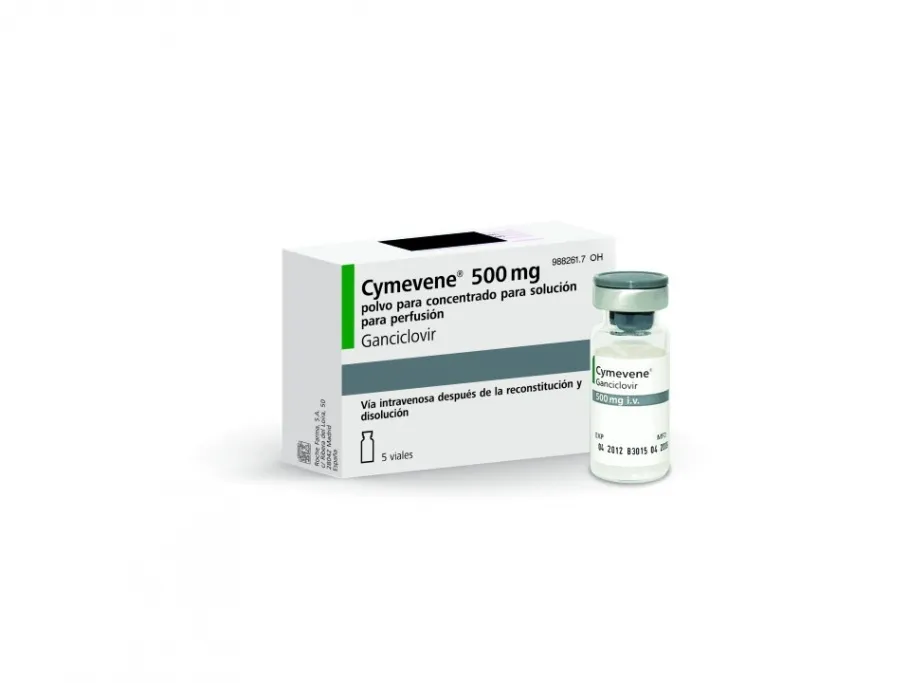
Table of Contents
Package leaflet: Information for the user
Introduction
Package leaflet: information for the user
Cymevene 500 mg powder for concentrate for solution for infusion
ganciclovir
Read all of this leaflet carefully before you start using this medicine, because it contains important information for you.
? Keep this leaflet. You may need to read it again.
? If you have any questions, ask your doctor, pharmacist or nurse.
? This medicine has been prescribed for you only, and you should not give it to other people even if they have the same symptoms as you, because it may harm them.
? If you experience any adverse effects, consult your doctor, pharmacist or nurse, even if they are adverse effects not listed in this leaflet. See section 4.
Contents of the leaflet
- What Cymevene is and what it is used for
- What you need to know before using Cymevene
- How to use Cymevene
- Possible adverse effects
- How to store Cymevene
- Contents of the pack and other information
1. What Cymevene is and what it is used for
What Cymevene is
Cymevene contains the active substance ganciclovir. It belongs to a group of medicines called antivirals.
What Cymevene is used for
Cymevene is used to treat diseases caused by a virus called cytomegalovirus (CMV) in adult and adolescent patients aged 12 years and older with a weakened immune system. It is also used to prevent CMV infection after organ transplantation or during chemotherapy in adults and children from birth onwards.
? The virus can affect any part of the body, including the retina at the back of the eye – meaning the virus can cause vision problems.
? The virus can affect anyone, but it is a particular concern in people with a weakened immune system. In these individuals, CMV can cause serious illness. A weakened immune system may result from other diseases (such as AIDS) or from medications (such as chemotherapy or immunosuppressants).
2. What you need to know before using Cymevene
Do not use Cymevene:
? if you are allergic to ganciclovir, valganciclovir, or any of the other ingredients of this medicine (listed in section 6).
? if you are breastfeeding (see subsection “Breast-feeding”).
Do not use Cymevene if any of the above apply to you. If you are unsure, consult your doctor, pharmacist, or nurse before using Cymevene.
Warnings and precautions
Consult your doctor, pharmacist, or nurse before starting to use Cymevene if:
? you are allergic to aciclovir, valaciclovir, penciclovir, or famciclovir – these are other medicines used to treat viral infections.
? you have a low number of white blood cells, red blood cells, or platelets in your blood – your doctor will perform blood tests before starting and during your treatment.
? you have previously had blood cell count problems due to medications.
? you have kidney problems – your doctor may prescribe a lower dose and you may require more frequent blood tests during treatment.
? you are receiving radiotherapy.
If any of the above apply to you (or you are unsure), consult your doctor, pharmacist, or nurse before using Cymevene.
Monitor for adverse effects
Cymevene may cause serious adverse effects that you must report to your doctor immediately. Monitor for the serious adverse effects listed in Section 4, and if you experience any of them while using Cymevene, inform your doctor – your doctor may instruct you to stop taking Cymevene and you may require urgent medical treatment.
Tests and monitoring
Your doctor will perform regular blood tests during treatment with Cymevene. This is to ensure that the dose you are receiving is appropriate for you. During the first 2 weeks, blood tests will be performed frequently. Afterwards, they will be performed less frequently.
Children and adolescents
There is limited information on the safety and efficacy of Cymevene in the treatment of CMV disease in children under 12 years of age. Periodic blood tests will be performed in newborns and infants treated with Cymevene for prevention of CMV disease.
Other medicines and Cymevene
Inform your doctor or pharmacist if you are taking, have recently taken, or might need to take any other medicines.
In particular, inform your doctor or pharmacist if you are taking any of the following medicines:
? imipenem/cilastatin – used for bacterial infections,
? pentamidine – used for parasitic or lung infections,
? flucytosine, amphotericin B – used for fungal infections,
? trimethoprim, trimethoprim/sulfamethoxazole, dapsone – used for bacterial infections,
? probenecid – used for gout,
? mycophenolate mofetil, cyclosporine, tacrolimus – used after organ transplantation,
? vincristine, vinblastine, doxorubicin – used for cancer,
? hydroxyurea – used for a condition called ‘polycythaemia’, sickle cell disease, and cancer,
? didanosine, stavudine, zidovudine, tenofovir, or other medicines used for HIV,
? adefovir or any other medicine used for the treatment of Hepatitis B.
If any of the above apply to you (or you are unsure), consult your doctor or pharmacist before using Cymevene.
Pregnancy, breast-feeding and fertility
Pregnancy
Cymevene must not be used in pregnant women unless the benefits to the mother outweigh the potential risks to the fetus.
If you are pregnant or think you might be pregnant, do not take this medicine unless instructed by your doctor. This is because Cymevene may harm the fetus.
Contraception
You must not become pregnant while using this medicine. This is because it may harm the fetus.
Women
If you are a woman of childbearing potential – you must use a contraceptive method while using Cymevene. You should also continue using it for at least 30 days after stopping treatment with Cymevene.
Men
If you are a man whose partner may become pregnant, you must use a barrier contraceptive method (e.g. condoms) while taking Cymevene. Continue using it for at least 90 days after stopping treatment with Cymevene.
If your partner becomes pregnant while you are taking Cymevene, consult your doctor immediately.
Breast-feeding
Do not use Cymevene if you are breast-feeding. If your doctor intends to start treatment with Cymevene, you must stop breast-feeding before starting this medicine. This is because Cymevene may pass into breast milk.
Fertility
Cymevene may affect fertility. Cymevene may temporarily or permanently stop sperm production in men. If you plan to have a child, consult your doctor or pharmacist before using Cymevene.
Driving and using machines
You may feel drowsy, dizzy, confused, agitated, lose your balance, or have seizures while using Cymevene. If this happens, do not drive or operate tools or machinery.
Cymevene contains sodium
This medicine contains 43 mg of sodium (a main component of cooking/table salt) per 500 mg vial. This is equivalent to 2% of the maximum daily recommended sodium intake for an adult.
3. How to use Cymevene
Follow exactly the administration instructions for this medicine as given by your doctor or pharmacist. If in doubt, consult your doctor or pharmacist again.
Use of this medicine
Cymevene will be administered to you by your doctor or nurse. It will be given through a tube into your vein. This is called "intravenous infusion" and will last approximately one hour.
The dose of Cymevene varies from person to person. Your doctor will calculate the dose you need. This dose will depend on:
? your weight (in children, height must also be taken into account),
? your age,
? proper functioning of your kidneys,
? the number of blood cells,
? the reason for which you are using the medicine.
The frequency with which Cymevene is administered and the duration of treatment may also vary.
? Usually, you will start by receiving one or two infusions per day.
? If you receive two infusions per day, this will continue for 21 days.
? Afterwards, your doctor may prescribe the infusion once daily.
Patients with renal or blood problems
If you have any kidney or blood problems, your doctor may recommend a lower dose of Cymevene and monitor your blood cell count more frequently during treatment.
If you use more Cymevene than you should
If you think you have been given too much Cymevene, consult your doctor or go to the hospital immediately. In case of overdose or accidental ingestion, you may also contact the Toxicology Information Service (Telephone: 91 5620420).
You may experience the following symptoms:
? stomach pain, diarrhea, or nausea
? tremors or seizures
? blood in your urine
? liver or kidney problems
? changes in blood cell count.
If you stop treatment with Cymevene
Do not stop using Cymevene without consulting your doctor.
If you have any further questions about the use of this medicine, ask your doctor, pharmacist, or nurse.
4. Possible adverse effects
Like all medicines, this medicine can cause adverse effects, although not everyone will experience them. The following adverse effects may occur with this medicine:
Serious adverse effects
Contact your doctor immediately if you experience any of the following serious adverse effects – your doctor may tell you to stop taking Cymevene and you may require urgent medical treatment:
Very common: may affect more than 1 in 10 people
- decrease in the number of white blood cells – with signs of infection such as sore throat, mouth ulcers, or fever
- decrease in the number of red blood cells – symptoms include feeling short of breath or tired, palpitations, or pale skin
Common: may affect up to 1 in 10 people
- blood infection (sepsis) – with signs including fever, chills, palpitations, confusion, and difficulty speaking
- decrease in the number of platelets – symptoms include bleeding and bruising more easily than normal, blood in urine or stools, or bleeding gums; these bleedings can be severe
- severe decrease in blood cells
- pancreatitis with signs such as severe stomach pain radiating to the back
- seizures
Uncommon: may affect up to 1 in 100 people
- inability of the bone marrow to produce blood cells
- hallucinations – seeing or hearing things that are not real
- disturbed thoughts or feelings, loss of contact with reality
- kidney function failure
Rare: may affect up to 1 in 1,000 people
- severe allergic reaction – symptoms may include skin redness and itching, swelling of the throat, face, lips, or mouth, difficulty swallowing or breathing
Contact your doctor immediately if you notice any of the adverse effects listed above.
Other adverse effects
If you experience any of the following adverse effects, inform your doctor, pharmacist, or nurse:
Very common: may affect more than 1 in 10 people
- candidiasis and oral candidiasis
- upper respiratory tract infection (e.g. sinusitis, tonsillitis)
- loss of appetite
- headache
- cough
- feeling short of breath
- diarrhea
- nausea and vomiting
- abdominal pain
- eczema
- fatigue
- fever
Common: may affect up to 1 in 10 people
- flu
- urinary tract infection, with signs including fever, more frequent urination, pain when urinating
- skin and subcutaneous tissue infection
- mild allergic reactions, with signs including skin redness and swelling
- weight loss
- feeling of depression, anxiety, or confusion
- difficulty sleeping
- numbness or weakness in hands and feet, which may affect your balance
- changes in sense of touch, tingling, prickling, pins and needles, or burning sensation
- changes in taste
- chills
- eye inflammation (conjunctivitis), eye pain, or vision problems
- ear pain
- low blood pressure, which may make you feel dizzy or cause blurred vision
- difficulty swallowing
- constipation, gas, indigestion, stomach pain, abdominal distension
- mouth ulcers
- abnormal results in liver and kidney laboratory tests
- night sweats
- itching, rash
- hair loss
- back, muscle, or joint pain, muscle spasms
- feeling of dizziness, weakness, or general discomfort
- skin reaction at the injection site – such as swelling, pain, and inflammation
Uncommon: may affect up to 1 in 100 people
- restlessness
- tremors
- deafness
- irregular heartbeat
- hives, dry skin
- blood in the urine
- infertility in men – see section “Fertility”
- chest pain
Other adverse effects in children and adolescents
A decrease in the number of blood cells is more likely in children, especially in babies and infants.
Reporting of adverse effects
If you experience any adverse effect, consult your doctor, pharmacist, or nurse, even if it is a possible adverse effect not listed in this leaflet. You can also report them directly via the Spanish Pharmacovigilance System for Human Medicines: https://www.notificaram.es. By reporting adverse effects, you can help provide more information on the safety of this medicine.
5. Storage of Cymevene
Keep this medicine out of the sight and reach of children.
Powder: No special storage conditions are required. Do not use this medicine after the expiry date stated on the container after EXP. The expiry date refers to the last day of the month indicated.
After reconstitution:
Chemical and physical in-use stability has been demonstrated for the reconstituted product for 12 hours at 25°C after dissolution with water for injections. Do not refrigerate or freeze.
From a microbiological standpoint, the reconstituted solution should be used immediately. If not used immediately, the time and storage conditions prior to use are the responsibility of the user.
After dilution in infusion solutions (0.9% sodium chloride, 5% dextrose, Ringer's solution, or Ringer lactate solution for injection):
Chemical and physical in-use stability has been demonstrated for 24 hours at 2 – 8°C (do not freeze).
From a microbiological standpoint, the Cymevene infusion solution should be used immediately. If not used immediately, the storage time prior to use should not exceed 24 hours between 2°C and 8°C, and storage conditions are the responsibility of the user, unless reconstitution and dilution have been carried out in a controlled environment and under validated aseptic conditions.
Medicines should not be disposed of via wastewater or household waste. Dispose of unused containers and medicines at a SIGRE collection point at your pharmacy. Ask your pharmacist how to dispose of medicines and containers you no longer need. This will help protect the environment.
6. Contents of the pack and other information
Composition of Cymevene
• The active substance is ganciclovir. Each glass vial contains 500 mg of ganciclovir as ganciclovir sodium. After reconstitution of the powder, 1 ml of solution contains 50 mg of ganciclovir.
• The other components are sodium hydroxide and hydrochloric acid.
Appearance of the product and contents of the pack
Cymevene is a white to off-white powder for concentrate for solution for infusion, supplied in single-dose glass vials with a rubber stopper and sealed with an aluminium cap. The colour of the reconstituted Cymevene solution ranges from colourless to pale yellow.
Cymevene vials are available in packs of 1 or 5 vials.
Only certain pack sizes may be marketed.
Marketing Authorisation Holder and Manufacturer
Marketing Authorisation Holder
CHEPLAPHARM Arzneimittel GmbH
Ziegelhof 24
17489 Greifswald
Germany
Manufacturer
CHEPLAPHARM Arzneimittel GmbH
Ziegelhof 23-24
17489 Greifswald
Germany
Prestige Promotion Verkaufsfoerderung & Werbeservice GmbH
Lindigstrasse 6
63801 Kleinostheim
Germany
Prestige Promotion Verkaufsfoerderung & Werbeservice GmbH
Borsigstrasse 2
63755 Alzenau
Germany
For further information about this medicinal product, please contact the local representative of the Marketing Authorisation Holder:
Laboratorios Rubió, S.A.
Industria, 29 - Pol. Ind. Comte de Sert
08755 Castellbisbal (Barcelona)
Spain
This medicinal product is authorised in the European Economic Area member states under the following names:
Cymevene: Austria, Belgium, Croatia, Czech Republic, Denmark, Finland, Hungary, Ireland, Luxembourg, Netherlands, Norway, Poland, Portugal, Slovak Republic, Spain, Sweden, United Kingdom.
Cymeven i.v.: Germany
Cymevan: France
Citovirax: Italy
Date of the most recent review of this summary: April 2020
Other sources of information
Detailed information on this medicinal product is available on the website of the Spanish Agency of Medicines and Health Products (AEMPS) http://www.aemps.gob.es/
This information is intended for healthcare professionals only:
INSTRUCTIONS FOR USE AND HANDLING
Please refer to the product's package leaflet or summary of product characteristics for complete prescribing information.
Method of administration
Warning:
Ganciclovir must be administered by intravenous infusion over 1 hour, at a concentration not exceeding 10 mg/ml. It must not be administered as a bolus or rapid intravenous injection, as excessively high plasma levels may increase ganciclovir toxicity.
Do not administer by intramuscular or subcutaneous injection, as this may cause severe tissue irritation due to the high pH (~11) of the ganciclovir solution.
The recommended dose, frequency, and infusion rate must not be exceeded.
Cymevene is a powder for solution for infusion. After reconstitution, Cymevene is a colourless to slightly yellow solution, practically free from visible particles.
The infusion should be administered into a vein with adequate blood flow, preferably through a plastic cannula.
Precautions to be taken in handling Cymevene:
Since Cymevene is considered potentially teratogenic and carcinogenic in humans, caution must be exercised during handling. Avoid inhalation or direct contact with the powder contained in the vials, or direct contact of the reconstituted solution with skin or mucous membranes. Cymevene solutions are alkaline (pH ~11). If contact occurs, wash the affected area thoroughly with soap and water, and rinse eyes thoroughly with copious amounts of water.
Preparation of the reconstituted concentrate
Aseptic technique must be used during reconstitution of the lyophilised Cymevene.
-
Remove the sealed aluminium cap to expose the central portion of the rubber stopper. Draw up 10 ml of water for injection with a syringe, then slowly inject it through the centre of the rubber stopper into the vial, directing the needle towards the vial wall. Do not use bacteriostatic water for injection containing parabens (para-hydroxybenzoates), as these are incompatible with Cymevene.
-
Gently rotate the vial to ensure complete wetting of the product.
-
Gently rotate or swirl the vial for several minutes until a clear reconstituted solution is obtained.
-
The reconstituted solution must be carefully inspected to ensure complete dissolution of the product and that it is practically free from visible particles before proceeding to dilution with a compatible diluent. The colour of the reconstituted Cymevene solution ranges from colourless to pale yellow.
Preparation of the final diluted solution for infusion
Depending on the patient's body weight, withdraw the required volume from the vial using a syringe, and then dilute it in an appropriate infusion fluid. Add 100 ml of diluent to the reconstituted solution. Infusion concentrations higher than 10 mg/ml are not recommended.
Sodium chloride solution, 5% dextrose, Ringer's injection, and Ringer's lactate injection have been shown to be chemically and physically compatible with Cymevene.
Cymevene must not be mixed with other intravenous products.
The diluted solution must be administered by intravenous infusion over 1 hour. Do not administer by intramuscular or subcutaneous injection, as this may cause severe tissue irritation due to the high pH (~11) of the ganciclovir solution.
Disposal
For single use only. Any unused medicinal product and waste material must be disposed of in accordance with local regulations.