Cyclogest 400 mg pessaries
Spain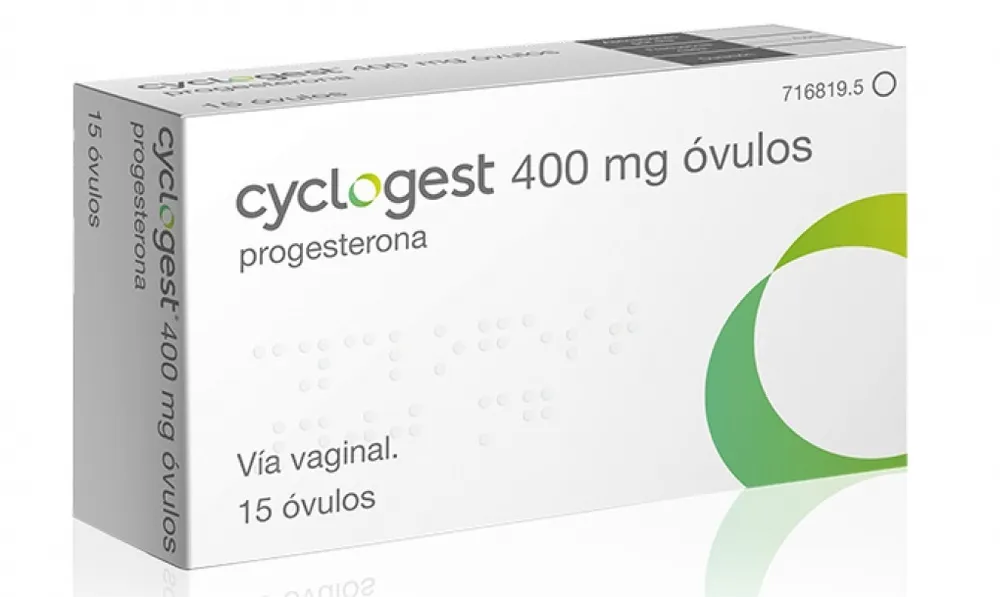
Table of Contents
Package leaflet: Information for the user
Introduction
Package leaflet: information for the user
Cyclogest 400 mg pessaries
progesterone
Read this entire leaflet carefully before you start using this medicine, because it contains important information for you.
-
Keep this leaflet, as you may need to read it again.
-
If you have any questions, ask your doctor, pharmacist or nurse.
-
This medicine has been prescribed for you only, and you should not give it to others, even if they have the same symptoms as you, because it may harm them.
- If you experience any adverse effects, consult your doctor, pharmacist or nurse, even if these are adverse effects not listed in this leaflet. See section 4.
Contents of this leaflet
- What Cyclogest is and what it is used for
- What you need to know before using Cyclogest
- How to use Cyclogest
- Possible side effects
- Storage of Cyclogest
- Contents of the pack and other information
1. What Cyclogest is and what it is used for
Cyclogest contains progesterone, which is a natural female sex hormone produced in the body.
Cyclogest is for women who need additional progesterone while undergoing treatment as part of an Assisted Reproductive Technology (ART) procedure.
Progesterone acts on the inner lining of the uterus and helps achieve and maintain pregnancy when undergoing fertility treatment.
2. What you need to know before using Cyclogest
Do not use Cyclogest:
- if you are allergic to progesterone or to any of the other components of this medicine (listed in section 6),
- if you have unusual vaginal bleeding that has not been evaluated by your doctor,
- if you have or suspect a tumour that is sensitive to hormones,
- if you have porphyria (a group of inherited or acquired disorders affecting certain enzymes),
- if you currently have or have had blood clots in your legs, lungs, eyes, or elsewhere in the body,
- if you currently have or have had liver problems,
- if you have had a miscarriage and your doctor suspects that some tissue remains in the uterus, or if you have an ectopic pregnancy.
Warnings and precautions
Be especially careful and consult your doctor immediately if you experience any of the following symptoms during treatment or even several days after the last dose:
- pain in calves or chest, sudden shortness of breath, or coughing up blood, which may indicate possible blood clots in the legs, heart, or lungs
- severe headache or vomiting, dizziness, feeling faint, or changes in vision or speech, weakness or numbness in one arm or leg, which may indicate possible blood clots in the brain or eye
- worsening of symptoms of depression
Before starting treatment with Cyclogest, consult your doctor if you have or have had any of the following health conditions:
- liver problems
- epilepsy
- migraine
- asthma
- heart or kidney disorder
- diabetes
Children and adolescents
There is no specific use for Cyclogest in children.
Use of Cyclogest with other medicines
Tell your doctor or pharmacist if you are taking, have recently taken, or might need to take any other medicines.
This is especially important if you are taking carbamazepine (for example, to prevent epileptic seizures, to treat certain types of pain or mood disorders), rifampicin (to treat infections), or phenytoin (for example, to prevent epileptic seizures or to treat certain types of pain), as these may reduce the effectiveness of progesterone.
The use of other vaginal products at the same time as Cyclogest is not recommended when Cyclogest is administered vaginally, as it is unknown whether they may affect treatment.
Pregnancy and breastfeeding
Cyclogest may be used during the first trimester of pregnancy in women who require additional progesterone while undergoing treatment as part of an Assisted Reproductive Technology (ART) procedure.
The risk of congenital anomalies (conditions present at birth), including genital abnormalities in boys and girls, following exposure to exogenous progesterone during pregnancy has not been fully established.
This medicine should not be used during breastfeeding.
Driving and using machines
Cyclogest has a minor or moderate influence on the ability to drive or operate machinery. It may cause dizziness; therefore, caution is advised for drivers and users of machinery.
3. How to use Cyclogest
Follow exactly the instructions for administering this medicine as given by your doctor. If in doubt, consult your doctor again.
The recommended dose is 400 mg twice daily by vaginal insertion. Start using Cyclogest on the day of oocyte retrieval. If pregnancy is confirmed, administration of Cyclogest should be continued until completing 38 days of treatment from the start of therapy.
How to insert Cyclogest
Always wash your hands before and after inserting the suppository.
To insert it into the vagina, place the suppository between the labia and push it upward and backward. You may find this easier if you are lying down or squatting.
If you use more Cyclogest than you should
If you (or another person) have accidentally swallowed any suppository or have used too many, contact the emergency department of your nearest hospital or contact your doctor immediately for advice.
In case of overdose or accidental ingestion, consult your doctor or pharmacist immediately or call the Toxicology Information Service at telephone number 91 562 04 20, indicating the medicine and the amount used or ingested.
If you forget to use Cyclogest
If you forget to insert a suppository, do so as soon as you remember, unless it is almost time for your next dose.
Never use two doses together. Remember to take the remaining doses at the correct time.
If you stop using Cyclogest
Consult your doctor or pharmacist if you intend to stop or if you have stopped using Cyclogest. Abrupt discontinuation of progesterone administration may cause anxiety, irritability, and increased susceptibility to seizures.
If you have any further questions about the use of this medicine, ask your doctor or pharmacist.
4. Possible adverse effects
Like all medicines, this medicine may cause adverse effects, although not everyone will experience them.
The following adverse reactions have been reported in patients receiving TRA treatment:
The following are frequent adverse effects (may affect up to 1 in 10 people):
- Abdominal distension (bloating), abdominal pain, constipation
- Somnolence
- Fatigue
- Hot flushes
- Breast pain
The following are uncommon adverse effects (may affect up to 1 in 100 people):
- Headache, dizziness, mood changes
- Taste alterations, vomiting, flatulence (gas), diarrhea, bloating (gastric dilation)
- Night sweats, skin rash or itching
- Joint pain
- Pelvic pain, ovarian enlargement, vaginal bleeding
- Frequent urination, involuntary loss of urine
- Weight gain
- Bleeding
- Itching at the application site, sensation of cold or changes in body temperature, or general malaise
After using Cyclogest, you may notice some leakage after the suppository has dissolved. Do not be concerned, as this is quite normal when using medicines inserted into the vagina or rectum.
Reporting of adverse effects
If you experience any adverse effect, consult your doctor, pharmacist, or nurse, even if it is a possible adverse effect not listed in this leaflet. You can also report them directly via the Spanish System for Human Medicines: https://www.notificaRAM.es. By reporting adverse effects, you can help provide more information on the safety of this medicine.
5. Storage of Cyclogest
Keep this medicine out of sight and reach of children.
Do not store above 30°C.
Do not use this medicine after the expiry date stated on the strip and on the packaging after EXP. The expiry date refers to the last day of the month indicated.
Medicines must not be disposed of via wastewater or household waste. Dispose of unused medicines and their packaging at a SIGRE collection point at your pharmacy. If you are unsure, ask your pharmacist how to dispose of unused medicines and their packaging. This will help protect the environment.
6. Contents of the package and other information
Composition of Cyclogest
- The active substance is progesterone. Each suppository contains 400 mg of progesterone.
- The other excipient is hard fat.
Nature of the product and package contents
Whiteish suppository, approximately 10 mm x 30 mm, torpedo-shaped, packed in PVC/PE strip packs.
Pack sizes: 12, 15, 30, or 45 suppositories.
Only certain pack sizes may be marketed.
Marketing Authorization Holder and Manufacturer
Marketing Authorization Holder
Gedeon Richter Plc.
Gyömroi út 19-21.
1103 Budapest,
Hungary
Manufacturer
Gedeon Richter Plc.
Gyömroi út 19-21.,
Budapest, 1103
Hungary
FULTON MEDICINALI S.P.A
Via Marconi, 28/9 – 20044
Arese (MI)
Italy
Local representative:
Gedeon Richter Ibérica, S.A.
Sabino Arana nº 28, 4º 2ª
08028 Barcelona
Spain
This medicinal product is authorized in the Member States of the European Economic Area under the following names:
United Kingdom | Progesterone 400mg Pessaries |
Austria | Cyclogest 400 mg Vaginal suppositories |
Belgium | Cyclovita |
Bulgaria | Cyclogest 400 mg pessaries |
Cyprus | Cyclogest |
Czech Republic | Cyclovita |
Germany | Cyclogest |
Denmark | Cyclogest |
Estonia | Cyclogest |
Greece | Cyclogest |
Spain | Cyclogest |
Finland | Cyclogest |
France | Cyclogest |
Croatia | Cyclogest 400 mg vaginal suppositories |
Hungary | Cyclogest 400 mg vaginal suppositories |
Ireland | Progesterone 400 mg |
Iceland | Cyclogest |
Italy | Cyclovita |
Luxembourg | Cyclovita |
Latvia | Progesterone 400 mg |
Malta | Cyclogest |
Netherlands | Cyclovita |
Norway | Cyclogest |
Poland | Cyclogest |
Portugal | Cyclogest |
Romania | Cyclovita |
Sweden | Cyclogest |
Slovenia | Cyclovita |
Slovakia | Cyclovita |
Date of the most recent review of this leaflet: September 2021
Other sources of information
Detailed information about this medicine is available on the website of the Spanish Agency of Medicines and Health Products (AEMPS) (http://www.aemps.gob.es/)