Cuatrocrem cream
Spain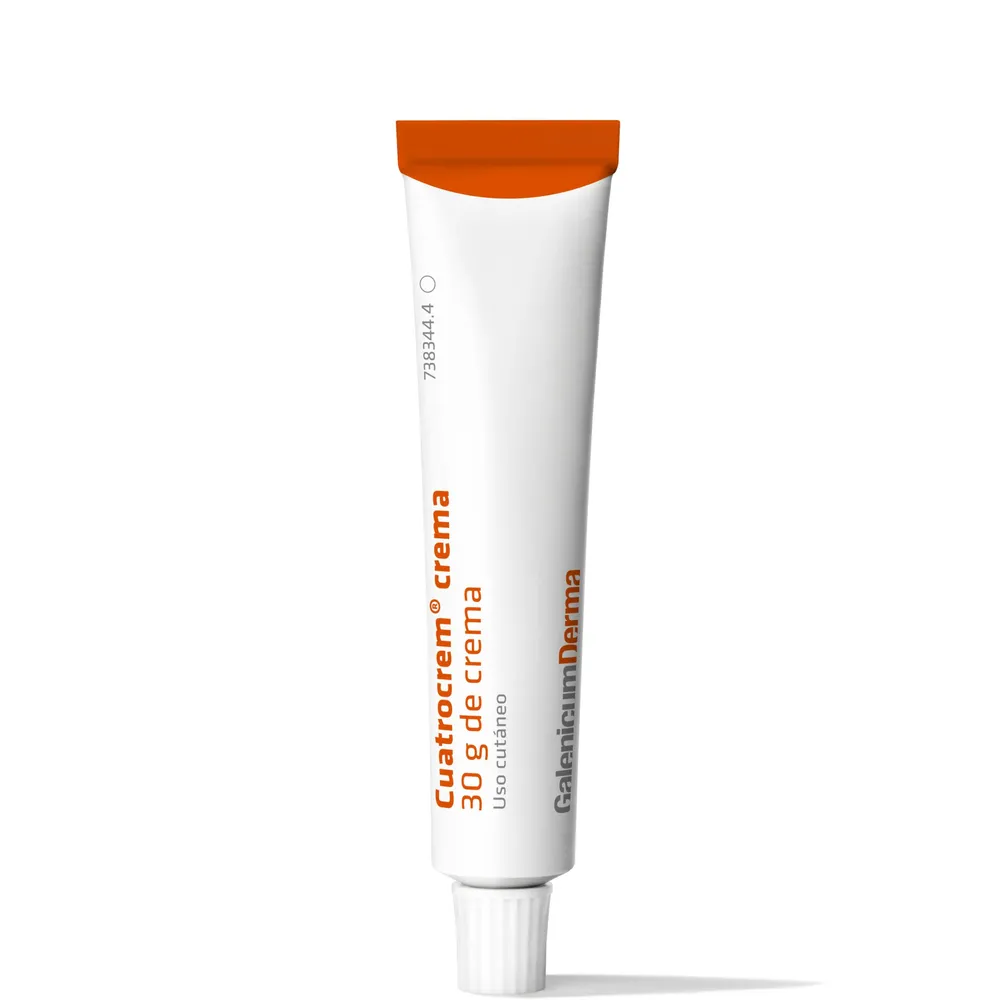
Table of Contents
Package leaflet: Information for the user
Introduction
Package leaflet: information for the user
Cuatrocrem cream
Read all of this leaflet carefully before you start using this medicine because it contains important information for you.
- Keep this leaflet as you may need to read it again.
- If you have any questions, ask your doctor or pharmacist.
- This medicine has been prescribed for you only and must not be given to other people, even if they have the same symptoms as you, because it could harm them.
- If you experience any side effects, talk to your doctor or pharmacist, even if the side effects are not listed in this leaflet. See section 4.
What this leaflet contains:
- What Cuatrocrem cream is and what it is used for
- What you need to know before using Cuatrocrem cream
- How to use Cuatrocrem cream
- Possible side effects
- How to store Cuatrocrem cream
- Contents of the pack and other information
1. What Cuatrocrem cream is and what it is used for
It is a combination of an anti-inflammatory (a corticosteroid), an aminoglycoside antibiotic, and two antifungal agents for topical administration.
Antibiotics are used to treat bacterial infections and are not effective against viral infections such as influenza or the common cold. It is important to follow your doctor's instructions regarding dosage, dosing interval, and duration of treatment. Do not store or reuse this medicine. If you have leftover antibiotics after completing the treatment, return them to the pharmacy for proper disposal. Medicines must not be disposed of via wastewater or household waste. |
It is indicated for the local treatment of inflammatory manifestations of dermatoses (skin conditions) that respond to corticosteroids, in cases complicated by mixed infections caused by microorganisms sensitive to the components of the medicinal product.
2. What you need to know before using Cuatrocrem cream
Do not use Cuatrocrem cream
- if you are allergic to betamethasone or other corticosteroids, gentamicin or other antibiotics, aminoglycosides, clioquinol, tolnaftate, iodine, or any of the other components of this medicine (listed in section 6).
- if you have tuberculosis, syphilis, or viral infections (e.g., herpes or varicella)
- on skin areas affected by rosacea (inflammation with redness of the facial skin) or perioral dermatitis (inflammation around the mouth)
- in skin conditions associated with skin thinning (atrophy)
- on skin areas showing a vaccine reaction, i.e., redness or inflammation after vaccination
- in the eyes or on deep wounds
- in children under 2 years of age.
Warnings and precautions
Consult your doctor or pharmacist before starting to use Cuatrocrem cream.
- The cream must not be applied over large areas of the body or for prolonged periods.
- The cream should not be applied under bandages or air-impermeable materials, or in skin folds such as the groin or armpits.
- If any hypersensitivity reaction occurs during use of Cuatrocrem cream, treatment must be discontinued and appropriate therapy prescribed.
- Cross-allergic reactions with aminoglycoside-type antibiotics have been reported.
- Adverse effects associated with corticosteroids, including adrenal gland suppression, may also occur with topical use due to systemic absorption of the active ingredient, especially when treating large areas, during prolonged treatment, or in children.
- With the use of gentamicin, the second component of this medicine, adverse reactions typical of systemic use may also occur, particularly with excessive use and in the presence of skin wounds.
- Prolonged use of topical antibiotics such as gentamicin may occasionally lead to overgrowth of non-susceptible organisms. In such cases, treatment with Cuatrocrem should be discontinued and medical advice sought.
- The use of clioquinol under occlusion may lead to increased iodine levels in the blood.
- This medicine may slightly stain clothing and skin due to its clioquinol content.
- Cuatrocrem cream must not come into contact with the eyes, mouth, open wounds, or mucous membranes (e.g., genital area).
- If you use this medicine for conditions other than those for which it was prescribed, it may mask symptoms and hinder correct diagnosis and treatment.
- Interference with diagnostic tests: If you are scheduled for any diagnostic tests (including blood or urine tests, skin tests using allergens, etc.), inform your doctor that you are using this medicine, as it may alter test results.
- Absorption of clioquinol may interfere with thyroid function tests, and the ferric chloride test for phenylketonuria may yield a false positive result.
- Contact your doctor if you experience blurred vision or other visual disturbances.
Children
Use of this medicine is not recommended in children under 12 years of age.
In children, corticosteroids are more likely to be absorbed through the skin, increasing the risk of systemic adverse effects compared to adult patients.
Adrenal gland suppression has been reported in children treated with topical corticosteroids, leading to symptoms such as obesity (Cushing's syndrome), growth retardation, etc.
Other medicines and Cuatrocrem cream
Inform your doctor or pharmacist if you are using, have recently used, or might need to use any other medicines.
No interactions between Cuatrocrem cream and other medicines are known.
Pregnancy, breastfeeding, and fertility
If you are pregnant or breastfeeding, think you may be pregnant, or are planning to become pregnant, consult your doctor or pharmacist before using this medicine.
Pregnancy
As a general rule, the cream should not be used during the first trimester of pregnancy.
Cuatrocrem cream should not be used during pregnancy unless your doctor considers that the potential benefit justifies the potential risk to the fetus.
Pregnant women or those planning pregnancy should not apply Cuatrocrem cream over large skin areas, for prolonged periods, or under occlusive dressings.
Breastfeeding
Do not apply Cuatrocrem cream to the breasts during breastfeeding; avoid contact of the infant with treated areas.
Do not use this medicine over large skin areas, for prolonged periods, or under occlusive dressings.
Driving and use of machines
Treatment with Cuatrocrem cream does not affect the ability to drive or operate machinery.
Cuatrocrem cream contains cetostearyl alcohol and chlorocresol
This medicine may cause local skin reactions (such as contact dermatitis) because it contains cetostearyl alcohol.
This medicine may cause allergic reactions because it contains chlorocresol.
3. How to use Cuatrocrem cream
Follow exactly the instructions for use of this medicine as given by your doctor. If in doubt, consult your doctor or pharmacist again.
The recommended dose is:
Adults and patients over 12 years of age
Apply a thin layer of Cuatrocrem cream to the entire affected area twice daily, in the morning and at night.
The duration of treatment should not exceed one or two weeks. If you are using the medicine for a condition affecting the face, treatment should be as short as possible, no longer than one week.
In cases of tinea pedis (athlete's foot), a longer treatment may be necessary (2 to 4 weeks), but if no improvement is observed within 3 weeks, consult your doctor.
Use in children
Cuatrocrem cream is contraindicated in children under 2 years of age and is not recommended for children under 12 years of age.
For topical use.
The cream should be gently massaged in a thin layer over the entire affected area, previously cleaned carefully.
If you use more Cuatrocrem cream than you should
Excessive use of topical corticosteroids (repeated overdosing or misuse) may cause adverse effects (see section 4).
A single overdose of gentamicin is not expected to produce symptoms. Excessive or prolonged use of topical antibiotics may lead to overgrowth in the lesions of fungi or bacteria that are not sensitive.
If tolnaftate is absorbed into the body, it is pharmacologically inactive.
Clioquinol rarely causes iodism, and prolonged use may lead to overgrowth of insensitive organisms.
Treatment of overdose is symptomatic. Acute symptoms due to excessive use of corticosteroids are usually reversible. In cases of chronic toxicity, it is advisable to gradually withdraw corticosteroids. If overgrowth of insensitive microorganisms occurs, treatment with Cuatrocrem should be discontinued and appropriate therapy initiated.
In case of overdose or accidental ingestion, consult your doctor or pharmacist immediately, go to a medical center, or call the Toxicology Information Service at telephone: 91 562 04 20, indicating the medicine and the amount ingested.
If you forget to use Cuatrocrem cream
Do not apply a double dose to make up for missed doses.
Apply the dose as soon as possible and then continue with your usual treatment schedule.
If you have any further questions about the use of this medicine, ask your doctor or pharmacist.
4. Possible adverse effects
Like all medicines, this medicine can cause adverse effects, although not everyone will experience them.
The following adverse effects have been reported occasionally with the use of Cuatrocrem cream: erythema (redness), pruritus, and changes in skin color.
Rash, irritation, and hypersensitivity have been reported with the use on skin of gentamicin sulfate, clioquinol, and rarely with tolnaftate.
An increase in protein-bound iodine levels may occur when used on large skin areas or wounds and/or with occlusive dressings.
The following reactions have been reported with the use of topical corticosteroids, especially after prolonged application, on large areas, with occlusive dressings or materials, and/or in children:
- Skin thinning (atrophy)
- Dryness of the skin
- Itching or burning
- Maceration (softening of the skin due to moisture)
- Redness (erythema)
- Appearance of red spots
- Bruising
- Inflammation of hair follicles (folliculitis)
- Cutaneous striae (stretch marks)
- Appearance of small blisters
- Acne
- Allergic skin reaction (contact dermatitis)
- Infections
- Blurred vision (frequency not known)
Adverse effects may occur not only in the treated area but also in completely different parts of the body, which may happen if the active ingredient passes into the body through the skin.
This, for example, could increase eye pressure (glaucoma) or could cause a condition characterized by a rounded face, fat accumulation, delayed wound healing, psychiatric symptoms, etc. (Cushing's syndrome); increased intracranial pressure, elevated blood sugar levels (hyperglycemia), increased blood pressure, fluid retention (edema), thyroid disturbances (hyperthyroidism), cataracts, increased hair growth, specific skin inflammation around the upper lip and chin (perioral dermatitis), changes in skin pigmentation, paresthesia (an abnormal sensation of the skin, such as numbness, tingling, prickling, or burning of the skin).
Reporting of adverse effects
If you experience any type of adverse effect, consult your doctor, pharmacist, or nurse, even if it is a possible adverse effect not listed in this leaflet. You may also report them directly via the Spanish Pharmacovigilance System for Human Medicines: https://www.notificaram.es.
By reporting adverse effects, you can help provide more information on the safety of this medicine.
5. Storage of Cuatrocrem cream
Keep this medicine out of the sight and reach of children.
Do not use this medicine after the expiry date stated on the packaging after EXP. The expiry date is the last day of the month indicated.
Store below 25°C.
Medicines must not be disposed of via wastewater or household waste. Dispose of containers and unused medicines at the SIGRE collection point at your pharmacy. If you have any doubts, ask your pharmacist how to dispose of containers and medicines you no longer need. This will help protect the environment.
6. Package contents and other information
Composition of Cuatrocrem cream
- The active substances are betamethasone (as valerate), gentamicin (as sulfate), clioquinol and tolnaftate.
- Each g of cream contains 0.5 mg of betamethasone (0.05%) (equivalent to 0.61 mg of betamethasone valerate), 1 mg of gentamicin (0.1%), 10 mg of tolnaftate (1%) and 10 mg of clioquinol (1%).
- The other components are: chlorocresol, macrogol cetyl stearyl ether, cetyl stearyl alcohol, white soft paraffin, liquid paraffin, sodium dihydrogen phosphate dihydrate and purified water.
Appearance of the medicine and contents of the pack
Cuatrocrem cream is a white, soft-textured cream.
It is available in tubes containing 15 g and 30 g of cream.
Marketing Authorization Holder and Manufacturer
Marketing Authorization Holder:
Galenicum Derma, S.L.U.
Ctra N-1, Km 36
28750 San Agustin del Guadalix (Madrid), Spain
Manufacturer:
SAG Manufacturing S.L.U.
Crta. N-I, Km 36
28750 San Agustin del Guadalix (Madrid), Spain
Date of the most recent revision of this leaflet: April 2019.
Detailed information on this medicine is available on the website of the Spanish Agency of Medicines and Medical Devices (AEMPS) http://www.aemps.gob.es/