Couldina with acetylsalicylic acid effervescent tablets
Spain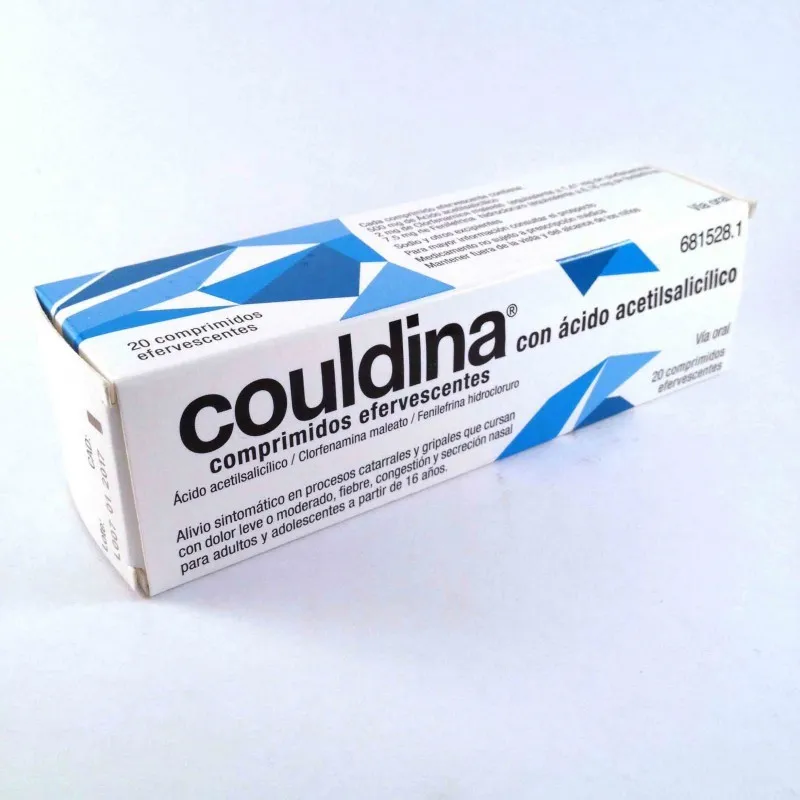
Table of Contents
- Patient Information Leaflet
- Introduction
- 1. What Couldina with Acetylsalicylic Acid is and what it is used for
- 2. What you need to know before taking Couldina with Acetylsalicylic Acid
- 3. How to take Couldina with Acetylsalicylic Acid
- 4. Possible adverse effects
- 5. Storage of Couldina with Acetylsalicylic Acid
- 6. Contents of the pack and other information
Patient Information Leaflet
Introduction
Patient Information Leaflet
Couldina with Acetylsalicylic Acid effervescent tablets
Acetylsalicylic acid/Chlorpheniramine maleate/Phenylephrine hydrochloride
Read the entire leaflet carefully before you start taking this medicine, because it contains important information for you.
Always follow exactly the instructions for taking this medicine as described in this leaflet or as given by your doctor or pharmacist.
- Keep this leaflet, as you may need to read it again.
- If you need advice or more information, consult your pharmacist.
- If you experience any side effects, consult your doctor or pharmacist, even if they are side effects not listed in this leaflet.
- You should consult your doctor if your condition worsens or does not improve, or if fever persists for more than 3 days or pain for more than 5 days of treatment.
Leaflet Contents
- What Couldina with Acetylsalicylic Acid is and what it is used for
- What you need to know before taking Couldina with Acetylsalicylic Acid
- How to take Couldina with Acetylsalicylic Acid
- Possible side effects
- How to store Couldina with Acetylsalicylic Acid
- Contents of the pack and other information
1. What Couldina with Acetylsalicylic Acid is and what it is used for
Couldina with Acetylsalicylic Acid is a combination of acetylsalicylic acid, chlorpheniramine, and phenylephrine.
Acetylsalicylic acid is an anti-inflammatory agent that acts against pain and fever.
Chlorpheniramine is an antihistamine that relieves nasal discharge.
Phenylephrine is a sympathomimetic that reduces nasal congestion.
It is indicated in adults and adolescents aged 16 years and older for the relief of symptoms of colds and flu accompanied by fever, mild to moderate pain, and nasal congestion and discharge.
You should consult your doctor if your condition worsens, does not improve, or if fever persists for more than 3 days or pain for more than 5 days.
2. What you need to know before taking Couldina with Acetylsalicylic Acid
Do not take Couldina with Acetylsalicylic Acid if:
- You are allergic to acetylsalicylic acid (aspirin), chlorphenamine maleate, phenylephrine hydrochloride, or any of the other components of this medicine (listed in section 6).
- You have experienced asthma-type allergic reactions (difficulty breathing, suffocation, bronchospasms, and in some cases coughing or wheezing) when taking anti-inflammatory drugs, acetylsalicylic acid (aspirin), other painkillers, or allergy medications, as cross-sensitivity may occur.
- You have gastric or duodenal ulcer, or recurrent stomach discomfort.
- You have had stomach bleeding or perforation caused by acetylsalicylic acid or other anti-inflammatory drugs.
- You have hemophilia or other blood coagulation disorders.
- You have asthma.
- You have nasal polyps associated with asthma that are caused or worsened by acetylsalicylic acid (aspirin).
- You have a serious heart condition (severe coronary disease or angina pectoris) or a serious arterial disease.
- You have tachycardia (rapid heartbeat).
- You have poorly controlled high blood pressure (hypertension).
- You have severe kidney or liver disease (severe renal or hepatic insufficiency).
- You have thyroid disease (hyperthyroidism).
- You are being treated with oral anticoagulant medications (e.g., Sintrom).
- You have glaucoma (increased eye pressure).
- You are taking or have taken within the last 15 days any medication for depression or Parkinson's disease that inhibits monoamine oxidase (MAOI) (see section “Taking Couldina with other medicines”).
- You are being treated with beta-blockers (medications for heart conditions or arterial diseases) (see section “Taking Couldina with other medicines”).
- The patient is under 16 years of age, as the use of acetylsalicylic acid has been linked to Reye's syndrome, a rare but serious illness occurring in individuals under 16 years.
- You have diabetes mellitus.
- You are in the third trimester of pregnancy.
Warnings and precautions
Do not take more medicine than recommended in section 3 “How to take Couldina”.
While being treated with this medicine, do not consume alcohol, as alcohol increases the likelihood of gastrointestinal adverse effects caused by acetylsalicylic acid. Additionally, alcohol may cause chronic irritation caused by acetylsalicylic acid and enhance the sedative effect produced by chlorphenamine.
If during treatment with this medicine you experience severe or persistent abdominal pain and/or black stools, stop taking the medicine immediately and consult your doctor, as you may have developed bleeding or perforation in the stomach or duodenum. This risk is higher when high doses are used, with prolonged treatment, in patients with a prior history of peptic ulcer, and in elderly patients.
Consult your doctor or pharmacist before starting treatment with this medicine:
- If you have bladder neck obstruction or urinary retention, as it may worsen.
- If you have glucose-6-phosphate dehydrogenase deficiency (an inherited condition causing a type of anemia).
- If you have or have had rhinitis or urticaria.
- If you have recently undergone or are scheduled to undergo surgery or dental procedures, including tooth extraction, within the next 7 days.
- If you have controlled high blood pressure.
- If you have pheochromocytoma, cardiovascular diseases such as slow heart rate, kidney, liver, or lung diseases, or if you suffer from anemia.
- If you are taking tricyclic antidepressants or medications with similar effects and develop gastrointestinal problems, you should stop taking this medicine and consult a doctor immediately, as you may develop paralytic ileus (cessation of normal intestinal movements).
- If you are being treated with monoamine oxidase inhibitors (MAOIs) for depression or Parkinson’s disease, you must separate the administration of Couldina with Acetylsalicylic Acid from these medications by at least 15 days.
Children and adolescents
Children under 16 years of age must not take this medicine; it is contraindicated for them.
Elderly patients
Elderly patients should not take this medicine without consulting their doctor, as they are more likely to experience adverse effects.
Taking Couldina with Acetylsalicylic Acid with other medicines
Inform your doctor or pharmacist if you are using or have recently used any other medicines, including over-the-counter products, homeopathic remedies, herbal medicines, and other health-related products, as it may be necessary to interrupt treatment or adjust the dose of one or more of them.
In particular, if you are using any of the following medicines, it is important to consult your doctor before taking Couldina with Acetylsalicylic Acid, as it may be necessary to modify the dose of some of them or discontinue treatment.
- Analgesics or non-steroidal anti-inflammatory drugs (medicines used to treat pain and/or muscle inflammation, such as ibuprofen or others) and corticosteroids, as concomitant treatment may cause ulcers, intestinal bleeding, and may also reduce the effectiveness of these medicines.
- Anesthetics (inhaled hydrocarbons): if you are scheduled for surgery, you should discontinue treatment with this medicine a few days before the procedure due to a possible risk of arrhythmias.
- Antacids, which may reduce the effectiveness of Couldina with Acetylsalicylic Acid.
- Anticoagulants (medicines used to prevent blood clots), such as Sintrom, heparin, or warfarin, as they increase the risk of bleeding.
- Antidepressants (medicines used for depression), such as selective serotonin reuptake inhibitors, tricyclic and tetracyclic antidepressants, and monoamine oxidase inhibitors (MAOIs), as they increase the risk of bleeding and may reduce the effectiveness of some of these medicines or cause serious adverse effects. If you are being treated with monoamine oxidase inhibitors (MAOIs) for depression or Parkinson’s disease, you must separate the administration of Couldina from these medicines by at least 15 days, as serious adverse effects may occur, such as severe headache, increased blood pressure, and sudden rise in body temperature. If you are being treated with lithium, you must not take this medicine, as it may increase lithium levels in the blood to toxic levels.
- Antiepileptic drugs such as phenytoin and valproic acid, due to reduced effectiveness or increased adverse effects of antiepileptic drugs.
- Antihypertensives (medicines to lower blood pressure), as they may cause kidney failure and reduced effectiveness of the antihypertensive.
- Medicines used to lower blood sugar levels (oral antidiabetics, insulin, and sulfonylureas), as taking Couldina with Acetylsalicylic Acid while on these medicines increases the blood sugar-lowering effect and may cause hypoglycemia.
- Medicines used to treat seizures (such as barbiturates), as taking both medicines together increases barbiturate levels in the blood and thus their adverse effects.
- Cyclosporine and tacrolimus (used to prevent transplant rejection), as taking Couldina while on cyclosporine increases cyclosporine kidney toxicity.
- Cimetidine and ranitidine (used for stomach acidity), as they increase the adverse effects of Couldina with Acetylsalicylic Acid.
- Digoxin (a heart medicine): Couldina with Acetylsalicylic Acid must not be taken while on these medicines, as digoxin may reach toxic blood levels.
- Interferon alfa (used to treat certain viral and tumoral infections), as it reduces interferon effectiveness.
- Methotrexate (used to treat cancer and rheumatoid arthritis), as it increases methotrexate toxicity.
- Medicines used to treat gout (probenecid and sulfinpyrazone), as they increase the toxicity of Couldina with Acetylsalicylic Acid and reduce the effectiveness of gout-treatment medicines.
- Medicines used to lower high blood pressure (diuretics and ACE inhibitors).
- Other analgesics or non-steroidal anti-inflammatory drugs (medicines used to treat pain and/or muscle inflammation).
- The antibiotic vancomycin (used to treat infections). Taking Couldina with Acetylsalicylic Acid while on vancomycin increases the risk of vancomycin-induced ototoxicity.
- Zidovudine (used in the treatment of patients infected with human immunodeficiency virus, HIV, causing AIDS). Taking Couldina with Acetylsalicylic Acid while on zidovudine reduces zidovudine elimination, increasing the risk of its adverse effects.
- Medicines affecting heart conduction, such as antiarrhythmics: taking this medicine while on such medicines must be monitored by a doctor.
- Medicines containing thyroid hormones (used to treat thyroid diseases): taking this medicine while on thyroid disease treatments must be monitored by a doctor.
- Medicines used for heart conditions or digestive disorders (atropine sulfate): taking Couldina with Acetylsalicylic Acid while on these medicines may reduce their effectiveness and increase their adverse effects.
- Medicines causing central nervous system depression (such as those used for insomnia, anxiety, or antihistamines), as symptoms of overdose of these medicines may occur.
- Ototoxic medicines (those with adverse effects damaging the ear). When taking Couldina while on medicines that may cause ototoxicity, symptoms such as tinnitus, dizziness, and vertigo may not be noticed.
- Photosensitizing medicines (those causing light allergy as an adverse effect), as taking Couldina with Acetylsalicylic Acid with photosensitizing medicines may increase their photosensitizing effects.
- Nasal decongestants, as adverse effects of central nervous system stimulation such as nervousness, irritability, insomnia, and possible convulsive seizures may increase. Increased blood pressure may also occur.
- Medicines containing caffeine, as Couldina with Acetylsalicylic Acid enhances the effects and adverse effects of caffeine.
Inform your doctor or pharmacist if you are taking, have recently taken, or might need to take any other medicine.
Interference with laboratory tests:
If you are scheduled for any laboratory tests (including blood and urine tests), inform your doctor that you are taking/using this medicine, as it may alter test results.
Taking Couldina with Acetylsalicylic Acid with food, drinks, and alcohol
Take this medicine after meals or with food.
While being treated with this medicine, do not consume alcoholic beverages, as they may enhance the occurrence of adverse effects of this medicine.
If you regularly consume alcohol (3 or more alcoholic drinks – beer, wine, liquor, etc. – per day), taking Couldina with Acetylsalicylic Acid may cause stomach bleeding. |
Pregnancy and breastfeeding
If you are pregnant or breastfeeding, think you may be pregnant, or are planning to become pregnant, consult your doctor or pharmacist before taking this medicine.
This medicine is contraindicated during the third trimester of pregnancy.
Furthermore, it should not be taken during the remainder of pregnancy unless your doctor considers it strictly necessary.
This medicine must not be used during breastfeeding, as it may cause adverse effects in the infant.
Driving and use of machines
This medicine may cause drowsiness, impairing mental or physical abilities. If you experience these effects, avoid driving or operating machinery.
Codina with Acetylsalicylic Acid contains sodium:
This medicine contains 410 mg of sodium (the main component of table/cooking salt) per tablet. This corresponds to 21% of the maximum daily sodium intake recommended for an adult.
Consult your doctor or pharmacist if you need to take 1 or more tablets daily for a prolonged period, especially if you have been advised to follow a low-salt (low-sodium) diet.
3. How to take Couldina with Acetylsalicylic Acid
Follow exactly the instructions for use provided in this leaflet or those indicated by your doctor or pharmacist. If in doubt, consult your doctor or pharmacist.
Recommended dose:
Adults and adolescents from 16 years of age:
Take 1 tablet every 8 hours. If necessary, it may be taken every 6 hours (3 or 4 times in 24 hours).
In any case, no more than 4 tablets should be taken in 24 hours, and a minimum interval of 6 hours must be maintained between doses.
Use in patients with reduced liver, kidney or heart function
These patients must not take this medicine without consulting a doctor, as the dose must be reduced.
Use in children
This medicine is contraindicated in individuals under 16 years of age.
Use in elderly people
Elderly individuals must not use this medicine without consulting a doctor, as certain adverse effects of the medicine may particularly affect them, such as slow heartbeats (bradycardia) or reduced cardiac output, due to the presence of phenylephrine and chlorphenamine. They may also be more likely to experience adverse effects such as sedation, confusion, hypotension, or excitement, and may be more sensitive to effects such as dry mouth and urinary retention.
Method of administration
Take Couldina with Acetylsalicylic Acid after meals or with food or milk (especially if gastrointestinal discomfort is noticed).
Do not take on an empty stomach.
This medicine is taken orally.
Dissolve the tablet in a small amount of liquid, preferably half a glass of water, and wait until the bubbling or effervescence has completely disappeared, then drink.
Always use the lowest effective dose.
The administration of this medicine should only occur when symptoms are present, such as pain or fever, nasal congestion, and nasal discharge. As these symptoms resolve, treatment should be discontinued.
If fever persists for more than 3 days of treatment, pain or other symptoms for more than 5 days, or if symptoms worsen or new symptoms appear, consult your doctor.
If you take more Couldina with Acetylsalicylic Acid than you should
The main symptoms of overdose are: headache, dizziness, tinnitus (ringing in the ears), blurred vision, drowsiness, sweating, rapid breathing, decreased or elevated blood pressure, pulse disturbances (cardiac arrhythmias), nervousness, hallucinations, confusion, nausea, vomiting, and occasionally diarrhea.
In case of overdose or accidental ingestion, consult your doctor or pharmacist immediately, go to a medical center immediately, or call the Toxicology Information Service at telephone: 91 562 04 20, indicating the medicine and the amount ingested.
4. Possible adverse effects
Like all medicines, Couldina with Acetylsalicylic Acid may produce adverse effects, although not everyone will experience them.
The following adverse effects have been reported during the use of acetylsalicylic acid, phenylephrine, chlorpheniramine, and vitamin C. Their frequency has not been established accurately:
- The adverse effects that may occur more frequently are:
Mild drowsiness, dizziness, muscle weakness; these adverse effects may disappear after 2–3 days of treatment. Difficulty in facial movements, clumsiness, tremor, disturbances in sensation and tingling, dryness of mouth, nose, and throat, loss of appetite, disturbances in taste or smell, gastrointestinal discomfort (which may decrease if the medicine is taken with food), nausea, vomiting, diarrhea, constipation, stomach pain, thickening of mucus secretions, sweating, blurred vision or other visual disturbances, gastric ulcer, duodenal ulcer, gastrointestinal bleeding. Hypoprothrombinemia (coagulation disorder) when high doses are taken.
- The adverse effects that may occur less frequently (rare):
Reye's syndrome in patients under 16 years of age with febrile conditions, influenza, or varicella (see section “What you need to know before taking Couldina with Acetylsalicylic Acid”). Hepatic disorders, especially in patients with juvenile arthritis. Confusion (particularly in elderly patients), euphoria, nervousness, restlessness (especially in children and elderly patients), insomnia, headache, unusual behaviour; pulse disturbances (palpitations, tachycardia), elevation in blood pressure (hypertension), which may sometimes be severe (hypertensive crisis). Difficulty in urination. Anaemia.
- The adverse effects that may occur very infrequently (very rare):
Chronic post-haemorrhagic anaemia/iron deficiency (due to occult bleeding) presenting typical symptoms such as fatigue and pallor. Cerebral haemorrhage, especially in patients with uncontrolled hypertension and who are simultaneously taking anticoagulant medicines. Anaphylactic shock and hyperglycaemia (increased blood sugar).
If taken for a prolonged period: dizziness, tinnitus, deafness, sweating, headache, confusion, renal failure, and acute interstitial nephritis (inflammation at the kidney level).
If you notice any of the following:
- Stomach discomfort or pain, gastric or intestinal bleeding, or black stools.
- Skin disorders, such as rashes or redness.
- Difficulty breathing.
- Unexpected changes in the amount or appearance of urine.
- Swelling of the face, feet, or legs.
- Deafness, ringing in the ears, or dizziness.
Stop taking the medicine and consult your doctor immediately, as these may indicate adverse effects requiring urgent medical attention.
If you experience any adverse effects, consult your doctor or pharmacist, even if they are adverse effects not listed in this leaflet.
5. Storage of Couldina with Acetylsalicylic Acid
Keep out of the sight and reach of children.
Do not store above 25°C.
Keep the container tightly closed. Store in the original packaging.
Do not use this medicine after the expiry date stated on the packaging after EXP. The expiry date refers to the last day of the month indicated.
Medicines must not be disposed of via wastewater or household waste. Dispose of unused containers and medicines at the SIGRE collection point (or any other medicine waste collection system) at your pharmacy. If you are in doubt, ask your pharmacist how to dispose of unused containers and medicines. This will help protect the environment.
6. Contents of the pack and other information
Composition of Couldina with Acetylsalicylic Acid effervescent tablets
- The active substances are: acetylsalicylic acid, chlorpheniramine maleate, phenylephrine hydrochloride. Each tablet contains 500 mg of acetylsalicylic acid, 2 mg of chlorpheniramine maleate, and 7.5 mg of phenylephrine hydrochloride.
- The other components (excipients) are: anhydrous citric acid (E-330), sodium hydrogen carbonate (E-500ii), anhydrous sodium carbonate (E-500i), sodium citrate (E-331), mannitol (E-421), povidone K 30 (E-1201), glycine (E-640), docusate sodium, and sodium saccharin (E-954ii).
Appearance of the medicine and contents of the pack
This medicine is presented as effervescent tablets, flat cylindrical, bright white in color. It is packaged in aluminum tubes coated with an epoxy paint layer, closed with a polyethylene cap containing silica gel, in packs containing 20 tablets.
Marketing Authorization Holder
Laboratorios Alter, S.A.
C/ Mateo Inurria, 30
28036, Madrid
Spain
Manufacturer
Laboratorios Alter, S.A.
C/ Mateo Inurria, 30
28036, Madrid
Spain
or
Laboratorios Alter, S.A.
C/ Zeus, 6
Polígono Industrial R2
28880, Meco (Madrid)
Spain
This leaflet was last approved in October 2018
Detailed and up-to-date information on this medicine is available on the website of the Spanish Agency of Medicines and Health Products (AEMPS) http://www.aemps.gob.es