Coslan 250 mg hard capsules
Spain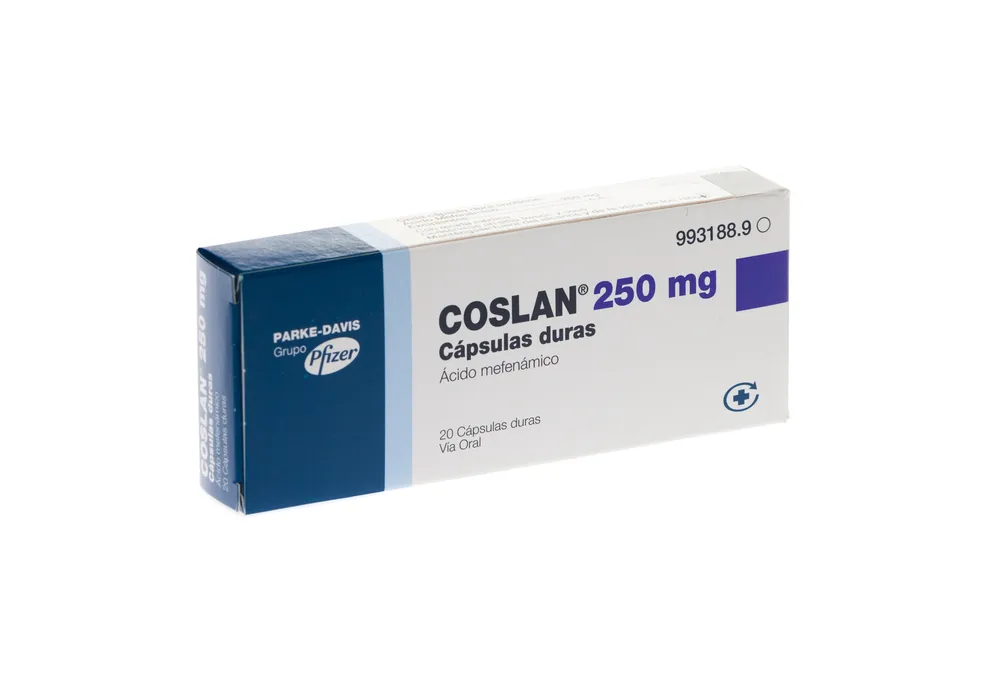
Table of Contents
Package leaflet: Information for the user
Introduction
Package leaflet: information for the user
Coslan 250 mg hard capsules
Mefenamic acid
Read the entire leaflet carefully before you start taking this medicine, because it contains important information for you.
- Keep this leaflet as you may need to read it again.
- If you have any questions, ask your doctor or pharmacist.
- This medicine has been prescribed for you only and must not be given to other people, even if they have the same symptoms as you, because it could harm them.
- If you experience any adverse effects, consult your doctor or pharmacist, even if they are adverse effects not listed in this leaflet. See section 4.
Leaflet contents
- What Coslan is and what it is used for
- What you need to know before taking Coslan
- How to take Coslan
- Possible adverse effects
- How to store Coslan
- Contents of the pack and other information
1. What Coslan is and what it is used for
Coslan belongs to the group of medicines known as non-steroidal anti-inflammatory and antirheumatic drugs. Mefenamic acid, the active ingredient in this medicine, has analgesic (relieves pain), anti-inflammatory (reduces inflammation), and antipyretic (lowers fever) properties.
Coslan is indicated for the treatment of mild to moderate acute painful conditions, inflammatory manifestations, and febrile states of any cause. It is also used to treat painful or difficult menstruation (dysmenorrhoea), excessive menstruation (menorrhagia), and for the symptomatic treatment of rheumatoid arthritis.
2. What you need to know before starting to take Coslan
It is important that you use the smallest dose that relieves/controls your pain and that you do not take this medicine for longer than necessary to control your symptoms.
Do not take Coslan
- If you are allergic to the active substance or to any of the other ingredients of this medicine (listed in section 6).
- If you are in the third trimester of pregnancy.
- If you are allergic (hypersensitive) to acetylsalicylic acid or to other non-steroidal anti-inflammatory drugs; it should not be administered to patients who experience symptoms of bronchospasm, allergic rhinitis, or urticaria.
- If you have had a stomach or duodenal ulcer or gastrointestinal bleeding, or have suffered a perforation of the digestive tract while taking a non-steroidal anti-inflammatory drug.
- If you have active or recurrent peptic ulcer/gastrointestinal bleeding (two or more confirmed episodes of ulceration or bleeding).
- If you suffer from chronic inflammation of the upper or lower gastrointestinal tract.
- If you are about to undergo or have recently undergone coronary artery bypass surgery (CABG).
- If you have severe renal or hepatic insufficiency.
- If you have severe heart failure.
Warnings and precautions
Consult your doctor or pharmacist before starting to take this medicine.
- If you have had or develop a stomach or duodenal ulcer, bleeding, or perforation, which may present as severe or persistent abdominal pain and/or black stools, or even without prior warning symptoms.
- The risk of gastrointestinal bleeding, ulceration, or perforation is higher when high doses or prolonged treatment are used, in patients with a history of peptic ulcer, and in elderly patients. In such cases, your doctor may consider prescribing a stomach-protective medication.
- If you are taking medications that affect blood coagulation, such as corticosteroids, oral anticoagulants, or antiplatelet agents like acetylsalicylic acid. You should also inform your doctor about the use of other medications that could increase the risk of such bleeding, such as corticosteroids and selective serotonin reuptake inhibitor (SSRI) antidepressants.
- If you have Crohn's disease or ulcerative colitis, as drugs like Coslan may worsen these conditions.
- If you have diarrhea, consult your doctor, as you may need a dose reduction or discontinuation of treatment.
- If you have liver or kidney problems (hepatic or renal insufficiency).
- If you have asthma (a bronchial disease characterized by difficult and labored breathing, cough, scant sputum, and wheezing), as attacks may worsen.
- If, during treatment, you develop a skin rash or diarrhea. In this case, you must stop treatment and inform your doctor immediately.
- If you have ever experienced generalized fixed bullous drug eruption (round or oval patches with redness and swelling of the skin that usually reappear in the same location(s), blisters, urticaria, and itching), erythematous (skin redness), and edematous (swelling) plaques after taking mefenamic acid.
- Potentially life-threatening skin reactions have been reported with mefenamic acid use, such as DRESS syndrome, generalized fixed bullous drug eruption (EFMAG), Stevens-Johnson syndrome, and toxic epidermal necrolysis. Treatment must be discontinued at the first sign of skin rash, blisters, skin peeling, mucosal lesions, or any other sign of hypersensitivity. If you develop a skin rash or any of these other skin or mucosal symptoms (such as inside the cheeks or lips), consult a doctor immediately and inform them that you are taking this medicine.
- If you have ever had fixed drug eruption (round or oval patches with redness and swelling of the skin that usually reappear in the same location(s), blisters, urticaria, and itching) after taking mefenamic acid.
Cardiovascular or cerebrovascular precautions
- Medicines like Coslan may be associated with a moderate increase in the risk of heart attacks ("myocardial infarction") or strokes. This risk is more likely when high doses or prolonged treatments are used. Do not exceed the recommended dose or duration of treatment.
This increased risk appears to be similar in patients with or without known cardiovascular disease or cardiovascular risk factors. However, patients with known cardiovascular disease or cardiovascular risk factors may have a higher risk.
If you have heart problems, a history of stroke, or think you may be at risk for these conditions (for example, if you have high blood pressure, diabetes, high cholesterol, or are a smoker), you should discuss this treatment with your doctor or pharmacist.
- In addition, this type of medicine may cause fluid retention and edema (swelling due to fluid accumulation in body tissues), especially in patients with heart failure and/or high blood pressure (hypertension).
Taking Coslan with other medicines
Inform your doctor or pharmacist if you are taking, have recently taken, or might need to take any other medicine.
-
- Medicines that affect blood coagulation (such as oral anticoagulants like warfarin and coumarins, and newer oral anticoagulants: apixaban, dabigatran, rivaroxaban), antiplatelet agents like acetylsalicylic acid.
- Medicines that could increase the risk of gastrointestinal ulcers or bleeding, such as corticosteroids (medicines for asthma, allergies, ulcerative colitis, etc.).
- Medicines for depression (serotonin reuptake inhibitors).
- Medicines for blood pressure control, including diuretics, angiotensin-converting enzyme (ACE) inhibitors, angiotensin II receptor antagonists (ARBs), and beta-blockers.
- Other non-steroidal anti-inflammatory drugs (NSAIDs) different from acetylsalicylic acid, including selective COX-2 inhibitors.
- Medicines for diabetes treatment (insulin and oral glucose-lowering agents).
- Lithium (a medicine used to treat bipolar disorder).
- Methotrexate (a medicine for psoriasis, rheumatoid arthritis, etc.).
- Cyclosporine, tacrolimus (medicines to prevent transplant rejection).
Interference with diagnostic tests
If you are scheduled for any diagnostic tests (including urine tests), inform your doctor that you are taking this medicine, as it may alter test results.
Taking Coslan with food, drinks, and alcohol
This medicine should be taken with a glass of water during or after food intake. You should not consume alcoholic beverages during treatment with this medicine, as it may increase the risk of adverse effects.
Pregnancy, breastfeeding, and fertility
If you are pregnant or breastfeeding, think you may be pregnant, or plan to become pregnant, consult your doctor or pharmacist before using this medicine.
Pregnancy
Consult your doctor or pharmacist before using any medicine.
NSAIDs may cause kidney and heart problems in the fetus. NSAIDs may affect the tendency of mothers and their babies to bleed and may delay or prolong labor beyond expected duration.
From week 20 of pregnancy, NSAIDs may cause kidney problems in the fetus if taken for more than a few days, leading to low levels of amniotic fluid surrounding the baby (oligohydramnios) or narrowing of a blood vessel (ductus arteriosus) in the baby's heart. If treatment for longer than a few days is needed, your doctor may recommend additional monitoring. In such cases, the dose and duration will be limited to the minimum possible.
Breastfeeding
Coslan should not be taken if you are breastfeeding, as part of the medicine may pass into breast milk.
Fertility
This medicine may impair fertility in women trying to conceive and its use should be avoided.
Driving and use of machines
The effect of Coslan on the ability to drive and operate machinery is unknown, as appropriate studies have not been conducted. However, Coslan may cause blurred vision, dizziness, and somnolence, which could affect your ability to drive or operate machinery.
Coslan contains lactose
This medicine contains lactose. If your doctor has informed you that you have an intolerance to certain sugars, consult with them before taking this medicine.
This medicine contains less than 1 mmol of sodium (23 mg) per capsule; therefore, it is essentially "sodium-free".
3. How to take Coslan
Follow exactly the administration instructions for this medicine as given by your doctor or pharmacist. If in doubt, consult your doctor or pharmacist again.
The recommended dose is:
Adults and adolescents over 14 years of age: 500 mg (2 hard capsules) three times a day. The dose may be reduced to 250 mg (1 capsule) four times a day in patients who cannot tolerate the 500 mg dose.
In the case of painful or difficult menstruation (dysmenorrhea) or excessive menstruation (menorrhagia), treatment should be started at the onset of pain or bleeding and continued for as long as symptoms persist, according to your doctor's advice.
Method of administration:
It is recommended to swallow the capsule whole with a glass of water during or after food intake.
Use in children and adolescents
The safety and efficacy of this medicine have not been established in children under 14 years of age.
If you take more Coslan than you should
If you have accidentally taken too many capsules, consult your doctor immediately.
Medical attention may be required.
At the recommended doses, the drug is very well tolerated and poisoning occurs almost exclusively in cases of overdose or massive ingestion for non-therapeutic purposes. Poisoning manifests as gastrointestinal and nervous disorders. In cases of overdose, seizures, acute renal failure, coma, confusion, dizziness, and hallucinations have been reported. Overdose may result in death.
After accidental overdose, the stomach should be emptied immediately by inducing vomiting or by gastric lavage, followed by administration of activated charcoal. Vital functions should be monitored and maintained. Hemodialysis is of little value, as mefenamic acid and its metabolites are strongly bound to plasma proteins.
In case of overdose or accidental ingestion, contact the Toxicology Information Service.
Telephone: 91 562 04 20.
If you forget to take Coslan
Do not take a double dose to make up for forgotten doses.
If you stop taking Coslan
If you have any further questions about the use of this medicine, ask your doctor or pharmacist.
4. Possible adverse effects
Like all medicines, this medicine may cause adverse effects, although not everyone will experience them.
Adverse effects are rare and mild at the recommended doses for pain relief (analgesic). They are rapidly detected and can be easily controlled when due to overdose or prolonged use.
Frequent adverse effects (may affect between 1 and 10 out of every 100 people):
- Increase in eosinophils (eosinophilia).
- Constipation.
Uncommon adverse effects (may affect between 1 and 10 out of every 1,000 people):
- Drowsiness.
- Abdominal pain, diarrhoea, nausea with or without vomiting.
Frequency not known (cannot be estimated from available data):
-
Marked decrease in the number of white blood cells in the blood (agranulocytosis), certain types of reduction in red blood cells (aplastic anaemia and autoimmune haemolytic anaemia), decreased blood production originating in the bone marrow (bone marrow hypoplasia), reduced proportion of red blood cells relative to total blood volume (decreased haematocrit), blood leucocyte count below normal (leucopenia), low platelet levels (pancytopenia), thrombocytopenic purpura, inhibition of platelet aggregation.
-
Excessive sensitivity reaction to certain substances (anaphylaxis).
-
Glucose intolerance in diabetic patients, low sodium levels in body fluids (hyponatraemia), fluid retention.
-
Nervousness.
-
Inflammation of the meninges (aseptic meningitis), blurred vision, convulsions, dizziness, headache (cephalalgia), insomnia.
-
Eye irritation, reversible loss of colour vision.
-
Ear pain.
-
Palpitations.
-
Low blood pressure (hypotension), high blood pressure (hypertension).
-
Asthma, difficulty breathing (dyspnoea).
-
Inflammation of the stomach and intestine, gastrointestinal haemorrhage, stomach and intestinal ulcers, gastrointestinal perforation, loss of appetite (anorexia), indigestion (dyspepsia), flatulence, stomach ulcer with or without bleeding, blood in stools (melena), vomiting blood (haematemesis), mouth ulcers (ulcerative stomatitis), colitis, worsening of colitis and Crohn's disease, heartburn (pyrosis), inflammation of the pancreas, presence of fat in stools (steatorrhoea).
-
Yellowish discoloration of the skin and eyes (cholestatic jaundice), liver involvement (rare), mild liver toxicity, inflammation of the liver (hepatitis), reduced kidney function in people with liver disease (hepato-renal syndrome).
-
Swelling of the face, lips, tongue and/or throat (angioedema), widespread peeling of the skin (exfoliative dermatitis), swelling of certain body parts such as the face or larynx (laryngeal oedema, facial oedema), a type of skin rash (erythema multiforme), sweating, itching sensation (pruritus), rash, hives usually accompanied by itching (urticaria). Bullous reactions including Stevens-Johnson Syndrome and Toxic Epidermal Necrolysis (Lyell's Syndrome).
-
A characteristic skin allergic reaction known as generalized fixed drug eruption (EFMAG), which usually reappears at the same site(s) upon re-administration of the medicine and may appear as round or oval plaques or erythematous (reddened skin) and oedematous (swollen) plaques or blisters (urticaria), sometimes with extensive skin peeling. The frequency is not known (frequency cannot be estimated from available data).
-
A characteristic skin allergic reaction known as fixed drug eruption, which usually reappears at the same site(s) upon re-administration of the medicine and may appear as round or oval plaques with redness and swelling of the skin, blisters (urticaria), itching. (Frequency cannot be estimated from available data.)
-
Painful, difficult and incomplete urination (dysuria), presence of blood in urine (haematuria), kidney failure (including papillary necrosis and tubulointerstitial nephritis, glomerulonephritis, nephrotic syndrome).
-
Fluid accumulation-related swelling (oedema).
-
Abnormal urine test results (urinary urobilinogen (false positive)), abnormal liver function tests.
Other adverse effects in children and adolescents
In children and adolescents, low body temperature (hypothermia) may occur.
Reporting of adverse effects
If you experience any type of adverse effect, consult your doctor or pharmacist, even if it is a possible adverse effect not listed in this leaflet. You may also report them directly via the Spanish Pharmacovigilance System for Human Medicines: https://www.notificaram.es. By reporting adverse effects, you can help provide more information on the safety of this medicine.
5. Storage of Coslan
No special storage conditions are required.
Keep this medicine out of the sight and reach of children.
Do not use this medicine after the expiry date stated on the blister and outer packaging following EXP. The expiry date refers to the last day of the month indicated.
Do not use this medicine if you notice that the packaging is damaged or opened.
Medicines must not be disposed of via wastewater or household waste. Instead, return unused medicines and their packaging to the SIGRE point at your pharmacy. If in doubt, ask your pharmacist how to properly dispose of unused medicines and their packaging. This helps protect the environment.
6. Contents of the pack and other information
Composition of Coslan
- The active substance is mefenamic acid.
- The other components (excipients) are lactose monohydrate, magnesium stearate (E572) and sodium lauryl sulfate.
Components of the capsule: gelatin, titanium dioxide (E171), iron oxide (E172) and indigo carmine (E132).
Components of the printing ink (colour code 10A1): shellac, black iron oxide (E172), N-butyl alcohol, propylene glycol, isopropyl alcohol, purified water, purified ethanol and 28% ammonium hydroxide.
or
Components of the printing ink (colour code 1014): shellac, dehydrated alcohol, isopropyl alcohol, butyl alcohol, propylene glycol, concentrated ammonium solution, black iron oxide (E172), potassium hydroxide and purified water.
Nature of the product and contents of the pack
Coslan is presented as hard gelatin capsules with a light blue opaque cap and an ivory body. The cap and body are printed in black with “Parke Davis”. Coslan is available in thermoformed blisters made of aluminium/PVC foil.
Each pack contains 20 capsules.
Marketing Authorisation Holder and Manufacturer
Marketing Authorisation Holder:
Pfizer, S.L.
Avda. de Europa, 20 B
Parque Empresarial La Moraleja
28108 Alcobendas (Madrid) - Spain
Manufacturer:
Pfizer Manufacturing Deutschland GmbH
Mooswaldallee 1
79108 Freiburg im Breisgau
Germany
Date of the most recent revision of this leaflet: April 2024
Detailed and up-to-date information on this medicine is available on the website of the Spanish Agency for Medicines and Health Products (AEMPS) http://www.aemps.gob.es/