Corlentor 7.5 mg film-coated tablets
Spain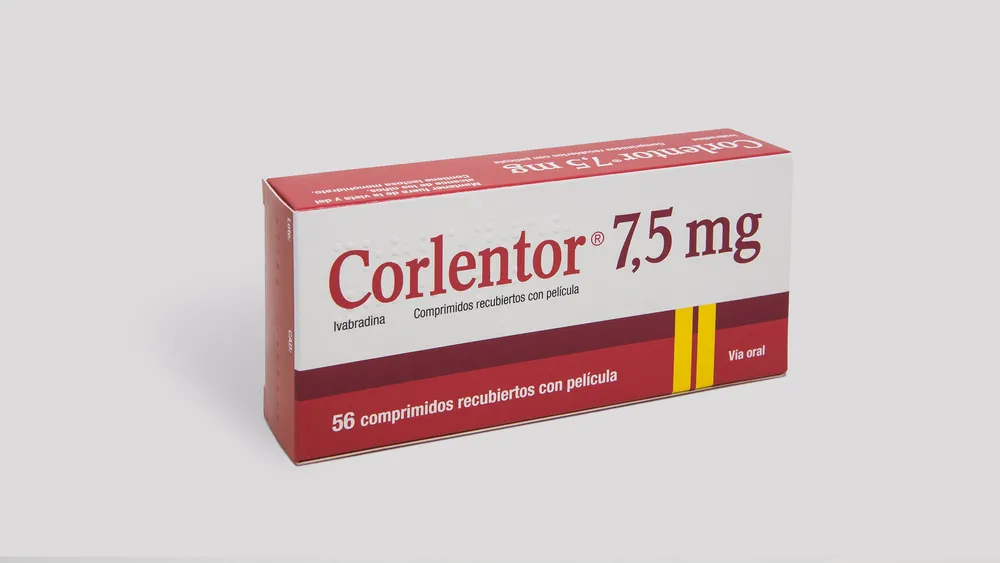
Instructions for Use
Package leaflet: Information for the user
Introduction
Package leaflet: information for the patient
Corlentor 5 mg film-coated tablets
Corlentor 7.5 mg film-coated tablets
ivabradine
Read the entire leaflet carefully before you start taking this medicine, because it contains important information for you.
- Keep this leaflet, as you may need to read it again.
- If you have any questions, ask your doctor or pharmacist.
- This medicine has been prescribed for you only, and you should not give it to other people, even if they have the same symptoms as you, because it may harm them.
- If you experience any adverse effects, consult your doctor or pharmacist, even if they are adverse effects not listed in this leaflet. See section 4.
Leaflet contents:
- What Corlentor is and what it is used for
- What you need to know before taking Corlentor
- How to take Corlentor
- Possible side effects
- How to store Corlentor
- Contents of the pack and other information
1. What Corlentor is and what it is used for
Corlentor (ivabradine) is a heart medication used to treat:
Symptomatic stable angina (which causes chest pain) in adult patients with a heart rate of ≥ 70 beats per minute. It is used in adult patients who do not tolerate or cannot take heart medications known as beta-blockers. It is also used in combination with beta-blockers in adult patients whose condition is not fully controlled with a beta-blocker alone.
Chronic heart failure in adult patients with a heart rate of ≥ 75 beats per minute. It is used in combination with standard therapy, including treatment with beta-blockers, or when beta-blockers are contraindicated or not tolerated.
About stable angina (commonly known as “angina”):
Stable angina is a heart disease that occurs when the heart does not receive enough oxygen. The most common symptom of angina is chest pain or discomfort.
About chronic heart failure:
Chronic heart failure is a heart disease that occurs when your heart cannot pump enough blood to the rest of the body. The most common symptoms of heart failure are shortness of breath, fatigue, tiredness, and swelling of the ankles.
How Corlentor works:
Corlentor’s specific heart rate-lowering action helps to:
- control and reduce the number of angina attacks by decreasing the heart’s oxygen demand,
- improve heart function and long-term prognosis in patients with chronic heart failure.
2. What you need to know before taking Corlentor
Do not take Corlentor
- if you are allergic to ivabradine or any of the other ingredients of this medicine (listed in section 6);
- if your resting heart rate before treatment is too slow (below 70 beats per minute);
- if you are suffering from cardiogenic shock (a heart condition treated in hospital);
- if you have a heart rhythm disorder (sick sinus syndrome, sinoatrial block, third-degree A-V block);
- if you are having a heart attack;
- if you have very low blood pressure;
- if you have unstable angina (a severe type of angina in which chest pain occurs very frequently, with or without exertion);
- if you have heart failure that has recently worsened;
- if your heart rate is solely determined by your pacemaker;
- if you have severe liver problems;
- if you are taking medicines for fungal infections (such as ketoconazole, itraconazole), macrolide antibiotics (such as josamycin, clarithromycin, telithromycin or oral erythromycin), medicines for HIV infections (such as nelfinavir, ritonavir) or nefazodone (a medicine for treating depression), or diltiazem, verapamil (used for treating high blood pressure or angina);
- if you are a woman of childbearing age and do not use reliable contraceptive methods;
- if you are pregnant or trying to become pregnant;
- if you are breastfeeding.
Warnings and precautions
Talk to your doctor or pharmacist before taking Corlentor:
- if you have heart rhythm disorders (such as irregular heartbeat, palpitations, increased chest pain) or sustained atrial fibrillation (a type of irregular heartbeat), or an abnormality on the electrocardiogram (ECG) called "Long QT syndrome";
- if you experience symptoms such as fatigue, dizziness or difficulty breathing (this may mean your heart is beating too slowly);
- if you develop symptoms of atrial fibrillation (unusually high resting pulse (over 110 beats per minute) or irregular pulse, without apparent reason, making it difficult to measure);
- if you have recently had a stroke (cerebral attack);
- if you have mild to moderate low blood pressure;
- if you have uncontrolled blood pressure, especially after a change in your antihypertensive treatment;
- if you have severe heart failure or heart failure with an ECG abnormality called "bundle branch block";
- if you have chronic retinal eye disease;
- if you have moderate liver problems;
- if you have severe kidney problems.
If you have any of these conditions, consult your doctor immediately before or during treatment with Corlentor.
Children
Do not give this medicine to children and adolescents under 18 years of age. Available data are insufficient in this age group.
Taking Corlentor with other medicines
Inform your doctor or pharmacist if you are taking, have recently taken, or might need to take any other medicines.
Make sure to tell your doctor if you are taking any of the following medicines, as dose adjustment of Corlentor or monitoring may be necessary:
- fluconazole (an antifungal medicine);
- rifampicin (an antibiotic);
- barbiturates (for sleep problems or epilepsy);
- phenytoin (for epilepsy);
- Hypericum perforatum or St. John's wort (herbal remedy for depression);
- Medicines that prolong the QT interval used to treat heart rhythm disorders or other conditions:
- quinidine, disopyramide, ibutilide, sotalol, amiodarone (for treating heart rhythm disorders);
- bepridil (for treating angina);
- certain types of medicines for treating anxiety, schizophrenia or other psychoses (such as pimozide, ziprasidone, sertindole);
- antimalarial medicines (such as mefloquine or halofantrine);
- intravenous erythromycin (an antibiotic);
- pentamidine (an antiparasitic medicine);
- cisapride (for gastroesophageal reflux);
- Certain types of diuretics that may cause a reduction in blood potassium levels, such as furosemide, hydrochlorothiazide, indapamide (used to treat edema, high blood pressure).
Taking Corlentor with food and drink
Avoid grapefruit juice during treatment with Corlentor.
Pregnancy and breastfeeding
If you are pregnant or breastfeeding, think you may be pregnant, or are planning to become pregnant, consult your doctor or pharmacist before using this medicine.
Do not take Corlentor if you are pregnant or planning to become pregnant (see "Do not take Corlentor").
If you are pregnant and have taken Corlentor, consult your doctor.
Do not take Corlentor if you are of childbearing age unless you are using reliable contraceptive methods (see "Do not take Corlentor").
Do not take Corlentor if you are breastfeeding (see "Do not take Corlentor"). Speak with your doctor if you are breastfeeding or planning to breastfeed, as breastfeeding must be discontinued if you are taking Corlentor.
Driving and using machines
Corlentor may cause transient visual phenomena (a temporary brightening in the field of vision, see "Possible side effects"). If this occurs, take care when driving or operating machinery in situations where sudden changes in light intensity may occur, especially when driving at night.
Corlentor contains lactose
If your doctor has informed you that you have an intolerance to certain sugars, consult your doctor before taking this medicine.
3. How to take Corlentor
Follow exactly the instructions for use of this medicine given by your doctor or pharmacist. If in doubt, consult your doctor or pharmacist again.
Corlentor should be taken with breakfast and dinner.
Corlentor 5 mg tablets may be divided into equal doses.
If you are being treated for stable angina
The starting dose should not exceed one Corlentor 5 mg tablet twice daily. If you still have angina symptoms and have tolerated the 5 mg twice daily dose well, the dose may be increased. The maintenance dose should not exceed 7.5 mg twice daily. Your doctor will prescribe the correct dose for you. The usual dose is one tablet in the morning and one tablet in the evening. In some cases (for example, if you are 75 years of age or older), your doctor may prescribe half the dose, i.e., half a Corlentor 5 mg tablet (corresponding to 2.5 mg of ivabradine) in the morning and half a 5 mg tablet in the evening.
If you are being treated for chronic heart failure
The recommended initial dose is one Corlentor 5 mg tablet twice daily, which may be increased if necessary to one Corlentor 7.5 mg tablet twice daily. Your doctor will decide the appropriate dose for you. The normal dose is one tablet in the morning and one tablet in the evening. In some cases (for example, if you are 75 years of age or older), your doctor may prescribe half the dose, i.e., half a Corlentor 5 mg tablet (corresponding to 2.5 mg of ivabradine) in the morning and half a 5 mg tablet in the evening.
If you take more Corlentor than you should:
An overdose of Corlentor may make you feel tired or short of breath due to your heart beating too slowly. If this happens, contact your doctor immediately.
If you forget to take Corlentor:
If you forget to take a dose of Corlentor, take the next dose at the scheduled time. Do not take a double dose to make up for forgotten doses.
The printed calendar on the blister pack containing the tablets will help you remember when you last took a Corlentor tablet.
If you stop taking Corlentor:
Treatment for stable angina or chronic heart failure is generally lifelong, so you must consult your doctor before stopping this medicine.
If you think that the effect of Corlentor is too strong or too weak, tell your doctor or pharmacist.
If you have any further questions about the use of this medicine, ask your doctor or pharmacist.
4. Possible adverse effects
Like all medicines, this medicine can cause adverse effects, although not everyone experiences them.
The most common adverse reactions with this medicine are dose-dependent and are related to its mechanism of action:
Very common (may affect more than 1 in 10 people)
Luminous visual phenomena (brief episodes of increased brightness, almost always caused by sudden changes in light intensity). These may also be described as halos, flashes of color, image fragmentation, or multiple images. These usually occur during the first two months of treatment, after which they may recur and resolve during or after treatment.
Common (may affect up to 1 in 10 people)
Altered heart function (symptoms include slowed heart rate). This occurs especially during the first 2 to 3 months after starting treatment.
The following other adverse effects have also been reported:
Common (may affect up to 1 in 10 people)
Rapid irregular contraction of the heart (atrial fibrillation), sensation of abnormal heartbeat (bradycardia, ventricular extrasystoles, first-degree A-V block (prolonged PQ interval on ECG)), uncontrolled blood pressure, headache, dizziness, and blurred vision (cloudy vision).
Uncommon (may affect up to 1 in 100 people)
Palpitations and additional heartbeats, sensation of dizziness (nausea), constipation, diarrhea, abdominal pain, sensation of spinning (vertigo), difficulty breathing (dyspnea), muscle spasms, elevated blood levels of uric acid, excess eosinophils (a type of white blood cell), elevated blood creatinine levels (a muscle breakdown product), skin rash, angioedema (such as swelling of the face, tongue, or throat, difficulty breathing or swallowing), low blood pressure, fainting, feeling of fatigue, feeling of weakness, abnormal electrocardiogram, double vision, visual disturbance.
Rare (may affect up to 1 in 1,000 people)
Urticaria, itching, redness of the skin, malaise.
Very rare (may affect up to 1 in 10,000 people)
Irregular heartbeats (second-degree A-V block, third-degree A-V block, sick sinus syndrome).
Reporting of adverse effects
If you experience any adverse effects, consult your doctor or pharmacist, even if they are adverse effects not listed in this leaflet. You may also report them directly through the national reporting system included in Appendix V. By reporting adverse effects, you can help provide more information on the safety of this medicine.
5. Storage of Corlentor
Keep this medicine out of the sight and reach of children.
Do not use this medicine after the expiry date stated on the packaging, after EXP. The expiry date refers to the last day of the month indicated.
This medicine does not require any special storage conditions.
Medicines must not be disposed of via wastewater or household waste. Ask your pharmacist how to dispose of any unused medicine and its container. This way, you can help protect the environment.
6. Contents of the pack and other information
Composition of Corlentor
- The active substance is ivabradine (as hydrochloride).
Corlentor 5 mg film-coated tablets:
Each film-coated tablet contains 5 mg of ivabradine (as hydrochloride).
Corlentor 7.5 mg film-coated tablets:
Each film-coated tablet contains 7.5 mg of ivabradine (as hydrochloride).
- The other components are:
Tablet core: lactose monohydrate, magnesium stearate (E 470 B), maize starch, maltodextrin, colloidal anhydrous silica (E 551),
Coating: hypromellose (E 464), titanium dioxide (E 171), macrogol 6000, glycerol (E 422), magnesium stearate (E 470 B), yellow iron oxide (E 172), red iron oxide (E 172).
Appearance of the product and contents of the pack
Corlentor 5 mg tablets are film-coated, salmon-coloured, oblong, scored on both sides, engraved with "5" on one side and on the other.
Corlentor 7.5 mg tablets are film-coated, salmon-coloured, triangular, engraved with "7.5" on one side and on the other.
The tablets are supplied in calendar packs (aluminum/PVC blisters) containing 14, 28, 56, 84, 98, 100 or 112 tablets.
Not all pack sizes may be marketed.
Marketing Authorization Holder
Les Laboratoires Servier
50, rue Carnot
92284 Suresnes cedex - France
Manufacturer
Les Laboratoires Servier Industrie
905 route de Saran
45520 Gidy - France
Servier (Ireland) Industries Ltd
Gorey Road
Arklow - Co. Wicklow - Ireland
Przedsiebiorstwo Farmaceutyczne ANPHARM S.A.
ul. Annopol 6B – 03-236 Warszawa – Poland
Laboratorios Servier, S.L.
Avda. de los Madroños, 33
28043 Madrid
Spain
Further information on this medicinal product is available upon request by contacting the local representative of the Marketing Authorization Holder.
Belgium/Belgium/Belgium S.A. Servier Benelux N.V. Tel/Tel: +32 (0)2 529 43 11 | Lithuania UAB “SERVIER PHARMA” Tel: +370 (5) 2 63 86 28 |
| Luxembourg/Luxembourg S.A. Servier Benelux N.V. Tel/Tel: +32 (0)2 529 43 11 |
Czech Republic Servier s.r.o. Tel: +420 222 118 111 | Hungary Servier Hungaria Kft. Tel.: + 36 1 238 77 99 |
Denmark Servier Danmark A/S Tlf.: +45 36 44 22 60 | Malta V.J. Salomone Pharma Ltd Tel: + 356 21 22 01 74 |
Germany Servier Deutschland GmbH Tel: +49 (0)89 57095 01 | Netherlands Servier Nederland Farma B.V. Tel: +31 (0)71 5246700 |
Estonia Servier Laboratories OÜ Tel:+ 372 664 5040 | Norway Servier Danmark A/S Tlf: +45 36 44 22 60 |
Greece SERBIE ELLAS PHARMACEUTICAL EPE Tel: +30 210 939 1000 | Austria Servier Austria GmbH Tel: +43 (1) 524 39 99 |
Spain Laboratorios Servier S.L. Tel: +34 91 748 96 30 | Poland Servier Polska SP. Z O.O. Tel.: + 48 (0) 22 594 90 00 |
France Les Laboratoires Servier Tel: +33 (0)1 55 72 60 00 | Portugal Servier Portugal, Lda Tel: +351 21 312 20 00 |
Croatia Servier Pharma, d. o. o. Tel: +385 (0)1 3016 222 | Romania Servier Pharma SRL Tel: +4 021 528 52 801 3016 222 |
Ireland Servier Laboratories (Ireland) Ltd. Tel: +353 (0)1 663 8110 | Slovenia Servier Pharma d.o.o. Tel: + 386 (0)1 563 48 11 |
Iceland Servier Laboratories C/o Icepharma hf Sími: +354 540 8000 | Slovakia Servier Slovensko spol. s r.o. Tel: +421 (0) 2 5920 41 11 |
Italy Istituto Farmaco Biologico Stroder S.r.l. Tel: +39 06 669081 | Finland/Suomi Servier Finland Oy Puh/Tel: +358 (0)9 279 80 80 |
Cyprus C.A. Papaellinas Ltd. Tel: +357 22741741 | Sweden Servier Sverige AB Tel: +46(8)5 225 08 00 |
Latvia SIA Servier Latvia Tel: + 371 67502039 |
Date of the most recent review of this leaflet: December 2024
Detailed information on this medicinal product is available on the website of the European Medicines Agency: http://www.ema.europa.eu.
Similar Medications
-
Apredonav 5 mg film-coated tablets EFG
Form: tablets, film-coated
Active substance Dosage IVABRADINE HYDROCHLORide 5.39 mg Manufacturer: Medochemie Limited
-
Apredonav 7.5 mg film-coated tablets EFG
Form: tablets, film-coated
Active substance Dosage IVABRADINE HYDROCHLORide 8.085 mg Manufacturer: Medochemie Limited
-
Corlentor 5 mg film-coated tablets
Form: tablets, film-coated
Active substance Dosage IVABRADINE 5 mg Manufacturer: Les Laboratoires Servier
-
Ivabradine Aurovitas 5 mg film-coated tablets EFG
Form: tablets, film-coated
Active substance Dosage IVABRADINE HYDROCHLORide 5,39 mg Manufacturer: Aurovitas Spain, S.A.U.
-
Ivabradine Aurovitas 7.5 mg film-coated tablets EFG
Form: tablets, film-coated
Active substance Dosage IVABRADINE HYDROCHLORide 8,085 mg Manufacturer: Aurovitas Spain, S.A.U.
-
Ivabradine CINFA 5 mg film-coated tablets EFG
Form: tablets, film-coated
Active substance Dosage IVABRADINE HYDROCHLORide 5,39 mg Manufacturer: Laboratorios Cinfa S.A.
-
Ivabradine CINFA 7.5 mg film-coated tablets EFG
Form: tablets, film-coated
Active substance Dosage IVABRADINE HYDROCHLORide 8,09 mg Manufacturer: Laboratorios Cinfa S.A.
-
Ivabradine Combix 5 mg film-coated tablets EFG
Form: tablets, film-coated
Active substance Dosage IVABRADINE HYDROCHLORide 5,390 mg Manufacturer: Laboratorios Combix S.L.U.
-
Ivabradine Combix 7.5 mg film-coated tablets EFG
Form: tablets, film-coated
Active substance Dosage IVABRADINE HYDROCHLORide 8,085 mg Manufacturer: Laboratorios Combix S.L.U.
-
Ivabradine Normon 5 mg film-coated tablets EFG
Form: tablets, film-coated
Active substance Dosage IVABRADINE HYDROCHLORide 5,42 mg Manufacturer: Laboratorios Normon S.A.
-
Ivabradine Normon 7.5 mg film-coated tablets EFG
Form: tablets, film-coated
Active substance Dosage IVABRADINE HYDROCHLORide 8,13 mg Manufacturer: Laboratorios Normon S.A.
-
Ivabradine Pensa 5 mg film-coated tablets EFG
Form: tablets, film-coated
Active substance Dosage IVABRADINE HYDROCHLORide 5,390 mg Manufacturer: Towa Pharmaceutical S.A.
This page has been machine-translated and may contain inaccuracies. The original data is available in the manufacturing country's language.
Last data check: May 18, 2026 · Data source: CIMA — AEMPS