Comirnaty LP.8.1 10 micrograms/dose injectable dispersion
Spain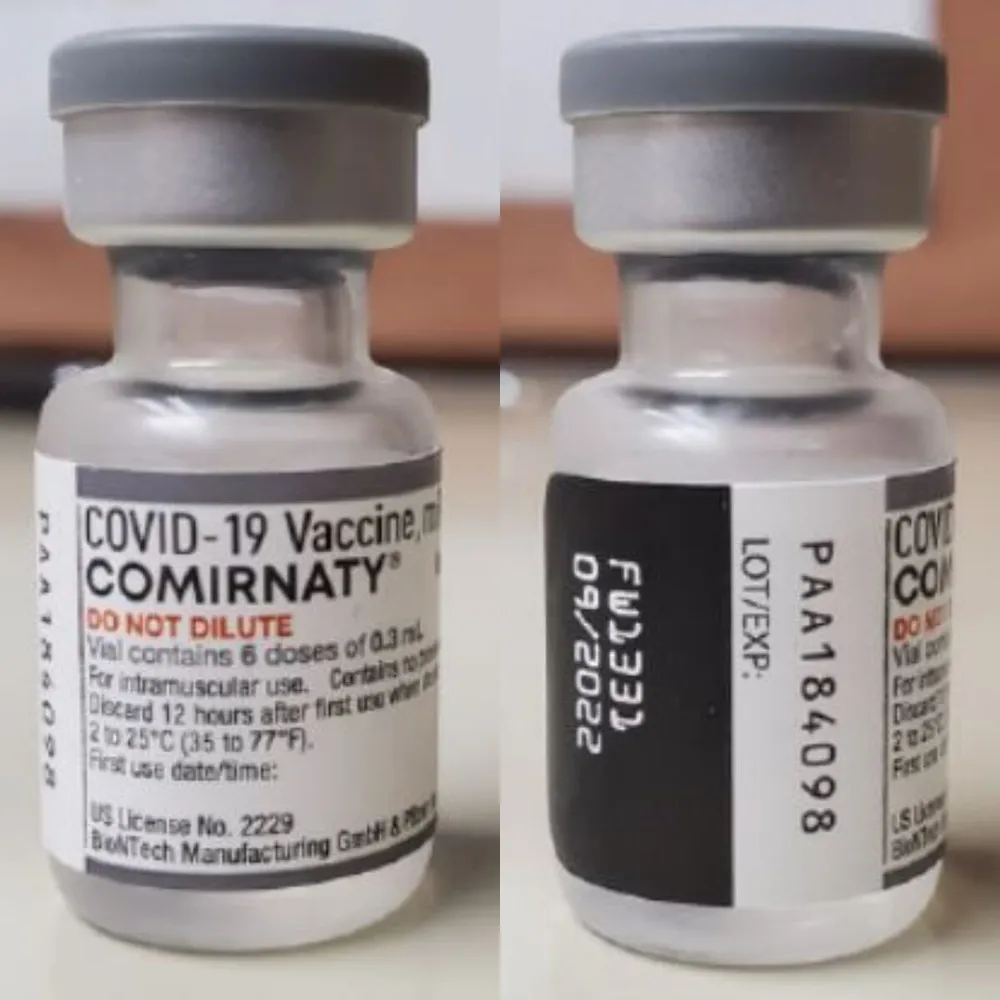
Table of Contents
- Package leaflet: Information for the user
- Introduction
- 1. What Comirnaty LP.8.1 is and what it is used for
- 2. What Comirnaty LP.8.1 is and what it is used for
- 3. How Comirnaty LP.8.1 is administered
- 4. Possible adverse effects
- 5. Storage of Comirnaty LP.8.1
- 6. Contents of the pack and other information
Package leaflet: Information for the user
Introduction
Package leaflet: information for the user
Comirnaty LP.8.1 10 micrograms/dose injectable dispersion
Children aged 5 to 11 years
mRNA vaccine against COVID-19
mRNA encoding LP.8.1
This medicinal product is subject to additional monitoring, which will allow rapid identification of new safety information. You can help by reporting any side effects that your child may experience. Information on how to report side effects is included at the end of section 4.
Read this entire leaflet carefully before your child receives this vaccine, as it contains important information for your child.
- Keep this leaflet, as you may need to read it again.
- If you have any questions, consult your child's doctor, pharmacist, or nurse.
- If your child experiences any side effects, consult your child's doctor, pharmacist, or nurse, even if they are side effects not listed in this leaflet. See section 4.
Leaflet contents
- What Comirnaty LP.8.1 is and what it is used for
- What you need to know before your child receives Comirnaty LP.8.1
- How Comirnaty LP.8.1 is administered
- Possible side effects
- How to store Comirnaty LP.8.1
- Contents of the pack and other information
1. What Comirnaty LP.8.1 is and what it is used for
Comirnaty LP.8.1 is a vaccine used to prevent COVID-19 caused by SARS-CoV-2.
Comirnaty LP.8.1 10 micrograms/dose injectable dispersion is administered to children between 5 and 11 years of age.
The vaccine causes the immune system (the body's natural defenses) to produce antibodies and blood cells that fight the virus, thereby providing protection against COVID-19.
Because Comirnaty LP.8.1 does not contain the virus to produce immunity, it cannot cause COVID-19 in your child.
This vaccine should be used in accordance with official recommendations.
2. What Comirnaty LP.8.1 is and what it is used for
Comirnaty LP.8.1 must not be administered
- if your child is allergic to the active substance or to any of the other ingredients of this medicine (listed in section 6).
Warnings and precautions
Talk to your child's doctor, pharmacist, or nurse before your child receives the vaccine if your child:
- has ever had a severe allergic reaction or breathing problems after an injection of any other vaccine or after receiving this vaccine in the past;
- is anxious about the vaccination process or has ever fainted after an injection with a needle;
- has a serious illness or an infection with a high fever. However, your child may still be vaccinated if they have a mild fever or a respiratory tract infection such as a cold;
- has a bleeding disorder, bruises easily, or takes a medicine to prevent blood clots;
- has a weakened immune system due to an illness such as HIV infection or due to medicines such as corticosteroids that affect the immune system.
There is an increased risk of myocarditis (inflammation of the heart muscle) and pericarditis (inflammation of the outer lining of the heart) following vaccination with Comirnaty (see section 4). These conditions may occur within a few days after vaccination and have mainly occurred within 14 days. They have been observed more frequently after the second dose of vaccination and more frequently in young males. The risk of myocarditis and pericarditis appears to be lower in children aged 5 to 11 years than in those aged 12 to 17 years. Most cases of myocarditis and pericarditis recover. Some cases required intensive care support and fatal cases have been reported. After vaccination, you should be alert for signs of myocarditis and pericarditis, such as difficulty breathing, palpitations, and chest pain, and seek immediate medical attention if these occur.
As with any vaccine, Comirnaty LP.8.1 may not fully protect all individuals who receive it, and it is not known how long protection will last.
The effectiveness of Comirnaty LP.8.1 may be reduced in immunocompromised individuals. If your child is immunocompromised, they may receive additional doses of Comirnaty LP.8.1. In such cases, your child should continue to maintain physical precautions to help prevent COVID-19. In addition, your child's close contacts should be vaccinated as appropriate.
Discuss with your child's doctor the appropriate individual recommendations.
Children
Comirnaty LP.8.1 10 micrograms/dose injectable dispersion is not recommended for children under 5 years of age.
Paediatric formulations are available for infants and children aged 6 months to 4 years. For more information, please refer to the package leaflet of other formulations.
The vaccine is not recommended for infants under 6 months of age.
Other medicines and Comirnaty LP.8.1
Tell your child's doctor or pharmacist if your child is taking, has recently taken, or might need to take any other medicines, or if they have recently received any other vaccine.
Pregnancy and breastfeeding
If your daughter is pregnant, inform her doctor, nurse, or pharmacist before she receives this vaccine.
There are currently no available data on the use of Comirnaty LP.8.1 during pregnancy. However, extensive data from pregnant women vaccinated with the originally approved Comirnaty vaccine during the second and third trimesters have not shown negative effects on pregnancy or the newborn. Although information on effects on pregnancy or the newborn following vaccination during the first trimester is limited, no change in the risk of spontaneous abortion has been observed. Comirnaty LP.8.1 may be used during pregnancy.
There are currently no available data on the use of Comirnaty LP.8.1 during breastfeeding. However, effects on the newborn/infant are not expected. Data from women who were breastfeeding after vaccination with the originally approved Comirnaty vaccine have not shown a risk of adverse effects in breastfed infants/newborns. Comirnaty LP.8.1 may be used during breastfeeding.
Driving and use of machines
Some of the effects of vaccination mentioned in section 4 (Possible side effects) may temporarily affect your child's ability to use machines or perform activities such as riding a bicycle. Wait until these effects have subsided before resuming activities requiring your child's full attention.
3. How Comirnaty LP.8.1 is administered
Comirnaty LP.8.1 is administered as a 0.3 ml injection into a muscle in your child's arm.
Your child will receive 1 injection, regardless of whether they have previously received a COVID-19 vaccine.
If your child has previously received a COVID-19 vaccine, they must not receive a dose of Comirnaty LP.8.1 until at least 3 months after the most recent dose.
If your child is immunocompromised, they may receive additional doses of Comirnaty LP.8.1.
If you have any further questions about the use of Comirnaty LP.8.1, ask your child's doctor, pharmacist, or nurse.
4. Possible adverse effects
Like all vaccines, Comirnaty LP.8.1 may cause adverse effects, although not everyone experiences them.
Very common adverse effects: may affect more than 1 in 10 people
- injection site: pain, swelling
- fatigue, headache
- muscle pain, joint pain
- chills, fever
- diarrhea
Common adverse effects: may affect up to 1 in 10 people
- nausea
- vomiting (‘very common’ in pregnant women aged 18 years and older and in immunocompromised individuals aged 5 to 18 years)
- redness at the injection site (‘very common’ in children aged 5 to 11 years and in immunocompromised individuals aged 5 years and older)
- enlarged lymph nodes (observed more frequently after a booster dose)
Uncommon adverse effects: may affect up to 1 in 100 people
- malaise, feeling weak or lack of energy/somnolence
- arm pain
- insomnia
- itching at the injection site
- allergic reactions such as skin rash or itching
- decreased appetite
- dizziness
- excessive sweating, night sweats
Rare adverse effects: may affect up to 1 in 1,000 people
- temporary facial paralysis on one side of the face
- allergic reactions such as hives or facial swelling
Very rare adverse effects: may affect up to 1 in 10,000 people
- inflammation of the heart muscle (myocarditis) or inflammation of the outer lining of the heart (pericarditis), which may lead to difficulty breathing, palpitations, or chest pain
Frequency not known (cannot be estimated from available data)
- severe allergic reaction
- extensive swelling in the limb where the vaccine was administered
- facial swelling (facial swelling may occur in patients who have received dermal filler injections)
- a skin reaction causing red spots or patches on the skin, which may resemble a target or "bull's eye" with a dark red center surrounded by paler red rings (erythema multiforme)
- abnormal skin sensations such as tingling or prickling (paresthesia)
- reduced sensitivity, especially in the skin (hypoesthesia)
- heavy menstrual bleeding (most cases do not appear to be serious and are temporary in nature)
Reporting of adverse effects
If your child experiences any adverse effects, consult your child's doctor, pharmacist, or nurse, even if they are possible adverse effects not listed in this leaflet.
You may also report them directly through the national reporting system detailed in Appendix V. By reporting adverse effects, you can help provide more information on the safety of this medicine.
5. Storage of Comirnaty LP.8.1
Keep this medicine out of the sight and reach of children.
The following information on storage, expiry, and use and handling is intended for healthcare professionals.
Do not use this medicine after the expiry date stated on the carton and label after "EXP". The expiry date refers to the last day of the month indicated.
Store in a freezer at between –90 °C and –60 °C.
Keep in the original packaging to protect from light.
The vaccine will be received frozen at between –90 °C and –60 °C. The frozen vaccine may be stored at between –90 °C and –60 °C or at between 2 °C and 8 °C after receipt.
Single-dose vials: If stored frozen at between –90 °C and –60 °C, packs of 10 single-dose vials of the vaccine may be thawed at between 2 °C and 8 °C for up to 2 hours, or individual vials may be thawed at room temperature (up to 30 °C) for 30 minutes.
Multi-dose vials: If stored frozen at between –90 °C and –60 °C, packs of 10 vials of the vaccine may be thawed at between 2 °C and 8 °C for up to 6 hours, or individual vials may be thawed at room temperature (up to 30 °C) for 30 minutes.
Thawed (previously frozen) vials: After removal from the freezer, unopened vials may be stored and transported refrigerated at between 2 °C and 8 °C for a maximum of 10 weeks; do not exceed the printed expiry date (EXP). The outer packaging must be marked with the new expiry date at between 2 °C and 8 °C. Once thawed, the vaccine must not be refrozen.
Prior to use, unopened vials may be kept for up to 12 hours at temperatures between 8 °C and 30 °C.
Thawed vials may be handled under ambient light conditions.
Opened vials: After the first puncture, store the vaccine at between 2 °C and 30 °C and use within 12 hours, which includes a maximum transport time of 6 hours. Discard any unused vaccine.
Do not use this vaccine if visible particles or a change in colour is observed.
Medicines should not be disposed of via wastewater or household waste. Ask your pharmacist how to dispose of medicines and packaging no longer required. This will help protect the environment.
6. Contents of the pack and other information
Composition of Comirnaty LP.8.1
-
The active substance of the mRNA vaccine against COVID-19 (with modified nucleosides) is called mRNA encoding LP.8.1.
-
A single-dose vial contains 1 dose of 0.3 ml with 10 micrograms of mRNA encoding LP.8.1 per dose.
-
A multi-dose vial contains 6 doses of 0.3 ml with 10 micrograms of mRNA encoding LP.8.1 per dose.
-
The other components are:
-
((4-hydroxybutyl)azanediyl)bis(hexane-6,1-diyl) bis(2-hexyldecanoate) (ALC-0315)
-
2-[(polyethylene glycol)-2000]-N,N-ditetradecylacetamide (ALC-0159)
-
1,2-distearoyl-sn-glycero-3-phosphocholine (DSPC)
-
cholesterol
-
tromethamine
-
tromethamine hydrochloride
-
sucrose
-
water for injections
Appearance of the product and contents of the pack
The vaccine is a dispersion (pH: 6.9–7.9), ranging from transparent to slightly opalescent, presented in:
- a single-dose vial of 1 dose, clear (type I glass), 2 ml, with a rubber stopper and a blue flip-off plastic cap with an aluminum seal; or
- a multi-dose vial of 6 doses, clear (type I glass), 2 ml, with a rubber stopper and a blue flip-off plastic cap with an aluminum seal.
Single-dose vial pack size: 10 vials.
Multi-dose vial pack size: 10 vials.
Only certain pack sizes may be marketed.
Marketing Authorization Holder
BioNTech Manufacturing GmbH
An der Goldgrube 12
55131 Mainz
Germany
Telephone: +49 6131 9084-0
Fax: +49 6131 9084-2121
[email protected]
Manufacturers
BioNTech Manufacturing GmbH
Kupferbergterrasse 17-19
55116 Mainz
Germany
Pfizer Manufacturing Belgium NV
Rijksweg 12
Puurs-Sint-Amands, 2870
Belgium
For further information about this medicinal product, please contact the local representative of the Marketing Authorization Holder.
- België/Belgique/Belgien, Luxembourg/Luxemburg: Pfizer S.A./N.V., Tél/Tel: +32 (0)2 554 62 11
- Ceská republika: Pfizer, spol. s r.o., Tel: +420 283 004 111
- Danmark: Pfizer ApS, Tlf.: +45 44 201 100
- Deutschland: BioNTech Manufacturing GmbH, Tel: +49 6131 90840
- Eesti: Pfizer Luxembourg SARL Eesti filiaal, Tel: +372 666 7500
- Ελλάδα: Pfizer Ελλάς A.E., Τηλ.: +30 210 6785 800
- España: Pfizer, S.L., Tel: +34914909900
- France: Pfizer, Tél +33 1 58 07 34 40
- Hrvatska: Pfizer Croatia d.o.o., Tel: +385 1 3908 777
- Ireland: Pfizer Healthcare Ireland, Tel: 1800 633 363 (toll free), +44 (0)1304 616161
- Ísland: Icepharma hf, Simi: +354 540 8000
- Italia: Pfizer S.r.l., Tel: +39 06 33 18 21
- Κύπρος: Pfizer Ελλάς Α.Ε. (Cyprus Branch), Τηλ: +357 22 817690
- Latvija: Pfizer Luxembourg SARL filiale Latvija, Tel.: +371 670 35 775
- Lietuva: Pfizer Luxembourg SARL filialas Lietuvoje, Tel. +370 52 51 4000
- Magyarország: Pfizer Kft, Tel: +36 1 488 3700
- Malta: Vivian Corporation Ltd., Tel: +35621 344610
- Norge: Pfizer AS, Tlf: +47 67 526 100
- Nederland: Pfizer BV, Tel: +31 (0)10 406 43 01
- Österreich: Pfizer Corporation Austria Ges.m.b.H, Tel: +43 (0)1 521 15-0
- Polska: Pfizer Polska Sp. z o.o., Tel.: +48 22 335 61 00
- Portugal: Laboratórios Pfizer, Lda., Tel: +351 21 423 5500
- România: Pfizer Romania S.R.L, Tel: +40 (0) 21 207 28 00
- Slovenija: Pfizer Luxembourg SARL, Pfizer, podružnica za svetovanje s področja farmacevtske dejavnosti, Ljubljana, Tel.: +386 (0) 1 52 11 400
- Slovenská republika: Pfizer Luxembourg SARL, organizačná zložka, Tel: +421 2 3355 5500
- Suomi/Finland: Pfizer Oy, Puh/Tel: +358 (0)9 430 040
- Sverige: Pfizer AB, Tel: +46 (0)8 550 520 00
Date of the most recent review of this leaflet:
Scan the code with a mobile device to obtain the leaflet in different languages.

URL: www.comirnatyglobal.com
Detailed information on this medicinal product is available on the European Medicines Agency website: https://www.ema.europa.eu.
This information is intended for healthcare professionals only:
Administer Comirnaty LP.8.1 by intramuscular injection as a single 0.3 ml dose regardless of prior vaccination status against COVID-19.
For individuals who have previously received a vaccine against COVID-19, Comirnaty LP.8.1 should be administered at least 3 months after the most recent dose of a COVID-19 vaccine.
Additional doses may be administered to individuals who are severely immunocompromised.
Traceability
To improve traceability of biological medicinal products, the name and batch number of the administered product should be clearly recorded.
Instructions for handling prior to use
Comirnaty LP.8.1 must be prepared by a healthcare professional using aseptic technique to ensure sterility of the prepared dispersion.
-
Check that the vial has a blue plastic cap and that the product name is Comirnaty JN.1 10 micrograms/dose injectable dispersion (for children aged 5 to 11 years).
-
If the vial has a different product name on the label, refer to the product information or summary of product characteristics for that formulation.
-
If the vial is stored frozen, it must be thawed before use. Frozen vials should be transferred to a refrigerated area between 2 °C and 8 °C to thaw. Ensure that vials are completely thawed before use.
-
Single-dose vials: a pack of 10 single-dose vials may take 2 hours to thaw.
-
Multi-dose vials: a pack of 10 multi-dose vials may take 6 hours to thaw.
-
When transferring vials to storage between 2 °C and 8 °C, update the expiry date on the carton.
-
Unopened vials can be stored for up to 10 weeks at 2 °C to 8 °C; do not exceed the printed expiry date (EXP).
-
Alternatively, individual frozen vials may be thawed for 30 minutes at temperatures up to 30 °C.
-
Prior to use, unopened vials may be stored for up to 12 hours at temperatures up to 30 °C. Thawed vials may be handled under ambient light conditions.
Preparation of 0.3 ml doses
-
Gently mix the vials by inverting them ten times before use. Do not shake.
-
Before mixing, the thawed dispersion may contain amorphous white to off-white particles.
-
After mixing, the vaccine should appear as a dispersion ranging from transparent to slightly opalescent, without visible particles. Do not use the vaccine if visible particles or discoloration are present.
-
Check whether the vial is a single-dose or multi-dose vial and follow the applicable handling instructions below:
-
Single-dose vials
-
Withdraw a single 0.3 ml dose of vaccine.
-
Discard the vial and any remaining volume.
-
Multi-dose vials
-
Multi-dose vials contain 6 doses of 0.3 ml each.
-
Using aseptic technique, clean the vial stopper with a single-use antiseptic swab.
-
Withdraw 0.3 ml of Comirnaty JN.1 for children aged 5 to 11 years.
To extract 6 doses from a single vial, low dead-volume syringes and/or needles must be used. The combination of syringe and needle with low dead volume must have a dead volume of no more than 35 microliters. If conventional syringes and needles are used, there may not be sufficient volume to extract a sixth dose from the same vial.
- Each dose must contain 0.3 ml of vaccine.
- If the remaining volume in the vial cannot provide a complete 0.3 ml dose, discard the vial and any remaining volume.
- Record the appropriate time and date on the vial. Discard any unused vaccine 12 hours after the first puncture.
Disposal
Disposal of unused medicinal product and all materials that have come into contact with it must be carried out in accordance with local regulations.