Colirofta Ciclopléjico 10 mg/ml eye drops solution
Spain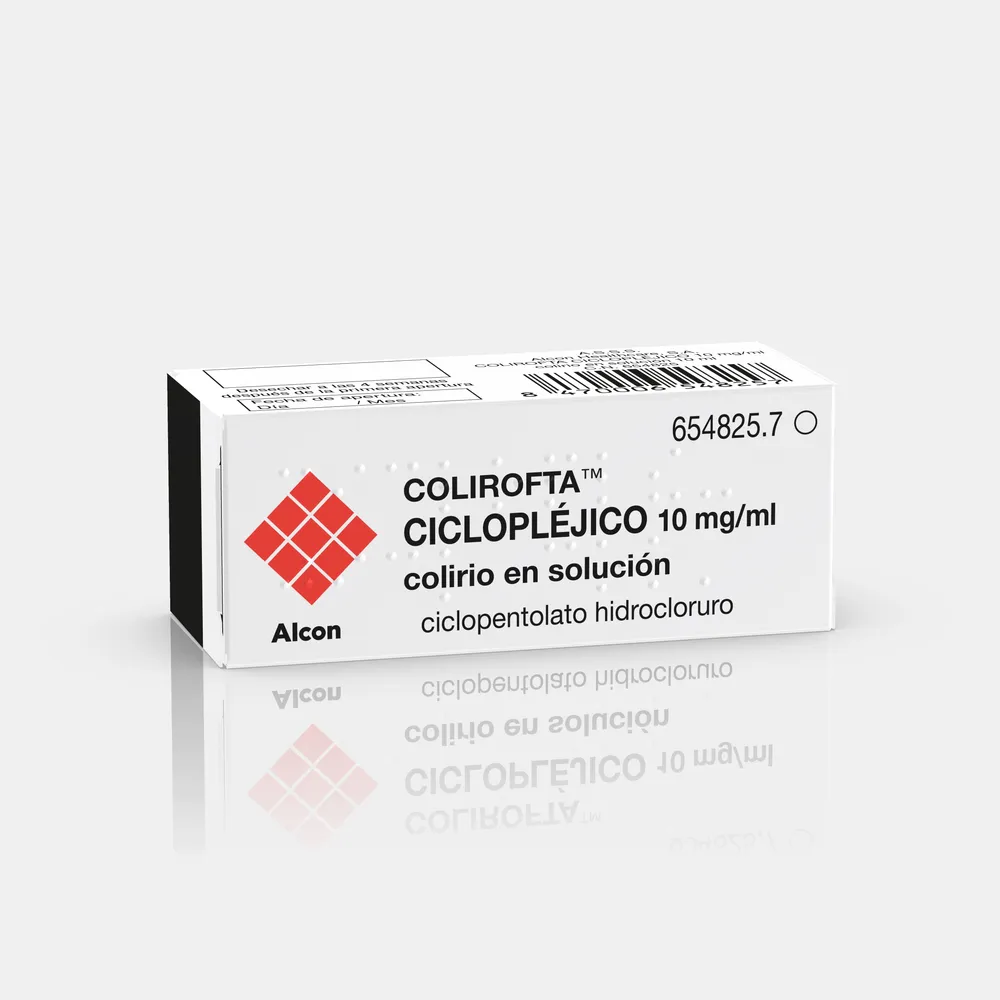
Table of Contents
- Package leaflet: Information for the user
- Introduction
- 1. What Colirofta Cycloplegic is and what it is used for
- 2. What you need to know before using Colirofta Cycloplegic
- 3. How to use Colirofta Cycloplegic
- 4. Possible adverse effects
- 5. Storage of Colirofta Cycloplegic
- 6. Contents of the pack and other information
Package leaflet: Information for the user
Introduction
Package leaflet: information for the user
COLIROFTA CYCLOPLEGIC 10 mg/ml eye drops solution
cyclopentolate hydrochloride
Read all of this leaflet carefully before you start using this medicine, because it contains important information for you.
- Keep this leaflet, as you may need to read it again.
- If you have any questions, ask your doctor or pharmacist.
- This medicine has been prescribed for you only, and you should not give it to other people, even if they have the same symptoms as you, because it may harm them.
- If you experience any adverse effects, consult your doctor or pharmacist, even if they are adverse effects not listed in this leaflet. See section 4.
Contents of the leaflet
- What COLIROFTA CYCLOPLEGIC is and what it is used for
- What you need to know before using COLIROFTA CYCLOPLEGIC
- How to use COLIROFTA CYCLOPLEGIC
- Possible side effects
- How to store COLIROFTA CYCLOPLEGIC
- Contents of the pack and other information
1. What Colirofta Cycloplegic is and what it is used for
It is an eye drop containing cyclopentolate hydrochloride as the active ingredient, which dilates the pupil (has a mydriatic effect) and paralyzes the eye's focusing ability (cycloplegic effect).
Colirofta Cycloplegic is used for fundus examination and refraction testing (to measure focusing errors of the eye and detect refractive defects such as myopia, astigmatism, presbyopia, etc.), and in any condition where a pupil dilation effect (mydriasis) or paralysis of the muscle responsible for accommodation (cycloplegia) is desired, or when atropine cannot be used (it produces a similar effect with a different action) in inflammatory conditions of the uveal tract or the intermediate layer of the eye wall.
2. What you need to know before using Colirofta Cycloplegic
Do not use Colirofta Cycloplegic:
- If you are allergic to cyclopentolate hydrochloride or any of the other ingredients of this medicine (listed in section 6).
- If you have narrow-angle glaucoma (increased pressure in the eyes) or narrow angles anatomically.
Warnings and precautions
Talk to your doctor or pharmacist before using Colirofta Cycloplegic.
- This medicine is for ophthalmic use only (in the eye[s]).
- Exercise extreme caution if you have previously experienced a severe reaction to atropine, especially in children.
- Also, if you have a fever or are exposed to high temperatures, particularly in children.
- Consult your doctor. Use of this medicine may cause:
- Increased intraocular pressure. Eye pressure should be monitored before starting treatment, especially in elderly patients.
- Changes in behavior, especially in children and elderly patients, although these reactions may occur at any age.
- Light sensitivity. Protect your eyes (with dark glasses) from bright light.
- If you are being treated with pilocarpine (for glaucoma), this medicine may interfere with that drug. Therefore, simultaneous use should be avoided.
Children
- This medicine is not recommended for newborns and infants (especially premature infants and low-birth-weight infants) due to the risk of serious adverse reactions. See also sections 3 and 4.
- Should be used with caution in children in general.
- Use with great caution in: premature infants, newborns, infants, young children, or children with Down syndrome, spastic paralysis (a condition affecting muscles of the limbs), cerebral injury, or known epilepsy. These children are highly sensitive to nervous system, gastrointestinal, or cardiopulmonary disturbances due to systemic absorption of the active ingredient.
- Children with fair skin and blue eyes may be more prone to adverse effects.
- Use of this medicine may cause feeding intolerance and necrotizing enterocolitis (NEC) in premature infants. Cases of NEC have been reported in premature infants after administration. Therefore, neonates and infants should not be fed for at least 4 hours after the examination.
- Prevent children from putting this medicine in their mouth or on their cheeks. Wash your hands and the child’s hands or cheeks immediately after administration.
Elderly patients
Use with caution in elderly patients, as they are more likely to experience increased intraocular pressure.
Other medicines and Colirofta Cycloplegic
Inform your doctor or pharmacist if you are taking, have recently taken, or might need to take any other medicines.
In particular, inform your doctor if you are taking:
- Amantadine (used in Parkinson’s disease and for influenza)
- Antihistamines (antiallergic agents)
- Antipsychotics (for mental illnesses)
- Tricyclic antidepressants (for depression)
- Belladonna and its alkaloids, such as atropine and scopolamine (the latter used before anesthesia or for gastrointestinal disorders such as colic)
- Tiotropium (used by inhalation in respiratory diseases)
- Donepezil (used in Alzheimer’s disease).
Pregnancy, breastfeeding, and fertility
If you are pregnant or breastfeeding, think you may be pregnant, or are planning to become pregnant, consult your doctor or pharmacist before using this medicine.
Colirofta Cycloplegic is not recommended during pregnancy.
During breastfeeding, your doctor must decide whether to discontinue breastfeeding or discontinue treatment with this medicine, taking into account the benefit of breastfeeding for the child and the benefit of treatment for the mother.
Driving and using machines
You may experience blurred vision and light sensitivity for an extended period, up to 24 hours. Do not drive or operate machinery until these effects have subsided.
COLIROFTA CYCOPLEGLIC contains methyl parahydroxybenzoate and propyl parahydroxybenzoate
May cause allergic reactions (possibly delayed) as it contains methyl parahydroxybenzoate (E-218) and propyl parahydroxybenzoate (E-216).
3. How to use Colirofta Cycloplegic
Follow exactly the instructions for administration of this medicine given by your doctor or pharmacist. If in doubt, consult your doctor or pharmacist again.
- To limit the amount of medicine passing into the bloodstream after eye drop application, keep your eyes closed while gently pressing with a finger on the tear duct for at least 2 minutes.
The recommended dose is:
Ophthalmic use.
Adults
Instill 1 or 2 drops into the eye(s) approximately 40–45 minutes before the refraction examination. If necessary, this dose may be repeated after 5 or 10 minutes.
When a sustained effect is desired, generally instill 2 drops three times a day.
Caution should be exercised when using this medicine in elderly patients, as they are more prone to increased eye pressure.
Use in children
For refraction examination:
- Children under 6 years: instill 1 drop of the solution 40 or 50 minutes before the examination. If necessary, a second drop may be instilled 5 or 10 minutes later.
In the case of very young children, see below.
- Children over 6 years: instill 1 or 2 drops of the solution; if necessary, a second drop may be administered 5 minutes later, 40 or 50 minutes before the examination.
After instillation, children should be carefully observed for 30 minutes.
Caution should be exercised when using this medicine in children (see section 2).
This medicine is not recommended in newborns and infants (especially premature infants and low-weight infants) due to the risk of serious adverse reactions. See also the sections “Warnings and precautions” in section 2, “If you use more Colirofta Cycloplegic than you should” in section 3, and section 4 “Possible side effects”.
The use of this medicine in newborns and infants may cause feeding intolerance. Therefore, feeding should be withheld for at least 4 hours after administration.
Instructions for use:
- Wash your hands.
- Take the bottle (dropper container).
- After opening the bottle for the first time, remove the loose plastic seal ring if present.
- Hold the bottle upside down between your fingers.
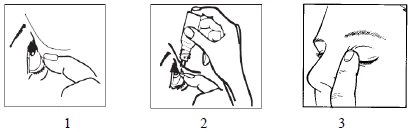
- Tilt your head backwards. Gently pull down the eyelid with a finger to create a pouch between the eyelid and your eye, into which the drop should fall (figure 1).
- Bring the tip of the bottle close to the eye. A mirror may be helpful.
- Do not touch the eye, eyelid, surrounding areas, or other surfaces with the dropper tip. The drops could become contaminated.
- Gently squeeze the base of the bottle with your index finger to release one drop at a time (figure 2).
- After using these eye drops, press with your finger on the inner corner of the eye near the nose for at least 2 minutes. This helps prevent the eye drops from passing into the rest of the body (figure 3).
- If applying drops to both eyes, repeat all the above steps for the other eye.
- Close the bottle tightly immediately after use.
- Remember to wash your hands after applying the eye drops.
If a drop misses the eye, try again.
If you are using other ophthalmic medicines, wait at least 5 minutes between administering this medicine and the other ophthalmic medicines. Ophthalmic ointments should be administered last.
If you use more Colirofta Cycloplegic than you should
You can remove it by rinsing the eyes with lukewarm water. Do not instill further drops until instructed to do so.
Symptoms of ophthalmic overdose may include: redness and dryness of the skin (rash may occur in children), blurred vision, rapid and irregular pulse, fever, abdominal swelling in young children, seizures, hallucinations, or loss of coordination.
Symptomatic treatment should be provided.
The treatment of choice is physostigmine.
In case of overdose or accidental ingestion, contact your doctor or pharmacist immediately or call the Toxicology Information Service at 91 562 04 20, indicating the medicine and the amount used, as serious reactions may occur (especially in children).
If you forget to use Colirofta Cycloplegic
Do not use a double dose to make up for forgotten doses.
Use a single dose as soon as you remember, and continue with the next scheduled dose. However, if it is almost time for the next dose, do not use the missed dose and continue with your regular dosing schedule.
If you have any further questions about the use of this medicine, ask your doctor or pharmacist.
4. Possible adverse effects
Like all medicines, this medicine may cause adverse effects, although not everyone experiences them.
The following adverse effects have been observed:
Adverse effects of unknown frequency (cannot be estimated from available data)
-
Eye-related effects: sensitivity to light (photophobia), increased pupil size (prolonged effect of the medicine), eye irritation, blurred vision, eye pain, eye redness.
-
General effects: allergy, hallucination, confusion, disorientation, agitation, restlessness, incoherent speech, recent memory loss, dizziness, headache, drowsiness, vomiting, nausea, dry mouth, skin redness, difficulty walking, fever, and fatigue.
Other adverse effects: increased eye pressure and glaucoma in patients predisposed to acute angle-closure, particularly elderly patients; hyperactivity, tremor, anxiety, sedation, difficulty concentrating, increased heart rate, increased body temperature.
Other adverse effects in children
Additionally, this medicine may cause in children lack of coordination, seizures, skin rash, behavioral changes, psychiatric disorders, prolonged pupil dilation, abdominal swelling in infants, increased heart rate, dilation of blood vessels, urinary retention, decreased intestinal motility, reduced secretion in salivary and sweat glands, throat, bronchi, and nasal passages. Severe reactions are characterized by low blood pressure with progressively shallow and rapid breathing.
In newborns and infants, the use of this medicine may lead to feeding intolerance (see section 3). In premature children, this medicine may cause necrotizing enterocolitis. In children, a local allergic reaction to this medicine has been observed, consisting of a skin rash.
The adverse effects of this medicine occur within 20–30 minutes after administration and, although usually transient, symptoms may last from 12 to 24 hours.
Reporting of adverse effects
If you experience any type of adverse effect, consult your doctor or pharmacist, even if it is a possible adverse effect not listed in this leaflet. You may also report them directly via the Spanish Pharmacovigilance System for Human Medicines: https://www.notificaRAM.es. By reporting adverse effects, you can help provide more information on the safety of this medicine.
5. Storage of Colirofta Cycloplegic
Keep this medicine out of the sight and reach of children.
Do not store above 25°C.
Do not use this medicine after the expiry date stated on the bottle and the carton, following the letters CAD. The expiry date refers to the last day of the month indicated.
To prevent infection, discard the bottle 4 weeks after first opening.
Record the date of first opening in the space provided for this purpose on the carton.
Medicines must not be disposed of via wastewater or household waste. Dispose of containers and unused medicines at the SIGRE collection point at your pharmacy. If you are in doubt, please ask your pharmacist how to dispose of containers and unused medicines. This will help protect the environment.
6. Contents of the pack and other information
Composition of COLIROFTA CYCLOPLEGIC
- The active substance is cyclopentolate hydrochloride. One ml of solution contains 10 mg of cyclopentolate hydrochloride (1%).
- The other components are: methyl parahydroxybenzoate (E-218), propyl parahydroxybenzoate (E-216), sodium chloride and purified water.
Appearance of the product and contents of the pack
Colirofta Cycoplegic is an eye drop solution. It is a liquid (clear and colourless) supplied in a box containing a dropper bottle (plastic bottle with dropper dispenser) with a cap.
Each container holds 10 ml of eye drops.
Marketing Authorization Holder
Alcon Healthcare S.A.
World Trade Center Almeda Park
Plaça de la Pau s/n, Edificio 6, planta 3
08940 - Cornellà de Llobregat (Barcelona)
Spain
Manufacturer
Alcon Laboratories Belgium
Lichterveld 3
2870 Puurs-Sint-Amands
Belgium
Date of the most recent revision of this leaflet: June 2023
Detailed information on this medicine is available on the website of the Spanish Agency for Medicines and Health Products (AEMPS) http://www.aemps.gob.es/