Colirofta atropine 10 mg/ml eye drops solution
Spain
Table of Contents
- Package leaflet: Information for the user
- Introduction
- 1. What COLIROFTA ATROPINE 10 mg/ml is and what it is used for
- 2. What you need to know before using COLIROFTA ATROPINE 10 mg/ml
- 3. How to use COLIROFTA ATROPINE 10 mg/ml
- 4. Possible adverse effects
- 5. Storage of COLIROFTA ATROPINE 10 mg/ml
- 6. Package contents and other information
Package leaflet: Information for the user
Introduction
Package leaflet: information for the user
COLIROFTA ATROPINE 10 mg/ml eye drops solution
Read the entire leaflet carefully before you start using this medicine, as it contains important information for you.
|
Package leaflet contents
- What COLIROFTA ATROPINE 10 mg/ml is and what it is used for
- What you need to know before using COLIROFTA ATROPINE 10 mg/ml
- How to use COLIROFTA ATROPINE 10 mg/ml
- Possible side effects
- Storage of COLIROFTA ATROPINE 10 mg/ml
- Contents of the pack and other information
1. What COLIROFTA ATROPINE 10 mg/ml is and what it is used for
It is an eye drop solution containing atropine, an anticholinergic agent (blocks certain acetylcholine receptors, a neurotransmitter), which when administered into the eyes produces mydriasis (pupil dilation) and cycloplegia (paralysis of the muscle responsible for accommodation).
Colirofta Atropine 10 mg/ml is indicated:
- For eye examinations, to dilate the pupil and prevent ocular focusing.
- For the treatment of acute inflammatory ocular conditions affecting the anterior part of the eye, such as inflammation of the colored part of the eye (iritis) and of the iris and ciliary body (iridocyclitis).
2. What you need to know before using COLIROFTA ATROPINE 10 mg/ml
Do not use COLIROFTA ATROPINE 10 mg/ml
- If you are allergic to atropine or to any of the other ingredients of this medicine (listed in section 6).
- If you have or think you may have primary glaucoma or a predisposition to narrow-angle glaucoma (increased pressure in the eye).
- Children with Down syndrome, spastic paralysis (a type of cerebral palsy), or brain injury.
- Children under 3 years of age.
- Children who have previously had a serious reaction to the active substance of this medicine, atropine.
(See section 2, subsection “Pregnancy, breastfeeding and fertility”).
Warnings and precautions
Talk to your doctor or pharmacist before using Colirofta Atropine 10 mg/ml.
-
Use this medicine only in your eye(s).
-
After application, keep your eyes closed and gently press with a finger on the tear duct for at least 1 minute. See section 3 “How to use…”.
-
Use of this medicine may cause:
-
Increased eye pressure and glaucoma, especially in elderly patients. Eye pressure should be monitored frequently and also before starting treatment, under medical supervision.
-
Changes in behavior (such as delirium), especially in children and elderly patients, although these reactions may occur at any age.
-
Light sensitivity. Protect your eyes from bright light (sunglasses).
-
Blurred vision, which may last up to 2 weeks.
-
If you have a fever or are exposed to high temperatures, caution is required, especially in children, as this medicine may increase body temperature.
-
Extreme caution is needed in patients with heart disease, arrhythmias, or recent myocardial infarction, as tachycardia (increased heart rate) may occur. Dose reduction is recommended.
An increase in blood pressure may occur.
-
Caution is required in patients with:
-
Significant kidney disease
-
Chronic lung diseases
-
Or lower urinary tract symptoms, such as prostate hyperplasia.
-
Do not use this medicine simultaneously with treatment using MAOIs (antidepressants in general) (see section “Other medicines…”).
Children
- This medicine should be used with caution in children over 3 years of age.
- Premature infants and low birth weight infants, or patients with: Down syndrome, spastic paralysis, brain injury, or children with fair skin and blue eyes are especially sensitive to the adverse effects of this medicine. Consult your doctor for information on serious adverse reactions that may occur with the use of this medicine.
- Avoid letting children get this medicine in their mouth or on their cheeks. Wash your hands and the child’s hands or cheeks immediately after administration.
Other medicines and COLIROFTA ATROPINE 10 mg/ml
Tell your doctor or pharmacist if you are taking, have recently taken, or might need to take any other medicines.
In particular, inform your doctor if you are taking:
Medicines that share properties with the active substance of this medicine, such as:
- Amantadine (an antiviral and for Parkinson’s disease, which stimulates the central nervous system)
- For obstructive lung diseases, such as: tiotropium, glycopyrronium, or revefenacin
- Scopolamine (used prior to anesthesia)
- Some antihistamines (medicines used to treat allergies)
- Antipsychotics (used to treat psychiatric conditions)
- Tricyclic antidepressants (medicines used to treat depression).
Other medicines:
- Donepezil (used in Alzheimer’s disease)
- Cardiac stimulants
- MAOI medicines (generally used to treat depression).
Pregnancy, breastfeeding and fertility
If you are pregnant or breastfeeding, think you might be pregnant, or are planning to become pregnant, consult your doctor or pharmacist before using this medicine.
This medicine is not recommended during pregnancy or breastfeeding.
Driving and using machines
The effect of this medicine on the ability to drive and use machines is significant.
This medicine may cause blurred vision and light sensitivity for a prolonged period, which may last several days. Do not drive or operate machinery or tools until your vision is clear.
COLIROFTA ATROPINE 10 mg/ml contains methylparahydroxybenzoate (E-218) and propylparahydroxybenzoate (E-216) and phosphates
This medicine may cause allergic reactions (possibly delayed) because it contains methylparahydroxybenzoate (E-218) and propylparahydroxybenzoate (E-216).
This medicine contains 6 mg of phosphates per ml.
If you have severe damage to the cornea (the transparent layer at the front of the eye), treatment with phosphates, in very rare cases, may cause blurred vision due to calcium accumulation.
3. How to use COLIROFTA ATROPINE 10 mg/ml
Follow exactly the instructions for use of this medicine as given by your doctor or pharmacist. If in doubt, consult your doctor or pharmacist again.
The recommended dose is:
Adults
When a sustained effect is desired, three daily applications of 2 drops are generally administered.
For refraction examination, instill 1 or 2 drops in each eye twice daily, 1 to 3 days before the examination.
Use in children
Children (over 3 years of age)
Due to the risk of causing serious systemic adverse effects, this medicine is contraindicated in children under 3 years of age and should be used with caution in children over 3 years of age. It is recommended to use the lowest effective dose to minimize the risk of systemic adverse effects (see section "Warnings and precautions").
When a sustained effect is desired, three daily applications of 1 drop are generally administered.
For refraction examination, instill 1 or 2 drops in each eye twice daily, 1 to 3 days before the examination.
Remember to apply your medicine according to your doctor's instructions.
Use in elderly patients
Use with caution in elderly patients, as they may be at higher risk of undiagnosed glaucoma and behavioral disorders.
Your doctor will determine the duration of your treatment with Colirofta Atropine 10 mg/ml. Do not discontinue treatment earlier unless instructed by your doctor.
Instructions for use:
Ophthalmic use (in the eyes).
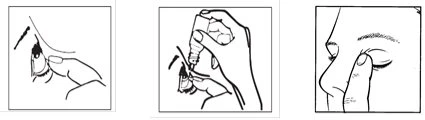
1 2 3
- Wash your hands.
- Take the bottle.
- After opening the bottle for the first time, remove the loose plastic seal ring.
- Hold the bottle upside down between your fingers.
- Tilt your head backward. Gently pull down the eyelid to create a pocket between the eyelid and your eye, into which the drop should fall (Figure 1).
- Bring the tip of the bottle close to the eye. A mirror may be helpful.
- Do not touch the eye, eyelid, surrounding areas, or any other surfaces with the dropper tip. The drops could become contaminated.
- Gently squeeze the base of the bottle with your index finger to release one drop at a time (Figure 2).
- After instilling the eye drops, release the lower eyelid, close your eye, and gently press with your finger at the inner corner of the eye near the nose for at least 1 minute. This helps prevent the medicine from passing into the rest of the body (Figure 3).
- If applying drops to both eyes, repeat all previous steps for the other eye.
- Close the bottle tightly immediately after use.
- Remember to wash your hands after administering this medicine.
If a drop falls outside the eye, try again.
If you are using other ophthalmic medicines, wait at least 5 minutes between administering this eye drop and other ophthalmic medicines. Ophthalmic ointments should be administered last.
If you use more COLIROFTA ATROPINE 10 mg/ml than you should
You can remove it by rinsing the eyes with lukewarm water. Do not apply additional drops until your next scheduled dose. Symptoms of overdose may include redness and dryness of the skin (in children, a rash may occur), blurred vision, rapid and irregular pulse, fever, abdominal swelling in children, seizures, hallucinations, loss of coordination, and rapidly progressive respiratory depression.
In case of overdose or accidental ingestion, contact your doctor or pharmacist immediately or call the Toxicology Information Service at telephone number: 91 562 04 20, stating the medicine and the amount used.
If you forget to use COLIROFTA ATROPINE 10 mg/ml
Do not apply a double dose to make up for missed doses.
Apply a single dose as soon as you remember, and then continue with your next scheduled dose. However, if it is almost time for your next dose, do not take the missed dose and continue with your next dose as per your regular schedule.
If you have any further questions about the use of this medicine, ask your doctor or pharmacist.
4. Possible adverse effects
Like all medicines, this medicine can cause adverse effects, although not everyone will experience them.
The following reactions have been reported during post-marketing experience:
Frequency not known (cannot be estimated from the available data):
-
Eye effects: blurred vision, increased pupil size (prolonged effect of the medicine), eyelid swelling, light sensitivity.
-
General effects: allergy, increased or decreased heart rate, headache, dizziness, hallucination, confusion, disorientation, intestinal obstruction, abdominal swelling, vomiting, skin redness or inflammation, rash, fever.
Other adverse effects in children
Children are more likely to experience the general adverse effects described above, especially premature children with low birth weight, or patients with Down's syndrome, spastic paralysis, or brain injury (see section 2, the section “Do not use…”).
Reporting of adverse effects
If you experience any type of adverse effect, consult your doctor or pharmacist, even if it is a possible adverse effect not listed in this leaflet. You may also report them directly through the Spanish Pharmacovigilance System for Human Medicines: https://www.notificaRAM.es. By reporting adverse effects, you can help provide more information on the safety of this medicine.
5. Storage of COLIROFTA ATROPINE 10 mg/ml
Keep this medicine out of the sight and reach of children.
Store below 25°C.
Do not use this medicine after the expiry date stated on the bottle and the carton after EXP. The expiry date refers to the last day of the month indicated.
To avoid infection, discard the bottle 4 weeks after first opening.
Record the date of opening the bottle in the space provided for this purpose on the carton.
Medicines must not be disposed of via wastewater or household waste. Dispose of containers and unused medicines at the SIGRE Point in your pharmacy. If you have any doubts, ask your pharmacist how to dispose of containers and medicines you no longer need. This will help protect the environment.
6. Package contents and other information
Composition of COLIROFTA ATROPINE 10 mg/ml
- The active substance is atropine. One ml of eye drops solution contains 10 mg of atropine (as sulfate) (1%).
- The other components are: methylparaben (E-218), propylparaben (E-216), sodium chloride, sodium hydrogen phosphate dodecahydrate, potassium dihydrogen phosphate, and purified water.
Appearance of the medicine and contents of the pack
Colirofta Atropine 10 mg/ml is an eye drop solution; it is a liquid (clear, colourless solution) supplied in a dropper container (plastic bottle) of 10 ml with a tamper-evident cap.
Marketing Authorization Holder and Manufacturer
Marketing Authorization Holder
Alcon Healthcare S.A.
World Trade Center Almeda Park
Plaça de la Pau s/n, Edificio 6, planta 3
08940 - Cornellà de Llobregat (Barcelona)
Spain
Manufacturer
Alcon Laboratories Belgium
Lichterveld 3
2870 Puurs-Sint-Amands
Belgium
Date of the most recent revision of this leaflet: May 2020
Detailed information on this medicine is available on the website of the Spanish Agency of Medicines and Medical Devices (AEMPS) http://www.aemps.gob.es