Colircusi phenylephrine 100 mg/ml eye drops solution
Spain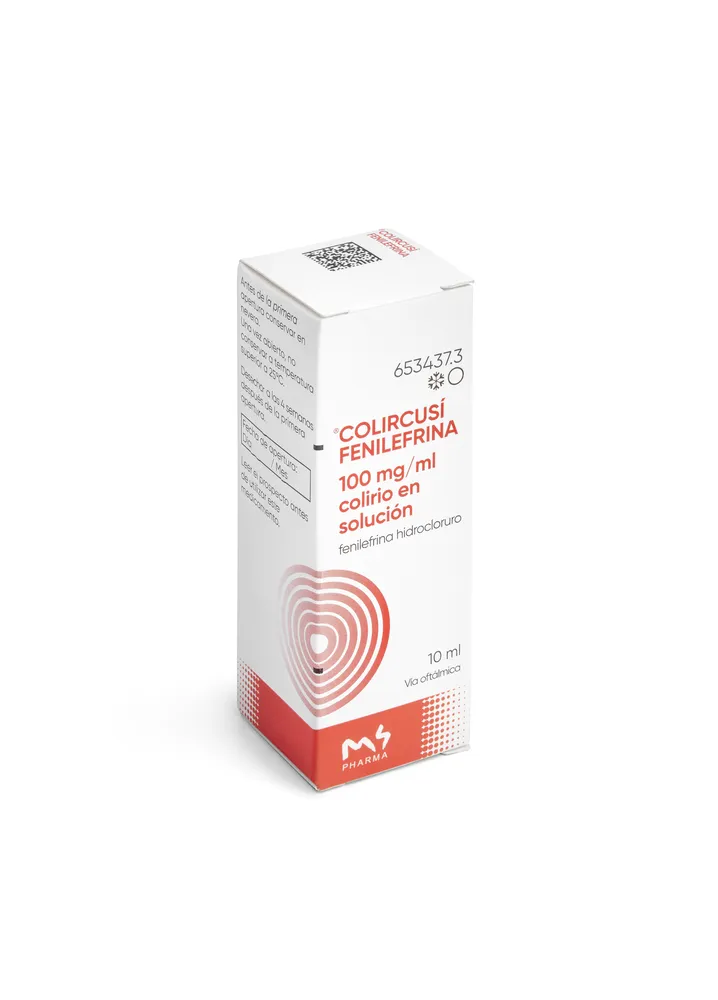
Table of Contents
- Package leaflet: Information for the user
- Introduction
- 1. What COLIRCUSÍ FENILEFRINA is and what it is used for
- 2. What you need to know before using COLIRCUSÍ PHENYLEPHRINE
- 3. How to use COLIRCUSÍ FENILEFRINA
- 4. Possible adverse effects
- 5. Storage of COLIRCUSÍ FENILEFRINA
- 6. Contents of the pack and other information
Package leaflet: Information for the user
Introduction
Package leaflet: information for the user
COLIRCUSÍ FENILEFRINA 100 mg/ml eye drops solution
Hydrochloride phenylephrine
Read the entire leaflet carefully before you start using this medicine, because it contains important information for you.
- Keep this leaflet, as you may need to read it again.
- If you have any questions, consult your doctor or pharmacist.
- This medicine has been prescribed for you only, and you should not give it to other people, even if they have the same symptoms as you, because it could harm them.
- If you experience any adverse effects, consult your doctor or pharmacist, even if they are adverse effects not listed in this leaflet. See section 4.
Leaflet contents
- What COLIRCUSÍ FENILEFRINA is and what it is used for
- What you need to know before using COLIRCUSÍ FENILEFRINA
- How to use COLIRCUSÍ FENILEFRINA
- Possible adverse effects
- How to store COLIRCUSÍ FENILEFRINA
- Contents of the pack and other information
1. What COLIRCUSÍ FENILEFRINA is and what it is used for
It is an ophthalmic solution containing phenylephrine hydrochloride as the active ingredient, which dilates the pupil.
Colircusí Fenilefrina is indicated for: producing pupil dilation (mydriasis) to examine the back of the eye, facilitating surgery for nuclear cataract (central cataract), and as part of the treatment of inflammations of the middle layer of the eye (uveitis), particularly inflammation of the colored part of the eye (iritis) and inflammation of this area and the ciliary body (iridocyclitis).
2. What you need to know before using COLIRCUSÍ PHENYLEPHRINE
Do not use Colircusí Phenylephrine:
- If you are allergic to phenylephrine or to any of the other ingredients of this medicine (listed in section 6).
- In children under 12 years of age and elderly patients.
- If you have narrow-angle glaucoma (increased pressure in the eyes) or anatomically narrow angles in your eyes (with blockage of drainage channels).
- If you have high blood pressure (severe hypertension).
- If you have a history of severe arteriosclerotic, cardiovascular, or cerebrovascular disease, rapid heartbeat (ventricular tachycardia), or heart disease. If you have an aneurysm (a widening in a blood vessel that may appear as a bulge).
- If you have had eye surgery.
Warnings and precautions
Talk to your doctor or pharmacist before starting to use Colircusí Phenylephrine.
-
Use this medicine only in your eye(s).
-
Do not use it after eye surgery, or in diseased, injured, dry eyes, or during anesthesia, as the medicine may be absorbed in sufficient amounts to cause adverse effects such as increased blood pressure.
-
After application, keep your eyes closed and gently press with a finger on the tear duct for 2 minutes. See section 3, “How to use COLIRCUSÍ PHENYLEPHRINE”.
-
Blood pressure should be monitored after administration of this medicine in susceptible patients, particularly in those with diseases of the autonomic nervous system (which controls involuntary actions such as heartbeat and blood vessels).
-
Exercise caution or avoid concomitant treatment with medications such as monoamine oxidase inhibitors (MAOIs), tricyclic antidepressants, antihypertensive drugs (to lower blood pressure), atropine, or anesthetics that sensitize the heart to sympathomimetics (see section "Other medicines and Colircusí Phenylephrine").
-
Wash your hands immediately after handling the bottle or after applying this medicine.
-
This medicine must be used with great caution:
-
if you have partial heart block (a defect in the heart's conduction system),
-
abnormally slow heart rate (bradycardia),
-
overactivity of the thyroid gland (hyperthyroidism),
-
if you are an insulin-dependent diabetic,
-
if you experience drops in blood pressure (fainting, dizziness) related to changes in position (upon standing after sitting for long periods) (orthostatic hypotension).
-
Colircusí Phenylephrine must not be used in children under 12 years of age, as children appear to be more sensitive to the risk of serious adverse effects.
-
Colircusí Phenylephrine is not recommended in children aged 12 to 18 years due to lack of adequate clinical experience.
Children
- This medicine must not be used in children under 12 years of age due to the increased risk of systemic toxicity (within the body). Children may be especially sensitive to the effects of phenylephrine, with potentially significant adverse effects on the heart and circulation.
Elderly patients
- This medicine must not be used in elderly patients. In these patients, the medicine has central nervous system stimulant effects. Also, these patients experience a greater increase in blood pressure than younger individuals.
- This medicine may cause the opposite effect the following day to dilation, namely rebound miosis (pupil constriction). This effect should be monitored by the physician.
- In elderly patients, floating pigment granules in the eyes are more common.
Other medicines and Colircusí Phenylephrine
Inform your doctor or pharmacist if you are taking, have recently taken, or might need to take any other medicines.
In particular, inform your doctor if you are taking or may be exposed to:
- Monoamine oxidase inhibitors (MAOIs). Even if you have taken them within the last 3 weeks (these are medicines used to treat depression or Parkinson's disease).
- Tricyclic antidepressants.
- Medicines that reduce blood pressure, called antihypertensives (guanethidine, reserpine, and non-selective beta-blockers such as propranolol).
- Cycloplegic drugs (pupil dilators) such as atropine.
- Inhaled anesthetic drugs.
- Methylene blue (used in surgery, among other uses).
Inform your doctor if you are going to undergo surgery with anesthesia.
Use of Colircusí Phenylephrine with food and drinks
- Beverages containing bitter orange: if they contain any stimulant additive similar to the active ingredient in this medicine, increased stimulant effects may occur.
Pregnancy, breastfeeding, and fertility
If you are pregnant or breastfeeding, think you may be pregnant, or are planning to become pregnant, consult your doctor or pharmacist before using this medicine.
As a precautionary measure, it is preferable to avoid using Colircusí Phenylephrine during pregnancy.
If you are breastfeeding, your doctor must decide whether breastfeeding should be discontinued or treatment with this medicine stopped, taking into account the benefits of breastfeeding for the child and the benefits of treatment for the mother.
Driving and use of machines
You may experience blurred vision and other visual disturbances for a prolonged period. Do not drive or operate machinery until this effect has disappeared.
Colircusí Phenylephrine contains benzalkonium chloride:
This medicine contains 0.10 mg of benzalkonium chloride per ml of solution.
Benzalkonium chloride may be absorbed by soft contact lenses and may alter the color of contact lenses. Remove contact lenses before using this medicine and wait 15 minutes before reinserting them.
Benzalkonium chloride may cause ocular irritation, especially if you have dry eye or other corneal diseases (the transparent layer at the front of the eye). Consult your doctor if you experience a foreign body sensation, stinging, or eye pain after using this medicine.
3. How to use COLIRCUSÍ FENILEFRINA
Follow exactly the instructions given by your doctor for the administration of this medicine. If in doubt, consult your doctor or pharmacist again.
- To limit the amount of medication that enters the bloodstream after eye drop application,
keep your eyes closed while gently pressing with a finger on the tear duct for at least 2 minutes.
The recommended dose is:
Use in adults
For examination of the fundus of the eye, one drop in each eye is recommended. If necessary, administration may be repeated after 1 hour.
When a sustained effect is desired, one drop 2 or 3 times a day is recommended.
Prior to cataract surgery, the usual dose is one drop into the conjunctiva between 30 and 60 minutes before surgery.
For the treatment of iritis and iridocyclitis, apply one drop. If necessary, it may be repeated the following day. Treatment must not exceed 3–5 consecutive days; if there is no improvement, consult your doctor.
Use in children
This medicine is contraindicated in children under 12 years of age due to the increased risk of systemic toxicity.
Instructions for use:
12
- Wash your hands.
- Take the bottle.
- Unscrew the cap and remove the safety seal.
- Hold the bottle upside down between your fingers.
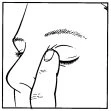
- Tilt your head backwards. Gently pull down the lower eyelid with one finger to form a pouch between the lower eyelid and your eye, into which the drop should fall (figure 1).
- Position the dropper tip close to the eye. A mirror may be helpful.
- Do not touch the eye, eyelid, surrounding areas, or any other surface with the dropper tip, as the eye drops could become contaminated.
- Gently squeeze the container while looking upward.
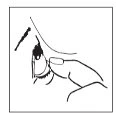
- After using these eye drops, press with your finger on the corner of the eye next to the nose for at least 2 minutes (figure 2). This helps prevent the medicine from passing into the rest of the body.
- If applying drops to both eyes, repeat all the previous steps for the other eye.
- Close the bottle tightly immediately after use.
- It is recommended to wash your hands after handling the bottle or applying the eye drops.
If a drop misses the eye, try again.
If you are using other ophthalmic medications, wait at least 5 minutes between the administration of this medicine and other eye medications. Ophthalmic ointments should be administered last.
If you use more Colircusí Fenilefrina than you should
You can remove it by rinsing the eyes with lukewarm water. Do not apply further drops until the next scheduled dose.
In case of overdose or accidental ingestion, go to a medical center or contact your doctor or pharmacist immediately, or call the Toxicology Information Service at: 91 562 04 20, indicating the medicine and the amount used.
Symptoms of toxicity may include sympathetic stimulation. In case of accidental ingestion, this medicine may cause high blood pressure, headache, seizures, cerebral hemorrhage, abnormally increased heart palpitations, skin sensations of tingling, warmth, or cold (paresthesia), or vomiting. Fluid in the lungs (pulmonary edema) and cardiac arrest may also occur.
In case of overdose, and because any serious reaction due to phenylephrine occurs rapidly, it is recommended to go to a medical center for supportive treatment.
For the treatment of hypertension resulting from blood vessel narrowing (vasoconstriction), beta-blockers and calcium channel blockers should be avoided.
If you forget to use Colircusí Fenilefrina
Do not apply a double dose to make up for missed doses.
If you have any further questions about the use of this medicine, ask your doctor or pharmacist.
4. Possible adverse effects
Like all medicines, this medicine may cause adverse effects, although not everyone experiences them.
The following adverse effects have been reported with this medicine:
Adverse effects of unknown frequency (cannot be estimated from the available data).
-
Eye effects: eye pain, eye irritation, eye redness, conjunctival inflammation and/or eyelid eczema.
-
General effects: allergy, dizziness, increased blood pressure, increased heart rate (heartbeats), fluid in the lungs, skin inflammation.
Other adverse effects in children
Fluid or swelling in the lungs: frequency not known (cannot be estimated from the available data).
Other adverse effects that may occur with this type of drug
The following have been reported: headache, cardiac rhythm disorders (extrasystoles), fainting. The incidence of adverse events with phenylephrine 100 mg/ml is higher than with lower concentrations.
This eye drop has occasionally caused serious cardiovascular complications, including myocardial infarction.
Reporting of adverse effects
If you experience any type of adverse effect, consult your doctor or pharmacist, even if it is a possible adverse effect not listed in this leaflet. You may also report them directly through the Spanish Pharmacovigilance System for Human Medicinal Products: https://www.notificaRAM.es. By reporting adverse effects, you can help provide more information on the safety of this medicine.
5. Storage of COLIRCUSÍ FENILEFRINA
Keep this medicine out of the sight and reach of children.
Store below 25°C.
Keep the bottle tightly closed and store in the original packaging.
To prevent infections, discard the bottle 4 weeks after first opening.
Record the date of opening of the bottle in the space provided for this purpose on the carton.
Do not use this medicine after the expiry date stated on the bottle and carton after EXP. The expiry date refers to the last day of the month indicated.
Medicines must not be disposed of via wastewater or household waste. Dispose of empty containers and unused medicines at the SIGRE collection point at your pharmacy. If in doubt, ask your pharmacist how to properly dispose of unused medicines and their packaging. This will help protect the environment.
6. Contents of the pack and other information
Composition of COLIRCUSÍ FENILEFRINA
- The active substance is phenylephrine hydrochloride. One ml of solution contains 100 mg of phenylephrine hydrochloride (10%).
- The other components are: sodium citrate dihydrate, boric acid, disodium edetate (EDTA), sodium metabisulfite (E-223), benzalkonium chloride and purified water.
Appearance of the medicine and contents of the container
Colircusí Fenilefrina is an eye drop solution; a clear, colourless or slightly yellowish liquid.
It is supplied in a dropper bottle made of low-density polyethylene (LDPE) with an insertable dropper made of low-density polyethylene (LDPE) and a screw cap with a high-density polyethylene (HDPE) security seal, containing 10 ml of eye drop solution.
Marketing Authorization Holder
M4 PHARMA, S.L.
Tánger, 86
08018 Barcelona – Spain
Manufacturer
LUSOMEDICAMENTA - SOCIEDADE TÉCNICA FARMACÊUTICA, S.A.
Rua Norberto de Oliveira, 1 5
2620-111 Póvoa de Sto. Adrião
Portugal
Date of the most recent revision of this leaflet: July 2025
Detailed information on this medicine is available on the website of the Spanish Agency for Medicines and Health Products (AEMPS) http://www.aemps.gob.es