Colchicina Seid 0.5 mg tablets
Spain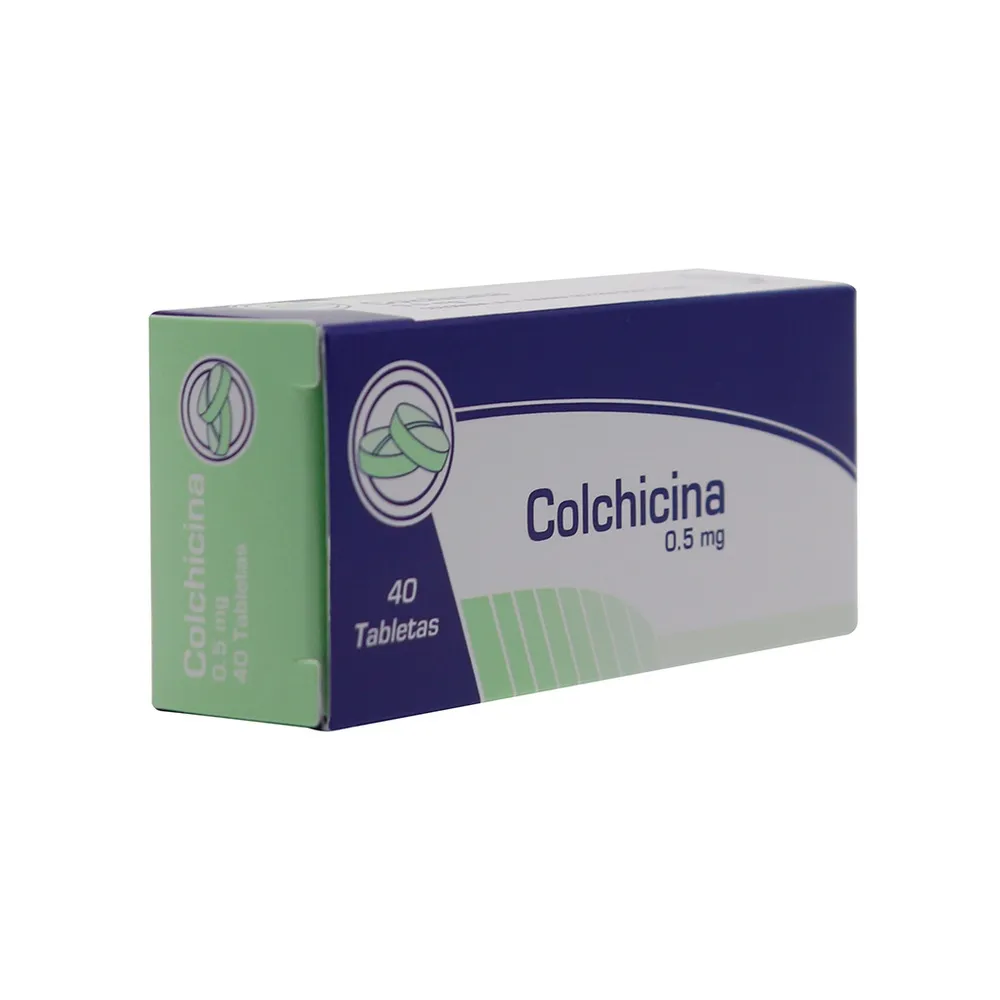
Table of Contents
- Package leaflet: Information for the user
- Introduction
- ***Package leaflet contents***
- 1. What Colchicina Seid is and what it is used for
- 2. What you need to know before starting to take Colchicine Seid
- 3. How to take Colchicine Seid
- **If you forget to take Colchicina Seid**
- 4. Possible adverse effects
- 5. Storage of Colchicine Seid
- 6. Contents of the pack and other information
Package leaflet: Information for the user
Introduction
Package leaflet: information for the patient
COLCHICINASEID 0.5 mg tablets
Read the entire patient information leaflet carefully before you start taking this medicine, as it contains important information for you.
|
Package leaflet contents
- What Colchicina Seid is and what it is used for
- What you need to know before taking Colchicina Seid
- How to take Colchicina Seid
- Possible side effects
- How to store Colchicina Seid
- Contents of the pack and other information
1. What Colchicina Seid is and what it is used for
Colchicina Seid belongs to a group of medicines known as antigout agents.
Colchicina is used in the treatment of acute gout attacks and chronic gout, prevention of acute attacks triggered by the initiation of other medications that cause a reduction in uric acid levels in blood and urine, and in familial Mediterranean fever (periodic disease).
Treatment in adults of acute pericarditis and recurrent pericarditis in combination with acetylsalicylic acid or other non-steroidal anti-inflammatory drugs (NSAIDs).
In children, this medicine is indicated for familial Mediterranean fever for the prophylaxis of attacks and prevention of amyloidosis.
2. What you need to know before starting to take Colchicine Seid
Do not take Colchicine Seid:
- If you are allergic to colchicine or to any of the other ingredients of this medicine (listed in section 6).
- If you have severe kidney disease.
- If you are undergoing dialysis.
- If you have severe liver disease.
- If you have severe gastrointestinal disorders.
- If you have a stomach ulcer.
- If you have heart diseases.
- If you have blood disorders.
- If you are pregnant.
- If you have recently taken or are currently taking other medicines (see section "Taking Colchicine Seid with other medicines").
Warnings and precautions
Consult your doctor or pharmacist before starting to take Colchicine Seid.
Take special care with Colchicine Seid:
- If you experience diarrhea, nausea, vomiting, or abdominal pain during treatment. Contact your doctor immediately, as it may be necessary to adjust the dose or discontinue treatment.
- In elderly patients, children, debilitated patients, or those who abuse alcohol.
- In patients with liver or kidney disease. Your doctor may need to adjust the dose.
- During long-term treatment, serious muscle and kidney problems may occur.
If you take Colchicine Seid, the side effects this medicine may cause on the blood (reduction in white blood cells, platelets, and red blood cells) should be monitored. Your doctor may perform periodic blood tests to monitor these adverse effects.
Children and adolescents
The safety and efficacy of colchicine in pediatric patients for the treatment of pericarditis have not been established. No data are available.
Other medicines and Colchicine Seid
Inform your doctor or pharmacist if you are taking, have recently taken, or might need to take any other medicines.
In particular, inform your doctor before taking colchicine if you have recently taken or are currently taking medicines containing any of the following active substances, as they may affect the elimination of Colchicine Seid from the body:
- Medicines used to treat infections such as clarithromycin, erythromycin, telithromycin, azithromycin, and other antibiotics belonging to this group known as macrolides.
- Medicines used to treat fungal infections, such as itraconazole and ketoconazole.
- Medicines used in the treatment of hypertension, such as verapamil and diltiazem.
- Medicines used in the treatment of HIV, such as indinavir, nelfinavir, ritonavir, and saquinavir.
If you take Colchicine Seid together with medicines to lower cholesterol and triglyceride levels such as atorvastatin, simvastatin, pravastatin, fluvastatin, gemfibrozil, fenofibrate, fenofibric acid, or bezafibrate, with medicines for heart disease such as digoxin, or with immunosuppressive medicines such as cyclosporine, the risk of developing muscle problems may be increased. Inform your doctor before taking colchicine.
Chronic administration or high doses of colchicine may interfere with vitamin B12 absorption. It may be necessary to increase vitamin B12 doses.
Use of Colchicine Seid with food and drinks
Do not take colchicine treatment at the same time as grapefruit juice, as it may reduce the elimination of colchicine from the body and therefore harm you.
Pregnancy and breastfeeding
If you are pregnant or breastfeeding, think you may be pregnant, or are planning to become pregnant, consult your doctor or pharmacist before using this medicine.
Do not take this medicine if you are pregnant.
It is advised not to take this medicine during breastfeeding, as colchicine may pass into breast milk and affect your baby.
Driving and using machines
It is very unlikely that Colchicine Seid will affect your ability to drive or operate machinery.
3. How to take Colchicine Seid
Follow exactly the dosing instructions for this medicine as prescribed by your doctor. If in doubt, consult your doctor or pharmacist again.
Colchicine is potentially toxic; therefore, it is important not to exceed the dose prescribed by your doctor.
Do not exceed the doses indicated below.
Oral use:
Adults
- Acute gout attack:
The recommended dose is 2 tablets (1 mg of colchicine) at the first sign of an acute attack. If pain relief is not achieved, 1 or 2 tablets (0.5 mg to 1 mg of colchicine) may be taken one or two hours after the first dose.
Do not exceed a total of 4 tablets (2 mg of colchicine) within 24 hours. Doses exceeding 4 tablets (2 mg of colchicine) per day have not demonstrated greater efficacy, but do increase the risk of adverse effects.
Over four consecutive days of treatment, do not take more than 12 tablets (6 mg of colchicine) in total. If further treatment is needed because gout pain persists, the previous treatment may be repeated, but only after a three-day break (without treatment).
- Prophylaxis of gout attacks during initial therapy with allopurinol or uricosuric agents:
The recommended prophylactic dose is 1 or 2 tablets (0.5 mg to 1 mg of colchicine) per day. Your doctor will advise you on how long you should continue taking Colchicine Seid.
- Familial Mediterranean fever or periodic disease:
The recommended dose is 2 to 4 tablets (1 mg to 2 mg of colchicine) per day. This may be given as two divided doses or as a single daily dose. Your doctor will advise you on how long you should continue taking Colchicine Seid.
- Treatment of chronic gout:
The recommended dose for treatment of chronic gout is 1 or 2 tablets (0.5 mg to 1 mg of colchicine) per day. Your doctor will advise you on how long you should continue taking Colchicine Seid.
- Treatment of pericarditis:
In adults, for the treatment of acute pericarditis as an adjunct to aspirin / NSAID therapy (3 months), and for recurrent pericarditis (6 months).
- Body weight 70 kg or more: 1 tablet (0.5 mg of colchicine) twice daily (1 mg of colchicine per day).
- Body weight less than 70 kg: 1 tablet (0.5 mg of colchicine) once daily (0.5 mg of colchicine per day).
Use in children and adolescents
- Acute gout attack, prevention of gout attacks, and chronic gout:
There are insufficient data to establish recommendations for this age group.
- Familial Mediterranean fever or periodic disease:
In children with Familial Mediterranean Fever, the recommended dosage is based on age. The following daily doses may be administered as a single dose or divided into two daily doses (for doses exceeding 1 mg/day):
- Children under 5 years: 0.5 mg/day
- Children between 5 and 10 years: 1 mg/day
- Children over 10 years: 1.5 mg/day
The colchicine dose should be gradually increased (0.25 mg increments) up to a maximum of 2 mg/day. Any dose increase must be closely monitored for adverse effects.
The tablet score line is intended only for ease of swallowing and allows the tablet to be split if necessary.
- Treatment of pericarditis:
The use of this medicine is not recommended in children and adolescents for the treatment of pericarditis. See the section “Children and adolescents” in section 2.
Method and route of administration
Oral use
The tablets should be taken with a glass of water.
If you take more Colchicine Seid than you should
Contact your doctor immediately or go immediately to the nearest hospital. Bring this leaflet and any remaining colchicine tablets with you.
If you take doses higher than those prescribed by your doctor, you may experience poisoning. Overdose intoxication with colchicine is very serious.
There is no specific antidote.
In cases of overdose due to ingestion of a large number of tablets, administer activated charcoal, perform gastric lavage, and provide intravenous rehydration and electrolyte replacement.
Symptoms of overdose usually appear within the first 24 hours after taking the medicine, but in some cases may be delayed up to 1 week. Therefore, if overdose is suspected—even in the absence of apparent symptoms—immediate specialized medical attention must be sought.
The most common symptoms of toxicity include a burning sensation and discomfort in the mouth and throat, difficulty swallowing and breathing, gastrointestinal disturbances such as diffuse abdominal pain, nausea, vomiting, profuse diarrhea (sometimes bloody), confusion, alopecia (hair loss), and hypotension (low blood pressure).
If you forget to take Colchicina Seid
Do not take a double dose to make up for missed doses.
If you have any further questions about the use of this medicine, ask your doctor or pharmacist.
4. Possible adverse effects
Like all medicines, this medicine may cause adverse effects, although not everyone experiences them.
The most frequent adverse reactions are:
- Nausea, vomiting, abdominal pain, and diarrhoea.
High doses may cause skin rashes, severe diarrhoea, gastrointestinal bleeding, and hepatic or renal disorders.
On some occasions, the following have been observed:
- In prolonged treatments, changes in blood cell counts such as reduced number of white blood cells (leucopenia), reduced number of neutrophils (neutropenia), reduced number of platelets (thrombocytopenia).
- Azoospermia (absence of spermatozoa).
- Alopecia (hair loss).
- Disorders of nerves controlling muscles, reversible upon discontinuation of treatment.
- Muscle disorders such as rhabdomyolysis (breakdown of muscle fibres).
- Liver injury.
If you consider any of the adverse effects you experience to be severe, or if you notice any adverse effect not listed in this leaflet, inform your doctor or pharmacist.
Reporting of adverse effects
If you experience any type of adverse effect, consult your doctor or pharmacist, even if it is a possible adverse effect not listed in this leaflet. You may also report them directly through the Spanish Pharmacovigilance System for Human Medicinal Products: www.notificaRAM.es. By reporting adverse effects, you can help provide more information on the safety of this medicine.
5. Storage of Colchicine Seid
Keep this medicine out of the sight and reach of children.
No special storage conditions are required.
Do not use this medicine after the expiry date stated on the packaging, after EXP. The expiry date refers to the last day of the month indicated.
Do not use this medicine if you observe any deterioration in the packaging.
Medicines should not be disposed of via wastewater or household waste. Return empty containers and unused medicines to the SIGRE Point at your pharmacy. If you have any doubts, ask your pharmacist how to dispose of containers and medicines you no longer need. This will help protect the environment.
6. Contents of the pack and other information
Composition of Colchicina Seid
- The active substance is colchicine. Each tablet contains 0.5 mg of colchicine.
- The other components (excipients) are: calcium hydrogen phosphate dihydrate, microcrystalline cellulose, anhydrous colloidal silica, and magnesium stearate.
Appearance of the product and contents of the pack
White, round, biconvex, scored tablets.
This medicine is presented in boxes containing a blister pack of 20 tablets.
Marketing Authorization Holder and Manufacturer:
SEID, S.A.
Carretera de Sabadell a Granollers, Km. 15
08185 - Lliçà de Vall (Barcelona)
Spain
Date of the most recent revision of this leaflet: December 2025
Detailed and up-to-date information on this medicine is available on the website of the Spanish Agency of Medicines and Health Products (AEMPS) http://www.aemps.gob.es/.