Codinex 1 mg/ml + 1 mg/ml + 6.67 mg/ml syrup
Spain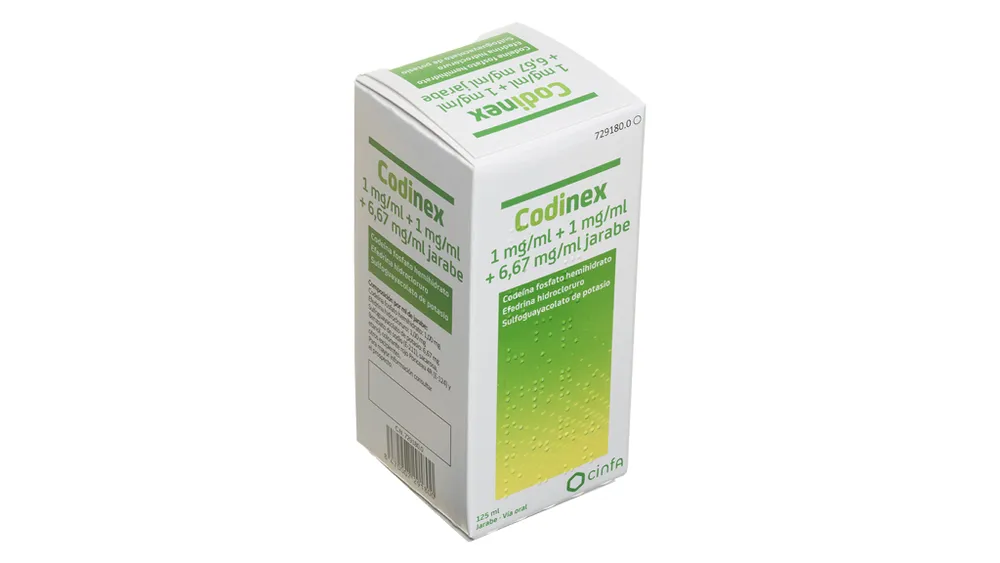
Table of Contents
Package leaflet: Information for the user
Introduction
Package leaflet: information for the patient
Codinex 1 mg/ml + 1 mg/ml + 6.67 mg/ml syrup
Codeine phosphate hemihydrate / Ephedrine hydrochloride / Potassium guaiacolsulfonate
Read the entire leaflet carefully before you start taking this medicine because it contains important information for you.
- Keep this leaflet. You may need to read it again.
- If you have any questions, ask your doctor or pharmacist.
- This medicine has been prescribed for you only. Do not pass it on to others, even if they have the same symptoms as you, because it may harm them.
- If you experience any side effects, talk to your doctor or pharmacist, even if it is a side effect not listed in this leaflet. See section 4.
Leaflet contents
- What Codinex is and what it is used for
- What you need to know before taking Codinex
- How to take Codinex
- Possible side effects
- How to store Codinex
- Contents of the pack and other information
1. What Codinex is and what it is used for
Codinex is a combination of codeine phosphate, a cough suppressant for relief of cough; ephedrine hydrochloride, which relieves nasal congestion; and potassium guaiacolsulfonate, which facilitates the elimination of respiratory secretions.
Codinex is indicated in adults for the symptomatic treatment of respiratory conditions associated with cough, particularly dry cough (not accompanied by mucus), and nasal congestion.
2. What you need to know before taking Codinex
Do not take Codinex:
-
If you are allergic to codeine phosphate, ephedrine hydrochloride, potassium guaiacolsulfonate, or to any of the other ingredients of this medicine (listed in section 6).
-
If you are under 12 years of age.
-
If you are pregnant or breastfeeding.
-
If you know you are a rapid metabolizer of codeine.
-
If you have any of the following disorders or diseases:
-
Respiratory problems such as chronic obstructive pulmonary disease (COPD), acute asthma attacks, or respiratory depression.
-
Intestinal obstruction (paralytic ileus) or are at risk of developing it.
-
Diarrhea associated with pseudomembranous colitis (inflammation of the colon) caused by antibiotic medications or diarrhea due to poisoning.
-
Thyroid problems or other conditions causing excess thyroid hormones (hyperthyroidism or thyrotoxicosis).
-
Enlarged prostate (prostatic hypertrophy).
-
Increased eye pressure (closed-angle glaucoma).
-
Severe heart disease, serious circulatory disorders, or high blood pressure (hypertension).
-
If you have been treated with a monoamine oxidase inhibitor (MAOI) within the last two weeks. See section “Taking Codinex with other medicines”.
-
If you are taking other medications belonging to the ephedrine family, such as phenylpropanolamine, pseudoephedrine, methylphenidate, or phenylephrine.
Warnings and precautions
Talk to your doctor or pharmacist before starting to take Codinex.
Codinex should be used with caution if you have any of the following conditions:
- If you are elderly, as you may be more sensitive to the effects and adverse reactions of this medicine, both due to its codeine content (especially respiratory depression) and ephedrine content (cardiovascular effects).
- If you have any kidney or liver disease or disorder.
- If you have urinary retention or a narrowing (stenosis) of the urethra.
- If you have underactive adrenal glands (Addison's disease).
- If you have reduced thyroid gland function (hypothyroidism).
- If you have muscle weakness or fatigue (multiple sclerosis or myasthenia gravis).
- If you have chronic ulcerative colitis.
- If you have gallbladder problems.
- If you have any lung disease with reduced respiratory capacity.
- If you have low blood pressure or are in shock.
- If you have any inflammatory bowel disease (acute colitis, pseudomembranous colitis), or diverticula.
- If you have previously experienced sudden involuntary muscle movements (seizures).
- If you have a history of drug abuse or dependence (including alcoholism).
- If you have undergone surgery on the stomach, intestines, or urinary tract.
- If you have a tumor of the adrenal gland such as a pheochromocytoma.
- If you are diabetic.
- If you have a history of increased eye pressure (closed-angle glaucoma).
It is not recommended to take this medicine for longer than three days.
Tolerance, dependence, and addiction
This medicine contains codeine, which is an opioid. It may cause dependence and/or addiction |
Repeated use of opioids may lead to reduced effectiveness of the medication (becoming accustomed to it, known as tolerance). Repeated use of Codinex may also cause dependence, abuse, and addiction, which could result in a potentially fatal overdose. The risk of these adverse effects may be higher with higher doses and prolonged use.
Dependence or addiction may cause a feeling of lack of control over the amount of medication you need to take or how frequently you need to take it.
The risk of dependence or addiction varies from person to person. You may have a higher risk of dependence or addiction to Codinex if:
- You or any member of your family have abused or been dependent on alcohol, prescription medications, or illegal drugs ("addiction").
- You smoke.
- You have ever had mood disorders (depression, anxiety, or a personality disorder) or have received treatment from a psychiatrist for other mental illnesses.
If you notice any of the following symptoms while taking Codinex, it could be a sign of dependence or addiction:
- You need to take the medication for longer than recommended by your doctor
- You need to take a higher dose than recommended
- You may feel the need to continue taking the medication, even when it does not help relieve your cough
- You are using the medication for reasons other than prescribed, for example, to stay calm or to help you sleep
- You have made repeated unsuccessful attempts to stop using the medication or control its use
- You feel unwell when you stop taking the medication, and feel better once you take it again ("withdrawal effects")
- If you notice any of these symptoms, consult your doctor to determine the best course of treatment in your case, when it is appropriate to discontinue the medication, and how to do so safely (see section 3 "If you stop treatment with Codinex")
Codeine is converted into morphine in the liver by an enzyme. Some people have a variant of this enzyme that may affect them differently. In some individuals (a small proportion of the population), morphine is either not produced or produced in very low amounts, and therefore will not have an effect on their cough symptoms. In others (a small proportion of the European population), a very high amount of morphine may be produced, making them more prone to adverse reactions. If you experience any of the following effects, you must stop taking this medication and seek immediate medical help: slow or shallow breathing, confusion, drowsiness, constricted pupils, nausea, vomiting, constipation, or loss of appetite.
Sleep-related breathing disorders
Codinex may cause sleep-related breathing disorders, such as sleep apnea (breathing pauses during sleep) and sleep-related hypoxemia (low blood oxygen levels during sleep). Symptoms may include breathing pauses during sleep, waking up at night due to shortness of breath, difficulty maintaining sleep, or excessive daytime sleepiness. If you or someone else notices these symptoms, contact your doctor. Your doctor may consider reducing the dose.
Contact your doctor if you experience severe upper abdominal pain that may radiate to the back, nausea, vomiting, or fever, as these could be symptoms associated with inflammation of the pancreas (pancreatitis) or of the bile ducts.
Children and adolescents
Children under 12 years of age must not take this medication, as they are at higher risk of experiencing adverse reactions following codeine administration. These reactions can be very serious in children who metabolize codeine extensively or rapidly (extensive or ultra-rapid metabolizers). See section "Other adverse effects in children and adolescents".
The use of this medication is not recommended in adolescents aged 12 to 18 years, especially if they have respiratory problems. See section "Other adverse effects in children and adolescents".
Taking Codinex with other medicines
Inform your doctor or pharmacist if you are taking, have recently taken, or might need to take any other medicines.
This information is especially important with the following medicines, as it may be necessary to adjust the dose of one or more of them or discontinue treatment:
- MAO inhibitors (MAOIs): antidepressants such as tranylcypromine and moclobemide, Parkinson's disease medications such as selegiline, anticancer drugs such as procarbazine, or anti-infectives such as linezolid, as they may cause a severe increase in blood pressure, very high fever, and headache. See section "Do not take Codinex". Administration must be separated by at least 15 days.
In addition, the simultaneous use of MAOIs with this medication may potentiate the adverse effects of both ephedrine and codeine, as well as those of the MAOIs.
- Other medications in the ephedrine family such as phenylpropanolamine, pseudoephedrine, phenylephrine, methylphenidate, as they may cause a severe increase in blood pressure, very high fever, and headache. See section "Do not take Codinex".
- Other medications that bind to the same receptors as codeine, such as buprenorphine or nalbuphine, pentazocine, or naltrexone, which may alter the effects of codeine and cause withdrawal symptoms.
- Medications used for depression such as tricyclic antidepressants, as their effects may be enhanced.
- Medications used to treat heart rhythm disorders (arrhythmias) such as mexiletine or quinidine.
- Anticholinergics or other medications with anticholinergic activity used to relieve spasms or contractions of the stomach, intestines, and bladder, which may increase urinary retention and constipation, leading to intestinal obstruction (paralytic ileus).
- Medications such as cimetidine (for stomach acidity), ciprofloxacin, or ritonavir (anti-infectives) may increase the effects of codeine.
- Medications used to treat vomiting (metoclopramide and domperidone) may produce the opposite effect due to the codeine content of this medication.
- Medications that depress the Central Nervous System (CNS), used for insomnia, allergy, or anxiety (such as anxiolytics, hypnotics, antipsychotics, sedating H1 antihistamines), may increase CNS depression and cause respiratory depression.
- Medications that alter urine acidity (such as ammonium chloride or sodium bicarbonate) as they may alter the effect of ephedrine.
- Inhaled anesthetics, as they may increase the risk of heart rhythm problems (arrhythmias) and cause increased blood pressure after surgery.
- Migraine medications (such as ergotamine or methysergide) may cause increased blood pressure and gangrene.
- Some antihypertensive medications such as alpha-blockers, methyldopa, reserpine, and some diuretics, which may reduce the effectiveness of ephedrine.
- Beta-blockers, as their use with ephedrine may cause increased blood pressure and slowed heart rate.
- Levodopa, used in the treatment of Parkinson's disease, may increase the risk of arrhythmias.
- Oxytocin, used to increase uterine contractions, may raise blood pressure.
- Theophylline, used to treat asthma, may increase the adverse effects (nausea, nervousness, and insomnia) of both medications.
- Cardiac glycosides used to treat heart problems may cause disturbances in heart rhythm.
- Dexamethasone, used as an anti-inflammatory, may have an enhanced effect in asthmatic patients.
- Gabapentin or pregabalin, used to treat epilepsy or nerve-related pain (neuropathic pain).
Taking Codinex with alcohol
Do not consume alcoholic beverages during treatment, as this may cause hypotension and severe respiratory depression, as well as symptoms of overdose.
Pregnancy and breastfeeding
If you are pregnant or breastfeeding, think you might be pregnant, or plan to become pregnant, consult your doctor or pharmacist before using this medication.
Pregnancy
Do not take Codinex during pregnancy. Its use may cause physical dependence and changes in fetal heartbeat. In the newborn, it may cause withdrawal syndrome and respiratory depression.
Breastfeeding
Do not take this medication if you are breastfeeding. Some components of this medication and their metabolites pass into breast milk and may be harmful to the infant.
Driving and using machines
Codinex may cause drowsiness, affecting mental and/or physical abilities. Avoid driving or operating machinery if you experience these effects.
Athletes
This medication contains components that may lead to positive results in anti-doping tests.
Codinex contains sodium benzoate (E-211)
This medication contains 2 mg of sodium benzoate per ml of syrup.
Sodium benzoate may increase the risk of jaundice (yellowing of the skin and eyes) in newborns (up to 4 weeks of age).
Codinex contains ethanol
This medication contains 0.17% mg of ethanol (alcohol); this small amount corresponds to 25.5 mg per 15 ml.
Codinex contains sucrose
If your doctor has informed you that you have an intolerance to certain sugars, consult with him before taking this medication.
Patients with diabetes mellitus should be aware that this medication contains 11.5 g of sucrose per 15 ml.
Codinex contains Ponceau 4R red dye (E-124)
This medication may cause allergic reactions as it contains Ponceau 4R red dye (E-124). It may trigger asthma, especially in patients allergic to acetylsalicylic acid.
Codinex contains sodium
This medication contains less than 23 mg of sodium (1 mmol) per ml; thus, it is essentially "sodium-free".
3. How to take Codinex
Follow exactly the administration instructions for this medicine as given by your doctor or pharmacist. If in doubt, consult your doctor or pharmacist again.
Before starting treatment and periodically during treatment, your doctor will explain what you can expect from using Codinex, when and for how long you need to use it, when to contact your doctor, and when you should stop taking it (see also the section "If you stop taking Codinex").
The lowest effective dose should be used to control symptoms. Treatment should last for the shortest possible time.
If symptoms have not improved after three days, you should consult your doctor. See section "Warnings and Precautions".
Codinex should be used for the shortest time necessary to relieve symptoms.
The usual recommended dose is:
Adults: 15 ml every 6 hours or longer (maximum of 4 doses per day).
Elderly patients:
Your doctor may recommend lower doses or longer dosing intervals than for younger patients. See section "Warnings and Precautions".
Patients with renal and/or hepatic impairment:
Your doctor may recommend lower than usual doses. See section "Warnings and Precautions".
Use in children and adolescents
See the section "Children and adolescents" in section 2.
If you take more Codinex than you should
Taking very high doses of this medicine, or taking it together with sedatives or alcoholic drinks, may cause drowsiness and slow breathing, which could be serious.
Nausea and vomiting, changes in blood pressure and heart rate, fever, restlessness, and seizures may also occur. Perception disturbances such as delirium or hallucinations may arise.
In case of overdose or accidental ingestion, contact your doctor or pharmacist immediately or call the Toxicology Information Service at 91 562 04 20, indicating the medicine and the amount ingested.
If you forget to take Codinex
Do not take a double dose to make up for missed doses.
If you stop taking Codinex
If you have been taking this medicine for a prolonged period (see section "Warnings and Precautions"), treatment should be discontinued gradually.
If you have any further questions about the use of this medicine, ask your doctor or pharmacist.
4. Possible adverse effects
Like all medicines, this medicine may cause adverse effects, although not everyone experiences them.
The following adverse reactions have been observed, for which the frequency has not been accurately established (frequency not known):
Adverse reactions due to codeine
- Skin rash, itching, difficulty breathing, increased sweating, facial flushing.
- Mood changes, hallucinations, symptoms of excitement, decreased alertness, nightmares.
- Confusion, drowsiness, dizziness, blurred vision or double vision.
- Involuntary muscle movements, headache, increased intracranial pressure, dependence (*).
- Constriction of the pupils.
- Changes in heart rhythm, palpitations (sensation of irregular heartbeat).
- Decreased blood pressure and drop in blood pressure upon standing.
- Slow breathing and difficulty breathing.
- Constipation, abdominal pain, nausea, vomiting, dry mouth.
- Muscle stiffness.
- Lower back pain and genital area pain, reduced urine output, difficulty urinating.
- Decreased sexual desire and sexual potency.
- General malaise, fatigue, decreased body temperature, tolerance (*).
* Prolonged regular use of this medicine may lead to tolerance, and treatment discontinuation should be done gradually to avoid withdrawal syndrome. (See section "Warnings and Precautions"). Restlessness and irritability may occur when treatment is stopped.
Symptoms associated with inflammation of the pancreas (pancreatitis) and of the biliary tract system (a disorder affecting a digestive tract valve, known as Oddi sphincter dysfunction), for example, severe upper abdominal pain that may radiate to the back, nausea, vomiting, or fever.
Adverse reactions due to ephedrine
- Headache, tremor, dependence.
- Anxiety, restlessness, and insomnia.
- Changes in heart rhythm (tachycardia and arrhythmias), myocardial infarction.
- Increased blood pressure (hypertension), impaired circulation in arms and legs.
- Nausea, dry mouth.
- Tolerance.
Adverse reactions due to potassium guaiacolsulfonate
- At very high doses, it is suspected of causing kidney or urinary tract stones.
Other adverse effects in children and adolescents
Children under 12 years of age are at higher risk of experiencing adverse reactions following administration of this medicine; these reactions may be particularly severe in children who metabolize codeine very rapidly.
In children, taking this medicine may have a stimulating effect, leading to nocturnal enuresis (bedwetting), and may cause insomnia, although it may also have a sedative effect in some children.
Symptoms of codeine toxicity could be more severe in adolescents (from 12 to less than 18 years of age) with respiratory problems; therefore, its use is not recommended in this population.
Reporting of adverse effects
If you experience any type of adverse effect, consult your doctor or pharmacist, even if it is a possible adverse effect not listed in this leaflet. You may also report them directly via the Spanish Pharmacovigilance System for Human Medicines: https://www.notificaram.es. By reporting adverse effects, you can help provide more information on the safety of this medicine.
5. Codinex Storage
Keep this medicine out of the sight and reach of children.
Do not use this medicine after the expiry date stated on the packaging after EXP. The expiry date refers to the last day of the month indicated.
Store this medicine in a secure and protected place inaccessible to others. This medicine may cause serious harm or even death in individuals who take it without having been prescribed it.
Medicines must not be disposed of via wastewater drains or household waste. Dispose of unused medicines and their containers at the SIGRE Point located at your pharmacy. If you have any doubts, ask your pharmacist how to properly dispose of medicines and containers you no longer need. This will help protect the environment.
6. Contents of the pack and other information
Composition of Codinex
- The active substances are: codeine phosphate hemihydrate, ephedrine hydrochloride and potassium guaiacolsulfonate. Each ml of syrup contains 1 mg of codeine phosphate hemihydrate, 1 mg of ephedrine hydrochloride and 6.67 mg of potassium guaiacolsulfonate.
- The other components (excipients) are: sodium benzoate (E-211), sucrose, menthol, vanillin, orange colour (composed of: quinoline yellow [E-104], red dye Ponceau 4R [E-124], indigo carmine [E-132] and sodium chloride), sodium citrate (E-331), anhydrous citric acid (E-330), ethanol and purified water.
Appearance of the product and contents of the pack
Codinex is an orange-brown transparent syrup with a characteristic aroma.
The medicine is presented in:
- Amber glass bottle containing 125 ml of syrup, with child-resistant cap.
- Amber polyethylene terephthalate (PET) bottles containing 125 ml of syrup, with child-resistant cap.
Each pack is supplied with a dosing spoon.
Marketing Authorization Holder and Manufacturer
Laboratorios Cinfa, S.A.
Carretera Olaz-Chipi, 10. Polígono Industrial Areta.
31620 Huarte (Navarra) - Spain
Date of the most recent review of this leaflet: December 2025
Detailed information on this medicine is available on the website of the Spanish Agency of Medicines and Health Products (AEMPS) http://www.aemps.gob.es/