Cod-Efferalgan 500 mg/30 mg effervescent tablets
Spain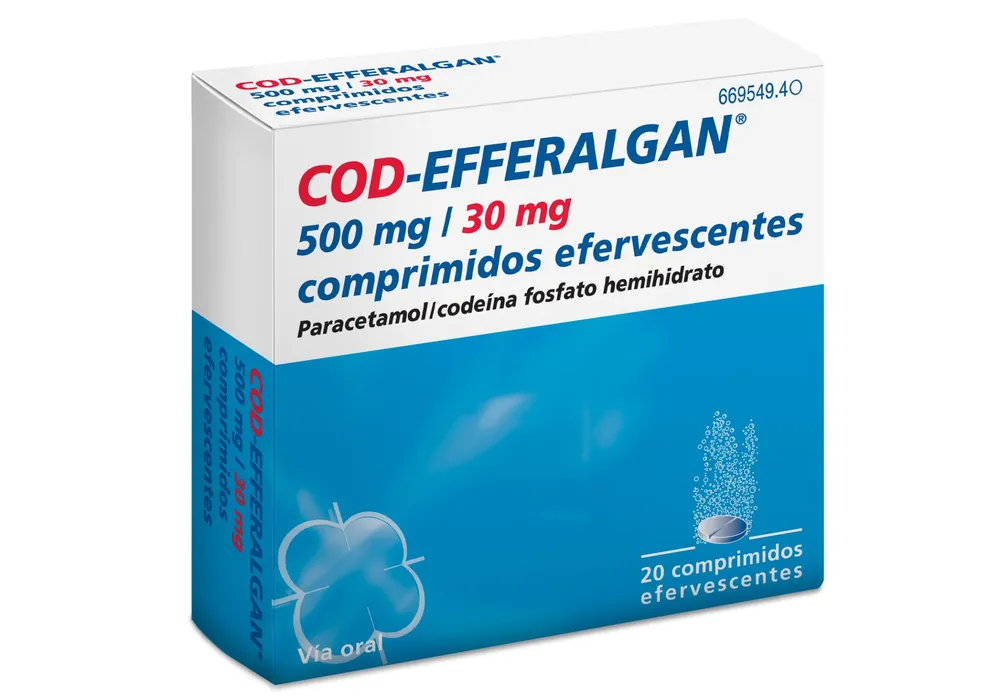
Table of Contents
Package leaflet: Information for the user
Introduction
Package leaflet: information for the user
Cod-Efferalgan 500mg/30mg effervescent tablets
Paracetamol/codeine phosphate hemihydrate
Read the entire leaflet carefully before you start taking this medicine, because it contains important information for you.
- Keep this leaflet, as you may need to read it again.
- If you have any questions, consult your doctor or pharmacist.
- This medicine has been prescribed for you only, and you should not give it to others, even if they have the same symptoms as you, because it could harm them.
- If you experience any adverse effects, consult your doctor or pharmacist, even if they are effects not listed in this leaflet. See section 4.
Contents of the leaflet
- What Cod-Efferalgan is and what it is used for
- What you need to know before taking Cod-Efferalgan
- How to take Cod-Efferalgan
- Possible side effects
- How to store Cod-Efferalgan
- Contents of the pack and other information
1. What Cod-Efferalgan is and what it is used for
Cod-Efferalgan is used in adults and adolescents weighing 50 kg or more (approximately over 15 years of age) for the relief of moderate acute pain, in cases where the use of ibuprofen or paracetamol alone is not considered appropriate as an analgesic.
2. What you need to know before taking Cod-Efferalgan
Do not take Cod-Efferalgan:
- if you are allergic to the active substances or to any of the other components (listed in section 6)
- in cases of severe hepatic insufficiency or active decompensated liver disease
- if you suffer from bronchial asthma
- if you have respiratory insufficiency
- in children and adolescents under 15 years of age
- to relieve pain in children and adolescents (0–18 years of age) after tonsil or adenoid removal due to obstructive sleep apnea syndrome
- if you know you metabolize codeine rapidly into morphine
- if you are breastfeeding
Warnings and precautions
Consult your doctor or pharmacist before starting to take Cod-Efferalgan.
- This medicine should be used with caution in patients with renal or hepatic impairment, anemia, or chronic cardiorespiratory insufficiency.
- Inform your doctor or pharmacist if you have or have had opioid, alcohol, prescription medication, or illicit substance dependence, or if you suffer from mental disorders (e.g. major depression).
- As with all analgesics, it should not be administered for prolonged periods unless otherwise directed by a physician.
- Paracetamol may cause serious skin reactions such as acute generalized exanthematous pustulosis (AGEP), Stevens-Johnson syndrome (SJS), and toxic epidermal necrolysis (TEN), which can be fatal. The use of this medicine should be discontinued at the first sign of skin rash or any other sign of hypersensitivity.
- Frequent long-term use of analgesics may cause or worsen headaches. If you suffer from chronic headaches and have been taking analgesics for more than 3 months, at least on alternate days, do not increase the dose of analgesics, but consult your doctor.
During treatment with Cod-Efferalgan, inform your doctor immediately if:
- You have serious conditions such as severe renal failure or sepsis (when bacteria and their toxins circulate in the blood, causing organ damage), or if you suffer from malnutrition, chronic alcoholism, or are also taking flucloxacillin (an antibiotic). A serious condition called metabolic acidosis (an abnormality in blood and body fluids) has been reported in patients in these situations when paracetamol is used at regular doses over a prolonged period or when paracetamol is taken together with flucloxacillin. Symptoms of metabolic acidosis may include: severe difficulty breathing with deep and rapid respiration, drowsiness, malaise (nausea), and vomiting.
Effects on the Central Nervous System
The central nervous system (CNS) depressant effects of opioids such as codeine may cause severe respiratory depression.
Prolonged use of this medicine increases the risk of medication-overuse headache.
Treatment with opioids, particularly with chronic use, may lead to increased pain in certain patients.
Alcohol consumption is not recommended during treatment with Cod-Efferalgan.
Effects on the Respiratory System
Opioids cause respiratory depression due to their CNS depressant effects. The risk of respiratory depression may be increased by concomitant medication use and pharmacogenetic factors.
Cod-Efferalgan should be used with caution in patients with asthma.
Gastrointestinal effects
Administration of opioids may mask symptoms of acute abdominal conditions.
Caution is advised in patients with biliary tract disorders such as pancreatitis and cholestasis.
Dermatological effects
Pruritus.
Hormonal effects
Reduction in hormone levels; therefore, use with caution in patients with hormonal disorders.
Musculoskeletal effects
Muscle rigidity and myoclonus.
Urogenital effects
Urinary retention. Use with caution in patients with urethral constriction or prostate hypertrophy.
Cardiovascular and cerebrovascular effects
Possible hemodynamic effects.
Tolerance
Prolonged use of opioids may lead to decreased analgesic efficacy or tolerance.
- Prolonged and regular administration of codeine (one of the active ingredients in this medicine) may lead to physical and psychological dependence, addiction, or misuse. This may lead to overdose and/or death. Do not take this medicine longer than necessary. Do not give this medicine to others.
- To avoid the risk of overdose, check that other medicines you are taking (with or without prescription) do not contain paracetamol.
- Administration of paracetamol doses higher than recommended may result in severe liver damage. An antidote should be administered as soon as possible.
- Paracetamol should be used with caution in cases of mild or moderate hepatic insufficiency.
To avoid the risk of overdose or serious adverse effects, ensure that other medicines you are taking (with or without prescription) do not contain opioids or other CNS depressants.
CYP2D6 metabolism
Codeine is metabolized by the hepatic enzyme CYP2D6 into morphine, its active metabolite. If you have a deficiency or complete absence of this enzyme, adequate analgesic effect may not be achieved. However, if you are an extensive or ultra-rapid metabolizer, there may be an increased risk of developing opioid toxicity adverse effects, even at commonly prescribed doses.
Alternative analgesic treatment is recommended in ultra-rapid metabolizers.
Poor metabolizers of codeine:
Patients with low CYP2D6 metabolizer phenotype have reduced ability to convert codeine into morphine and therefore do not experience analgesic effects from codeine treatment, but may still experience adverse effects.
Children and adolescents
In pediatric patients, signs of progressive CNS depression associated with codeine, such as excessive drowsiness and reduced respiratory rate, should be carefully monitored.
Children with compromised respiratory function
The use of codeine is not recommended in children in whom respiratory function may be compromised, including neuromuscular disorders, severe cardiac or respiratory conditions, upper airway disorders, or pulmonary infections, multiple trauma, or extensive surgical procedures.
Post-operative use in children
There are data on post-operative administration of codeine in children after tonsillectomy and/or adenoidectomy for treatment of obstructive sleep apnea syndrome, which led to rare but life-threatening adverse events, including death.
Use in elderly patients
Geriatric patients may have an increased risk of opioid-related adverse effects, such as respiratory depression and constipation. A lower initial dose than usual is recommended in elderly patients.
These patients also have a high likelihood of using concomitant medications, which may increase the risk of drug interactions.
Other medicines and Cod-Efferalgan
Inform your doctor or pharmacist if you are taking, have recently taken, or might need to take any other medicines.
In particular, if you are using the following medicine, dose adjustment or discontinuation of treatment may be necessary:
- Flucloxacillin (antibiotic): due to a serious risk of blood and fluid imbalance (called metabolic acidosis with high anion gap) that requires urgent treatment (see section 2).
Effect of other medicines on Cod-Efferalgan
-
Associated with paracetamol:
- May increase chloramphenicol toxicity.
- Concomitant use of phenytoin may reduce paracetamol effectiveness and increase the risk of hepatotoxicity.
- A reduction in paracetamol dose should be considered when administered concomitantly with probenecid.
- Salicylamide may prolong the elimination half-life (t1/2) of paracetamol.
- Caution is advised when paracetamol is administered concomitantly with enzyme-inducing agents such as barbiturates, isoniazid, carbamazepine, rifampicin, and ethanol.
-
Associated with codeine:
Concomitant use of codeine with other opioids such as alfentanil, dextromoramide, dextropropoxyphene, dihydrocodeine, fentanyl, hydromorphone, morphine, oxycodone, pethidine, phenoperidine, remifentanil, sufentanil, tramadol, methadone, and cough suppressants such as dextromethorphan, noscapine, pholcodine, codeine, and ethylmorphine, may intensify CNS depressant effects, including sedation and respiratory depression, increasing the risk of fatal overdose.
Concomitant use with opioid agonist/antagonists and partial opioid agonists (buprenorphine, butorphanol, nalbuphine, nalorphine, pentazocine) may reduce analgesic effect and cause opioid withdrawal symptoms.
Other CNS depressants, such as barbiturates; anxiolytics and antidepressants, including tricyclic antidepressants (TCAs), selective serotonin reuptake inhibitors (SSRIs), monoamine oxidase inhibitors (MAOIs), benzodiazepines, and hypnotics may enhance the CNS depressant effects of codeine.
Other medicines that may cause drowsiness, such as analgesics, cough suppressants, and replacement therapies, neuroleptics, barbiturates, benzodiazepines, anxiolytics and other benzodiazepines (meprobamate), hypnotics, sedating antidepressants, antidepressants (amitriptyline, doxepine, mianserine, mirtazapine, trimipramine), sedating H1 antihistamines, centrally acting antihypertensives, baclofen, and thalidomide, may have an additional sedative effect with codeine.
Other medicines metabolized by or inhibiting CYP2D6 such as SSRIs (paroxetine, fluoxetine, bupropion, and sertraline), neuroleptics (chlorpromazine, haloperidol, levomepromazine, thioridazine), and tricyclic antidepressants (TCAs) (imipramine, clomipramine, amitriptyline, nortriptyline), celecoxib, quinidine, dexamethasone, and rifampicin may reduce the analgesic effect of codeine.
Anticholinergics administered concomitantly with opioids, including codeine, may enhance inhibition of intestinal function and increase the risk of intestinal paralysis.
Naltrexone, as an opioid antagonist, blocks the analgesic effect of codeine.
Effect of Cod-Efferalgan on other medicines
Caution is advised with concomitant use of paracetamol and anticoagulants such as warfarin.
Taking Cod-Efferalgan with food and drinks
Alcohol intake may enhance the toxic effect of paracetamol; therefore, alcoholic beverages should not be consumed during treatment. Concomitant use of alcohol and codeine may enhance CNS depression.
Pregnancy, breastfeeding, and fertility
If you are pregnant or breastfeeding, think you may be pregnant, or plan to become pregnant, consult your doctor or pharmacist before using this medicine.
Its use during pregnancy and breastfeeding is not recommended, as paracetamol is excreted in breast milk in small amounts. Cases of pruritus in newborns have been reported. If used, it should always be under medical prescription, with careful assessment of potential risks and benefits. Never exceed the recommended dose.
At usual therapeutic doses, codeine and its active metabolite may be present in breast milk in very low amounts and are unlikely to affect the breastfed infant. However, if the patient is an ultra-rapid CYP2D6 metabolizer, higher levels of the active metabolite morphine may be found in breast milk, and in very rare cases this may cause opioid toxicity symptoms in the infant, which could be fatal.
Driving and use of machines
This medicine may cause drowsiness, impairing mental and/or physical ability. If you experience these effects, avoid driving or operating machinery.
If you feel drowsy, dizzy, or have visual disturbances while taking this medicine, do not drive or operate machinery until you are certain that your ability to perform these activities is not affected.
Alcohol may enhance this effect; therefore, alcoholic beverages should not be consumed during treatment.
Cod-Efferalgan contains aspartame (E-951), sodium, sorbitol (E-420), sodium benzoate, glucose, fructose, sucrose, ethanol, and sulfites
This medicine contains 30 mg of aspartame in each effervescent tablet.
Aspartame contains a source of phenylalanine, which may be harmful in individuals with phenylketonuria (PKU), a rare genetic disorder in which phenylalanine accumulates because the body cannot properly eliminate it.
This medicine contains 300 mg of sorbitol in each effervescent tablet.
Sorbitol is a source of fructose. If your doctor has informed you (or your child) that you have an intolerance to certain sugars, or have been diagnosed with hereditary fructose intolerance (HFI), a rare genetic disorder in which the patient cannot break down fructose, consult your (or your child's) doctor before taking this medicine.
This medicine contains 385 mg of sodium (main component of table/cooking salt) in each effervescent tablet. This corresponds to approximately 19.25% of the maximum daily recommended sodium intake for an adult.
This medicine contains 59 mg of benzoic acid salt in each effervescent tablet.
This medicine contains glucose and sucrose. If your doctor has informed you that you have an intolerance to certain sugars, consult with your doctor before taking this medicine.
This medicine contains 5 mg of fructose in each effervescent tablet.
This medicine contains 0.5 mg of alcohol (ethanol) in each effervescent tablet. The amount per effervescent tablet of this medicine is equivalent to a small amount of beer or wine. The small amount of alcohol contained in this medicine does not produce any noticeable effect.
This medicine contains sorbitol, which rarely may cause severe hypersensitivity reactions and bronchospasm.
3. How to take Cod-Efferalgan
Follow exactly the instructions for use of this medicine given by your doctor or pharmacist. If in doubt, consult your doctor or pharmacist again.
This medicine is administered orally.
Dissolve 1 or 2 tablets in a glass of water and take the solution after effervescence has ceased.
The score line should not be used to divide the tablet.
This medicine should not be taken for longer than 3 days. If pain does not improve after 3 days, seek advice from your doctor.
Adults
The recommended dose is 1 or 2 effervescent tablets dissolved in a glass of water, up to 4 times daily as needed, at intervals of no less than 6 hours. The maximum daily dose of codeine must not exceed 240 mg.
Administration of the medicine depends on the presence of pain and fever symptoms, and the dosage may be reduced as symptoms subside.
Use in children and adolescents
This medicine is not recommended for use in children and adolescents under 15 years of age. Children under 12 years of age must not take Cod-Efferalgan due to the risk of serious breathing problems.
Adolescents weighing 50 kg or more (and older than 15 years): The recommended dose is 1 to 2 effervescent tablets every 6 hours as needed, up to a maximum daily codeine dose of 240 mg (8 tablets). This dose is calculated based on body weight (0.5 to 1 mg/kg).
Elderly patients
Elderly individuals should reduce the dose, as they are more sensitive to the effects and adverse reactions of this medicine.
Renal impairment
In cases of moderate or severe kidney disease, the maximum dose per administration is one tablet. Depending on the severity of your condition, your doctor will advise whether you should take the medicine at a minimum interval of 6 or 8 hours.
Liver disease
Patients should take the amount of medicine prescribed by their doctor, with a minimum interval of 8 hours between doses.
Do not take more than 4 tablets (2 grams of paracetamol) in 24 hours, divided into several doses.
If you take more Cod-Efferalgan than you should
Symptoms of overdose, which generally appear within the first 24 hours, include nausea, vomiting, anorexia, pallor, malaise, and diaphoresis.
Paracetamol overdose is considered to occur when a single intake exceeds 6 g in adults or more than 100 mg per kg of body weight in children.
In case of overdose or accidental ingestion, contact the Toxicology Information Service. Telephone: (91) 562 04 20.
Patients undergoing treatment with barbiturates or who are chronic alcoholics may be more susceptible to the toxicity of a paracetamol overdose.
Treatment consists of aspiration and gastric lavage, oral administration of activated charcoal, and urinary alkalization, preferably with sodium bicarbonate, along with normalization of serum potassium levels. To control respiration, naloxone and intravenous N-acetylcysteine should be administered at appropriate doses. In extreme cases, hemodialysis may be necessary.
The period during which treatment offers the greatest likelihood of effectiveness is within 12 hours following overdose ingestion.
If you forget to take Cod-Efferalgan
Do not take a double dose to make up for missed doses.
Take the missed dose as soon as you remember. If your next dose is due soon, skip the missed dose and continue taking the medicine at your usual time. If in doubt, consult your doctor or pharmacist.
4. Possible adverse effects
Like all medicines, this medicine can cause adverse effects, although not everyone experiences them.
Associated with paracetamol, frequency not known:
-
Blood and lymphatic system disorders: Thrombocytopenia, leucopenia, neutropenia
-
Gastrointestinal disorders: Diarrhoea, abdominal pain
-
Hepatobiliary disorders: Increased liver enzymes
-
Immune system disorders: Anaphylactic reaction (including hypotension), anaphylactic shock, hypersensitivity, angioedema
-
Skin and subcutaneous tissue disorders: Urticaria, erythema, rash, purpura, acute generalized exanthematous pustulosis, toxic epidermal necrolysis, Stevens-Johnson syndrome
-
A serious condition that may cause the blood to become more acidic (called metabolic acidosis) in patients with severe illness who use paracetamol (see section 2).
Associated with codeine, frequency not known:
- Blood and lymphatic system disorders: Thrombocytopenia
- Ear and labyrinth disorders: Vertigo
- Gastrointestinal disorders: Abdominal pain, constipation, diarrhoea, nausea, pancreatitis, vomiting
- General disorders and administration site conditions: Asthenia, malaise, oedema
- Hepatobiliary disorders: Biliary colic, hepatitis
- Immune system disorders: Anaphylactic reaction, hypersensitivity
- Investigations: Increased alanine aminotransferase, increased aspartate aminotransferase, increased alkaline phosphatase in blood, increased blood amylase, increased gamma-glutamyltransferase, increased INR
- Musculoskeletal and connective tissue disorders: Rhabdomyolysis
- Nervous system disorders: Dizziness, myoclonus, paraesthesia, somnolence, syncope, tremor
- Psychiatric disorders: Confusional state, addiction, abuse, dependence with prolonged administration, withdrawal syndrome after sudden discontinuation of treatment, hallucinations
- Renal and urinary disorders: Renal failure, urinary retention
- Respiratory, thoracic and mediastinal disorders: Dyspnoea, respiratory depression
- Skin and subcutaneous tissue disorders: Angioedema, erythema, pruritus, rash, urticaria
- Vascular disorders: Hypotension
Reporting of adverse effects
If you experience any type of adverse effect, consult your doctor or pharmacist, even if it is a possible adverse effect not listed in this leaflet. You may also report them directly via the Spanish Pharmacovigilance System for Human Medicines: www.notificaram.es. By reporting adverse effects, you can help provide more information on the safety of this medicine.
5. Storage of Cod-Efferalgan
Keep this medicine out of the sight and reach of children.
Store in the original packaging to protect it from moisture.
Do not use this medicine after the expiry date stated on the packaging after EXP. The expiry date is the last day of the month indicated.
Medicines should not be disposed of via wastewater or household waste. Dispose of empty containers and unused medicines at the SIGRE collection point at your pharmacy. Ask your pharmacist how to properly dispose of containers and medicines you no longer need. This will help protect the environment.
6. Contents of the pack and other information
Composition of Cod-Efferalgan
- The active substances are paracetamol and codeine phosphate hemihydrate.
Each effervescent tablet contains 500 mg of paracetamol and 30 mg of codeine phosphate hemihydrate.
- The other components are aspartame, sodium hydrogen carbonate, anhydrous sodium carbonate, anhydrous citric acid, sorbitol, sodium docusate, sodium benzoate, povidone, and grapefruit flavouring.
Appearance of Cod-Efferalgan and contents of the pack
White, round, scored tablets on one side, presented in aluminium strips, packed in containers containing 20 effervescent tablets.
Marketing Authorization Holder
UPSA SAS
3 rue Joseph Monier
92500 Rueil-Malmaison
France
Manufacturer
UPSA
979, Avenue des Pyrénées
47520 - Le Passage
France
or
UPSA
304, avenue du Dr Jean Bru
47000 - Agen
France
Local representative
NEWLINE PHARMA, S.L.U.
Calle Tarragona 151-157, 11th floor, Door 1, Block A
08014 Barcelona (Spain)
Tel.: 931851380
Date of the most recent revision of this leaflet: January 2025
Detailed and up-to-date information on this medicinal product is available on the website of the Spanish Agency for Medicines and Health Products (AEMPS) http://www.aemps.gob.es/