Cloxacillin Normon 1 g powder for injection and for infusion EFG
Spain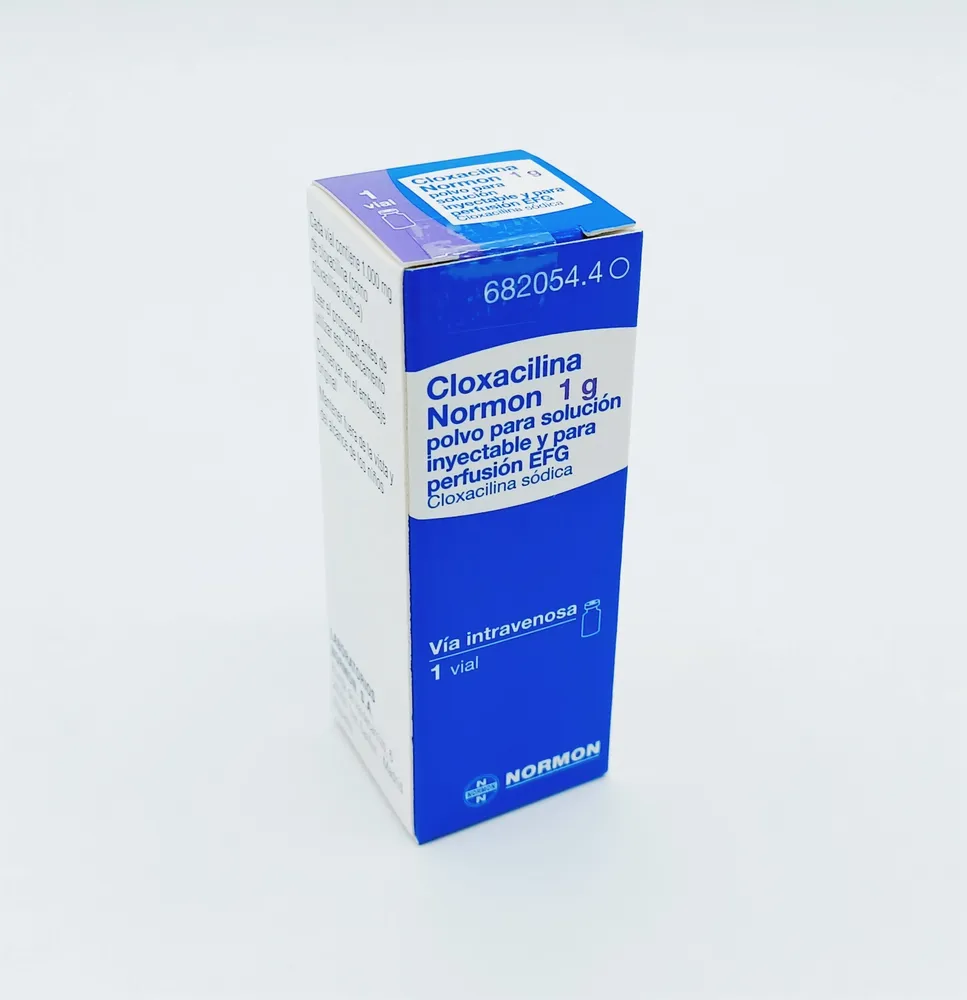
Table of Contents
- Package leaflet: Information for the user
- Introduction
- 1. What Cloxacilina Normon is and what it is used for
- 2. What you need to know before starting to take Cloxacilina Normon
- 3. How to use Cloxacilina Normon
- 4. Possible adverse effects
- 5. Storage of Cloxacilina Normon
- 6. Contents of the pack and other information
Package leaflet: Information for the user
Introduction
Package leaflet: information for the user
Cloxacilina Normon 1 g powder for injectable solution and for infusion EFG
cloxacillin sodium
Read the entire leaflet carefully before you start using the medicine, as it contains important information for you.
even if they have the same symptoms as you, because it could harm them.
effects are not listed in this leaflet. See section 4. |
Package leaflet contents:
- What Cloxacilina Normon is and what it is used for
- What you need to know before taking Cloxacilina Normon
- How to use Cloxacilina Normon
- Possible side effects
- Storage of Cloxacilina Normon
- Contents of the pack and other information
1. What Cloxacilina Normon is and what it is used for
Cloxacilina Normon 1 g is supplied as a vial containing powder for injectable solution.
Cloxacilina Normon is indicated for the treatment of the following infections caused by susceptible organisms:
- Skin and soft tissue infections.
- Mastitis (inflammation of the mammary gland).
- Osteoarticular infections such as septic arthritis (joint inflammation due to infection) and osteomyelitis (bone inflammation due to infection).
- Sepsis (systemic infection).
- Endocarditis (inflammation of certain parts of the heart).
- Meningitis (inflammation of the meninges).
2. What you need to know before starting to take Cloxacilina Normon
Do not use Cloxacilina Normon
If you are allergic (hypersensitive) to penicillins or other beta-lactams or to any of the other components of Cloxacilina Normon.
Warnings and precautions
- If you are allergic to cephalosporins, because cross-allergic reactions may occur.
- In newborns with jaundice (evidenced by yellowing of the skin).
- If you have renal dysfunction (kidney damage), due to the risk of neurotoxicity (damage to the nervous system).
- If you are on a sodium-restricted diet, since each gram of Cloxacilina Normon 1 g powder for injectable solution contains 52.8 mg of sodium.
This medicine may interfere with the analytical determination of serum aspartate aminotransferase (AST) concentration, urinary glucose testing, urinary and plasma protein testing, and the Coombs test.
Other medicines and Cloxacilina Normon
Inform your doctor or pharmacist if you are using or have recently used any other medicines, including those obtained without a prescription.
Some drugs may influence the action of others.
Cloxacilina Normon interacts with the following drugs:
- Bacteriostatic antibiotics (chloramphenicol, tetracyclines, erythromycin, or sulfonamides): may reduce its effectiveness.
- Probenecid: reduces the elimination of cloxacillin.
Pregnancy and breastfeeding
Consult your doctor or pharmacist before using any medicine.
Pregnancy
The use of Cloxacilina Normon in pregnant women should only be considered when the potential benefits outweigh the potential risks associated with treatment.
Breastfeeding
Cloxacilina Normon is excreted in breast milk. Its use during breastfeeding should be carried out with caution.
Driving and use of machines
There is no evidence of effects on the ability to drive or operate dangerous machinery.
Important information about some of the components of Cloxacilina Normon
This medicine contains 52.8 mg of sodium (main component of table/cooking salt) in each vial. This corresponds to 2.71% of the maximum daily sodium intake recommended for an adult.
3. How to use Cloxacilina Normon
Follow exactly the administration instructions for Cloxacilina Normon as indicated by your doctor. If in doubt, consult your doctor or pharmacist again.
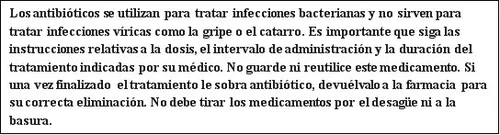
Remember to take your medication. Your doctor will indicate the duration of your treatment with cloxacillin. Do not stop treatment early. If you feel that the effect of this medicine is too strong or too weak, inform your doctor or pharmacist.
Cloxacilina Normon is administered intravenously.
The appropriate dosage for each type of pathology will be determined by your doctor.
Adults and children over 12 years of age: The recommended dose for adults is 500 mg to 1 g every 6–8 hours. These doses are indicative and may be increased if the severity of the condition so requires.
Children over 2 years of age: The recommended dose is 12.5–25 mg/kg body weight every 6–8 hours.
Children under 2 years of age: The recommended dose is 6.25–12.5 mg/kg body weight every 6 hours.
If you use more Cloxacilina Normon than you should
Contact your doctor or pharmacist immediately. In case of overdose or accidental administration, contact the Toxicology Information Service (Tel. 91 562 04 20), indicating the product and the amount administered.
If you forget to take Cloxacilina Normon
Do not take a double dose to make up for missed doses.
If you stop treatment with Cloxacilina Normon
If you have any further questions about the use of this product, ask your doctor, pharmacist, or nurse.
4. Possible adverse effects
Like all medicines, Cloxacilina Normon may cause adverse effects, although not everyone will experience them:
Hypersensitivity reactions: skin reactions, interstitial nephritis (inflammation of the kidney). Rarely, other reactions have been reported such as angioneurotic edema (extensive swelling of the face), anaphylaxis (an unusual or exaggerated allergic reaction characterized by hypotension and bronchospasm causing breathing difficulty), serum sickness (an allergic reaction to serum).
Gastrointestinal tract disturbances: diarrhea, nausea, and vomiting, which are usually mild and transient and do not require discontinuation of treatment. Persistent diarrhea should raise suspicion of pseudomembranous colitis.
Blood disorders: rare cases of neutropenia (reduced number of white blood cells) and platelet dysfunction have been reported.
Central nervous system disturbances: at very high doses, seizures may occur. Hepatic function disturbances: jaundice (evident as yellowing of the skin) and hepatitis. Local reactions: cases of phlebitis (vein inflammation) may occur.
Other adverse reactions: oral candidiasis.
Reporting of adverse effects
If you experience any type of adverse effect, consult your doctor or pharmacist, even if it is a possible adverse effect not listed in this leaflet. You may also report them directly through the Spanish Pharmacovigilance System for Human Medicines: https://www.notificaram.es. By reporting adverse effects, you can help provide more information on the safety of this medicine.
5. Storage of Cloxacilina Normon
Keep this medicine out of the sight and reach of children. Store in the original packaging.
Do not use Cloxacilina Normon after the expiry date stated on the container after EXP. The expiry date refers to the last day of the month indicated.
After reconstitution, the physico-chemical stability of the product reconstituted with water for injections has been demonstrated for up to 6 hours at 25°C and 72 hours at 2–8°C. The in-use physico-chemical stability of the solution diluted with sodium chloride 9 mg/ml (0.9%) for injection or glucose 50 mg/ml (5%) in infusion bags or bottles has been demonstrated for 6 hours at 25°C or 48 hours at 2–8°C. From a microbiological standpoint, the product should be used immediately. If not used immediately, the storage times and conditions prior to use are the responsibility of the user and normally should not exceed 24 hours at 2–8°C, unless reconstitution/dilution has taken place under controlled and validated aseptic conditions.
Do not use this medicine if you notice the presence of particles or if the reconstituted solution is cloudy.
Medicines must not be disposed of via wastewater or household waste. Dispose of containers and unused medicines at the SIGRE point at your pharmacy. If in doubt, ask your pharmacist how to properly dispose of unused containers and medicines. This will help protect the environment.
6. Contents of the pack and other information
Composition of Cloxacilina Normon
The active substance is cloxacillin sodium. Each vial contains 1 g of cloxacillin sodium.
Presentation of the medicinal product and contents of the pack
Cloxacilina Normon 1 g is presented as a powder for injectable solution, each pack containing 1 vial.
Marketing Authorization Holder and Manufacturer
LABORATORIOS NORMON, S.A.
Ronda de Valdecarrizo, 6 – 28760 Tres Cantos – Madrid (Spain)
OTHER PRESENTATIONS
Cloxacilina Normon 500 mg powder for injectable solution and for infusion EFG.
Date of the most recent review of this leaflet: February 2024
Detailed and up-to-date information on this medicinal product is available on the website of the Spanish Agency of Medicines and Health Products (AEMPS) http://www.aemps.gob.es/
THIS INFORMATION IS INTENDED FOR HEALTHCARE PROFESSIONALS ONLY
Information for the physician:
In case of overdose, carry out symptomatic and supportive treatment. Peritoneal dialysis or hemodialysis are not effective.
Precautionary measures for parenteral administration
Intravenous administration: Reconstitute the vial with 20 ml of water for injections. Inject slowly over 3-4 minutes.
For administration by continuous infusion, the reconstituted powder in 20 mL of water for injections should be withdrawn from the vial and added to a 100 mL bag of sodium chloride 9 mg/mL (0.9%) or glucose 50 mg/mL (5%) for infusion in hospital settings.
Cloxacillin sodium must not be used in solutions containing protein hydrolysates, lipid emulsions, amino acids, blood or serum. It is compatible, however, with most commonly used intravenous solutions (physiological saline or glucose solutions).
Mixing cloxacillin and aminoglycosides may result in substantial mutual inactivation; therefore, they must not be mixed together in the same container for administration.