Clotrimazole Gine-Canesmed 20 mg/g vaginal cream EFG
Spain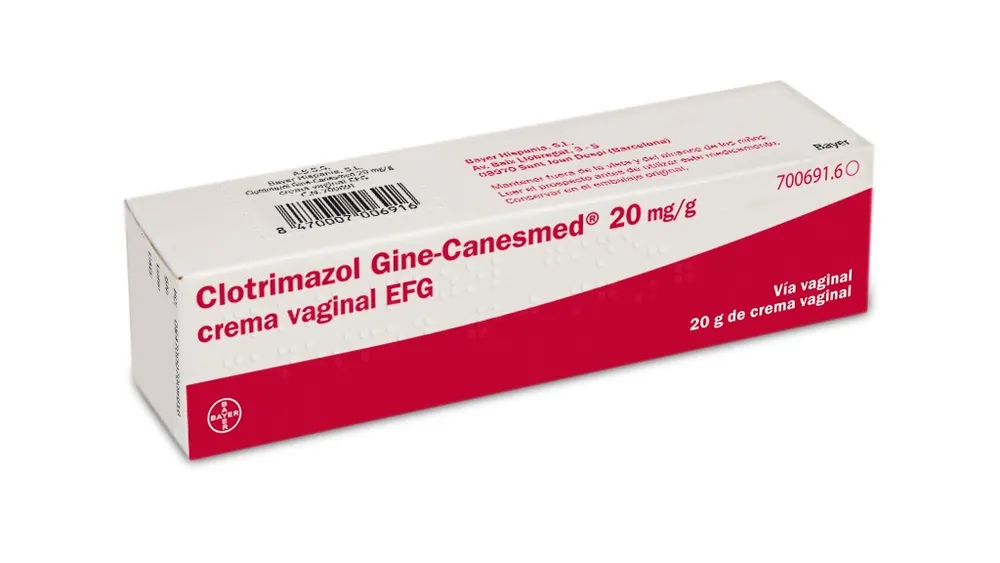
Table of Contents
- Package leaflet: Information for the user
- Introduction
- 1. What Clotrimazole Gine-Canesmed is and what it is used for
- 2. What you need to know before using Clotrimazol Gine-Canesmed
- 3. How to use Clotrimazole Gine-Canesmed
- 4. Possible adverse effects
- 5. Storage of Clotrimazole Gine-Canesmed
- 6. Contents of the pack and other information
Package leaflet: Information for the user
Introduction
Package leaflet: patient information
Clotrimazole Gine-Canesmed 20 mg/g vaginal cream EFG
clotrimazole
Read the entire leaflet carefully before you start using this medicine, because it contains important information for you.
- Keep this leaflet, as you may need to read it again.
- If you have any questions, consult your doctor, pharmacist, or nurse.
- This medicine has been prescribed for you only, and you should not give it to others, even if they have the same symptoms as you, because it could harm them.
- If you experience any adverse reactions, consult your doctor, pharmacist, or nurse, even if they are adverse reactions not listed in this leaflet. See section 4.
Leaflet contents:
- What Clotrimazole Gine-Canesmed is and what it is used for
- What you need to know before using Clotrimazole Gine-Canesmed
- How to use Clotrimazole Gine-Canesmed
- Possible side effects
- How to store Clotrimazole Gine-Canesmed
Pack contents and additional information
1. What Clotrimazole Gine-Canesmed is and what it is used for
Clotrimazole is an antifungal (a medicine used to treat infections caused by fungi).
This medicine is indicated in adults and adolescents over 12 years of age for the treatment of:
- Complicated vulvovaginal candidiasis (4 or more fungal infections in the past year, or infections with severe symptoms, or patients with weakened immune systems), and
- Uncomplicated vulvovaginal candidiasis (sporadic fungal infections, or fewer than 4 infections in the past year, or infections with mild to moderate symptoms).
2. What you need to know before using Clotrimazol Gine-Canesmed
Do not use Clotrimazol Gine-Canesmed
If you are allergic to clotrimazole, to imidazoles in general, or to any of the other components of this medicine (listed in section 6).
Warnings and precautions
Consult your doctor, pharmacist, or nurse before starting to use Clotrimazol Gine-Canesmed.
Before using this medicine, inform your doctor if you have problems with your immune system, for example if you are being treated with oral corticosteroids or have HIV infection, AIDS, or diabetes.
If you develop fever (38°C or higher), abdominal or back pain, lower back pain, or abundant watery and/or nauseating vaginal discharge, you must consult your doctor to rule out other types of illness.
Do not use tampons, vaginal douches, spermicides, or other vaginal products while using this medicine.
It is not recommended to start treatment during menstruation. Treatment should be completed before the onset of menstruation.
This medicine may reduce the effectiveness and safety of latex products such as condoms and diaphragms. This effect is temporary and occurs only during treatment.
It is recommended to avoid sexual intercourse in case of vaginal infection and while using this medicine, to prevent transmission to your partner.
If an allergic reaction occurs during use, treatment must be stopped and you should immediately contact your doctor. Signs of a severe allergic reaction include raised, itchy rash, swelling, sometimes in the face or mouth, causing difficulty breathing.
You should consult a doctor if symptoms worsen during treatment, persist after treatment has ended, or if there is an increase in vaginal discharge or changes in its appearance or odor, or if you experience vaginal bleeding.
Children and adolescents
This medicine is indicated for children over 12 years of age. See section How to use Clotrimazol Gine-Canesmed for administration instructions.
Using Clotrimazol Gine-Canesmed with other medicines
Inform your doctor or pharmacist if you are taking, have recently taken, or might need to take any other medicines, especially if you are taking tacrolimus or sirolimus (medicines used in transplant patients), so your doctor can provide appropriate monitoring.
Pregnancy and breastfeeding
If you are pregnant or breastfeeding, think you may be pregnant, or plan to become pregnant, consult your doctor or pharmacist before using this medicine.
Pregnancy
Clotrimazole may be used during pregnancy, but only under the supervision of a healthcare professional.
Breastfeeding
Clotrimazole may be used during breastfeeding.
Driving and using machines
The influence of Clotrimazol Gine-Canesmed on the ability to drive and use machines is none or negligible.
Clotrimazol Gine-Canesmed contains cetostearyl alcohol and benzyl alcohol
This medicine may cause local skin reactions (such as contact dermatitis) because it contains cetostearyl alcohol.
This medicine contains 20 mg of benzyl alcohol in each gram of cream.
Benzyl alcohol may cause allergic reactions.
Benzyl alcohol may cause moderate local irritation.
3. How to use Clotrimazole Gine-Canesmed
Follow exactly the instructions for use of this medicine provided by your doctor or pharmacist. If in doubt, consult your doctor or pharmacist again.
Administer by vaginal route. Do not ingest.
Recommended dose:
Adults and adolescents over 12 years of age
Complicated vulvovaginal candidiasis (4 or more fungal infections in the past year, or infections with severe symptoms, or patients with weakened immune system): Apply one full applicator load (approximately 5 g) once daily, preferably at night, for 7–14 consecutive days.
Uncomplicated vulvovaginal candidiasis (fungal infections occurring sporadically, or fewer than 4 infections in the past year, or infections with mild to moderate symptoms): Apply one full applicator load (approximately 5 g) once daily, preferably at night, for 3 consecutive days.
The cream should be inserted deeply into the vagina (see INSTRUCTIONS FOR USE OF THE APPLICATOR), while the patient is lying on her back with knees bent, preferably at night before going to bed.
INSTRUCTIONS FOR USE OF THE APPLICATOR
|
|



Pregnant women
During treatment in the last 4 to 6 weeks of pregnancy, the use of the applicator is not recommended. Therefore, vaginal tablets are recommended instead of vaginal cream, as they can be inserted directly with a finger after carefully washing the hands.
If symptoms persist after completing treatment or recur within two months, or if you have immune system disorders, HIV infection, AIDS, or diabetes, you should consult your doctor.
Contact with the eyes should be avoided, as it may cause irritation. If accidental contact with the eyes occurs, rinse thoroughly with plenty of water and consult an ophthalmologist if necessary.
If you use more Clotrimazol Gine-Canesmed than you should
Accidental ingestion may cause gastrointestinal discomfort and/or vomiting.
In case of overdose or accidental ingestion, consult your doctor or pharmacist immediately or call the Toxicology Information Service at telephone number (91) 562 04 20, indicating the medication and the amount ingested.
If you forget to use Clotrimazol Gine-Canesmed
If you miss a dose, wait until the next scheduled dose. Do not apply a double dose to make up for the missed dose.
If you stop using Clotrimazol Gine-Canesmed before completing treatment
Continue using Clotrimazol Gine-Canesmed until the end of the treatment period, even if you feel better. Completing the full course of treatment is necessary to cure the infection. If you interrupt treatment, the fungi may not have been completely eliminated.
If you have any further questions about the use of this medicine, ask your doctor.
4. Possible adverse effects
Like all medicines, Clotrimazol Gine-Canesmed may cause adverse effects, although not everyone experiences them.
Adverse reactions with unknown frequency (cannot be estimated from the available data) are:
Angioedema (swelling under the skin), allergic reaction, hypersensitivity.
Syncope (sudden loss of consciousness, fainting), hypotension (low blood pressure).
Difficulty breathing.
Abdominal pain, nausea.
Rash, urticaria (raised red itchy welts).
Vaginal desquamation, vaginal discharge, vulvovaginal itching, vulvovaginal erythema, burning sensation in the genital area, vulvovaginal discomfort, vulvovaginal pain, and vaginal haemorrhage.
Application site irritation, oedema, pain.
These symptoms usually do not require discontinuation of treatment and are more common during the first days of treatment.
Reporting of adverse effects
If you experience any type of adverse effect, consult your doctor or pharmacist, even if it is a possible adverse effect not listed in this leaflet. You may also report them directly through the Spanish Pharmacovigilance System for Human Medicines: http://www.notificaram.es. By reporting adverse effects, you can help provide more information on the safety of this medicine.
5. Storage of Clotrimazole Gine-Canesmed
Keep this medicine out of the sight and reach of children.
No special storage conditions are required. Store in the original packaging.
Do not use Clotrimazole Gine-Canesmed after the expiry date stated on the packaging, following the abbreviation EXP. The expiry date refers to the last day of the month indicated.
Medicines must not be disposed of via wastewater or household waste. Dispose of unused containers and medicines at the Sigre Collection Point at your pharmacy. If in doubt, ask your pharmacist how to dispose of containers and medicines you no longer need. This will help protect the environment.
6. Contents of the pack and other information
Composition of Clotrimazole Gine-Canesmed
- The active substance is clotrimazole. Each gram of cream contains 20 mg of clotrimazole.
- The other components (excipients) are: sorbitan stearate type I, polysorbate 60, cetyl palmitate, cetostearyl alcohol, octyldodecanol, benzyl alcohol and purified water.
Appearance of the product and contents of the pack
White cream.
Presented in a cardboard box containing an aluminum tube with a PE cap with 20 g of cream and 3 disposable vaginal applicators made of PE/PP.
Marketing Authorization Holder and Manufacturer
Marketing Authorization Holder
BAYER HISPANIA, S.L.
Av. Baix Llobregat, 3 – 5
08970 Sant Joan Despí (Barcelona)
Spain
Manufacturer
GP Grenzach Produktions GmbH
Emil-Barell-Str. 7
79639 Grenzach-Wyhlen
Germany
Date of the most recent revision of this leaflet: October 2021
Detailed and up-to-date information on this medicinal product is available on the website of the Spanish Agency of Medicines and Medical Devices (AEMPS) http://www.aemps.gob.es/