Clotrimazole Canesmed 10 mg/g cream EFG
Spain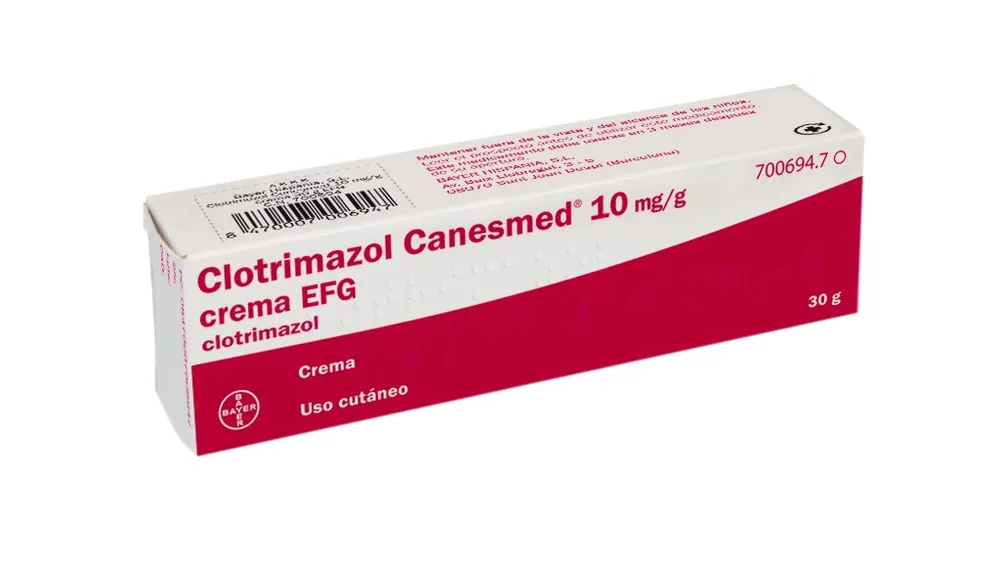
Table of Contents
- Package leaflet: Information for the user
- Introduction
- 1. What Clotrimazole Canesmed is and what it is used for
- 2. What you need to know before using Clotrimazol Canesmed
- 3. How to use Clotrimazol Canesmed
- 4. Possible adverse effects
- 5. Storage of Clotrimazole Canesmed
- 6. Contents of the pack and other information
Package leaflet: Information for the user
Introduction
PACKAGE LEAFLET: INFORMATION FOR THE USER
Clotrimazol Canesmed 10 mg/g cream EFG
Clotrimazole
Read the entire leaflet carefully before you start using this medicine, because it contains important information for you.
- Keep this leaflet, as you may need to read it again.
- If you have any questions, ask your doctor, pharmacist or nurse.
- This medicine has been prescribed for you only, and you should not give it to other people, even if they have the same symptoms as you, because it could harm them.
- If you experience any adverse effects, consult your doctor, pharmacist or nurse, even if they are effects not listed in this leaflet. See section 4.
Leaflet contents:
-
What Clotrimazol Canesmed is and what it is used for
-
What you need to know before using Clotrimazol Canesmed
-
How to use Clotrimazol Canesmed
-
Possible side effects
-
How to store Clotrimazol Canesmed
-
Contents of the pack and other information
1. What Clotrimazole Canesmed is and what it is used for
Clotrimazole is an antifungal (a medicine used to treat infections caused by fungi).
This medicine is indicated for the treatment of superficial skin infections: athlete's foot (tinea pedis), tinea of the hands, body ringworm (tinea corporis), groin ringworm (tinea cruris, also known as jock itch), pityriasis versicolor (tinea versicolor), candidal balanitis (inflammation of the glans), and vulvovaginal candidiasis (characterized by itching, usually accompanied by increased vaginal discharge, inflammation of the vaginal mucosa and vulvar area, and burning or stinging sensation during urination).
2. What you need to know before using Clotrimazol Canesmed
Do not use Clotrimazol Canesmed
- If you are allergic (hypersensitive) to clotrimazole, to imidazoles in general, or to any of the other components of this medicine (listed in section 6).
Warnings and precautions
Talk to your doctor, pharmacist, or nurse before starting to use Clotrimazol Canesmed.
Avoid contact with the eyes, as this may cause stinging. If accidental contact occurs, rinse thoroughly with water and consult an ophthalmologist if necessary. Do not ingest.
If a hypersensitivity reaction occurs during use, treatment must be discontinued and you should immediately consult your doctor.
The use of additional contraceptive methods besides condoms and diaphragms is recommended during treatment, as this medicine may affect latex. This effect on latex is temporary and occurs only during treatment.
Your doctor will assess the most appropriate treatment depending on the type of infection and whether you have certain medical conditions, such as a weakened immune system or diabetes.
Using Clotrimazol Canesmed with other medicines
Inform your doctor or pharmacist if you are taking, have recently taken, or might need to take any other medicines.
Pregnancy, breastfeeding, and fertility
If you are pregnant or breastfeeding, think you may be pregnant, or are planning to become pregnant, consult your doctor or pharmacist before using this medicine.
Pregnancy
No risks to mother and child are expected following topical use of clotrimazole during pregnancy; however, your doctor will evaluate the benefit of using the medicine before administration.
Breastfeeding
Clotrimazole may be used during breastfeeding. If applied topically to the nipple area, wash the area thoroughly before feeding the infant.
Driving and using machines
The effect of Clotrimazol Canesmed on the ability to drive and operate machinery is none or negligible.
Clotrimazol Canesmed contains cetyl stearyl alcohol and benzyl alcohol
This medicine may cause local skin reactions (such as contact dermatitis) because it contains cetyl stearyl alcohol.
This medicine contains 20 mg of benzyl alcohol per gram of cream.
Benzyl alcohol may cause allergic reactions.
Benzyl alcohol may cause moderate local irritation.
3. How to use Clotrimazol Canesmed
Follow exactly the instructions for use of this medicine given by your doctor, pharmacist, or nurse. If in doubt, consult your doctor, pharmacist, or nurse again.
Clean and thoroughly dry the affected areas before applying the medicine.
The recommended dose is:
Apply a thin layer of cream to the affected area and surrounding skin, gently massaging until completely absorbed, 2–3 times a day. A strip of cream approximately 2 cm in length is sufficient to treat an area the size of the hand (dorsal and palmar surfaces). As a guide, 2 cm corresponds to the length of the distal phalanx of the index finger.
The duration of treatment depends on the location and extent of the infection. In general, it is recommended:
Dermatophyte infections: 3 to 4 weeks
Pityriasis versicolor: 1 to 3 weeks
Vaginal candidiasis or candidal balanitis: 1 to 2 weeks
In the case of vaginal candidiasis, apply this medicine to the labia or adjacent areas.
Other formulations are available on the market for the intravaginal treatment of vulvovaginitis, such as vaginal tablets and vaginal cream with applicator, depending on the site of infection. Follow your doctor's recommendations.
If you use more Clotrimazol Canesmed than you should
Accidental ingestion may cause gastrointestinal discomfort and/or vomiting. Accidental application to the eyes may cause burning and mild eye irritation.
In case of overdose or accidental ingestion, consult your doctor or pharmacist immediately or call the Toxicology Information Service. Telephone (91) 562 04 20, indicating the medicine and the amount ingested.
If you forget to use Clotrimazol Canesmed
If you miss a dose, wait until the next scheduled dose. Do not apply a double dose to make up for the missed dose.
If you stop using Clotrimazol Canesmed
If you stop treatment prematurely, the fungi may not have been completely eradicated. If you have any further questions about the use of this medicine, ask your doctor.
4. Possible adverse effects
Like all medicines, Clotrimazole Canesmed may produce adverse effects, although not everyone experiences them.
Adverse reactions with unknown frequency (cannot be estimated from the available data) are:
Immune system disorders:
Angioedema (swelling under the skin), allergic reaction, hypersensitivity.
Vascular disorders:
Syncope (sudden loss of consciousness, fainting), hypotension (low blood pressure).
Respiratory, thoracic and mediastinal disorders:
Difficulty breathing.
Skin and subcutaneous tissue disorders:
Blisters, contact dermatitis (redness of the skin following direct contact with a substance), erythema, tingling sensation, pruritus, urticaria (red, raised, itchy rashes), burning/stinging sensation of the skin, exfoliation (skin peeling), and skin rash.
General disorders and administration site conditions:
Irritation at the application site, reaction at the application site, edema, pain.
These symptoms usually do not require discontinuation of treatment and are more common during the first days of treatment.
If you experience any adverse effects, consult your doctor, pharmacist, or nurse, even if they are adverse effects not listed in this leaflet.
Reporting of adverse effects:
If you experience any type of adverse effect, consult your doctor or pharmacist, even if they are possible adverse effects not listed in this leaflet. You may also report them directly via the Spanish Pharmacovigilance System for Human Medicines: http://www.notificaram.es. By reporting adverse effects, you can help provide more information on the safety of this medicine.
5. Storage of Clotrimazole Canesmed
This medicine does not require special storage conditions.
Keep out of the sight and reach of children.
Do not use Clotrimazole Canesmed after the expiry date stated on the container, indicated after the abbreviation EXP. The expiry date refers to the last day of the month indicated.
This medicine should be used within 3 months after opening.
Medicines must not be disposed of via wastewater drains or household waste. Dispose of unused containers and medicines at the Sigre Point in your pharmacy. If you are unsure, please ask your pharmacist how to properly dispose of unused containers and medicines. This will help protect the environment.
6. Contents of the pack and other information
Composition of Clotrimazol Canesmed
- The active substance is clotrimazole. Each gram of cream contains 10 mg of clotrimazole.
- The other components (excipients) are: sorbitan stearate, polysorbate 60, cetyl palmitate, cetostearyl alcohol, octyldodecanol, benzyl alcohol, purified water.
Appearance of the medicine and contents of the pack:
This medicine is a white cream. It is supplied in aluminum tubes with screw caps containing 30 grams of cream.
Marketing Authorization Holder
BAYER HISPANIA, S.L.
Av. Baix Llobregat, 3 – 5
08970 Sant Joan Despí (Barcelona)
Spain
Manufacturer
GP Grenzach Produktions GmbH
Emil-Barell-Str. 7
79639 Grenzach-Wyhlen
Germany
Date of the most recent revision of this leaflet: July 2021
Detailed and up-to-date information on this medicine is available on the website of the Spanish Agency of Medicines and Medical Devices (AEMPS) http://www.aemps.gob.es/